Disclosure: As an Amazon Associate, we earn from qualifying purchases. If you click a link on this page and make a purchase, we may receive a small commission at no extra cost to you.
Choosing a welding helmet comes down to more than shade number. You need clear visibility, fast lens response, a comfortable fit, and enough protection for the welding work you actually do. The Welding True Color Helmet is built around an auto-darkening lens, a light shade 4 mode, a dark shade range of 9 to 13, solar-powered charging, and a lightweight 1.2-pound design. This review helps you decide if its viewing area, comfort features, and adjustable controls are enough for your shop, garage, or job-site work. It looks like a practical choice for MIG, TIG, and ARC welding, but buyers who need verified certification details should check the product label and listing before relying on it for professional compliance.
Quick Verdict
Rating: Recommended with caveats
Best For: Welders who want a lightweight auto-darkening helmet with true-color visibility and adjustable shade control.
Bottom Line: The Welding True Color Helmet offers useful core features for everyday welding, including a 4/9-13 shade range, solar-assisted power, and a standard 3.62-inch by 1.65-inch viewing area. The main tradeoff is that the supplied article does not confirm the brand, exact certification label, or warranty terms, so you should verify those details before using it in regulated work settings.
| Specification | Detail |
|---|---|
| Product Name | Welding True Color Helmet |
| Product Type | Auto-darkening welding helmet |
| Lens Type | True-color auto-darkening lens |
| Shade Range | Light shade 4, dark shade 9 to 13 |
| Viewing Area | 3.62 inches by 1.65 inches |
| Weight | 1.2 pounds |
| Power | Solar-powered charging support |
| Controls | Sensitivity and delay settings |
| Delay Range | Dark-to-bright adjustment from 0.1 seconds to 0.8 seconds |
| Fit | Adjustable headband |
| Suggested Welding Use | MIG, TIG, and ARC welding |
| Common Work Settings | Automotive repair, construction, metal production, and general shop work |
| Safety Note | Check the product label, manual, and workplace requirements before professional or regulated use. |
What Is the Welding True Color Helmet?
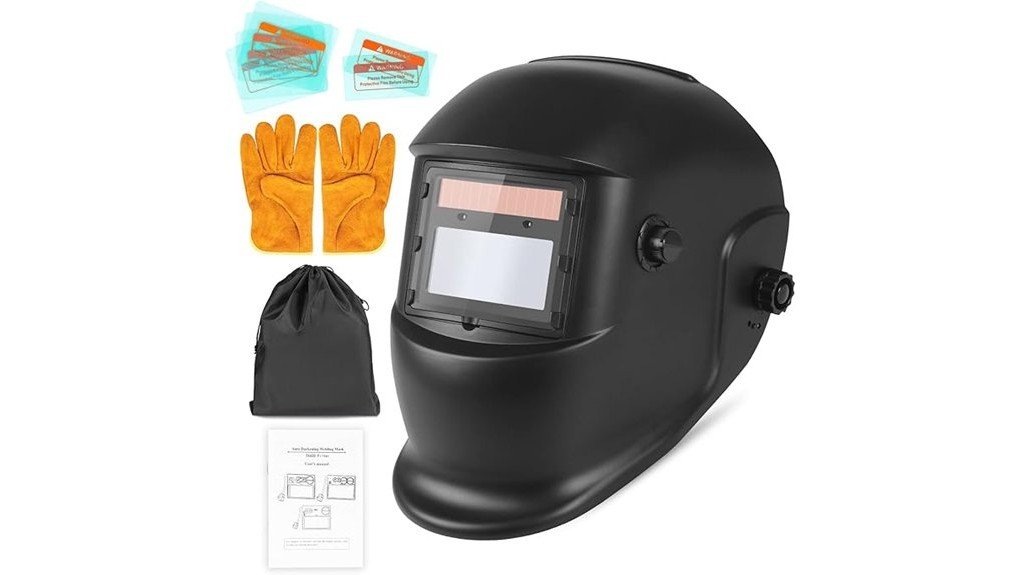
The Welding True Color Helmet is an auto-darkening welding hood designed to help protect your face and eyes while you weld. Its main feature is a lens that changes shade when it detects welding light, so you do not need to lift and lower a fixed-shade helmet between each weld.
The helmet includes a light shade 4 mode and a dark shade range from 9 to 13. That range makes it suitable for common welding tasks where you need different lens darkness levels based on arc brightness, material, and process. The true-color lens also helps you see the work area with more natural color contrast than a basic dark lens.
At 1.2 pounds, this helmet focuses on comfort during longer sessions. The adjustable headband helps you tune the fit, while the 3.62-inch by 1.65-inch viewing area gives you a standard window for positioning, tacking, and checking the weld puddle.
Before You Buy: The supplied product details do not confirm the brand, exact safety certification label, or warranty period. If your workplace requires a specific ANSI, CSA, CE, or other safety marking, verify the label and manual before buying.
Who Should Buy It?
Best For
- DIY welders who want auto-darkening convenience without a heavy helmet.
- Shop users who switch between MIG, TIG, and ARC welding tasks.
- Buyers who want true-color visibility for better workpiece detail.
Skip If
- You need a verified brand, model number, or listed certification before purchase.
- You prefer a larger viewing window for production welding or detailed fabrication.
- Your job site requires documented PPE approval from a safety manager.
Features and Specifications
Auto-Darkening Shade Control
The main reason to choose this helmet is its auto-darkening hood. The lens uses a light shade 4 setting for setup visibility and switches into a darker 9 to 13 range when you weld. This helps you keep the helmet down while moving from setup to arc start.
The adjustable shade range also gives you more control than a fixed-shade helmet. You can choose a darker setting for brighter arcs and a lighter dark setting when the job allows it. Always match the shade to the welding process, amperage, and safety guidance in the product manual.
Sensitivity and Delay Settings
The helmet includes sensitivity and delay controls. Sensitivity helps the lens respond to the welding arc, while delay controls how quickly the lens returns from dark to bright after the arc stops.
The article-supported delay range is 0.1 seconds to 0.8 seconds. A shorter delay can feel faster when you tack or move between short welds. A longer delay may feel more comfortable when the work area stays bright after the arc stops.
True-Color Visibility
The true-color lens is designed to improve color recognition while you weld. This can help you see the workpiece, joint line, and surrounding area more clearly than with a basic green-tinted view.
Better color contrast does not replace skill or proper lighting, but it can make setup and inspection easier. It is especially useful when you need to track position, check bead placement, or avoid losing sight of the joint.
Comfort and Fit
The 1.2-pound weight makes the helmet easier to wear for longer periods than many heavier hoods. Less weight can reduce neck strain when you move around a vehicle, bench, frame, or work stand.
The adjustable headband lets you change the fit around your head. A good fit matters because a loose helmet can shift when you nod, bend, or reposition, while a tight one can cause pressure during longer sessions.
Power and Charging
The helmet uses solar-powered charging support. This reduces the need to think about battery replacement during normal use, especially when the helmet gets regular exposure to shop light or outdoor light.
Solar support is convenient, but you should still inspect the helmet before each use. If the lens response seems slow, inconsistent, or dim, stop using it until you confirm the power system and lens function are working correctly.
Performance and Usability
In everyday use, the Welding True Color Helmet focuses on three practical needs: seeing your work clearly, reducing interruptions, and staying comfortable. The auto-darkening lens helps you keep both hands available instead of raising the hood between welds.
The 3.62-inch by 1.65-inch viewing area is a standard-size window. It should work for common welding tasks, but it may feel narrow if you are used to panoramic or wide-view helmets. This is one of the biggest fit-for-purpose decisions before you buy.
The helmet also supports automotive, construction, and metal production work as described in the original article. For occasional repairs and general shop welding, the shade control and lightweight design should be the most useful features.
How It Performs in Real Use
For Garage and DIY Welding
For home shop projects, this helmet gives you the core functions most casual welders want. The auto-darkening lens helps when you tack, pause, reposition, and restart because you do not need to keep flipping the helmet up and down.
For Automotive Repair
Automotive work often requires awkward angles, short welds, and frequent repositioning. The 1.2-pound design and adjustable headband can help when you are working around panels, brackets, frames, or exhaust parts.
For Construction and Shop Work
For job-site or shop welding, the helmet’s 9 to 13 dark shade range gives you room to adjust for different tasks. However, professional users should confirm the helmet’s safety markings and workplace approval before relying on it for regulated use.
For Outdoor Use
The sensitivity adjustments can help when you weld in brighter surroundings. Outdoor lighting may affect how an auto-darkening lens behaves, so test the lens response before starting a full weld and adjust sensitivity as needed.
Pro Tip: Before your first weld of the day, test the auto-darkening response, adjust the headband, clean the lens cover, and confirm the shade setting matches your welding process.
Applications and Recommendations
The Welding True Color Helmet is best suited for general welding tasks where you want a mix of visibility, comfort, and automatic shade control. It can support automotive repair, construction work, metal fabrication, maintenance tasks, and small shop projects.
| Application | Why It Fits | Buyer Note |
|---|---|---|
| Automotive Repair | Lightweight design helps when working in tight positions. | Check fit before working under or around vehicles. |
| Construction | Adjustable shade range supports varied welding tasks. | Verify required job-site PPE certifications. |
| Metal Production | True-color view helps with workpiece visibility. | A larger viewing area may suit production users better. |
| Maintenance Work | Auto-darkening function helps during short welds and repairs. | Inspect the lens and shell before each use. |
| Outdoor Welding | Sensitivity control can help in brighter work areas. | Test the lens response before starting the job. |
Setup Tips Before First Use
Start by adjusting the headband so the helmet sits securely without pressure points. The helmet should stay in place when you look down, turn your head, or move around the work area.
Next, set the shade based on your welding process and the brightness of the arc. Use the manual or safety guidance for your specific welding setup, and do not choose a shade simply because it feels easier to see through.
Clean the viewing area with a soft cloth before use. Avoid harsh chemicals on the lens because they may damage the viewing surface or leave residue that affects clarity.
Compatibility and Safety
The article describes the helmet as suitable for MIG, TIG, and ARC welding. That makes it flexible for many shop and repair tasks, but it does not mean every job or workplace will accept it without checking the helmet markings.
Before welding, inspect the shell, lens, headband, and viewing window. Do not use the helmet if the lens is cracked, the auto-darkening feature behaves inconsistently, or the shell has damage that could reduce protection.
You should also wear the rest of your welding protection, including gloves, proper clothing, and any respiratory or face protection your work requires. A welding helmet protects your face and eyes, but it does not replace a complete safety setup.
Pros and Cons
Pros
- Auto-darkening lens helps reduce helmet lifting between welds.
- Light shade 4 and dark shade 9 to 13 range support common welding tasks.
- True-color view can improve workpiece detail and color recognition.
- 1.2-pound weight helps reduce fatigue during longer sessions.
- Sensitivity and delay controls let you tune lens behavior for different conditions.
Cons
- Brand, exact model number, warranty, and certification details are not confirmed in the supplied article.
- The 3.62-inch by 1.65-inch viewing area may feel small compared with wide-view helmets.
- Professional users may need to verify workplace approval before using it on regulated job sites.
Is It Worth the Price?
The Welding True Color Helmet is worth considering if you want a practical auto-darkening helmet for everyday welding, repair, and fabrication work. Its strongest value comes from the combination of shade adjustment, true-color visibility, solar-assisted power, and a lightweight 1.2-pound design.
It is a smart buy for everyday use if you care more about comfort and basic auto-darkening function than premium extras. The main limitation is documentation. Since the supplied article does not confirm the exact brand, model, warranty, or certification label, you should verify those details on the product page or packaging before purchase.
How It Compares to Alternatives
Compared with a basic fixed-shade helmet, this model is easier to use because the lens darkens automatically and lets you keep the hood down during setup and welding. That can help you work faster, especially on short welds and repeat tacks.
Compared with larger premium auto-darkening helmets, the standard 3.62-inch by 1.65-inch viewing area may feel more limited. The Welding True Color Helmet makes the most sense if you want lightweight comfort, true-color viewing, and adjustable shade control without needing a wide panoramic lens.
Frequently Asked Questions
Can this helmet be used for MIG, TIG, and ARC welding?
Yes, the supplied article describes it as suitable for MIG, TIG, and ARC welding. You should still match the shade setting to your welding process, amperage, and product manual guidance.
What does the 4/9-13 shade range mean?
Shade 4 is the lighter viewing state, while shades 9 to 13 are the darker welding states. This range lets you adjust lens darkness based on the arc brightness and welding task.
Is the viewing area large enough?
The viewing area measures 3.62 inches by 1.65 inches, which is a standard window size. It should work for many repair and shop tasks, but users who want a wider field of view may prefer a larger lens.
Does the helmet work outdoors?
It can be used outdoors when the sensitivity is set correctly for the lighting conditions. Test the auto-darkening response before starting because bright sunlight can affect how some auto-darkening helmets behave.
How should you clean and maintain it?
Use a soft cloth to clean the lens area and avoid harsh chemicals. Store the helmet away from impact, heavy dust, and unnecessary direct sunlight when it is not in use.
What should you check before using it for professional work?
Check the product label, manual, and any listed safety certifications before using it on a job site. If your workplace has PPE rules, confirm approval with your safety manager or supervisor.
Who should skip this welding helmet?
Skip it if you need a confirmed brand, model number, warranty term, or documented certification before purchase. You may also want a different helmet if you prefer a larger viewing window for long production welding sessions.
The Bottom Line
The Welding True Color Helmet is a practical pick for welders who want auto-darkening shade control, true-color visibility, and a lightweight fit for common MIG, TIG, and ARC welding tasks. It is best for DIY, garage, repair, and general shop use, but professional buyers should verify the certification label, brand details, and warranty before relying on it for regulated work.