E7018 Premium Arc Welding Rods Review
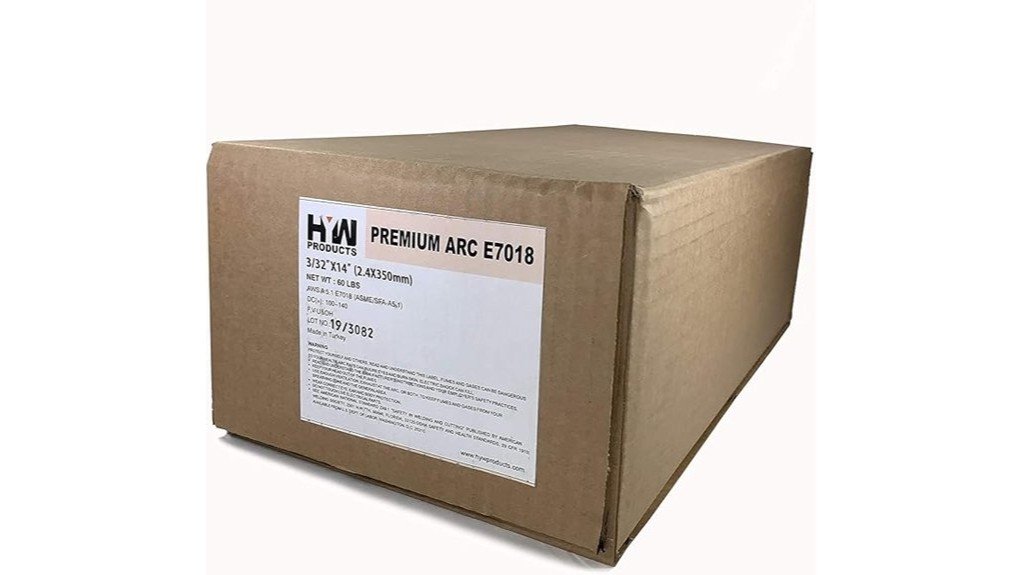
Buying E7018 electrodes in bulk can lower your cost per pound, but only when the size, packaging, machine requirements, and storage demands fit your work. The HYW Products E7018 Premium Arc Welding Rods reviewed here are the linked 1/8-inch, 14-inch-long variant sold as 60 pounds total in six 10-pound boxes. This review explains where that large supply makes sense, what E7018 classification tells you, and what you must confirm before using the rods on structural or code-controlled work. The main strength is a practical bulk format for frequent stick welding, while the main tradeoff is the moisture-sensitive storage requirement.
Quick Verdict
Rating: 8/10, recommended with caveats
Best For: Fabrication shops, repair crews, farms, and frequent stick welders who regularly use 1/8-inch E7018 electrodes.
Bottom Line: The six-box, 60-pound package gives you a substantial supply of all-position E7018 rods for mild steel, low-alloy steel, and hard-to-weld steel applications. It is less suitable for occasional users because opened low-hydrogen electrodes need controlled dry storage and the listing does not publish a detailed product-specific technical data sheet.
Key Specifications
| Specification | Detail |
|---|---|
| Brand/store | HYW Products |
| Product type | Shielded metal arc welding electrodes, also called stick welding rods |
| AWS classification | E7018 |
| Linked diameter | 1/8 inch |
| Electrode length | 14 inches |
| Total package weight | 60 pounds |
| Package format | Six 10-pound boxes |
| Welding positions | Flat, horizontal, vertical, and overhead |
| Metals listed | Mild steel, low-alloy steel, hardenable steel, and certain cold-rolled steels |
| Typical 1/8-inch reference range | About 90 to 150 amps for many E7018 products; follow the package, welding procedure, and machine manual |
| Storage need | Keep sealed until needed, then store opened rods according to the manufacturer or welding procedure |
| Best use | Frequent fabrication, repair, farm, shop, and structural-style work where E7018 is specified |
Before You Buy: This review covers the linked 1/8-inch, 60-pound variant. Do not assume a different diameter, H4/H8 hydrogen designation, moisture-resistant R designation, polarity requirement, or code approval unless it appears on the package and supporting documentation you receive.
What Are the HYW Products E7018 Premium Arc Welding Rods?
These are carbon-steel stick electrodes classified as E7018. In that classification, the letter E identifies an electrode, 70 refers to a minimum 70,000 psi tensile-strength class, 1 indicates all-position use, and 8 identifies a low-hydrogen iron-powder coating with medium penetration and defined current characteristics.
The linked Amazon variant is 1/8 inch in diameter, 14 inches long, and packed as six 10-pound boxes. That package is built for buyers who expect to consume rods regularly. It is not a small trial pack, and it requires more storage planning than a single 5- or 10-pound box.
The listing highlights hardenable steels, cold-rolled steels, mild steel, and low-alloy steel. E7018 electrodes are commonly chosen for controlled, strength-focused welds because they produce a smooth arc, relatively low spatter, and a slag-covered bead when the base metal, joint preparation, settings, and technique are correct.
Who Should Buy It?
Best For
- Shops and mobile repair crews that regularly run 1/8-inch E7018.
- Farm, equipment, trailer, frame, and fabrication work where the job procedure calls for E7018.
- Buyers with a suitable constant-current stick welder and a proper low-hydrogen storage plan.
Skip If
- You weld only a few times a year and are unlikely to use 60 pounds before storage becomes a concern.
- Your welder cannot provide the amperage, duty cycle, polarity, or open-circuit voltage required by the rods you receive.
- You need traceable certifications, a stated H4R designation, or project-specific approvals that are not shown on the current listing.
Feature-by-Feature Review
E7018 Classification and Weld Strength
The E7018 classification is the main buying reason. It places these rods in the 70,000 psi tensile-strength class and supports flat, horizontal, vertical, and overhead welding. That makes one electrode type useful across many joint positions, provided your welding procedure allows it.
Low-hydrogen electrodes can help limit hydrogen-related cracking risk on hardenable steels, thick sections, and restrained joints. They do not remove cracking risk by themselves. Base-metal chemistry, preheat, interpass temperature, joint restraint, heat input, contamination, and cooling rate still matter.
Six-Box, 60-Pound Package
The six 10-pound boxes are easier to manage than one loose 60-pound container. You can keep unopened boxes sealed while using one box at a time, which may reduce unnecessary atmospheric exposure. The format also helps a shop distribute stock across work areas without opening the full supply.
The downside is commitment. A casual welder may save less than expected if several boxes remain unused or are stored incorrectly. Compare the delivered cost per pound with smaller branded packages and include the cost of a suitable electrode oven or controlled storage if your work requires one.
Arc Control, Spatter, and Slag
E7018 rods are known for a smooth, quiet arc, medium penetration, and relatively low spatter. Those traits can help you hold a controlled puddle and reduce cleanup compared with a more forceful digging electrode. They also reward clean fit-up, a short arc, and steady travel.
You should not treat E7018 as the best answer for every surface. Heavy rust, oil, paint, moisture, and poor fit-up can still cause defects. Clean the joint to the standard required by the job, remove slag between passes, and inspect each bead before continuing.
All-Position Capability
The listing identifies these rods for all-position welding. That gives you flexibility when a part cannot be rotated into the flat position. Vertical-up and overhead work still require more control than flat welding, and a rod that is rated for the position does not guarantee an acceptable weld.
For vertical-up welding, use the angle, bead width, amperage, and progression required by your procedure. For flat and horizontal work, keep a tight arc and avoid excessive weaving, which can trap slag or produce a bead that is wider than the procedure allows.
Machine Compatibility and Amperage
A common reference range for 1/8-inch E7018 electrodes is about 90 to 150 amps, but that is not a substitute for the package label or welding procedure specification. The correct setting changes with joint type, plate thickness, position, power source, arc length, and travel speed.
E7018 electrodes can be made for AC or DC operation, but the current Amazon listing does not provide a detailed product-specific data sheet. Confirm the printed polarity and operating range before striking an arc. This is especially important with small AC machines or power sources with low open-circuit voltage, which may have trouble maintaining the arc on some E7018 formulations.
Pro Tip: Open one 10-pound box at a time and mark the opening date. Keep the remaining boxes sealed, and follow the package or welding procedure for holding and reconditioning temperatures instead of guessing.
Storage, Handling, and Safety
Moisture control is the biggest ownership issue with E7018. Low-hydrogen electrodes are normally shipped in sealed packaging because the flux coating can absorb moisture after opening. For code work, the allowable exposure time, holding temperature, and reconditioning cycle may be set by the project specification.
Many E7018 products are held in an electrode oven after opening, often around 250°F to 300°F, but you must follow the manufacturer’s instructions for the rods you receive. Reconditioning temperatures can be much higher and may damage the coating when handled incorrectly. Do not use a household food oven for welding consumables.
Use a welding helmet with the correct shade, safety glasses, dry welding gloves, flame-resistant clothing, hearing protection when needed, and suitable footwear. Provide ventilation or fume extraction for the base metal, coating, and work area. Remove flammable materials, inspect leads and the electrode holder, and follow your welder’s manual.
How It Performs in Real Use
For Repeated Shop Fabrication
The bulk package is most practical when you run the same 1/8-inch diameter often. Six boxes give you enough stock for repeat joints, repair batches, fixtures, frames, and heavier fabrication without buying a new pack after every project. The value falls quickly when your work frequently changes to smaller diameters.
For Thick or Restrained Joints
E7018 is a common choice when weld quality and cracking control matter on thick or restrained steel joints. You still need the correct preheat, interpass temperature, joint design, and sequence. For load-bearing or critical work, use an approved welding procedure and qualified personnel rather than relying on a retail listing.
For Vertical and Overhead Repairs
The all-position rating supports repair locations where you cannot rotate the part. A controlled short arc and proper vertical-up technique can produce a sound bead, but overhead work increases exposure to sparks and slag. Position the work safely and use complete protective clothing.
For Outdoor and Mobile Work
Stick welding is practical outdoors because it does not depend on an external shielding-gas cylinder. Wind is less disruptive than it is for gas-shielded processes, but rain, condensation, dirty steel, and damp rods remain serious problems. Transport the electrodes in sealed containers and do not weld in wet conditions.
Common Mistakes to Avoid
- Buying the wrong variant: The linked product is 1/8 inch and 60 pounds. Confirm the selected size before checkout.
- Opening every box at once: Keep unused boxes sealed until you need them.
- Guessing at amperage: Start with the range printed on the package and adjust within the approved procedure.
- Running a long arc: Excessive arc length can increase spatter, porosity risk, and poor bead control.
- Welding over contamination: Remove oil, moisture, paint, and heavy scale as required for the joint.
- Assuming E7018 equals code approval: Classification alone does not replace certificates, lot control, a WPS, or job-specific acceptance requirements.
Buyer Feedback and Listing Notes
The listing supports the core package facts, including HYW Products branding, E7018 classification, 1/8-inch diameter, 14-inch length, 60-pound total weight, six-box packaging, and all-position use.
A current, product-specific technical data sheet was not clearly provided on the page. For that reason, this review does not assign unverified H4/H8/R designations, exact chemistry, impact values, deposition data, or a product-specific amperage range. Check the labels and paperwork on delivery before using the rods for controlled work.
Pros and Cons
Pros
- Verified 1/8-inch, 14-inch E7018 format for common shop and repair work.
- Six 10-pound boxes let you open the supply in smaller stages.
- All-position classification supports flat, horizontal, vertical, and overhead joints.
- E7018 arc characteristics favor controlled puddle handling, low spatter, and medium penetration.
- Bulk quantity can offer strong value for buyers who consume rods regularly.
Cons
- Sixty pounds is excessive for occasional welding and creates a larger storage burden.
- The listing does not clearly publish a detailed product-specific data sheet or hydrogen designator.
- Low-hydrogen performance depends on sealed packaging, correct storage, and disciplined handling after opening.
Is It Worth the Price?
This bulk pack can be strong value for a shop that already uses 1/8-inch E7018 and has proper storage. The six-box format lets you stage the inventory, and a regular user may pay less per pound than with repeated small-package purchases.
It is not the best fit when you need only a handful of rods, frequently switch diameters, or lack an electrode oven or approved storage method. Compare delivered cost, packaging condition, documentation, and seller terms, not just the headline price.
You get the most value when the linked diameter matches your normal work and you can consume each opened box promptly. For critical fabrication, traceability and supporting documentation may matter more than the lowest cost per pound.
How It Compares to Alternatives
The Forney 30810 is a 1/8-inch E7018 option sold in a smaller 10-pound package, which is easier for occasional use and storage. Hobart and Lincoln Electric also sell branded E7018 products with published technical information and moisture-control designations on selected lines, which can be a better fit when documentation and traceability matter.
The HYW Products pack makes the most sense when you want 60 pounds of one common diameter and can manage low-hydrogen storage. Choose a smaller package when you are testing E7018 for the first time, and choose a fully documented industrial line when your project specification requires defined certifications or lot records.
Frequently Asked Questions
What exact size is linked in this review?
The linked Amazon variant is 1/8 inch in diameter, 14 inches long, and 60 pounds total. The package is listed as six 10-pound boxes, so confirm that exact selection before checkout.
What does E7018 mean?
E identifies a stick electrode, 70 identifies the 70,000 psi tensile-strength class, and 1 indicates all-position use. The final 8 refers to the low-hydrogen iron-powder coating, medium penetration, and current characteristics associated with the classification.
What amperage should you use for 1/8-inch E7018?
Many 1/8-inch E7018 products use an approximate 90 to 150 amp range. Treat that only as a reference, then follow the package label, your welder manual, and the approved welding procedure for the joint and position.
Will these rods run on AC and DC welders?
E7018 electrodes can be formulated for AC or DC operation, but the current listing does not clearly state a product-specific polarity range. Check the box before use, especially when your machine has low open-circuit voltage or limited output.
How should you store the rods after opening a box?
Keep unopened boxes sealed and store opened rods under the conditions stated by the manufacturer or project procedure. Many E7018 products require a heated holding oven after opening, but the correct temperature and allowable exposure time must come from the package or governing specification.
Are these rods suitable for vertical and overhead welding?
Yes, the listing identifies the rods for all-position welding. Vertical and overhead work still require correct settings, a short arc, proper progression, slag control, and protective clothing.
Can you use these rods for code or structural work?
Only when the electrodes, documentation, procedure, welder qualification, and job requirements all match. The E7018 label alone does not prove H4R status, lot traceability, impact properties, or approval for a specific code-controlled project.
Who should buy a smaller package instead?
Choose a 5- or 10-pound package when you weld occasionally, lack heated storage, or want to test how a particular E7018 brand runs on your machine. A smaller pack also makes sense when you need several diameters rather than 60 pounds of 1/8-inch rods.
The Bottom Line
The HYW Products E7018 Premium Arc Welding Rods are worth considering when you regularly use 1/8-inch electrodes and want a 60-pound supply divided into six boxes. Their main strengths are the useful bulk format, all-position E7018 classification, and controlled arc characteristics associated with this electrode type.
Skip this package when you weld infrequently, cannot control moisture after opening, or need technical certifications that are not clearly published on the listing. Confirm the box labels, polarity, amperage range, packaging condition, and project requirements before use.
Ready to Buy?
Check the latest price, selected 1/8-inch variant, seller details, and package information before you decide.