Disclosure: As an Amazon Associate, we earn from qualifying purchases. If you click a link on this page and make a purchase, we may receive a small commission at no extra cost to you.
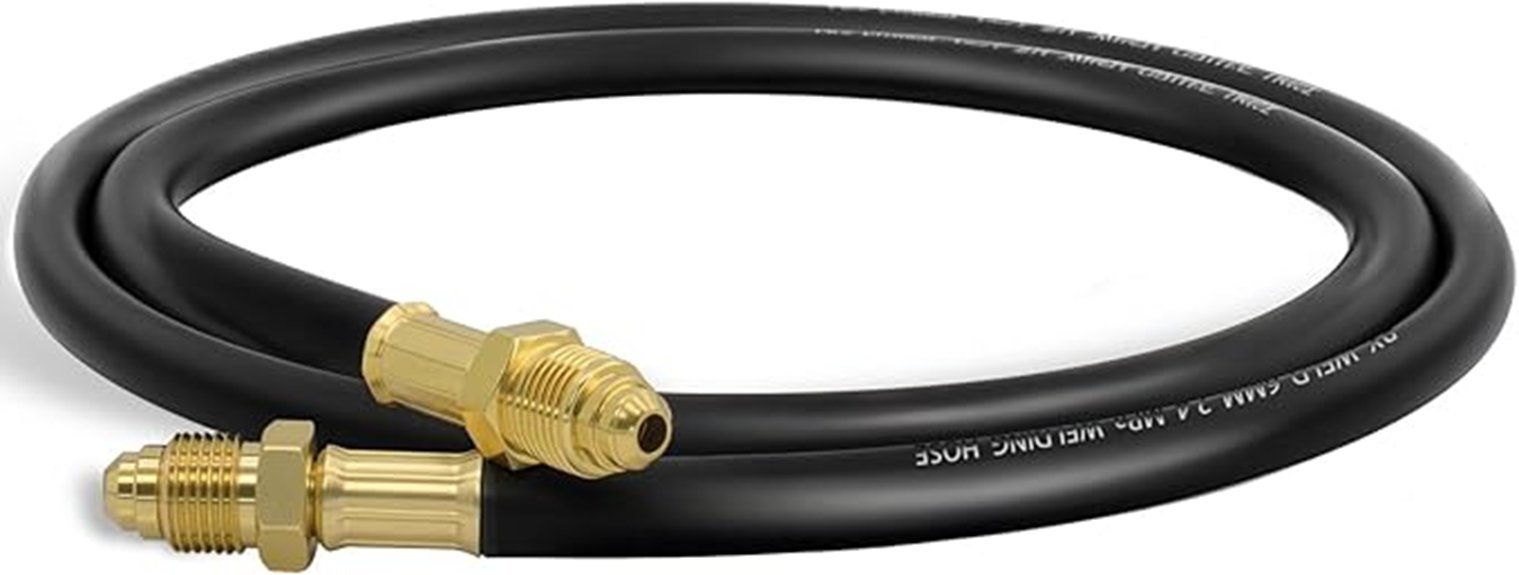
Choosing a welding gas hose is not just about length. You need a hose that fits your regulator and equipment, handles the pressure safely, and stays flexible enough for shop use. The RX WELD Inert Gas Welding Hose is built for argon, CO2, and helium service, with article-supported specs that include a 300 PSI working pressure, 900 PSI burst pressure, durable rubber construction, and 5/8 UNF-18RH fittings. It is a practical choice if you want a straightforward shielding gas hose for MIG or TIG setups, but you should still confirm the exact length and connection fit before buying.
Quick Verdict
Rating: 8/10, Recommended with caveats
Best For: Welders who need a rubber inert gas hose for argon, CO2, or helium setups.
Bottom Line: The RX WELD Inert Gas Welding Hose offers useful pressure ratings, common shielding gas compatibility, and multiple length options. The main tradeoff is that you need to verify the fitting match, length option, and seller details before ordering.
| Specification | Detail |
|---|---|
| Brand | RX WELD |
| Product type | Inert gas welding hose |
| Available lengths | 6.56 FT, 30 FT, and 50 FT |
| Working pressure | 300 PSI |
| Burst pressure | 900 PSI |
| Material | Durable rubber |
| Gas compatibility | Argon, CO2, and helium |
| Fitting detail | 5/8 UNF-18RH fittings listed in the source article |
| Color noted | Primarily black |
| Best use | Shielding gas lines for welding setups that use compatible inert or shielding gases |
What Is the RX WELD Inert Gas Welding Hose?
The RX WELD Inert Gas Welding Hose is a rubber gas hose made for welding setups that use shielding gases such as argon, CO2, or helium. It is designed to carry gas from the supply side to your welding equipment while helping you keep steady gas flow during welding work.
The source article lists three length options: 6.56 FT, 30 FT, and 50 FT. That gives you flexibility for a compact bench setup, a standard garage welding cart, or a larger shop space where the cylinder and work area are farther apart.
Its key strengths are the 300 PSI working pressure, 900 PSI burst pressure, rubber construction, and stated resistance to wear, tears, and cold hardening. Those details make it more useful for welders who want a hose that can handle regular handling and changing shop conditions.
Who Should Buy It?
Best For
- Welders who use argon, CO2, or helium shielding gas.
- Garage and shop users who need a rubber hose in 6.56 FT, 30 FT, or 50 FT lengths.
- Buyers who want a hose with a 300 PSI working pressure and 900 PSI burst rating.
Skip If
- Your regulator, machine, or gas setup does not use 5/8 UNF-18RH fittings.
- You need a hose with verified UV resistance for frequent outdoor storage.
- You need certified specs, warranty terms, or accessories that are not clearly listed in the product details.
Before You Buy: Check your regulator, gas cylinder setup, and welder connection before ordering. The source article lists 5/8 UNF-18RH fittings, and the hose will only make sense if that connection matches your equipment.
Key Features of RX WELD Inert Gas Welding Hose
The RX WELD Inert Gas Welding Hose focuses on the core details that matter in a shielding gas line: pressure handling, material durability, fitting compatibility, and gas flow. It does not try to be a complex accessory. Instead, it gives you a practical hose option for common welding gases.
The 300 PSI working pressure gives the hose a useful operating margin for normal gas delivery setups. The 900 PSI burst pressure adds another safety-related data point, but you should still use the hose only within the limits of your regulator, gas setup, and equipment instructions.
The hose is also listed as compatible with argon, CO2, and helium. That makes it useful across many MIG and TIG welding setups, especially when you work with shielding gases for steel, stainless, aluminum, or other compatible materials.
Materials and Build Quality
The hose uses durable rubber construction. Rubber is a practical choice for welding gas hoses because it can handle regular movement, coiling, and shop handling better than a stiff line that kinks easily.
The source article also notes resistance to wear, tears, and cold hardening. That matters if you work in a garage, mobile repair space, or colder shop where a weaker hose may become harder to manage over time.
The main limitation is that UV resistance is not clearly stated. If your hose will sit in direct sunlight, store it in a shaded area or inside a cabinet when it is not in use.
Pressure Rating and Gas Flow
The RX WELD hose is listed with a 300 PSI working pressure and a 900 PSI burst pressure. Those figures are the most important specs in the article because gas hoses must handle pressure without swelling, cracking, or leaking during use.
For welding, steady shielding gas flow helps protect the weld area from contamination. A hose that fits correctly and stays in good condition helps maintain that flow from the regulator to your welding machine or torch setup.
Pressure ratings do not replace safe setup. Always set your regulator for the process you are using, check for leaks after connection, and follow the instructions for your welder, regulator, and gas cylinder.
Fit and Compatibility
The article lists compatibility with argon, CO2, and helium. These gases are commonly used in shielding gas applications, so the RX WELD hose is most relevant for welders who work with MIG or TIG gas setups.
The article also mentions 5/8 UNF-18RH fittings. This is a key buying detail because a strong hose is not useful if it does not connect to your regulator or machine. Check your existing hose, regulator outlet, and equipment manual before choosing this model.
If you are replacing an old hose, compare the fitting thread, hose length, and gas type before buying. Do not assume every welding hose uses the same connection.
Length Options and Shop Setup
The listed 6.56 FT length is best for a compact setup where your gas cylinder, regulator, and welder stay close together. It can help reduce extra hose on the floor, which may lower trip hazards and make your cart easier to move.
The 30 FT length is a better fit for many garage and workshop layouts. It gives you more reach without needing to move the gas cylinder every time you shift your workpiece.
The 50 FT length makes sense when your gas bottle needs to stay against a wall or in a fixed area while you work across a wider space. Longer hose runs can be convenient, but you should route the hose carefully so it does not cross sharp edges, hot metal, or high-traffic walkways.
Pro Tip: Choose the shortest hose that comfortably reaches your work area. Extra length can be useful, but too much hose on the floor can snag, kink, or get damaged in a busy welding space.
Installation and Setup Tips
Before installing the hose, inspect both ends for visible damage, dirt, or thread issues. A damaged fitting can cause poor sealing even when the hose body looks fine.
Secure the 5/8 UNF-18RH fittings carefully and avoid forcing the threads. If the fitting does not start cleanly by hand, stop and check the match before tightening.
After setup, check for leaks using a safe leak-check method approved for gas equipment. Do not use open flame to test a connection. If you are unsure about the setup, ask a qualified welding supplier or technician for help.
Compatibility and Safety
This hose is intended for compatible welding gas use, including argon, CO2, and helium as listed in the source article. It should not be used as a general-purpose hose for unrelated fuels, liquids, oxygen service, or unknown gases unless the manufacturer specifically approves that use.
Inspect the hose before each welding session. Look for cracks, cuts, flattening, bulges, worn fittings, or areas that feel unusually stiff. Replace the hose if you see damage that could affect gas flow or sealing.
Keep the hose away from sparks, sharp metal, hot workpieces, and grinding debris. Rubber can be durable, but it is not damage-proof.
How It Performs in Real Use
For Garage Welding
In a garage setup, the RX WELD hose is most useful when you need a simple shielding gas line between your cylinder regulator and welding machine. The 30 FT option is likely the most practical for many home shops because it gives more movement than a short hose without requiring a very long run.
For TIG Welding Setups
If your TIG setup uses argon or helium-compatible gas flow, this hose can support the gas delivery side of the system. The key is making sure the fittings match your regulator and machine before you order.
For MIG Welding Setups
For MIG welding with CO2 or argon/CO2 gas, the hose can help supply shielding gas when paired with compatible equipment. A secure connection matters because gas leaks can waste gas and hurt weld quality.
For Cold or Rough Shop Conditions
The article notes resistance to cold hardening, wear, and tears. That makes the hose more appealing if your workspace gets cold or if the hose will be moved around a cart, bench, or shop floor.
Storage and Maintenance
Store the hose loosely coiled when it is not in use. Avoid tight bends because sharp coils can stress the rubber and fittings over time.
Keep it clean, dry, and away from direct sunlight when possible. Since UV resistance is not clearly stated, indoor or shaded storage is the safer habit.
Do not hang heavy tools from the hose or use it as a pull line for moving equipment. Treat it as a gas delivery component, not a handle or tie-down.
Pros and Cons
Pros
- Available in 6.56 FT, 30 FT, and 50 FT lengths for different shop layouts.
- 300 PSI working pressure gives a clear pressure rating for welding gas use.
- 900 PSI burst pressure adds useful safety-related specification detail.
- Durable rubber construction is listed as resistant to wear, tears, and cold hardening.
- Compatible with argon, CO2, and helium according to the source article.
Cons
- You must confirm the 5/8 UNF-18RH fitting match before buying.
- UV resistance is not clearly stated, so outdoor storage may shorten hose life.
- Warranty terms and included accessories are not clearly verified from the source article.
Is It Worth the Price?
The RX WELD Inert Gas Welding Hose looks like a strong value for the price if you need a basic rubber gas hose with clear pressure ratings and common shielding gas compatibility. Its best value comes from the combination of multiple length options, 300 PSI working pressure, and argon, CO2, and helium compatibility.
It is worth considering if you want a straightforward hose for everyday welding gas use and you already know the fittings match your setup. It is not the best fit if you need verified UV protection, a special connection type, or documented warranty details before purchase.
How It Compares to Alternatives
Compared with a generic welding gas hose, the RX WELD hose gives you useful article-supported specs, including pressure ratings, rubber construction, and multiple length options. That makes it easier to judge fit for your setup than a hose listing with limited technical detail.
If you need a brand-specific hose for a certain welder, regulator, or torch kit, an OEM replacement hose may be better. If you want a longer shop run, compare this 50 FT option with other welding gas hoses that list the same gas compatibility and fitting type.
Frequently Asked Questions
What gases is the RX WELD Inert Gas Welding Hose compatible with?
The source article lists compatibility with argon, CO2, and helium. That makes it relevant for many shielding gas setups, but you should still confirm your exact gas, regulator, and machine requirements before using it.
What lengths are available?
The listed length options are 6.56 FT, 30 FT, and 50 FT. Choose 6.56 FT for compact carts, 30 FT for many garage setups, and 50 FT when you need more reach across a larger workspace.
What pressure rating does this hose have?
The article lists a 300 PSI working pressure and a 900 PSI burst pressure. Use the hose only within the limits of your gas system and follow the regulator and welder instructions.
Will it fit every welding regulator?
No. The source article mentions 5/8 UNF-18RH fittings, so you should check your regulator and equipment threads before buying. A pressure-rated hose still will not work safely if the fitting type is wrong.
How should you store the hose when not in use?
Coil it loosely and keep it clean, dry, and away from sharp edges. Since UV resistance is not clearly stated, shaded or indoor storage is the safer choice.
Can the hose be repaired if it is damaged?
A damaged gas hose should be treated carefully because leaks can affect safety and weld quality. If you see cracks, cuts, bulges, or damaged fittings, replacing the hose is usually safer than trying to patch it.
Is it good for outdoor welding?
The hose may be used in different work areas if your gas setup and equipment are compatible, but UV resistance is not clearly confirmed. Store it out of direct sunlight and protect it from sparks, hot metal, and sharp surfaces.
Who should skip this hose?
Skip it if your equipment does not use the listed fitting type or if you need a hose with verified outdoor UV resistance. You should also compare other options if you need confirmed warranty terms or special accessories.
The Bottom Line
The RX WELD Inert Gas Welding Hose is a solid pick if you need a rubber shielding gas hose for argon, CO2, or helium and the 5/8 UNF-18RH fittings match your setup. Its strongest points are the 300 PSI working pressure, 900 PSI burst pressure, and multiple length choices. Skip it if you need a different fitting type, verified UV resistance, or more confirmed documentation before purchase.