Disclosure: As an Amazon Associate, we earn from qualifying purchases. If you click a link on this page and make a purchase, we may receive a small commission at no extra cost to you.
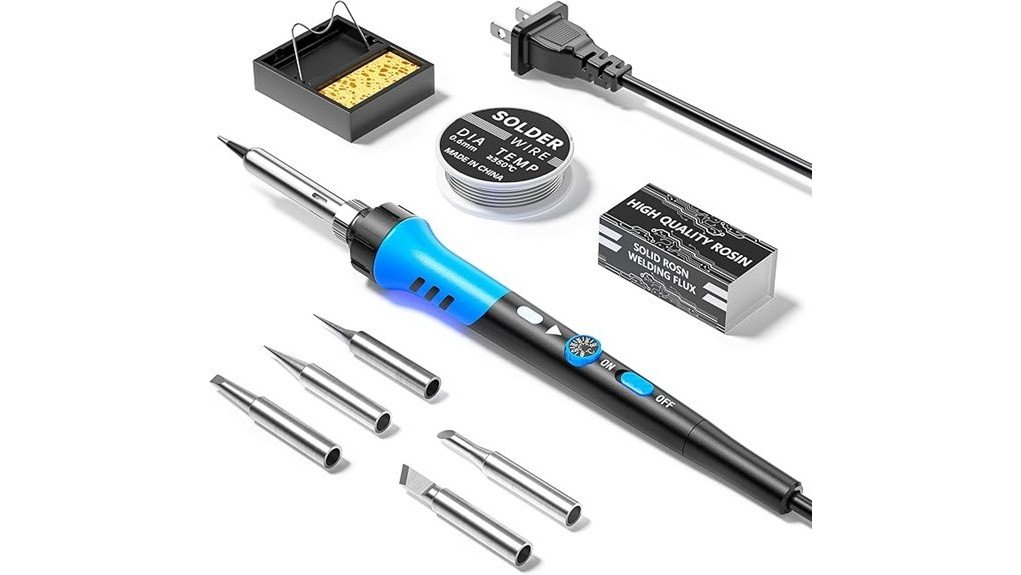
Choosing a soldering iron can feel confusing when you need enough heat for repair work but do not want a tool that feels hard to control. This Soldering Iron Kit is built around a 60W ceramic heater, an adjustable 200 to 450℃ temperature range, and a 5-piece tip set for common electronics and wire work. It looks like a practical option for beginners, hobby repair, small electronics, and general home projects. The main tradeoff is that the article does not confirm a named brand, warranty length, or advanced digital temperature display, so you should check the Amazon listing details before you buy.
Quick Verdict
Rating: 8.2/10
Best For: Beginners, DIY electronics users, light repair work, and hobby soldering projects.
Bottom Line: This kit gives you adjustable heat, a 60W ceramic heater, and multiple tip shapes in one simple setup. It is best for practical home and electronics work, but you should skip it if you need a professional soldering station with a digital display or verified industrial-duty specs.
| Specification | Detail |
|---|---|
| Product type | Adjustable soldering iron kit |
| Amazon ASIN in article link | B09DSDBC7G |
| Power | 60W ceramic heater |
| Temperature range | 200 to 450℃ |
| Tip set | 5-piece tip set with fine point, chisel, conical, knife, and flat tip styles |
| Controls | Adjustable temperature control and on/off switch |
| Safety design | Six exhaust vents, high-temperature resistant silicone cover, and insulating rubber materials |
| Included solder wire | Article states solder wire is included, typically 0.8mm |
| Stated weight | 1.2 pounds |
| Best use | Electronics repair, wire soldering, hobby projects, and light general repairs |
| Safety note | Use eye protection, work in a ventilated area, and let the iron cool before storage. |
What Is the Soldering Iron Kit?
The Soldering Iron Kit is a plug-in soldering tool made for small repair jobs, electronics work, and hands-on DIY projects. Its main feature is the 60W ceramic heater, which supports a working range from 200 to 450℃. That range gives you more flexibility than a fixed-temperature beginner iron.
The kit also includes a 5-piece tip set, which matters because different soldering jobs need different contact points. A fine tip helps with detailed electronics, while a chisel or flat tip gives more contact area for larger joints. The article also notes an on/off switch, six exhaust vents, a silicone cover, and insulating rubber materials, all of which make the tool easier and safer to handle during normal use.
Before You Buy: The source article does not verify a named brand, warranty length, or digital display. Check the current Amazon listing for seller details, included accessories, voltage compatibility, and return terms before ordering.
Who Should Buy It?
Best For
- Beginners who want an adjustable iron for basic electronics practice.
- DIY users who need several tip shapes for wires, small boards, and general repairs.
- Hobbyists who want a lightweight iron with simple controls and a compact kit setup.
Skip If
- You need a full soldering station with a stand-alone base and digital temperature readout.
- You need verified professional specs for daily shop, lab, or production work.
- You want confirmed brand documentation, certification details, or a clearly stated warranty before purchase.
Features and Design of the Soldering Iron Kit
The biggest design strength is the balance between heat range and simple operation. The 60W ceramic heater is strong enough for many everyday soldering tasks, while the 200 to 450℃ adjustment range lets you match heat to the work instead of using one temperature for every joint.
The ergonomic grip is useful during longer sessions because soldering often requires steady hand control. The silicone cover and insulating rubber materials help you keep a safer grip, but they do not remove burn risk. The metal tip and heated shaft can still cause serious burns, so you should always use the iron with a stable stand and a clear work area.
Heating Performance and Temperature Control
A 60W ceramic heater is a practical spec for a general-purpose soldering iron. It can heat quickly and recover better than many low-power irons when the tip touches a joint. That helps when you are soldering wires, small connectors, or board components that pull heat away from the tip.
The adjustable range from 200 to 450℃ gives you room to work with different soldering needs. Lower settings are useful for delicate tasks when too much heat could damage nearby parts. Higher settings may help with larger joints or lead-free solder, which often needs more heat than traditional leaded solder. You should still follow the solder and component guidance for your project.
Pro Tip: Start at a moderate temperature, test on scrap wire or an old board, then increase heat only if the solder does not flow smoothly. Too much heat can lift pads, melt insulation, or damage small parts.
Versatility and Tip Set Performance
The 5-piece tip set makes the kit more flexible than a single-tip soldering iron. You can choose a narrow tip for detail work, a wider tip for heat transfer, or a blade-style tip for wire and surface contact. This helps you avoid forcing one tip shape into every job.
| Tip Shape | Suitable For | Buyer Benefit |
|---|---|---|
| Fine point | Detailed electronics | Better control in small areas |
| Chisel | Larger pads and surfaces | More even heat transfer |
| Conical | General repairs | Useful for mixed project types |
| Knife | Wire soldering | Helpful contact edge for wires |
| Flat | Surface mount components | Wider contact area for controlled heat |
Tip choice affects your results as much as temperature does. A tip that is too small may not transfer enough heat to a larger joint. A tip that is too wide can touch nearby parts. Having several shapes gives you more control, especially as your soldering skills improve.
Safety, Ventilation, and Handling
Safety matters with any soldering iron because the tip can reach hundreds of degrees Celsius. This kit includes six exhaust vents, which are meant to reduce overheating around the iron body. The silicone cover and insulating rubber materials also support safer grip control during use.
You should still treat the iron as a hot tool at all times. Wear protective eyewear, keep loose cords away from the heated tip, and work on a heat-resistant surface. Good ventilation is also important because solder and flux can create fumes. If you are working on electronics you do not understand, or on a device connected to power, stop and seek proper repair guidance first.
Maintenance and Long-Term Use
Regular tip care is the easiest way to keep the iron working well. Clean the tip during use, keep it lightly tinned, and avoid scraping it with harsh tools. A dirty or oxidized tip transfers heat poorly, which can make you raise the temperature too high and risk damaging your project.
The article also notes that users should check for wear and monitor performance. If the iron heats unevenly, the tip becomes badly pitted, or the grip feels loose, stop using it until you can inspect the tool safely. Let the iron cool fully before changing tips, cleaning deeper parts, or storing it.
How It Performs in Real Use
For Beginner Practice
For a beginner, the adjustable temperature range and 5-piece tip set are useful learning tools. You can practice on scrap wire, old circuit boards, and simple kits without being locked into one tip shape. The on/off switch also makes the tool easier to manage than irons that stay powered as soon as they are plugged in.
For Electronics Repair
For small electronics, the fine point and conical tips are the most useful options. They help you reach smaller joints with better control. You still need patience, steady hands, and the right soldering technique, especially around compact circuit boards.
For Wire Connections
The knife and chisel styles can help when you need more contact area on wire joints. The 60W heater gives the tool enough power for many light wire repairs, but thick wire or heavy-duty electrical work may need a more specialized iron or a higher-grade soldering station.
For Occasional Home Use
This kit makes the most sense as an occasional-use tool for repairs, hobbies, and learning. It is compact and flexible enough for a drawer or small workspace. If you solder every day for work, you may prefer a station with a stable base, calibrated readout, and replaceable parts from a known professional brand.
How to Use It Correctly
Before first use, inspect the iron, cord, tip, and accessories. Make sure the tip is installed securely while the iron is cool. Set up a safe workspace with good light, ventilation, a stable stand, and a surface that will not melt or burn.
Match the tip to the job before you start. Use a fine point for precision, a chisel tip for larger contact areas, and a knife or flat tip when the joint needs more edge or surface contact. Heat the joint, not only the solder, so the solder flows into the connection instead of sitting on top.
After use, switch the iron off, unplug it, and let it cool fully before storage. Do not wrap the cord tightly around a warm tool. Store the tips dry and clean so they are ready for the next project.
Pros and Cons
Pros
- 60W ceramic heater supports quick heating for many everyday soldering tasks.
- Adjustable 200 to 450℃ range gives you more control than a fixed-temperature iron.
- 5-piece tip set covers detail work, larger joints, wire soldering, and general repairs.
- On/off switch helps with safer handling and reduces unnecessary powered time.
- Six exhaust vents, silicone cover, and insulating materials improve comfort and basic safety.
Cons
- No verified brand or model name is confirmed in the source article.
- Not a full soldering station with a separate base or digital temperature display.
- May require trial and error for beginners to match temperature, tip shape, and solder type.
Is It Worth the Price?
This Soldering Iron Kit looks like a strong value for the price if you need a basic adjustable iron with several tip shapes. The 60W heater, 200 to 450℃ range, and on/off switch give you useful features for common home and hobby tasks.
You get the most value if you plan to use it for occasional electronics practice, wire repairs, or small DIY projects. It is not the best fit if you need verified professional-grade durability, a digital soldering station, or clearly documented brand support.
How It Compares to Alternatives
Compared with a fixed-temperature pencil iron, this kit gives you better control because you can adjust the heat and swap tip shapes. Compared with a full soldering station from brands like Weller, Hakko, or X-Tronic, it is simpler and likely more compact, but it does not offer the same verified station-style controls or pro-level documentation.
The Soldering Iron Kit makes the most sense if you want an affordable all-in-one starter setup. If temperature accuracy, heavy daily use, and long-term parts support matter more, compare it with a dedicated soldering station before you decide.
Frequently Asked Questions
How long does the soldering iron take to heat up?
The article describes the iron as quick-heating and powered by a 60W ceramic heater. Actual heat-up time can vary by starting temperature, selected setting, tip size, and power source.
Can you use this soldering iron for lead-free solder?
Yes, the article states that the iron can be used with lead-free solder. Because lead-free solder often needs more heat, start with the solder maker’s guidance and adjust within the 200 to 450℃ range.
What solder wire is included in the kit?
The source article says the kit includes solder wire, typically with a 0.8mm diameter. Check the current Amazon listing because included accessory details can vary by seller or bundle.
Which tip should you use for electronics?
Use the fine point or conical tip for small electronics and tight spaces. Use a chisel or flat tip when you need more heat contact on a larger pad or joint.
Is this soldering iron suitable for beginners?
Yes, it is beginner-friendly because it has adjustable temperature, an on/off switch, and several tip options. Beginners should practice on scrap parts first and avoid working on powered devices.
How much does the soldering iron weigh?
The article lists the soldering iron at 1.2 pounds. That makes it light enough for most hand-held repair tasks, although long sessions still require breaks and careful grip control.
What safety gear should you use with it?
Use protective eyewear, good ventilation, a stable soldering stand, and a heat-safe work surface. Keep children, pets, loose cords, and flammable items away from the hot tip.
Who should skip this soldering iron kit?
Skip it if you need a professional soldering station with a digital display, calibrated controls, and verified brand documentation. It is better suited to beginners and occasional DIY users than heavy daily shop work.
The Bottom Line
The Soldering Iron Kit is worth considering if you want a simple adjustable iron with a 60W ceramic heater, five tip shapes, and basic safety-focused design details. It is a strong fit for beginners and home repair users, but it is not the best choice if you need verified pro-grade specs, a full station base, or confirmed brand documentation. The 8.2/10 rating fits its useful feature set, with the main limitation being incomplete verified product details.