Disclosure: As an Amazon Associate, we earn from qualifying purchases. If you click a link on this page and make a purchase, we may receive a small commission at no extra cost to you.
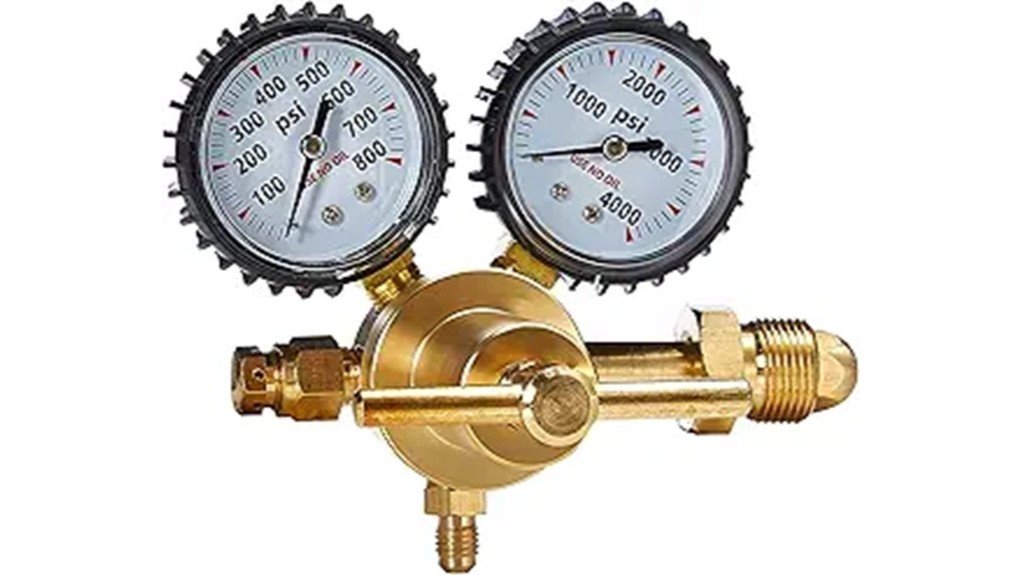
High-pressure nitrogen work can become risky when your regulator is hard to read, poorly matched, or not built for the pressure range you need. The SPARC Premium Nitrogen Regulator is designed for nitrogen and compatible inert gases, with a CGA580 inlet and adjustable output pressure from 0 to 600 PSI. This review helps you decide if its brass construction, full-size piston design, and 2-inch gauges fit your HVAC, pressure testing, welding-related, or shop setup. Its biggest strengths are pressure range and build quality, while its main limitation is that outdoor weather resistance is not clearly confirmed in the article details.
Quick Verdict
Rating: 8.4/10, Recommended with caveats
Best For: HVAC technicians, welders, and shop users who need adjustable nitrogen or inert-gas pressure up to 600 PSI.
Bottom Line: The SPARC Premium Nitrogen Regulator makes sense if you need a brass CGA580 regulator with clear gauges and a wide pressure range. Skip it if your cylinder, gas, fitting, or outdoor-use needs are not clearly compatible.
| Specification | Detail |
|---|---|
| Brand | SPARC |
| Model | Premium Nitrogen Regulator |
| Product type | High-pressure nitrogen and inert-gas regulator |
| Body material | Solid brass construction |
| Regulator design | Full-size piston regulator |
| Outlet pressure range | Adjustable from 0 to 600 PSI |
| Input pressure capability | Up to 3,000 PSI, based on the article details |
| Inlet connection | CGA580 inlet |
| Gauge design | Clear 2-inch, single-scale gauges with rubber protection |
| Compatible gases mentioned | Nitrogen, argon, helium, and other inert gases |
| Not designed as | A universal regulator for every gas, cylinder, or fitting |
| Best use | HVAC purging, pressure testing, welding-related inert-gas work, and shop use |
| Warranty | Lifetime warranty against manufacturing defects, based on the article details |
| Safety note | Use only with compatible gases and fittings. Follow the product instructions, equipment limits, and professional guidance. |
What Is the SPARC Premium Nitrogen Regulator?
The SPARC Premium Nitrogen Regulator is a pressure-control tool for nitrogen and compatible inert gases that use a CGA580 inlet connection. It is aimed at professional and serious shop use, especially when you need controlled output pressure for HVAC purging, pressure testing, or welding-related gas tasks.
The main feature is its adjustable 0 to 600 PSI output range. That gives you more flexibility than a basic low-pressure regulator when a job calls for higher test pressure or a wider adjustment window. The solid brass body, full-size piston design, and rubber-protected 2-inch gauges also make it better suited to regular shop handling than a light-duty regulator.
Who Should Buy It?
Best For
- HVAC users who need controlled nitrogen pressure for purging or pressure testing.
- Welders and fabrication shops using compatible inert gases such as argon or helium.
- Buyers who want a brass CGA580 regulator with 2-inch gauges and a wide 0 to 600 PSI output range.
Skip If
- You need a regulator for a gas that is not compatible with this CGA580 inert-gas setup.
- You only need a basic low-pressure regulator for occasional light-duty work.
- You need confirmed outdoor weather resistance before buying.
Before You Buy: Confirm that your cylinder, gas type, hose, and fittings match a CGA580 inert-gas regulator. Do not buy this as a universal regulator for every gas or cylinder connection.
Key Features of the SPARC Premium Nitrogen Regulator
Solid Brass Construction
The solid brass body is one of the strongest reasons to consider this regulator. Brass is commonly used in gas-control hardware because it holds up better to frequent connection, adjustment, and shop handling than cheap, light-duty materials. For you, the benefit is a regulator that should feel more secure when attached to a compatible cylinder and moved between jobs.
Build quality matters more with high-pressure gas work than with simple low-pressure tasks. A weak regulator can become the problem point in a pressure setup, while this model is positioned for more serious pressure-control work.
Full-Size Piston Regulator Design
The article describes this model as a full-size piston regulator, which is useful when steady pressure control matters. A stable regulator helps reduce constant readjustment during pressure testing or gas setup. You still need to monitor the gauges, but the design supports more controlled work than a very basic regulator.
This feature helps most when you move between jobs that need different pressure levels. You can dial the output within the 0 to 600 PSI range instead of being locked into a narrow setting.
Clear 2-Inch Gauges with Rubber Protection
The SPARC regulator uses clear 2-inch, single-scale gauges with rubber protection. The larger readout helps you check pressure without leaning in too close or guessing at small markings. Rubber protection also helps in shops where gauges may get bumped during storage or transport.
The single-scale design keeps the gauge face cleaner. That can reduce confusion when you need a fast pressure check during purging, testing, or setup.
CGA580 Inlet for Inert Gases
The CGA580 inlet is meant for compatible inert-gas cylinders. The article mentions nitrogen, argon, helium, and other inert gases, which gives this regulator useful range across HVAC, fabrication, and shop tasks. It is not described as a universal fitting for all gases, so you should check compatibility before use.
This detail matters most if you already own cylinders or hoses. Matching the inlet, gas type, hose, and fittings before you buy can prevent returns and unsafe workarounds.
Performance and Usability
The 0 to 600 PSI adjustable output range is the main performance feature. It gives you room for lower-pressure setup work and higher-pressure testing tasks. The article also lists input pressure capability up to 3,000 PSI, which is relevant for users working with high-pressure cylinders.
In use, the regulator should be most helpful when you need controlled pressure rather than simple on-off gas delivery. The clear gauges support quick checks, while the brass body supports repeated use in tougher settings.
The main usability limit is weather exposure. The article does not clearly confirm outdoor weather resistance, so you should avoid leaving it exposed to rain, moisture, or harsh storage conditions unless the product instructions allow that use.
How It Performs in Real Use
For HVAC Purging
For HVAC purging, the regulator gives you controlled nitrogen pressure and a gauge setup that is easy to monitor. The 0 to 600 PSI range gives you flexibility across different service tasks, but you should always follow the equipment maker’s limits and your trade procedures.
For Pressure Testing
Pressure testing is where the wide output range becomes especially useful. A regulator that can be adjusted up to 600 PSI gives you more room than basic low-pressure models. Raise pressure carefully, watch the gauge, and never exceed the limits of the system being tested.
For Welding-Related Inert-Gas Work
The article lists welding as one of the suitable applications, with compatibility for inert gases such as argon and helium. That can help users who need a regulator for shop gas tasks linked to welding setups. You should still confirm the exact process, cylinder type, pressure needs, and flow requirements before connecting it.
For Long-Term Shop Use
The brass construction, rubber-protected gauges, and lifetime warranty against manufacturing defects support long-term value. That does not make the regulator maintenance-free. You still need to inspect connections, store it carefully, and avoid dropping or striking the gauges.
Setup Tips Before First Use
Start by confirming the gas and cylinder connection. This regulator is described for nitrogen, argon, helium, and other inert gases with a CGA580 inlet, so it should not be forced onto mismatched cylinders or adapters.
Before opening the cylinder, inspect the regulator, gauges, hose, and fittings for obvious damage or wear. Make sure connections are secure, then adjust pressure slowly while watching the gauge. If you are using the regulator for HVAC or welding work, follow the relevant equipment manual, job procedure, and safety rules.
Store the regulator in a dry, protected place after use. Rubber gauge protection can help with normal handling, but it does not mean the regulator should be thrown into a toolbox or left where moisture can reach the gauges and fittings.
Pro Tip: Match the regulator to your cylinder and job before comparing price. The 0 to 600 PSI range is useful only if your work actually needs that pressure capacity.
Compatibility and Safety
This regulator should be treated as an inert-gas pressure-control tool, not a universal regulator. The article lists nitrogen, argon, helium, and other inert gases, and it identifies the inlet as CGA580. If your gas, cylinder, or application does not match those details, choose a regulator designed for that setup.
Safe use also depends on the rest of your system. Check hoses for wear, keep fittings tight, avoid mixing incompatible gas systems, and do not exceed the pressure limits of the equipment you are testing or supplying. If you are not trained for pressure testing, HVAC service, or welding gas setup, get help from a qualified professional.
Do not use this regulator as a workaround for gases or cylinder connections that are not described as compatible. High-pressure gas equipment should match the gas, cylinder valve, hose, fittings, and task.
Customer Support and Warranty Information
The article states that the SPARC Premium Nitrogen Regulator includes a lifetime warranty against manufacturing defects. That is a useful trust signal for a tool that may see repeated professional use. It also suggests the brand expects the regulator to hold up when used correctly.
Customer support is described as available by phone, text, and email. That matters if you need help with setup questions, warranty concerns, or product issues after purchase. Warranty coverage does not replace safe handling, proper storage, or correct gas compatibility.
Pros and Cons
Pros
- Adjustable 0 to 600 PSI output range supports several professional tasks.
- Solid brass construction is a strong fit for regular shop use.
- CGA580 inlet works with compatible inert gases mentioned in the article.
- Clear 2-inch gauges with rubber protection make pressure easier to monitor.
- Lifetime warranty against manufacturing defects adds buyer confidence.
Cons
- Not a universal regulator for every gas or cylinder fitting.
- Outdoor durability and weather resistance are not clearly stated in the article details.
- May be more regulator than you need for simple low-pressure tasks.
Is It Worth the Price?
The SPARC Premium Nitrogen Regulator fits best in the mid-range to professional-use category because it combines a brass body, high output range, CGA580 inlet, protected gauges, and warranty support. It is worth considering if you need one regulator for repeated HVAC, pressure testing, or inert-gas shop tasks.
You get the most value from it if the 0 to 600 PSI range matches your work. If your tasks are light, rare, or low-pressure only, a simpler regulator may be enough.
The value depends less on brand appeal and more on whether the pressure range, gas compatibility, and fittings match your setup. A cheaper regulator is not a good deal if it cannot safely match your cylinder or job.
How It Compares to Alternatives
Compared with basic low-pressure nitrogen regulators, the SPARC Premium Nitrogen Regulator stands out for its 0 to 600 PSI output range and brass construction. It is better suited to users who need higher pressure control for trade or shop work.
Compared with more specialized dual-stage or application-specific regulators, this model is more of a broad-use inert-gas option. Choose it when you want a durable CGA580 regulator for nitrogen and other compatible inert gases, but compare alternatives if you need a very specific flow-control setup or verified outdoor-rated construction.
Frequently Asked Questions
What gases can the SPARC Premium Nitrogen Regulator handle?
The article lists nitrogen, argon, helium, and other inert gases. You should still confirm your cylinder connection and gas type before use because this regulator is not described as universal for every gas.
Is the output pressure adjustable?
Yes. The article states that the output pressure adjusts from 0 to 600 PSI, which gives you flexibility for different HVAC, pressure testing, and shop tasks.
Can you use it for HVAC pressure testing?
Yes, HVAC purging and pressure testing are listed uses for this regulator. Always follow the HVAC equipment limits and your normal service procedures when applying pressure.
Is it suitable for welding applications?
The article says the regulator can be used for welding-related applications with compatible inert gases. Confirm your gas, cylinder, pressure needs, and welding setup before connecting it.
Does it use a CGA580 inlet?
Yes. The article identifies the inlet as CGA580, which is a key detail to check against your cylinder before buying. Match the regulator, cylinder valve, hose, and fittings before setup.
Is this regulator weather resistant?
The article does not clearly verify outdoor weather resistance. Store the regulator in a dry, protected place unless the product manual confirms outdoor exposure is acceptable.
How should you maintain it?
Keep the regulator clean and dry, inspect the gauges and fittings, and check hoses for wear before use. Do not use damaged parts or force mismatched connections.
Who should skip this regulator?
Skip it if you need a regulator for an incompatible gas, a different cylinder fitting, or confirmed outdoor-rated construction. It may also be more than you need for basic low-pressure work.
The Bottom Line
The SPARC Premium Nitrogen Regulator is a strong choice if you need a brass CGA580 regulator with clear gauges and adjustable output pressure up to 600 PSI. It is best for HVAC, pressure testing, and compatible inert-gas shop work.
Skip it if your cylinder, gas type, pressure needs, or outdoor-use requirements are not confirmed. Its rating of 8.4/10 fits buyers who need high-pressure flexibility, but it still requires careful compatibility checks.