Disclosure: As an Amazon Associate, we earn from qualifying purchases. If you click a link on this page and make a purchase, we may receive a small commission at no extra cost to you.
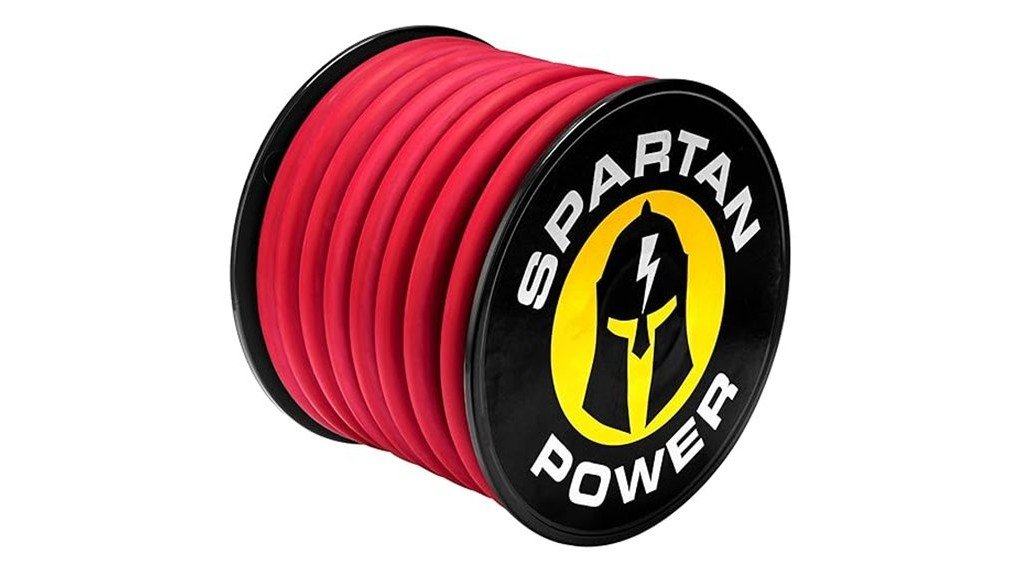
A heavy cable can still be the wrong cable if its gauge, length, jacket, or terminals do not match your electrical system. The Spartan Power Welding Lead & Car Battery Cable reviewed here is the red, 20-foot, 1/0 AWG version, model WELD1/0AWG20FTRED. It uses 1026 fine copper strands inside a flexible EPDM jacket and carries a 600-volt rating. This review explains where that combination is useful, what is included, and what you must calculate before cutting or installing it.
Quick Verdict
Rating: 8.3/10
Best For: Custom welding leads, battery and inverter cables, RV wiring, vehicle power upgrades, and other high-current runs that need flexible 1/0 AWG copper cable.
Bottom Line: This Spartan Power cable combines a 20-foot cut length, fine-strand bare copper, and a durable EPDM jacket that is easier to route than many stiff battery cables. The tradeoff is that it is unfinished bulk cable, so you must supply the correct lugs, crimping tools, circuit protection, and installation plan.
| Specification | Detail |
|---|---|
| Brand | Spartan Power |
| Model | WELD1/0AWG20FTRED |
| Amazon ASIN | B08Y7CW5J8 |
| Product type | Unterminated welding lead and car battery cable |
| Cable size | 1/0 AWG |
| Length and color | 20 feet, red |
| Conductor | Annealed Class K bare copper, 1026 strands of 30 AWG wire |
| Voltage rating | 600 volts |
| Jacket | Flexible EPDM, resistant to heat, abrasion, tearing, moisture, and oil |
| Temperature range | -58°F to 221°F (-50°C to 105°C) |
| Approximate outside diameter | 0.525 inch (13.33 mm) |
| Approximate cable weight | About 8.2 pounds for 20 feet, based on the manufacturer figure of 410 lb per 1,000 ft |
| Reference ampacity | 260 amps in the manufacturer table; your safe load depends on the installation, duty cycle, temperature, bundling, run length, and applicable code |
| Compliance notes | RoHS compliant, lead-free, and silicone-free according to the technical sheet |
| Included | One 20-foot cable length; lugs, terminals, heat shrink, fuse hardware, and crimping tools are not listed as included |
| Best use | Custom welding leads, battery banks, inverters, RVs, vehicles, boats, golf carts, and other properly engineered high-current cable runs |
Key Takeaways
- This ASIN is the 1/0 AWG, 20-foot, red cable, not a generic roll or pre-terminated cable assembly.
- The conductor uses 1026 fine strands of bare copper, which improves flexibility for tight routing.
- The EPDM jacket is rated for -58°F to 221°F and is designed to resist abrasion, tearing, moisture, heat, and oil.
- The manufacturer lists a 260-amp reference ampacity, but you must size the cable for your actual circuit, duty cycle, voltage drop, and installation conditions.
- You need separate lugs, a proper crimper, heat shrink, routing protection, and correctly placed overcurrent protection where the circuit requires it.
What Is the Spartan Power Welding Lead Cable?
The Spartan Power WELD1/0AWG20FTRED is a single 20-foot length of red 1/0 AWG welding cable. Spartan Power markets it for welding leads, automotive cable replacement, battery banks, inverters, RVs, boats, golf carts, and other DC power systems where pure copper cable is appropriate.
Inside the jacket is an annealed Class K bare copper conductor made from 1026 strands of 30 AWG wire. The fine-strand design allows the cable to bend around battery boxes, frame rails, equipment cabinets, and welding carts with less resistance than many coarse-strand battery cables.
This is raw cable, not a finished lead. You cut it to length and install your own terminals, connectors, insulation, and protective hardware. That gives you control over the final assembly, but it also makes correct sizing and workmanship essential.
Who Should Buy It?
Best For
- DIY builders who need a custom 1/0 AWG welding, battery, or inverter cable.
- RV, vehicle, boat, and golf cart owners who need flexible copper cable for tight routing.
- Installers who already own or can access a proper 1/0 AWG cable cutter, stripper, lug crimper, and heat-shrink tools.
Skip If
- You need a plug-and-play cable with lugs already attached.
- Your equipment calls for a different gauge, conductor type, jacket rating, or cable color.
- You cannot verify current load, voltage drop, fuse requirements, terminal size, or safe routing.
Before You Buy: A 600-volt insulation rating does not tell you how much current the cable can safely carry in your project. Confirm the required gauge, run length, duty cycle, voltage drop, fuse or breaker size, terminal rating, ambient heat, and routing method before installation.
Conductor Quality and Electrical Specifications
The cable uses annealed rope-stranded Class K bare copper. The technical sheet identifies the strands as 30 AWG wire built to ASTM B-3 and ASTM B-172 conductor standards. For the 1/0 AWG size, the table lists 1026 strands, an 85-mil insulation thickness, and an approximate outside diameter of 0.525 inch.
Fine strands provide the main handling advantage. They let the cable flex through curved routes and reduce the spring-back you often get from stiff, coarse-strand wire. That is useful for welding carts, battery compartments, RV cabinets, and frame-mounted runs where a large bend radius can be difficult to maintain.
The manufacturer lists 260 amps as a reference ampacity based on a National Electrical Code flexible-cord table. Treat that number as a starting reference, not a universal circuit limit. Continuous loads, enclosed spaces, cable bundles, elevated temperatures, welding duty cycles, long runs, and voltage-drop targets can all require a different design value.
Jacket, Flexibility, and Durability
EPDM Insulation
The red EPDM jacket is rated from -58°F to 221°F. Spartan Power describes it as resistant to heat, abrasion, tearing, moisture, and oil. Those properties suit shop floors, vehicle compartments, welding equipment, and other places where a basic plastic jacket may become stiff or wear faster.
Resistance does not mean immunity. The cable still needs protection from exhaust components, sharp sheet metal, moving suspension or steering parts, pinch points, battery acid, and prolonged rubbing. Use grommets, loom, clamps, and strain relief where the route creates a damage risk.
Paper Separator and Stripping
A paper separator sits between the copper conductor and EPDM insulation. Its purpose is to make the jacket easier to strip without bonding to the strands. This can speed up custom assembly, but you still need a controlled cut that does not nick the fine copper wires.
Size and Handling
The 1/0 AWG cable measures about 0.525 inch across and weighs roughly 8.2 pounds for the full 20-foot length before terminals or packaging. That is manageable for a cable this size, but the finished assembly can become heavy once you add large lugs, protective sleeving, and mounting hardware.
Pro Tip: Mock up the route with rope before cutting the cable. Include terminal orientation, service loops, bend clearance, and strain relief, then add a small amount of working length so the finished cable is not pulled tight.
Where This 1/0 AWG Cable Makes Sense
| Application | Why It Can Work | What to Verify |
|---|---|---|
| Welding lead | Flexible Class K copper is suited to repeated handling and curved routing. | Welder output, duty cycle, lead length, connector type, and manufacturer guidance. |
| Battery or inverter cable | 1/0 AWG copper can support high-current DC runs when correctly sized. | Continuous and surge current, voltage drop, fuse placement, lug size, and polarity marking. |
| RV or vehicle wiring | The flexible jacket helps around compartments, frames, and battery boxes. | Heat sources, abrasion points, pass-through protection, grounding method, and service access. |
| Boat or damp-area battery run | The EPDM jacket resists moisture and oil. | Whether local marine standards require tinned copper, approved terminals, ignition protection, or another cable type. |
Installation and Setup Tips
Confirm the Electrical Design First
Start with the equipment manual or a circuit design from a qualified technician. Record the maximum continuous current, surge current, system voltage, one-way cable length, duty cycle, allowable voltage drop, and ambient temperature. Use those values to confirm whether 1/0 AWG is appropriate.
Use Correctly Sized Lugs and Tools
Match each lug to 1/0 AWG cable and to the stud or connector it will attach to. Use a crimper designed for heavy cable, not pliers, a hammer, or a light-duty hand crimper. Finish the joint with properly sized adhesive-lined heat shrink when the environment calls for sealed protection.
Protect the Route
Keep the cable away from exhaust heat, sharp edges, rotating parts, steering links, belt drives, and suspension movement. Add grommets at every metal pass-through and secure the cable with clamps that support it without crushing the jacket.
Plan Polarity and Circuit Protection
This ASIN is red, so it is normally easiest to reserve it for a positive conductor. Follow the equipment diagram and local code rather than relying on color alone. Place a properly rated fuse or breaker close to the energy source when the circuit design requires overcurrent protection.
Compatibility and Safety
The cable is rated for 600 volts and the technical sheet lists use with welding leads and temporary industrial power applications. That rating describes insulation capability. It does not approve the cable for every 600-volt installation, direct burial, permanent building wiring, solar-array exposure, or marine application.
For battery banks and inverters, protect both ends from accidental contact and route the cable so a loose tool cannot bridge exposed conductors. Disconnect power before cutting, crimping, or servicing the circuit. High-current batteries can release enough energy to cause severe burns, fire, or equipment damage during a short circuit.
For boats, RVs, vehicles, and off-grid systems, follow the relevant equipment instructions and electrical standards. Ask a qualified electrician, marine technician, RV technician, or automotive electrical specialist to review the design when you are unsure about cable sizing, grounding, fusing, or terminal construction.
How It Performs in Real Use
For Welding Leads
The fine-strand conductor and flexible EPDM jacket are the strongest reasons to use this cable for a custom welding lead. It should be easier to coil, move, and route than rigid battery wire. The 20-foot length also gives you room to build one long lead or several shorter assemblies, depending on your connector plan.
For Battery Banks and Inverters
In a battery or inverter system, the copper conductor can limit resistance compared with copper-clad aluminum cable of the same nominal size. The final performance still depends on run length, lug quality, connection torque, fuse sizing, and the current demands of the equipment.
For RV and Vehicle Upgrades
The cable bends well around battery trays, storage compartments, and frame routes. Its oil and abrasion resistance are useful in these settings, but it should not rest against hot exhaust parts or unprotected metal edges. Secure mounting matters because a heavy, unsupported cable can stress its terminals.
For Boats and Outdoor Power Systems
The moisture-resistant jacket helps in damp areas, but the conductor is bare copper rather than tinned copper. Before using it on a boat or in a corrosive environment, confirm that the cable type meets the rules for that installation and seal exposed terminals with approved hardware and corrosion protection.
Pros and Cons
Pros
- Exact 1/0 AWG, 20-foot red variant is clearly identified.
- 1026-strand Class K bare copper conductor offers good flexibility.
- EPDM jacket resists heat, abrasion, tearing, moisture, and oil.
- Wide -58°F to 221°F operating range supports cold and hot work areas.
- Paper separator can make clean stripping easier during custom assembly.
Cons
- No lugs, terminals, heat shrink, fuse hardware, or crimping tools are listed as included.
- The bare copper conductor may be less suitable than tinned marine cable in corrosive environments.
- The reference ampacity cannot replace a project-specific load and voltage-drop calculation.
Is It Worth the Price?
This Spartan Power cable offers strong value for the price when you need a specific 20-foot length of flexible 1/0 AWG copper cable and plan to build your own ends. The conductor, EPDM jacket, temperature range, and published technical data give you more useful detail than an unbranded cable with vague material claims.
You get the most value when you already have the tools and experience to cut, strip, crimp, seal, and mount heavy cable. The total project cost rises if you still need a large cable cutter, hydraulic or dieless crimper, lugs, heat shrink, fuse hardware, and protective loom.
It is not the best fit if you need a finished cable assembly or a marine-grade tinned conductor. In those cases, paying more for a pre-terminated or application-specific cable can reduce installation work and compatibility risk.
How It Compares to Alternatives
Compared with standard coarse-strand battery cable, this welding cable is easier to bend and route. Compared with copper-clad aluminum cable, its bare copper conductor provides better conductivity at the same nominal gauge, but it usually costs more and weighs more.
A pre-terminated Spartan Power battery cable or welding lead may be better when you know the exact stud sizes and do not want to crimp your own ends. Tinned marine cable is worth comparing for boats, salt air, and corrosive compartments. This bulk cable makes the most sense when flexibility, pure copper, and custom length matter most.
Frequently Asked Questions
What exact size and length is ASIN B08Y7CW5J8?
It is the red 1/0 AWG cable in a 20-foot length. The listed model and part number are WELD1/0AWG20FTRED, so check that identifier before ordering.
Does the cable include lugs or terminals?
The listing identifies one cable length and does not list lugs, terminals, heat shrink, a fuse, or crimping tools as included. Plan your terminal sizes and assembly supplies before you cut the cable.
How many amps can the 1/0 AWG cable carry?
The manufacturer technical table lists a 260-amp reference ampacity for its 1/0 AWG welding cable. Your safe circuit rating may be lower or different because run length, duty cycle, temperature, bundling, voltage drop, terminals, and applicable electrical rules all matter.
Can it replace a factory battery cable?
It can be used to build a battery cable when 1/0 AWG copper, the 600-volt EPDM insulation, and your chosen terminals meet the system requirements. Match the original cable routing, connection sizes, grounding method, and circuit protection rather than choosing by gauge alone.
Is it suitable for marine use?
Spartan Power lists boats among the possible applications, and the EPDM jacket resists moisture and oil. The conductor is bare copper, so confirm whether your boat, location, or governing standard calls for tinned marine cable and approved marine terminals.
Can it be used in a solar or backup-power system?
It may work for properly designed battery-to-inverter or battery-bank connections when 1/0 AWG meets the current and voltage-drop requirements. Do not assume welding cable is approved as exposed photovoltaic array wire, direct-burial cable, or permanent building wiring.
What tools do you need to make a finished cable?
You normally need a heavy-cable cutter, a controlled stripping tool, 1/0 AWG lugs with the correct stud holes, a suitable crimper, and heat shrink or terminal boots. A multimeter, torque tool, cable clamps, loom, grommets, and correctly rated fuse hardware may also be required by the project.
What common installation mistakes should you avoid?
Avoid undersized lugs, loose crimps, nicked strands, unsupported cable weight, tight bends at terminals, unfused battery conductors, and routes near heat or moving parts. Measure the route before cutting and test each finished connection before placing the system under full load.
The Bottom Line
The Spartan Power WELD1/0AWG20FTRED is a strong choice when you need a flexible, unfinished 20-foot length of 1/0 AWG copper cable for a properly designed welding, battery, inverter, RV, vehicle, or similar power project. Its main strengths are the 1026-strand conductor, EPDM jacket, clear technical data, and broad temperature range. Skip it if you need pre-installed terminals, a different gauge, or tinned marine cable for a corrosive environment.
Ready to Buy?
Check the latest price and confirm the 1/0 AWG, 20-foot red variant before you decide.