Disclosure: As an Amazon Associate, we earn from qualifying purchases. If you click a link on this page and make a purchase, we may receive a small commission at no extra cost to you.
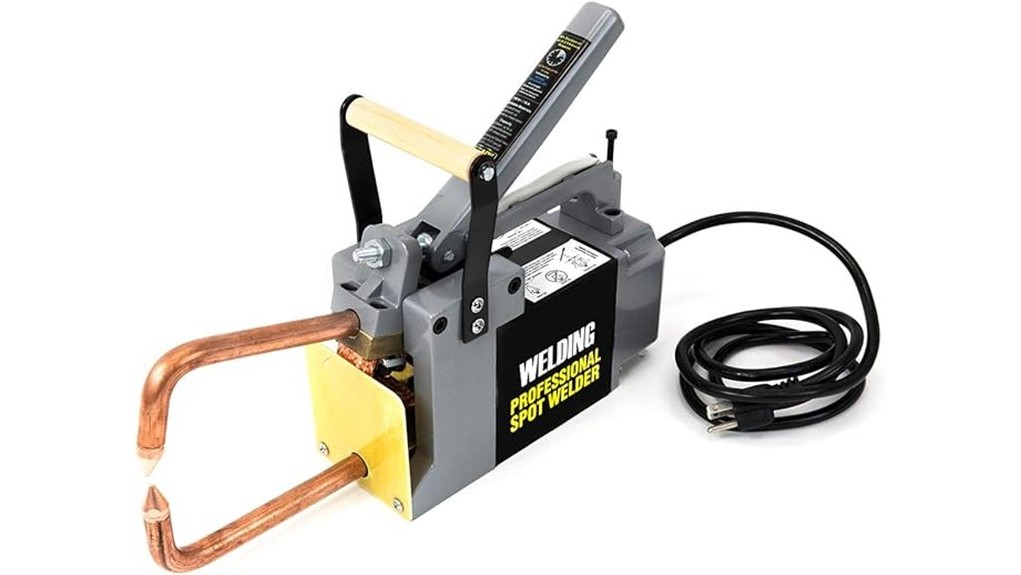
Joining overlapping sheet metal can take longer than expected when a MIG setup would add filler, cleanup, and heat distortion. The Stark USA Portable Spot Welder, model 55009, gives you a simpler tong-style option for thin steel panels, brackets, and repair pieces. Its strongest points are a listed 5500A maximum output, a 6-inch throat depth, and straightforward lever operation. The main caution is inconsistent wording across the listing and manual, so this review relies on the official product page plus the manual’s primary specification table while telling you where verification is still required.
Quick Verdict
Rating: 8.0/10
Best For: DIY fabricators, auto body hobbyists, and small-shop users who repeatedly join overlapping mild, galvanized, or stainless sheet steel.
Bottom Line: The Stark USA 55009 combines useful 6-inch reach with a simple portable format and enough listed output for thin-steel spot welding. You should buy it only after confirming the 120V, 13.5A nameplate and accepting its 50% duty-cycle and material limits.
| Specification | Detail |
|---|---|
| Brand | Stark USA |
| Model | 55009 |
| ASIN | B01H2OEIFO |
| Product Type | Portable, air-cooled resistance spot welder |
| Design | Single-phase, lever-operated upper and lower tongs with carrying handle |
| Electrical Rating | 120V AC, 13.5A according to the model 55009 manual and Stark USA product page |
| Rated Output | 1.5 kVA at 50% duty cycle |
| Maximum Output Current | 5500A, ±10% as listed in the manual |
| Duty Cycle | 50% at rated output, up to 5 seconds of welding in each 10-second interval |
| Throat Depth | 6 inches on the current product page |
| Weldable Materials | Uncoated mild, galvanized, or stainless sheet steel |
| Not Rated For | Aluminum, copper, or copper alloys according to the manual’s specification table |
| Mild Steel Capacity | Up to 1/8-inch combined sheet thickness |
| Galvanized Steel Capacity | Two pieces of 20-gauge, 0.039-inch sheet steel according to the manual |
| Dimensions | 18-1/2 inches L x 4-1/2 inches W x 7-1/2 inches H |
| Tip Care | Inspect, dress, align, or replace electrode tips as needed |
| Package Note | The product copy references the welder, a manual, and an extra pair of replacement tips, but seller bundles can vary |
| Best Use | Overlapping thin-steel panels, flanges, brackets, tabs, and repair patches that fit between the tongs |
What Is the Stark USA Portable Spot Welder?
The Stark USA 55009 is a resistance spot welder that joins two overlapping metal sheets by pressing electrode tips against both sides of the stack and passing high current through the contact point. It does not use welding wire, filler rod, or shielding gas. The heat is concentrated between the two sheets, creating a small weld nugget while the tongs hold the parts together.
This design is useful when you need repeated attachment points on sheet-metal flanges, patch panels, tabs, or light fabricated assemblies. The 6-inch throat depth controls how far the tips can reach inward from an open edge, so the machine is more useful on accessible panels than on deep channels or closed box sections.
Model 55009 is the 120V version. Stark USA also lists a separate model 55010 for 240V power, which is one reason you should check the model number and electrical nameplate before connecting the machine.
Before You Buy: Documentation for this model is inconsistent. The official Stark USA page, manual cover, and primary specification table identify a 120V, 13.5A machine, but the manual contains a stray 240V safety line and one Amazon block shows 240V and 16A. Confirm the nameplate, plug, and circuit requirements on the exact unit you receive before use.
Who Should Buy It?
Best For
- Auto body hobbyists joining accessible flanges and thin steel patch panels.
- DIY fabricators making brackets, tabs, enclosures, and overlapping sheet assemblies.
- Small shops that want a dedicated 120V tong-style spot welder instead of using MIG for every sheet-metal joint.
Skip If
- You need to weld aluminum, copper, copper alloys, or structural steel beyond the listed capacity.
- Your weld points sit deeper than the 6-inch tong reach or inside closed structures.
- You need MIG, TIG, or stick capability for seams, butt joints, or thicker fabrication.
Performance and Welding Capacity
The verified specification table in the model 55009 manual lists a 1.5 kVA rated output, 5500A maximum output current, and a 50% duty cycle. Those numbers suit short resistance-welding pulses rather than continuous welding. At rated output, the manual limits operation to about 5 seconds of welding during each 10-second period.
The stated mild-steel limit is a combined 1/8-inch stack. That means the total thickness of both overlapping sheets matters, not the thickness of each sheet. The manual is more specific for galvanized steel, listing two pieces of 20-gauge, 0.039-inch sheet.
Actual weld quality still depends on clean contact surfaces, correct tip alignment, suitable tong pressure, metal type, and pulse time. A high output-current number does not make the tool suitable for oversized material or poorly fitted panels.
Reach, Access, and Joint Fit
The 6-inch throat depth is one of the most useful buying details because it sets the physical reach from the edge of your workpiece to the weld location. It should cover many patch-panel flanges, edge tabs, enclosure seams, and small brackets. It will not reach the middle of a wide panel or inside a closed channel.
Both electrode tips must contact opposite sides of the same joint. You therefore need access to the front and back of the workpiece, which rules out many blind repairs. Curved, uneven, or heavily formed panels can also make it harder to keep the tips centered and square.
Build Quality and Electrode Maintenance
The welder uses an air-cooled body, copper-colored tongs, replaceable electrode tips, a fixed handle, and an operating lever. The attached carrying handle makes it easier to move around a garage or shop, but you still need a stable working position because accurate tip placement affects weld strength.
Electrode tips are wear parts. The manual tells you to inspect them before use, dress the contact faces with a file or tip dresser when possible, and replace tips that cannot be restored. It also calls for tip alignment so the upper and lower electrodes meet directly instead of touching off-center.
When installing new tips, the manual specifies heat-sink compound on the threads and warns against overtightening. The compound and tip-dressing tools are not listed as included, so plan for those maintenance items if you expect frequent use.
Ease of Use and Controls
The operating sequence is simple: place the overlapping sheets between the tips, lower the lever to apply pressure, and use the power switch to send current through the joint. This is easier to learn than coordinating wire speed, travel speed, torch angle, and shielding gas on a MIG welder.
Simple controls do not remove the need for setup. Weak tong pressure can cause arcing and a failed weld, while excessive pressure can dimple the weld and force molten material outward. The model lets you adjust tong and lever pressure, but the machine must be unplugged before you make those adjustments.
Compatibility and Safety
The model 55009 manual rates the machine for uncoated mild, galvanized, and stainless sheet steel. Its specification table says it is not for aluminum, copper, or copper alloys. This directly conflicts with some broad online search text, so do not buy it for aluminum work unless Stark USA provides written confirmation for your exact unit.
Resistance spot welding creates hot metal, pinch points, electrical hazards, sparks, and fumes. Follow the model 55009 owner’s manual, wear dry welding gloves and proper eye and protective clothing, keep the work area dry, and disconnect power before adjusting or servicing the tongs.
Use adequate ventilation, especially on galvanized or stainless steel. Keep your head out of the fume path and follow applicable OSHA welding-fume guidance. The manual also advises people with pacemakers to consult their physician before use because welding equipment can create electromagnetic fields.
How It Performs in Real Use
For Auto Body Patch Panels
The tool makes the most sense on lap joints and flanges where you can reach both sides of thin steel. It can reduce filler-metal buildup compared with plug welding, but paint, seam sealer, undercoating, and corrosion must be removed from the electrode contact area before you weld.
For Brackets, Tabs, and Enclosures
Small flat parts are easier to position squarely between the tips, so they suit the lever design well. Use separate clamps when needed to hold the assembly in alignment. The manual warns against treating the welder’s tongs as a high-pressure vise.
For Repeated Bench Work
The lever and side-mounted power switch support quick repeated welds once the pressure and timing are set. You still need to observe the 50% duty cycle, inspect tip faces, and allow hot workpieces and electrodes to cool before handling.
For Deep or One-Sided Repairs
This is the wrong tool when the weld location is beyond the 6-inch reach or you cannot place one electrode on each side of the joint. A MIG plug weld, stud welder, or different tong configuration may fit those situations better.
Setup Tips Before First Use
- Confirm the unit: Check that the nameplate says Stark USA 55009 and matches the 120V, 13.5A documentation before plugging it in.
- Read the manual: Verify outlet, grounding, cord, extension-cord, protective-equipment, and duty-cycle requirements for your workspace.
- Prepare matching test coupons: Use scrap from the same metal type, coating, and combined thickness as the final job.
- Clean the contact area: Remove scale, oxide, paint, grease, oil, and heavy contamination where the electrodes and overlapping sheets meet.
- Inspect alignment: Make sure the upper and lower tips meet directly and have clean, properly shaped contact faces.
- Set pressure while unplugged: Adjust tong pressure so the sheets sit tightly together without excessive dimpling or electrode damage.
- Test weld strength: Make trial welds, let the parts cool, and perform a destructive peel test on scrap before working on the final assembly.
Pro Tip: Keep a small set of labeled test coupons for the sheet gauges you use most. Record the pressure and approximate switch time that produced a sound nugget, then recheck whenever tip shape, coating, or material changes.
Pros and Cons
Pros
- Verified 120V, 13.5A model can suit garages with the correct grounded circuit.
- 5500A listed maximum output supports short weld pulses on thin steel.
- 6-inch throat depth covers many accessible flanges, tabs, and patch areas.
- Lever operation is simpler than setting up a multi-process welder for repeated lap joints.
- Replaceable, dressable electrode tips support ongoing maintenance.
Cons
- Amazon and manual data contain conflicting voltage, reach, and capacity wording, so nameplate verification is essential.
- The 50% duty cycle limits continuous production speed.
- It needs two-sided access and is not rated for aluminum, copper, or material beyond the listed sheet capacity.
Is It Worth the Price?
The Stark USA 55009 sits in the practical mid-range for a dedicated tong-style spot welder. It offers strong value when you regularly make accessible lap joints in thin steel and want faster, cleaner attachment points than a general-purpose arc process may provide.
You get less value if the tool will sit unused, if your work needs one-sided access, or if most jobs involve aluminum or thicker structural material. You should also compare the seller’s current return policy and package contents because the listing and manufacturer copy do not describe the included items in exactly the same way.
How It Compares to Alternatives
The VEVOR DN-100E portable spot welder is a direct competitor with a similar 1/8-inch steel target and 50% duty cycle, but VEVOR lists a higher 6500A maximum output and a slightly shorter 5.9-inch electrode arm. It may be worth comparing when maximum listed current and current availability matter more than matching the Stark USA format.
If your shop is wired for 240V, the Stark USA 55010 is the same brand’s higher-voltage alternative. The 55009 remains the better fit when you specifically need the documented 120V model and your projects stay within its material, access, and duty-cycle limits.
Frequently Asked Questions
Is the Stark USA 55009 a 120V or 240V spot welder?
The official Stark USA page, manual cover, and primary specification table identify it as a 120V, 13.5A machine. A stray manual safety line and one Amazon block show 240V, so confirm the nameplate and plug on the exact welder before use.
How thick can the Stark USA 55009 weld?
The manual’s main specification table lists mild steel up to a combined 1/8-inch sheet thickness. It separately lists galvanized steel as two pieces of 20-gauge, 0.039-inch sheet.
Can this spot welder join aluminum?
No aluminum rating appears in the model 55009 manual. Its specification table says the welder is not for aluminum, copper, or copper alloys, so choose a machine specifically documented for those metals.
What does a 6-inch throat depth mean?
It is the approximate reach from the open edge of the workpiece to the weld point. Both tips must still contact opposite sides of the joint, so the machine cannot make blind welds inside closed panels.
What is the duty cycle?
The manual lists a 50% duty cycle at rated output. Based on its 10-second interval, that means up to 5 seconds of welding followed by enough rest to stay within the stated limit.
Do the electrode tips need maintenance?
Yes. Inspect the tips for deformation, contamination, and poor alignment, then dress or replace them when they no longer provide clean, centered contact.
What should you test before welding a finished panel?
Use scrap with the same metal, coating, and combined thickness. Check tip alignment, tong pressure, switch time, surface preparation, and weld strength before moving to the final part.
Who should skip this spot welder?
Skip it if you need one-sided weld access, more than 6 inches of reach, aluminum compatibility, continuous production, or a machine for MIG, TIG, and stick welding. It is a specialized tool for accessible thin-steel lap joints.
The Bottom Line
The Stark USA Portable Spot Welder 55009 is a good buy for users who repeatedly join accessible thin-steel lap joints and can work within its 6-inch reach, 1/8-inch combined mild-steel limit, and 50% duty cycle. Its simple lever design and replaceable tips are useful strengths, but conflicting documentation makes nameplate verification non-negotiable.
Buy it for documented 120V sheet-steel spot welding. Skip it for aluminum, deep or blind joints, thicker structural work, or any project that needs a multi-process welder.
Ready to Buy?
Check the latest seller details, package contents, and electrical label before you decide.