Disclosure: As an Amazon Associate, we earn from qualifying purchases. If you click a link on this page and make a purchase, we may receive a small commission at no extra cost to you.
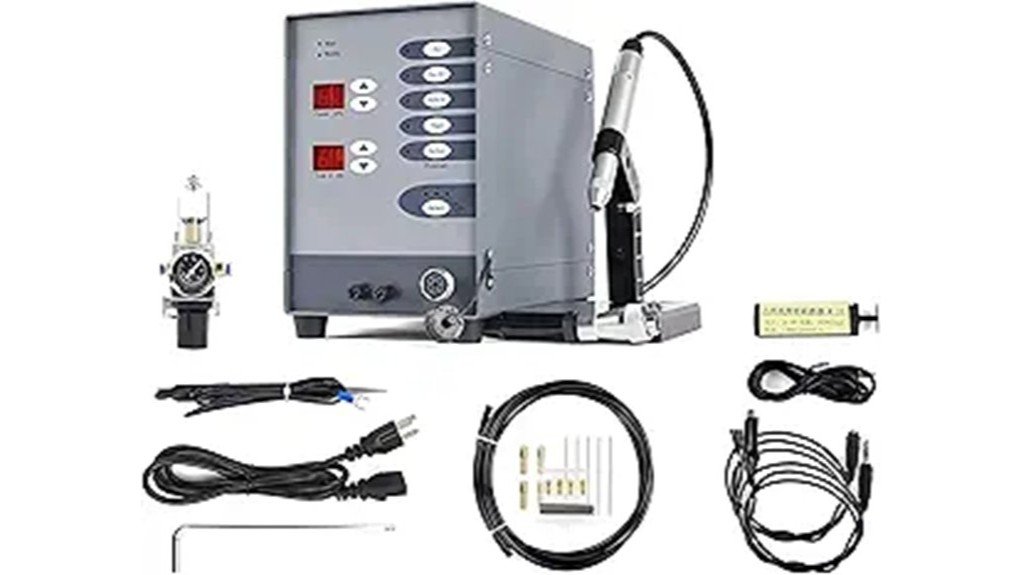
Small jewelry welds demand more control than raw power. The TBVECHI Permanent Jewelry Welder is a 110V benchtop pulse arc machine with a handheld welding handle, five material modes, and a listed 50A to 600A adjustment range. It is designed for jewelry repair, permanent jewelry chains, compatible metal components, and trained dental-lab work. This review explains where its broad controls help, where its 14.77-pound size and learning curve may slow you down, and what you should verify before buying.
Quick Verdict
Rating: 8/10, recommended with caveats
Best For: jewelry makers, repair users, and small-shop operators who want adjustable pulse arc control for fine metal work.
Bottom Line: The TBVECHI offers a wide listed current range, five welding modes, and a useful accessory package for precise bench work. It is heavier and less portable than purpose-built permanent jewelry welders, and you should expect practice before working on finished or customer-owned pieces.
| Specification | Detail |
|---|---|
| Brand | TBVECHI |
| Model / part name | Permanent Jewelry Welder 110V |
| Product type | Benchtop pulse argon arc spot welder with handheld welding handle |
| Power input | 110V, 60Hz, 100W, corded electric |
| Listed current range | 50A to 600A |
| Supported workpiece range | 0.8mm to 3.5mm |
| Welding modes | Gold, cobalt-chromium alloy, mixed welding, pure titanium, and orthodontic mode |
| Dimensions | 5.9 x 11 x 8.66 inches |
| Net weight | 14.77 pounds |
| Housing materials listed | Iron, copper, PC circuit board, and PE |
| Ingress rating | IP21 |
| Handle length | 7.48 inches |
| Power cord length | 3.93 feet |
| Handle lead length | 33.85 inches |
| Included components listed | English manual, assembly accessories, pedestal with handle, welding machine, welding loop clamp, and 10 tungsten needles |
| Assembly | Required |
| Best use | Fine jewelry welding, small compatible metal parts, repairs, and trained dental-lab applications |
What Is the TBVECHI Permanent Jewelry Welder?
The TBVECHI Permanent Jewelry Welder is a compact benchtop pulse arc spot welder. The base unit sits on your work surface, while you position the weld through its handheld handle and tungsten electrode setup. This distinction matters because the machine is not a pocket-size handheld welder, even though the working handle gives you close control over small parts.
Five selectable modes cover gold, cobalt-chromium alloy, mixed-metal work, pure titanium, and orthodontic applications. The machine can match current and voltage after mode selection, while still allowing current and duration adjustments.
Its listed 0.8mm to 3.5mm workpiece range makes it a fine-work tool rather than a substitute for a MIG, TIG, or stick welder. You should view it as a specialized bench machine for jump rings, chain links, small findings, and compatible repair parts.
Before You Buy: The machine is listed for 110V, 60Hz power and weighs 14.77 pounds. Confirm that you have a stable bench, the correct electrical supply, suitable eye protection, and any gas or accessory setup required for your intended process before you order.
Who Should Buy It?
Best For
- Jewelry makers who want adjustable pulse arc settings for chain links, jump rings, and small repairs.
- Small-shop users who value five material modes and a broad listed current range more than low weight.
- Experienced DIY users or trained technicians working with compatible pieces between 0.8mm and 3.5mm.
Skip If
- You need a lightweight welder for frequent pop-up events or mobile appointments.
- You need to weld thick stock, structural parts, iron bars, or large fabrication projects.
- You want verified U.S.-based training, a clearly stated long warranty, or a microscope included with the machine.
Design and Build Quality
The 5.9 x 11 x 8.66-inch base has a smaller footprint than a full-size shop welder, but its 14.77-pound weight makes it better for a permanent bench than a travel case. The housing uses listed iron, copper, PE, and circuit-board components, and the finish is gray with a spray-painted surface.
The 7.48-inch handle, 33.85-inch handle lead, and 3.93-foot power cord suit a bench placed near an outlet.
The IP21 rating provides limited protection against fingers or large objects and vertically dripping water. It does not make the unit dustproof, splashproof, or suitable for wet work areas. Keep liquids, metal dust, oil, and loose debris away from the vents, sockets, and controls.
Welding Modes and Adjustment Range
The five modes are the main reason to choose this model over a simpler permanent jewelry welder. You can select gold, cobalt-chromium alloy, mixed welding, pure titanium, or orthodontic mode. The machine then applies automatic current and voltage matching as a starting point.
The listed current can be adjusted from 50A to 600A, and the welding duration is also adjustable. That range gives you more control than a fixed-output tool, but more control also creates more room for error. A setting that works on a heavier finding may mark, pit, or overheat a fine chain link.
Do not treat the mode labels as proof that every alloy or plated piece will weld cleanly. Base metal, plating, joint fit, cleanliness, electrode condition, and actual cross-section all affect the result. When material identity is uncertain, test a matching scrap piece or ask the supplier for guidance.
Precision and Weld Control
Pulse arc welding concentrates energy at a small contact point, which is useful when you need to close a jump ring or join a delicate component without heating an entire piece with a torch. The TBVECHI uses an MCU control system, IGBT inverter technology, and a high-frequency transformer to control arc starting and output.
Precision still depends on setup. The joint should fit closely, the electrode should be clean and correctly shaped, and the ground connection should be secure. Poor contact or a large gap can produce an inconsistent weld even when the selected mode is correct.
The package includes 10 tungsten needles, a welding loop clamp, and a pedestal with handle. Confirm replacement electrode size and accessory availability before relying on it for paid production.
Pro Tip: Keep a small test card for each metal and joint size you use. Record the mode, current, duration, electrode condition, and result so you can repeat a successful setup instead of guessing on customer pieces.
Ease of Use and Learning Curve
Automatic matching makes the first setup less intimidating, but this is not a true one-button appliance. You still need to assemble the handle and clamp, select the correct mode, set or confirm the output, prepare the joint, and position the electrode safely.
Beginners should expect several practice sessions. Start with inexpensive compatible samples, inspect each joint closely, and use a pull test that makes sense for the item. A weld that looks neat can still be weak if the parts were dirty, misaligned, or poorly grounded.
No microscope or integrated viewing system is listed. Confirm the magnification and welding-rated eye protection needed for your workspace.
Safety and Workspace Requirements
The listing identifies automatic voltage compensation, over-current protection, overload protection, over-temperature protection, and a protective handle-socket cover. It also says the unit changes to orthodontic mode after five minutes without operation. These features can reduce some equipment risks, but they do not replace safe technique.
| Safety Feature | Buyer Impact |
|---|---|
| Over-temperature protection | Helps protect the machine if internal heat rises too far. |
| Over-current and overload protection | Adds a safeguard against abnormal electrical demand. |
| Voltage compensation | Supports steadier operation when input voltage varies within the machine’s limits. |
| Socket cover | Helps block foreign material or liquid from entering the handle socket. |
| Five-minute mode change | Reduces the chance that the machine remains at a previously selected setting after inactivity. |
Use the welder in a dry, well-lit, ventilated area on a stable, nonflammable surface. Wear welding-rated eye protection, secure loose clothing and hair, and keep flammable materials away. Do not touch the electrode or workpiece immediately after a weld.
The orthodontic mode is intended for trained dental-lab applications. It does not make the machine suitable for intraoral use, clinical treatment, or unqualified dental work. Follow the manual, workplace rules, and professional standards that apply to your job.
How It Performs in Real Use
For Permanent Jewelry Chains
The small workpiece range and adjustable pulse settings suit compatible chain links and jump rings. You need a clean joint, stable positioning, magnification, and a tested setting before welding near a customer’s skin.
For Jewelry Repair
The gold, titanium, and mixed-welding modes give you options for small repair work. Plated, filled, hollow, stone-set, or heat-sensitive pieces can behave differently from solid metal, so identify the material and protect nearby components before applying an arc.
For Small-Batch Bench Work
The adjustable controls and included clamp can help when you repeat the same joint across a small batch. Its 14.77-pound base is stable on a bench, but it is not convenient to move between events. A saved setup log will help you reproduce settings more reliably.
For Trained Dental-Lab Work
Cobalt-chromium and orthodontic modes may support compatible lab components in trained hands. Material verification, contamination control, joint preparation, and professional procedures remain essential. This product should not be treated as a substitute for regulated clinical equipment or training.
Setup Tips Before First Use
- Check the electrical supply. Use a grounded 110V, 60Hz outlet that matches the machine label. Avoid improvised adapters or an undersized extension cord.
- Read the full manual. Confirm assembly order, electrode installation, grounding, gas requirements, and control behavior before powering the unit.
- Build a safe bench. Place the 14.77-pound machine on a stable, dry, nonflammable surface with clear ventilation around it.
- Inspect the tungsten electrode. Install and shape it as directed, then replace or recondition it when contamination affects arc placement.
- Clean and fit the joint. Remove oil, dirt, oxidation, and incompatible surface coatings when the product instructions allow it. Minimize the gap between parts.
- Practice before production. Test the selected mode, current, and duration on the same material and cross-section before welding a finished item.
Common Mistakes to Avoid
Do not confuse the 50A to 600A adjustment claim with the ability to weld thick structural metal. The machine’s listed 0.8mm to 3.5mm workpiece range still defines it as a fine-detail welder.
Do not assume a material-mode label removes the need to identify the alloy. Gold-filled, plated, soldered, hollow, and mixed-metal jewelry can react differently from solid gold or titanium.
Do not weld directly on a person until you have the correct training, shielding, grounding method, eye protection, and a proven setting for the exact chain. Customer safety should never depend on a first test weld.
Pros and Cons
Pros
- Five modes cover gold, cobalt-chromium alloy, mixed welding, pure titanium, and orthodontic work.
- Listed 50A to 600A adjustment and variable duration offer more control than a fixed-output tool.
- Automatic current and voltage matching provides a useful starting point for each mode.
- Includes a pedestal, handle, loop clamp, English manual, assembly accessories, and 10 tungsten needles.
- Over-temperature, over-current, overload, voltage-compensation, and socket-protection features add practical safeguards.
Cons
- At 14.77 pounds, it is much less portable than compact permanent jewelry welders made for events.
- The wide adjustment range and material modes require testing, recordkeeping, and practice.
- The listing does not clearly confirm a long manufacturer warranty, included microscope, or complete argon-gas setup.
Is It Worth the Price?
The TBVECHI is worth considering when you want broad adjustment, several material modes, and a stable benchtop package. Its value comes from capability, not low weight or simple event use.
You will get the most value when the supported metals and 0.8mm to 3.5mm range match your regular work and you can build repeatable settings.
It is not the best fit when portability, formal training resources, a clearly documented long warranty, or integrated magnification matter more than maximum setting flexibility. Those buyers may be better served by a purpose-built permanent jewelry system with stronger manufacturer support.
How It Compares to Alternatives
The Sunstone Zapp is a lighter, beginner-focused permanent jewelry welder with a narrower energy range and a stated three-year manufacturer warranty. The Zapp Plus 2 adds a digital energy dial, 1J to 30J adjustment, a removable stylus, optional optics, and a 1.9-pound body. Both are designed around permanent jewelry workflows and U.S.-based support.
The TBVECHI makes more sense when you want a heavier bench machine with five named material modes, a listed 50A to 600A range, and broader jewelry or dental-lab positioning. The Sunstone models are stronger comparisons when portability, simple controls, training support, and a clearly stated warranty are your priorities.
Frequently Asked Questions
Is the TBVECHI Permanent Jewelry Welder fully handheld?
No. It is a 14.77-pound benchtop welding machine with a handheld welding handle. The base measures 5.9 x 11 x 8.66 inches and should sit on a stable work surface.
What metals and modes does it support?
The listing names gold, cobalt-chromium alloy, mixed welding, pure titanium, and orthodontic modes. Actual results still depend on the exact alloy, plating, joint size, cleanliness, and selected settings.
Can it weld thick metal or structural parts?
No. Its listed workpiece range is 0.8mm to 3.5mm, so it is intended for small components and detail work. Use an appropriate full-size welding process for structural or heavy fabrication.
Is it suitable for beginners?
The automatic mode matching can help a beginner establish a starting point, but the machine still requires assembly, safe electrode handling, joint preparation, and testing. Practice on inexpensive samples before working on finished jewelry.
What comes with the welder?
The listing names an English manual, assembly accessories, a pedestal with handle, the pulse arc welding machine, a welding loop clamp, and 10 tungsten needles. Check the current seller’s package list before ordering because accessory bundles can change.
Does it include an argon cylinder or microscope?
Neither item is clearly named in the verified included-components list. Confirm gas requirements, regulator compatibility, optics, and eye-protection needs with the seller before buying.
Can it be used for permanent jewelry on customers?
It can weld compatible small jewelry parts, but customer-facing use requires proper training, shielding, grounding, sanitation, eye protection, and tested settings. Do not perform your first practice weld on a person.
What warranty does the TBVECHI welder have?
The verified listing does not state a specific manufacturer warranty term in the product details. Review the current warranty and return information on the seller page before purchase.
The Bottom Line
The TBVECHI Permanent Jewelry Welder is a capable choice for bench users who want five material modes, a broad listed adjustment range, and control over small workpieces. Buy it for jewelry repair, permanent jewelry practice, or trained compatible lab work, but skip it if you need a lightweight event machine, structural welding capacity, or clearly documented premium support.
Ready to Buy?
Check the latest price, package contents, warranty terms, and product details before you decide.