Disclosure: As an Amazon Associate, we earn from qualifying purchases. If you click a link on this page and make a purchase, we may receive a small commission at no extra cost to you.
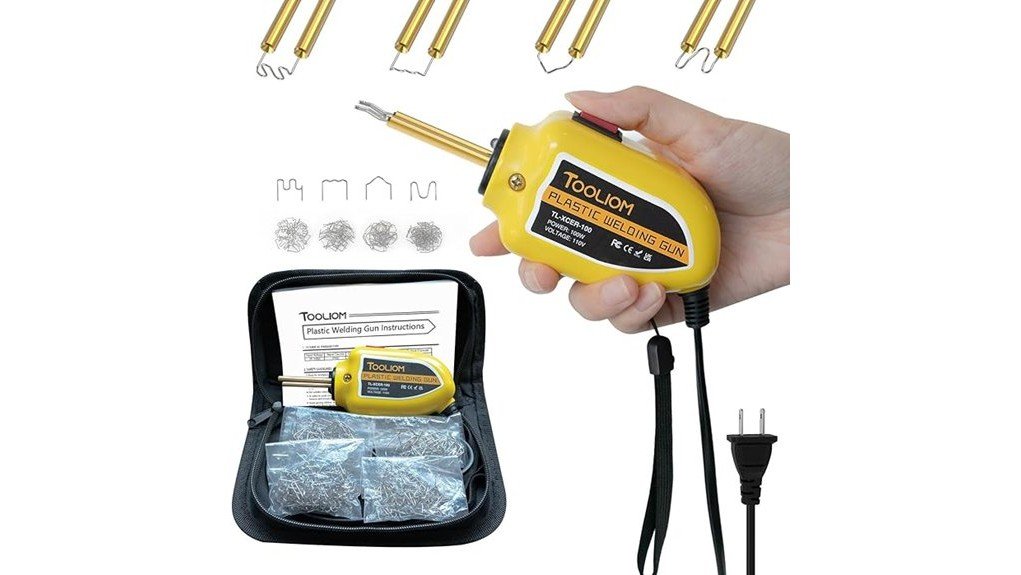
Cracked plastic parts can be frustrating because glue often fails, replacement panels can cost more than the part is worth, and bulky repair tools can be hard to control. The TOOLIOM 100W Portable Plastic Welder gives you a faster way to reinforce small plastic cracks with heat and compatible welding staples. It is built for light automotive and household repairs where speed, portability, and simple handling matter. This review helps you decide where it performs well, what you need to watch during use, and when a heavier-duty plastic welding setup makes more sense.
Quick Verdict
Rating: 8.5/10
Best For: DIY users, light automotive plastic repair, household fixes, and occasional crack reinforcement
Bottom Line: The TOOLIOM 100W Portable Plastic Welder is a practical choice when you need fast heat-up, easy handling, and basic protection for small plastic repairs. Its main tradeoff is that it is not meant for continuous industrial use or thick structural plastic work.
| Specification | Detail |
|---|---|
| Brand | TOOLIOM |
| Model | 100W Portable Plastic Welder |
| Product Type | Handheld plastic welding and crack repair tool |
| Power | 100W |
| Max Temperature | Up to 752°F |
| Heat-Up Time | 1 to 3 seconds |
| Weight | Under 4 lbs |
| Design | Compact body for tight or awkward repair areas |
| Repair Method | Heat-based repair using compatible welding staples |
| Safety Feature | Built-in overheating protection |
| Certifications Listed | CE, FCC |
| Best Use | Automotive plastic repair, household plastic fixes, and occasional DIY repairs |
| Important Limitation | Not designed for continuous industrial welding or thick structural plastics |
What Is the TOOLIOM 100W Portable Plastic Welder?
The TOOLIOM 100W Portable Plastic Welder is a handheld repair tool made to join and reinforce plastic components with heat and compatible welding staples. Instead of only bonding the surface, it helps bridge a crack so the damaged area has added support after the repair.
It is made for users who need a quick way to repair cracked bumpers, dashboard trim, furniture plastics, storage bins, appliance housings, and similar plastic parts. The 100W output, fast 1 to 3 second heat-up, and compact body make it most useful for short repair sessions rather than all-day shop work.
The main appeal is speed. You can start working quickly, guide the tip into small spaces, and handle the tool without the bulk of a larger plastic welder. The limitation is also clear: very thick, reinforced, or load-bearing plastic parts may need stronger equipment or professional repair.
Who Should Buy It?
Best For
- DIY users who want a fast tool for small plastic crack repairs
- Car owners fixing light bumper, trim, dashboard, or plastic housing damage
- Home users repairing storage bins, plastic chairs, appliance covers, and similar items
Skip If
- You need a tool for continuous industrial welding or daily professional repair volume
- You mainly work on very thick, reinforced, or structural plastic parts
- You need advanced controls, such as adjustable temperature settings, for precision plastic welding
Design and Portability
The compact design is one of this TOOLIOM welder’s strongest practical advantages. A smaller body helps you position the tip around awkward plastic parts, especially inside vehicles where dashboards, trim panels, and bumper corners can limit your working angle.
At under four pounds, it also reduces arm strain during short repair sessions. That matters when you need to hold a cracked part steady with one hand while guiding the welder with the other. It is easier to store in a toolbox than a larger industrial unit, which makes it a better fit for occasional DIY repairs.
Pro Tip: Before you heat the staple, align and support the cracked plastic from behind. A small clamp, tape, or steady backing support can help keep the crack from shifting during insertion.
Performance and Heating Efficiency
The 100W output allows the welder to reach a working temperature of up to 752°F in about 1 to 3 seconds. That quick start reduces waiting time and helps when you only need a few spot repairs.
It works best on thin to medium plastic components where the staple can reinforce the damaged area without needing deep material penetration. For thicker plastics, you may need multiple staple points, extra finishing work, or a stronger plastic welding tool.
The fast heat also means you should work with control. Pressing too hard or holding heat in one place too long can deform plastic, especially on thin trim or household items. Start with a light touch and increase pressure only as needed.
Plastic Compatibility and Safety
This welder targets common automotive and household plastic repairs, including bumpers, dashboards, plastic housings, and general cracked parts. It is most useful when the damaged part can be aligned and reinforced from the back or along the crack line.
Built-in overheating protection gives you a safety layer during regular DIY use, and the article-supported certifications are CE and FCC. Still, hot plastic repair requires care. Work in a ventilated area, avoid touching heated staples or the tool tip, and follow the product instructions for safe use.
Before You Buy: This tool is best for light to medium plastic repairs. It is not designed for continuous industrial welding, thick structural plastics, or safety-critical repairs where a failed part could cause damage or injury.
How to Use It Correctly
Start by cleaning the cracked plastic so dirt, grease, or loose debris does not interfere with the repair. Align the broken edges before you heat the staple, because the reinforcement will hold the part in the position you set.
Use short, controlled pressure when inserting staples. The goal is to embed the staple enough to reinforce the crack without pushing through the visible side. After the plastic cools, trim or smooth any exposed staple ends according to the product instructions.
For best results, test your technique on scrap plastic before working on a visible bumper, dashboard, or appliance cover. This helps you learn how quickly the 100W tool heats and how much pressure your material can handle.
How It Performs in Real Use
For Automotive Bumper Cracks
For light to medium bumper cracks, the fast heat-up helps you make several reinforcement points without long pauses. It is most useful when the bumper still lines up cleanly and only needs added support across the crack.
For Interior Trim and Dashboards
The compact body helps in tight spaces around dashboards, panels, and trim pieces. Because these plastics can be thinner, you should use careful pressure and avoid staying on one spot too long.
For Household Plastic Fixes
Broken plastic chairs, storage bins, and appliance housings can be good matches when the repair does not carry heavy structural load. The welder can reinforce the crack better than surface-only glue in many small repair situations.
For Occasional DIY Use
This TOOLIOM model makes the most sense for users who need a plastic repair tool a few times a month or a few times a year. It is easy to store, quick to start, and practical for backup repairs, but it is not a substitute for a professional-duty welder in a busy shop.
Pros and Cons
Pros
- 100W output reaches working heat quickly for small repairs
- 1 to 3 second heat-up helps reduce downtime between repair points
- Under 4 lb body improves control in short repair sessions
- Compact design helps around car interiors, trim, and awkward plastic parts
- Built-in overheating protection adds reassurance for regular DIY use
Cons
- Not suitable for continuous heavy-duty industrial repair work
- Requires practice to place staples cleanly without marking visible plastic
- Limited effectiveness on very thick, reinforced, or load-bearing plastic parts
Need a Quick Plastic Repair Tool?
Check the current product details before you decide.
Is It Worth the Price?
The TOOLIOM 100W Portable Plastic Welder fits best in the budget-to-mid-range repair tool category. It delivers strong value for the price if your main goal is quick plastic reinforcement without buying a larger industrial welder.
You get the most value if you repair small automotive plastics, household parts, or occasional cracked items. The fast heat-up, compact body, and under 4 lb weight make it easier to use than a bulky setup for quick jobs.
It is not the best fit if your work requires long continuous sessions, advanced control, or deep repairs on thick plastic. In that case, a more powerful plastic welding system may be worth considering.
How It Compares to Alternatives
Compared with larger plastic welders that offer adjustable temperature control, this TOOLIOM model focuses more on speed, simplicity, and portability. That makes it easier for beginners, but less flexible for users who need fine temperature control on different plastics.
Compared with glue or epoxy, a staple-based repair can add mechanical reinforcement across a crack. Glue may still help with finishing or sealing, but the TOOLIOM welder is more useful when the damaged part needs added support rather than surface bonding alone.
Frequently Asked Questions
Can the TOOLIOM 100W Portable Plastic Welder fix plastic bumpers?
Yes, it can help with light to medium bumper cracks when the plastic still lines up properly. Deep structural damage, missing material, or safety-critical bumper repairs may need professional repair.
How fast does it heat up?
The article-supported heat-up time is 1 to 3 seconds. That fast start is useful for quick spot repairs where you need several reinforcement points.
What temperature does it reach?
The listed maximum temperature is up to 752°F. Use controlled pressure because too much heat in one spot can deform thinner plastics.
Is it beginner-friendly?
Yes, the simple design and quick heating make it approachable for beginners. You should still practice on scrap plastic before repairing a visible part.
Can it repair thick plastic?
It performs best on thin to medium plastic parts. Very thick, reinforced, or load-bearing plastics may require stronger equipment or multiple repair steps.
Does it have overheating protection?
Yes, the article lists built-in overheating protection. Even with that feature, take short breaks during extended use and follow the product instructions.
What common mistake should you avoid?
Do not push too hard before the staple and plastic are ready. Too much pressure can create visible marks, push through thin plastic, or leave the crack misaligned.
Who should skip this plastic welder?
Skip it if you need continuous professional use, advanced temperature control, or repairs on thick structural plastics. It is better for fast DIY repairs than heavy workshop duty.
The Bottom Line
The TOOLIOM 100W Portable Plastic Welder is a smart buy for DIY users who need fast, portable help with light automotive and household plastic repairs. Its main strengths are the 100W output, 1 to 3 second heat-up, compact body, and overheating protection. Skip it if you need continuous industrial performance or advanced control for thick structural plastic work.