Disclosure: As an Amazon Associate, we earn from qualifying purchases. If you click a link on this page and make a purchase, we may receive a small commission at no extra cost to you.
Sharpening tungsten by hand can waste time, create uneven tips, and make TIG starts less consistent. The Tungsten Electrode Sharpener Grinder is a compact hand-held grinder made to help you prep tungsten electrodes with fixed guide holes, preset grinding angles, diamond wheels, and included mandrels. It is best for welders who want faster, more repeatable electrode prep without setting up a full bench grinder. The main tradeoff is that the source product copy lists electrode sizing in more than one way, so you should confirm your tungsten diameter on the Amazon page before you buy.
Quick Verdict
Rating: 8.2/10, Recommended with caveats
Best For: TIG welders who want a portable tungsten sharpener with fixed guide holes and multiple angle options.
Bottom Line: This grinder is useful if you sharpen tungsten often and want a more repeatable tip than freehand grinding. Check your electrode sizes carefully, because the product copy references several size ranges and this review could not independently verify the live Amazon listing.
| Specification | Detail |
|---|---|
| Product type | Tungsten electrode sharpener grinder for TIG welding |
| Design | Hand-held electric rotary grinder with guide holes |
| Weight | About 1.5 pounds, based on the source article |
| Electrode sizes | Six supported sizes are stated. The source mentions 1/16 inch to 1/8 inch and also references sizes up to 5/32 inch. |
| Grinding angles | 10 preset angle options from 7.5° to 30° |
| Grinding wheels | 10 double-sided diamond grinding wheels |
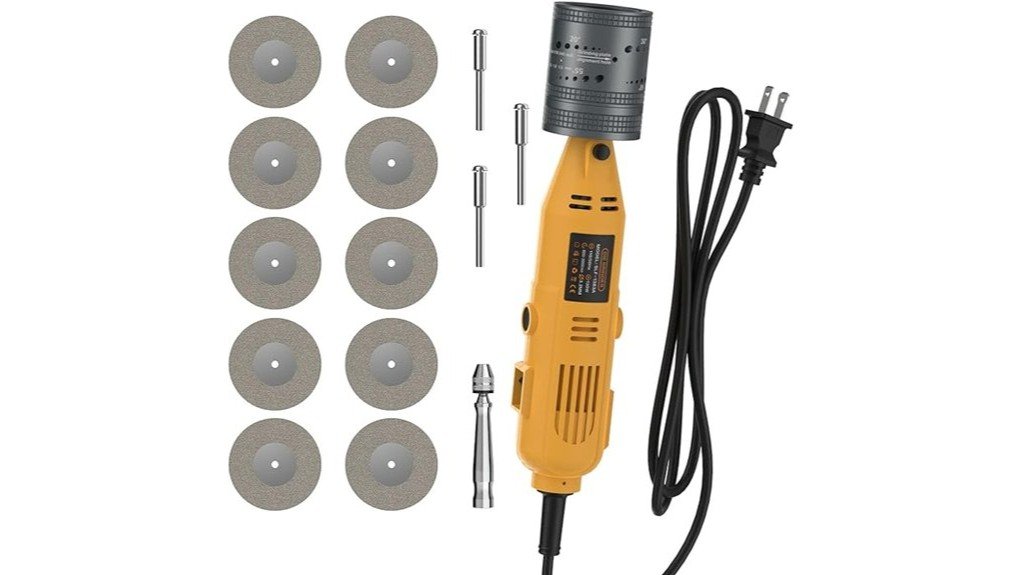
| Included accessories | Electric grinder, flat grinding block, cut-off slot, 3 CNC mandrels, 10 grind wheels, and user manual |
| Best use | Sharpening tungsten electrodes for TIG welding work |
| Safety note | Use eye protection, control grinding dust, and follow the user manual |
| Warranty | The source article states one year. Confirm warranty terms with the seller before purchase. |
Before You Buy: Confirm your tungsten diameter, wheel style, and included parts on the Amazon page. The source copy lists multiple electrode size references, so the safest choice is to match the sharpener to the tungsten sizes you actually use.
What Is the Tungsten Electrode Sharpener Grinder?
The Tungsten Electrode Sharpener Grinder is a small rotary grinding tool made for preparing tungsten electrodes used in TIG welding. Instead of holding the tungsten freehand against a general-purpose wheel, you insert the electrode into a fixed guide hole and use the selected angle to shape the tip.
The product is built around repeatable grinding. The source article states that it includes 10 grinding angle options from 7.5° to 30°, 10 double-sided diamond wheels, 3 CNC mandrels, a flat grinding block, and a cut-off slot. Those parts make it more complete than a basic wheel attachment, especially if you sharpen electrodes often.
It is not a full industrial sharpening station. It is better viewed as a portable shop tool for welders who want consistent tungsten prep at a workbench, in a small shop, or near a welding cart.
Who Should Buy It?
Best For
- TIG welders who sharpen tungsten electrodes often and want a more repeatable point.
- Small-shop users who prefer a compact hand-held tool over a fixed bench setup.
- Buyers who need several grinding angles for different TIG welding preferences.
Skip If
- You need a verified brand, exact model number, or confirmed industrial warranty before purchase.
- You only sharpen tungsten once in a while and already have a safe bench grinding setup.
- Your electrode size is outside the listed guide-hole range or you need a sealed dust-collection system.
Design and Build Quality
The grinder uses a hand-held design, so it should be easier to move around a welding bench than a large stationary grinder. At about 1.5 pounds, it is light enough for quick setup and storage, but still has enough structure to hold the guide and rotary tool together during sharpening.
The source article also mentions an ergonomic grip. That matters because tungsten sharpening often involves short, repeated passes rather than one long grind. A comfortable grip can help you keep the tool steady and reduce awkward hand positions.
The guide holes use offset compensation, according to the source article. In plain terms, the holes are meant to line the electrode tip up with the grinding point without extra height adjustment. That can save time, but you still need to insert the tungsten straight and avoid forcing it into the wrong hole.
Grinding Angles and Electrode Compatibility
The key feature is the set of 10 grinding angles from 7.5° to 30°. A sharper point can help with focused arc starts, while a blunter point may suit higher-amperage work or situations where tip durability matters more. This grinder gives you preset choices instead of making you judge the angle by eye.
For electrode size support, the article states that the sharpener accommodates six sizes. The intro describes a range from 1/16 inch to 1/8 inch, while another section references 0.40 to 5/32 inches. Because that wording is inconsistent, confirm the size markings in the listing photos or manual before relying on it for a specific tungsten diameter.
The tool is made for tungsten electrodes, not for general metal shaping. Using it on other materials may wear the diamond wheels faster, clog the grinding surface, or produce results the guide holes were not designed to control.
Diamond Wheels, Mandrels, and Cut-Off Slot
The package includes 10 double-sided diamond grinding wheels. That is a useful package detail because tungsten is hard, and a diamond wheel is a common choice for clean, controlled grinding. Having multiple wheels also gives you spares for normal wear.
The 3 CNC mandrels add setup flexibility for the wheels. This is helpful if you want to keep a clean wheel available or replace worn parts without stopping your work for a long teardown.
The cut-off slot is a practical addition for trimming a contaminated or damaged tungsten end before sharpening. For best results, cut or grind away the damaged section first, then sharpen the electrode to the angle you want.
Ease of Use
The biggest advantage over freehand grinding is guidance. You choose the hole and angle, insert the electrode, and let the wheel form the tip. This can reduce the guesswork that often happens when you hold tungsten against a bench wheel by hand.
Newer TIG welders may find this especially helpful because the tool makes the process more repeatable. Experienced welders may like it for speed, especially when preparing several electrodes before a job.
The limitation is that guide-hole tools work best when the tungsten matches the hole size. If the electrode is loose, too tight, or not fully seated, the point may not come out centered.
Pro Tip: Keep one tungsten size and angle combination noted on your welding bench. If a setting gives you clean arc starts, it is easier to repeat that setup next time instead of changing angles at random.
How It Performs in Real Use
For Daily TIG Setup
For daily TIG work, the grinder can shorten prep time because you do not have to reset a bench grinder or eyeball the electrode angle. The fixed holes and preset angles are most useful when you sharpen the same tungsten sizes again and again.
For Small Shops and Mobile Work Areas
The light, hand-held design makes sense for a small shop, garage, or welding cart. You can store it with your tungsten, cups, collets, and filler rod instead of dedicating a bench area to a larger grinder.
For Contaminated Tungsten
When a tungsten electrode touches the weld puddle or filler, the cut-off slot and grinding wheels give you a quick way to remove the bad end and form a fresh point. This is more controlled than trying to rescue a contaminated tip freehand.
For Batch Sharpening
If you prepare several electrodes before starting a project, the repeatable guide holes can help keep the tips more consistent. That can reduce interruptions once you are welding, especially when you want several ready-to-use electrodes on the bench.
How to Use It Correctly
Start by choosing the guide hole that matches your tungsten diameter. Insert the electrode straight, keep light pressure on the tool, and let the diamond wheel do the grinding instead of forcing the tungsten into the wheel.
Use the cut-off slot first if the tungsten end is badly contaminated or uneven. After trimming, sharpen the clean end at the angle that fits your welding setup. A consistent point usually matters more than grinding aggressively.
Always read the manual before first use. Check that the wheel and mandrel are installed securely, keep fingers away from moving parts, and unplug or power down the grinder before changing accessories.
Safety and Maintenance Notes
Tungsten grinding creates fine dust and sparks, so basic shop safety matters. Wear eye protection, use a suitable mask or respirator when dust exposure is possible, and work in a ventilated area. Keep loose clothing, gloves, and cords away from the spinning wheel.
Clean the grinding area after use and check the wheel surface for wear. Replace worn wheels rather than pushing harder, because extra pressure can heat the tip, damage the wheel, and make the grind less accurate.
Store the wheels and mandrels in a dry container so small parts do not get lost. If the sharpener begins to vibrate, grind unevenly, or make unusual noise, stop using it and inspect the wheel, mandrel, and guide alignment.
Pros and Cons
Pros
- 10 preset grinding angles help you create a more repeatable tungsten point.
- Six supported guide-hole sizes give you more flexibility than a single-size sharpener.
- Includes 10 double-sided diamond wheels, 3 CNC mandrels, a cut-off slot, and a manual.
- Hand-held 1.5-pound design is easy to store near a welding bench or cart.
- Offset guide-hole design reduces the need for manual height adjustment.
Cons
- Electrode size details in the source copy are not fully consistent, so buyers should confirm fit.
- Not a sealed dust-collection grinder, so safe ventilation and cleanup are still needed.
- Not ideal if you need a verified industrial-grade sharpening station with published full specifications.
Is It Worth the Price?
This sharpener is worth considering if you want a compact, purpose-built tungsten prep tool instead of using a general bench wheel. The included wheels, mandrels, cut-off slot, angle options, and guide holes give it stronger value than a very basic sharpener attachment.
It offers the best value for buyers who sharpen tungsten often enough to care about repeatability. If you only weld once in a while, or if your existing setup already gives safe and consistent tips, it may be more tool than you need.
The main value question is fit. If your tungsten sizes match the guide holes and you like the angle range, it can be a smart buy for regular TIG prep. If not, choose a sharpener with clearer published compatibility details.
How It Compares to Alternatives
Compared with a standard bench grinder, this tool is more focused on tungsten prep because it uses guide holes and preset angles. A bench grinder may be more versatile for general shop tasks, but it is harder to keep tungsten angles consistent without a dedicated guide.
Compared with higher-end dedicated tungsten grinding stations, this grinder is more compact and easier to store. Those larger machines may be better if you need sealed dust collection, heavy shop use, or fully verified industrial specifications.
Frequently Asked Questions
What tungsten sizes does this sharpener support?
The source article says the sharpener supports six tungsten sizes. It mentions 1/16 inch to 1/8 inch in one place and also references sizes up to 5/32 inch, so you should confirm the exact guide-hole markings before buying.
Can this grinder sharpen materials besides tungsten?
It is designed for tungsten electrodes used in TIG welding. Using it for other materials may not fit the guide holes correctly and can wear or clog the diamond wheel.
Is it suitable for professional TIG welding work?
It can be useful for professional prep when portability and repeatable angles matter. For high-volume industrial use, a larger dedicated tungsten grinder with verified dust control and published duty details may be a better fit.
How many grinding angles does it offer?
The article states that it offers 10 angle options from 7.5° to 30°. That range helps you choose a sharper or blunter tungsten point based on your TIG welding setup.
What comes in the package?
The source article lists the electric grinder, 10 double-sided grind wheels, 3 CNC mandrels, a flat grinding block, a cut-off slot, and a user manual. Package contents can vary by seller, so check the current Amazon listing before ordering.
How do you maintain the tungsten sharpener?
Keep the guide area clean, inspect the wheel for wear, and replace worn wheels instead of using extra pressure. Check mandrel tightness before use and store the small parts together so the kit stays complete.
Does it include a warranty?
The source article states that the warranty period is one year. Because warranty terms can change by seller or listing, confirm the current warranty details on Amazon before purchase.
Who should skip this tungsten grinder?
Skip it if you need a fully sealed dust-control system, verified industrial specifications, or a guide size that is not listed for this tool. It is also less necessary if you already sharpen tungsten safely and consistently with another setup.
The Bottom Line
The Tungsten Electrode Sharpener Grinder is a practical choice for TIG welders who want a portable way to sharpen tungsten with fixed guide holes, 10 angle settings, diamond wheels, and included mandrels. It is strongest for repeatable electrode prep, but you should skip it if you need fully verified industrial specs, sealed dust collection, or confirmed support for an electrode size not clearly shown in the listing.