Belt sander attachments for angle grinders, such as the Rocsuk model, offer enhanced functionality for various projects. They are compatible with different grinder sizes, feature adjustable angles, and reach a maximum speed of 6000 RPM, which aids in efficient material removal and shaping. Many users appreciate their performance, although some have noted issues with belt slippage. With such varied applications, understanding how to optimize their use can lead to impressive results. Explore the key details and benefits further.
Key Takeaways
- The Rocsuk Sander is compatible with 4-inch, 4-1/2 inch, and 5-inch angle grinders, enhancing versatility in various projects.
- It includes 20 sanding belts in multiple grits, allowing for efficient sanding across different materials.
- Users appreciate its high-speed capability of 6000 RPM, making it effective for tasks like rust removal and woodworking.
- While praised for versatility, some users report issues with belt slippage and adjustment challenges.
- Overall, the Rocsuk Attachment holds a solid rating of 4.0 out of 5 stars, reflecting positive customer feedback.
How to Use Belt Sander Attachments for Angle Grinders
Using belt sander attachments for angle grinders can greatly enhance the versatility and efficiency of a standard tool.
To utilize these attachments effectively, one must master various sanding techniques, such as adjusting the angle for ideal contact and employing different grit levels for specific tasks.
Safety precautions are essential; wearing goggles, gloves, and a dust mask protects against debris. Additionally, ensuring the sanding belt is securely attached prevents accidents.
This multi-functional approach enables users to tackle diverse projects, from woodworking to metal rust removal, making it an invaluable addition to any workshop seeking liberation from traditional limitations.
Key Features of the Rocsuk Sander
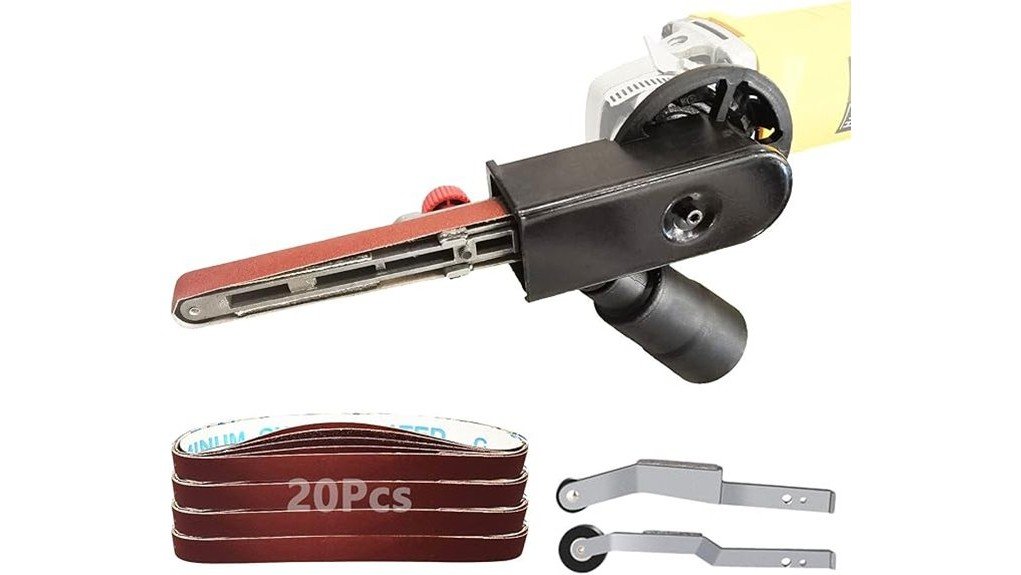
The Rocsuk sander stands out in the domain of belt sander attachments for angle grinders, showcasing a blend of functionality and efficiency.
Designed for compatibility with 4-inch, 4-1/2 inch, and 5-inch angle grinders, it guarantees versatility across various tools. The attachment includes 20 sanding belts in multiple grits, enhancing belt sander efficiency.
High-strength springs effectively prevent slippage, while an adjustable angle feature guarantees precise tracking, eliminating belt deviation.
With dimensions of 6.6 x 3.7 x 3.4 inches and a maximum speed of 6000 RPM, it effortlessly tackles diverse tasks, making it a valuable addition to any toolkit.
Applications: When and How to Use Belt Sander Attachments
Belt sander attachments for angle grinders, like the Rocsuk model, are designed for a variety of applications that enhance their utility in both professional and DIY settings. Common uses include welding polishing and metal rust removal, making these attachments versatile tools for various materials.
| Application | Description |
|---|---|
| Welding Polishing | Smoothens welds for a clean finish |
| Rust Removal | Eliminates rust from metal surfaces |
| Woodworking | Shapes and finishes wood projects |
| Corner Grinding | Fits into tight spaces effectively |
These applications demonstrate the attachment’s capability to transform tasks efficiently.
Customer Feedback on the Rocsuk Belt Sander Attachment
While many users appreciate the versatility and performance of the Rocsuk belt sander attachment for angle grinders, feedback indicates a range of experiences regarding its functionality and ease of use.
Customer satisfaction varies, with some praising its adaptability for different surfaces and materials, while others report challenges with belt slippage and adjustment.
Performance feedback highlights the attachment’s efficiency in metal rust removal and woodworking tasks.
With a solid rating of 4.0 out of 5 stars from 29 reviews, potential buyers may find it worthwhile to contemplate these varied insights before making a purchase decision.
Tips for Maximizing Your Belt Sander Experience
Maximizing the experience with a belt sander attachment for an angle grinder involves understanding both the tool’s capabilities and the techniques that enhance its performance.
Employing effective sanding techniques and adhering to safety precautions can greatly improve outcomes.
Mastering sanding techniques and prioritizing safety can significantly enhance your results.
- Choose the right grit for your project.
- Maintain a steady hand to guarantee even sanding.
- Use proper safety gear to protect against debris.
- Regularly check belt tension to avoid slippage.
- Experiment with different angles for ideal results.
These strategies not only elevate craftsmanship but also empower users, providing a sense of liberation in mastering the art of sanding.
Frequently Asked Questions
Are the Sanding Belts Reusable or Single-Use Only?
The sanding belts are typically single-use, as they wear down with use. However, users can benefit from selecting appropriate sanding belt types for different tasks, potentially extending the lifespan of each belt through careful application.
What Is the Lifespan of the Sanding Belts?
The lifespan of sanding belts varies considerably, influenced by sanding belt types and belt durability factors. Generally, users can expect several hours of effective use, depending on the material being worked on and the intensity of application.
Can It Be Used for Automotive Applications?
Yes, it can be utilized for automotive applications, particularly in surface preparation. The attachment effectively handles tasks such as rust removal and smoothing surfaces, offering versatility for automotive enthusiasts seeking liberation in their restoration projects.
Is the Angle Grinder Attachment Easy to Install?
The installation process proved straightforward for a DIY enthusiast, enhancing their user experience. With clear instructions, they transformed their angle grinder into a versatile tool, effortlessly handling various projects, from woodworking to metalwork, with newfound freedom.
Does It Require Any Special Maintenance?
Regular maintenance is minimal, but users should follow safety precautions and performance tips, such as keeping the sanding belts clean and properly tensioned, ensuring peak functionality and longevity of the attachment during use.