Disclosure: As an Amazon Associate, we earn from qualifying purchases. If you click a link on this page and make a purchase, we may receive a small commission at no extra cost to you.
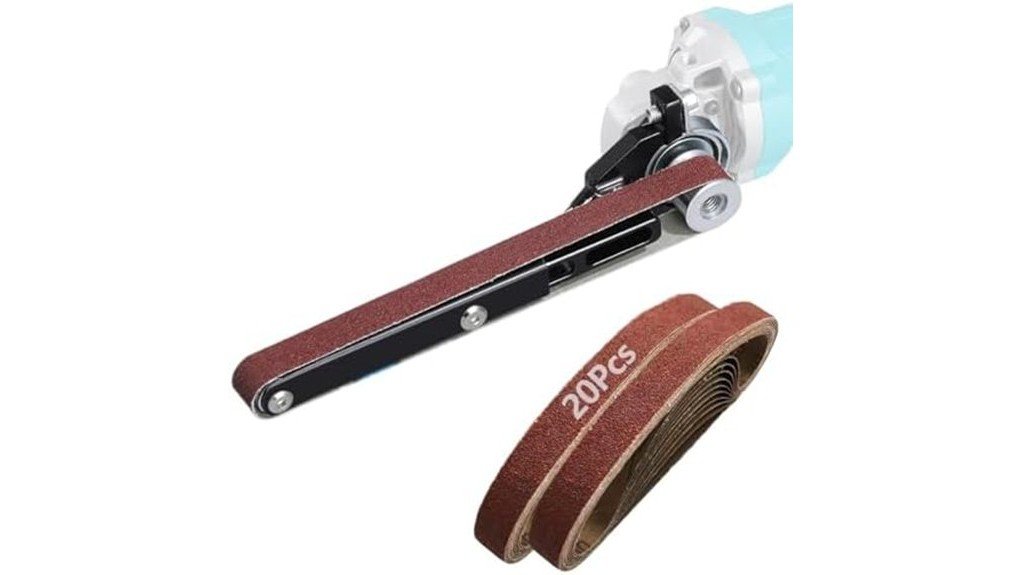
Small sanding jobs can become slow, uneven, and hard to control when you use only hand sanding or a standard grinder disc. This belt sander attachment for angle grinders gives your existing grinder a narrow sanding surface for corners, weld spots, rust patches, edges, and small finishing work. It makes the most sense if you already own a compatible 4, 4-1/2, or 5-inch angle grinder with a US 5/8-11 spindle. Its biggest strength is versatility, while its main tradeoff is fit, since the attachment depends on grinder size, spindle thread, gear case cover diameter, and safe operating speed.
Quick Verdict
Rating: 8.2/10, recommended with fit and safety caveats
Best For: DIY users, welders, metalworkers, and woodworkers who need a narrow sanding belt on a compatible angle grinder.
Bottom Line: This attachment can speed up edge sanding, rust removal, small polishing work, and weld cleanup when your grinder matches the required fit. It is not a universal add-on, so you should confirm spindle size, grinder size, gear case cover range, and RPM before you buy.
Key Takeaways
- The attachment is designed for 4, 4-1/2, and 5-inch angle grinders with a US 5/8-11 spindle.
- The stated gear case cover fit range is Φ1.61 inches to Φ1.77 inches, or about 41 mm to 45 mm.
- High carbon steel and aluminum alloy construction give the tool a stronger body than a light plastic adapter.
- The kit includes 20 sanding belts in different grits, so you can begin with rougher sanding and finish with finer passes.
- The dual bearing design and high-strength spring help the sanding belt track smoothly when the attachment is installed correctly.
- The stated maximum speed is 13,000 RPM, so you need to compare that rating with your grinder before use.
| Specification | Detail |
|---|---|
| Reviewed product | Belt sander attachment for angle grinders |
| Amazon ASIN from link | B0F4QDVSR5 |
| Product type | Belt sander attachment for compatible angle grinders |
| Compatible grinder sizes | 4 inch, 4-1/2 inch, and 5 inch angle grinders |
| Required spindle | US 5/8-11 spindle |
| Gear case cover fit | Φ1.61 inches to Φ1.77 inches, about 41 mm to 45 mm |
| Material | High carbon steel and aluminum alloy |
| Belt support design | Dual bearing design with a high-strength spring for belt tension |
| Included accessories | 20 sanding belts in different grits |
| Stated maximum speed | 13,000 RPM |
| Best use | Corner sanding, edge work, weld smoothing, rust removal, metal polishing, and small woodworking tasks |
| Setup note | Check belt tracking and secure mounting before powering on the grinder |
| Safety note | Wear eye, hearing, and respiratory protection suited to the material you are sanding |
What Is the Belt Sander Attachment for Angle Grinders?
This product is an add-on attachment that turns a compatible angle grinder into a narrow belt sanding tool. Instead of using a grinding disc, you use sanding belts to work along edges, small flat areas, corners, gaps, welds, and shaped surfaces.
The attachment uses high carbon steel and aluminum alloy, with a dual bearing design to support smoother belt movement. It also uses a high-strength spring to help keep the sanding belt under tension during use.
It makes the most sense for users who already own the right angle grinder and want more sanding control without buying a separate full-size belt sander. It is not the best fit if you need broad surface sanding, one-handed convenience, or a plug-and-play tool that works with every grinder.
Before You Buy: Check your grinder before ordering. The article-supported fit requirements are a 4, 4-1/2, or 5-inch angle grinder, a US 5/8-11 spindle, and a gear case cover size from Φ1.61 inches to Φ1.77 inches. If any of those details do not match, the attachment may not mount securely.
Who Should Buy It?
Best For
- You own a compatible 4, 4-1/2, or 5-inch angle grinder and want more sanding flexibility.
- You need a narrow belt for corners, edges, weld points, rust spots, or small metal parts.
- You want a compact sanding setup for DIY shop work, light fabrication, or occasional woodworking tasks.
Skip If
- Your angle grinder does not use a US 5/8-11 spindle or does not match the stated gear case cover range.
- You mainly sand large tabletops, doors, panels, or wide flat boards where a full-size belt sander is easier.
- You are not comfortable setting up attachments on power tools or checking belt tracking before use.
Features and Benefits of the Belt Sander Attachment
Fit and Compatibility
The most important buying factor is compatibility. The attachment is listed for 4, 4-1/2, and 5-inch angle grinders, and it requires a US 5/8-11 spindle.
The gear case cover size also matters. The supported range is Φ1.61 inches to Φ1.77 inches, or roughly 41 mm to 45 mm. If that part of your grinder sits outside the range, the attachment may not clamp or align correctly.
Materials and Build
The attachment uses high carbon steel and aluminum alloy. That material mix is useful for a shop tool because the frame needs to handle vibration, sanding pressure, heat, and frequent belt changes.
The dual bearing design is another practical detail. Bearings help the belt move more smoothly, while the high-strength spring helps maintain belt tension during sanding. You still need to use light pressure because an attachment this narrow can mark soft metal or wood if you force it.
Belt System and Included Sanding Belts
The kit includes 20 sanding belts in different grits. That gives you a starter supply for multiple jobs, including rough sanding, rust cleanup, and smoother finishing passes.
The article does not verify the exact grit numbers, so you should check the product page before choosing it for a specific finish. For best results, start with a coarser belt for material removal, then move to a finer belt for cleanup.
Speed Rating and Control
The stated maximum speed is 13,000 RPM. That number matters because many angle grinders run at high speed, and an attachment should never be used above its stated rating.
Even when your grinder falls within the speed limit, control matters more than pressure. Use a steady grip, keep the belt square to the work, and stop if the belt drifts, frays, slips, or makes unusual noise.
Installation and Setup
Installation is designed to be quick, and the original article states that setup can take about two minutes. That makes the attachment approachable for experienced DIY users, but you should still slow down and check alignment before powering on the grinder.
Before installation, unplug a corded grinder or remove the battery from a cordless grinder. Confirm the spindle thread, gear case cover size, and belt position. After mounting the attachment, rotate the belt by hand to check that it tracks without rubbing or slipping.
Pro Tip: Keep one belt for rough rust removal and another belt for cleaner finishing work. Mixing heavy debris and fine finishing on the same belt can leave deeper scratches than you expect.
Setup Tips Before First Use
- Measure before buying: Check your grinder size, spindle thread, and gear case cover diameter instead of buying by brand alone.
- Start with a clean setup: Remove loose debris from the grinder area so the attachment seats flat and tracks more predictably.
- Check belt direction and tracking: Turn the belt by hand before powering on the tool, then test it briefly away from the workpiece.
- Use light pressure: Let the abrasive belt do the cutting. Pushing harder can heat the belt, damage the surface, or reduce control.
- Match grit to the job: Use coarser belts for rust or rough shaping and finer belts for cleanup or light polishing.
Applications and Use Cases
| Application | How It Helps |
|---|---|
| Woodworking projects | Helps shape small edges, trim tight spots, and smooth narrow surfaces. |
| Metal polishing | Useful for polishing aluminum, brass, and other metal surfaces when paired with the right grit. |
| Rust removal | Lets you target small rusty areas without using a large sanding tool. |
| Corner grinding and sanding | Reaches corners, gaps, and edges that can be awkward with a standard grinder disc. |
| Weld cleanup | Helps smooth welding points and blend small areas before finishing. |
How It Performs in Real Use
For Tight Corners and Narrow Edges
The narrow belt format is the main reason to consider this attachment. It can reach along edges, inside corners, and small gaps where a standard sanding disc may feel bulky or imprecise.
For Rust Removal on Small Parts
For small rust patches, the included sanding belts let you remove surface corrosion without switching to a larger dedicated sander. You still need the right grit, light pressure, and a steady hand to avoid gouging the workpiece.
For Metal Polishing and Weld Smoothing
The attachment can help clean up small weld areas and polish metals such as aluminum or brass. It works best as a controlled finishing tool, not as a heavy grinding replacement.
For Woodworking Touch-Ups
In woodworking, this attachment is better for shaping, edge cleanup, and tight spots than for sanding wide boards. If you need a smooth finish across a large surface, a random orbital sander or full-size belt sander will usually be easier to control.
Compatibility and Safety
This attachment connects to a high-speed power tool, so setup and safety matter. Wear eye protection, hearing protection, and a dust mask or respirator suited to the material you are sanding. Metal dust, wood dust, paint dust, and old coatings can create different risks.
Do not exceed the attachment’s stated maximum speed of 13,000 RPM. Use light, controlled pressure, keep both hands secure, keep loose clothing away from moving parts, and stop the tool if the belt tracks poorly, slips, frays, or makes unusual noise.
You should also follow the product instructions and your grinder’s manual. If a task involves structural metal, vehicle parts, electrical components, or unknown coatings, get professional guidance before sanding aggressively.
Maintenance and Belt Care
Inspect the belt before each use. Replace it when it becomes torn, frayed, glazed, clogged, or uneven because a damaged belt can track poorly and leave rough marks on the workpiece.
Let the attachment cool after longer sanding sessions, then brush away dust and debris before storage. Store the included belts flat and dry so they do not kink, absorb moisture, or become hard to track.
Common Mistakes to Avoid
- Buying by grinder brand alone: Fit depends on grinder size, spindle thread, and gear case cover dimensions, not just the logo on the tool.
- Ignoring RPM: Compare your grinder speed with the attachment’s stated 13,000 RPM maximum before use.
- Using too much pressure: Let the belt do the work. Heavy pressure can overheat the belt, mark the surface, or make the tool harder to control.
- Skipping belt inspection: Replace a belt when it becomes torn, glazed, clogged, or uneven.
- Using one grit for every job: Rough removal and finishing need different belt grits for better results.
Pros and Cons
Pros
- Works with common 4, 4-1/2, and 5-inch grinder sizes when the spindle and cover dimensions match.
- High carbon steel and aluminum alloy construction adds durability for shop use.
- Includes 20 sanding belts, giving you a useful starter set for different sanding tasks.
- Dual bearing design and a high-strength spring help support smoother belt movement.
- Narrow belt shape is useful for corners, welds, rust spots, edges, and small parts.
Cons
- Limited compatibility means it will not fit every angle grinder.
- Not ideal for wide, flat surfaces where a dedicated sander gives better control.
- Requires careful setup, belt tracking checks, and normal power tool safety gear.
- Exact grit numbers are not verified in the article, so you should check the listing for finish-specific work.
Is It Worth the Price?
This attachment is worth considering if you already own a compatible grinder and need a compact tool for edges, small metal parts, rust cleanup, and tight sanding areas. The included 20 belts improve value because you can start using the attachment without buying sanding belts separately right away.
It offers strong value when you compare it with buying a separate specialty sander for occasional use. It is less compelling if you sand large panels often, need maximum control, or prefer tools that require less setup.
How It Compares to Alternatives
A full-size belt sander is better for large flat boards, panels, and broad material removal. A file belt sander can offer more refined control in tight spaces, but it usually costs more because it is a dedicated tool.
A flap disc on an angle grinder may remove material faster on metal, but it does not offer the same narrow belt access for gaps and corners. This attachment makes the most sense when you want a lower-cost way to add belt sanding capability to a grinder you already own.
Frequently Asked Questions
Will this belt sander attachment fit every angle grinder?
No. The supported fit details are 4, 4-1/2, and 5-inch angle grinders with a US 5/8-11 spindle and a gear case cover from Φ1.61 inches to Φ1.77 inches. Measure your grinder before ordering.
What jobs is it best for?
It is best for corners, gaps, edges, weld smoothing, small rust patches, and light polishing. It is not the easiest option for large, flat sanding surfaces.
How many sanding belts come with it?
The article-supported package detail is 20 sanding belts in different grits. Check the Amazon listing before purchase if you need specific grit numbers for a planned project.
Can I use it for metal polishing?
Yes, it can help polish metals such as aluminum and brass when you use the right belt grit. Start carefully because aggressive sanding can leave scratches on softer metals.
What safety gear should I use?
Wear eye protection, hearing protection, and a dust mask or respirator appropriate for the material. Keep both hands controlled and stop if the belt slips, frays, or tracks poorly.
What is the maximum RPM rating?
The article states a maximum speed rating of 13,000 RPM. Do not use the attachment above its stated speed rating, and check your grinder’s speed before setup.
Can the sanding belts be reused?
Yes, you can reuse a sanding belt while it still cuts cleanly and tracks safely. Replace it when it becomes clogged, torn, frayed, glazed, or uneven.
Who should skip this attachment?
Skip it if your grinder does not match the stated spindle and gear case cover requirements. You should also skip it if you mainly sand large surfaces or want a dedicated tool with no attachment setup.
Final Verdict
This belt sander attachment is a practical add-on for users who already own a compatible angle grinder and need a narrow sanding belt for corners, edges, rust spots, weld cleanup, and small finishing jobs. Its best strengths are the metal construction, included 20 belts, dual bearing design, and support for common grinder sizes.
Its main limitation is compatibility, so skip it if your grinder does not match the spindle and gear case cover requirements. If your grinder fits and you work on small sanding tasks often, it can add useful belt sanding capability without taking up the space of another dedicated tool.