Disclosure: As an Amazon Associate, we earn from qualifying purchases. If you click a link on this page and make a purchase, we may receive a small commission at no extra cost to you.
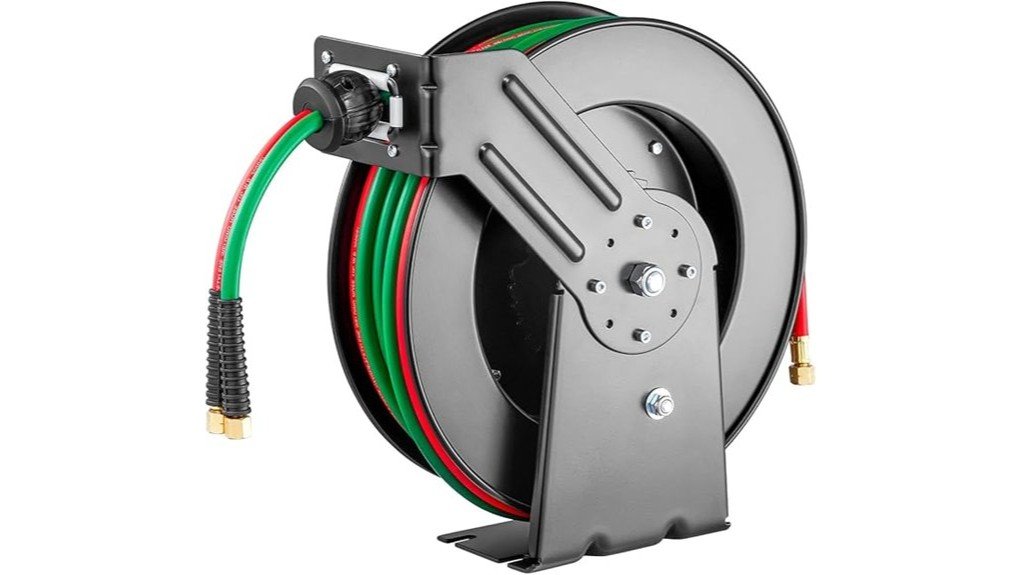
Long oxygen-acetylene hoses can create a storage problem, a trip hazard, and extra setup time when you have to coil them by hand. The VEVOR Retractable Welding Hose Reel combines a 50-foot, 1/4-inch twin hose with an automatic rewind system and a steel reel frame. Its reach and hose control are useful in a fixed workshop, but the fitting type, mounting surface, and fuel-gas compatibility need careful checking before you buy. This review helps you decide where the reel fits, what its listed specifications mean, and which limitations matter in daily use.
Quick Verdict
Rating: 8/10, recommended with compatibility caveats
Best For: Garages, repair bays, and fabrication spaces that use a fixed oxygen-acetylene setup
Bottom Line: The 50-foot twin hose and automatic rewind can keep a work area cleaner and reduce time spent coiling hose. The main tradeoff is that you must confirm the R-grade hose service, connector type, mounting method, and package contents against your existing equipment.
Product Features and Specifications
| Specification | Detail |
|---|---|
| Brand | VEVOR |
| Product type | Retractable twin welding hose reel |
| Hose size | 1/4-inch diameter, 50-foot length |
| Hose construction | Twin R-grade rubber hose |
| Intended gas service | Oxygen and acetylene, as described in the product information |
| Hose identification | Color-coded twin lines |
| Maximum working pressure | 300 PSI listed rating |
| Burst pressure | 900 PSI listed rating |
| Listed temperature range | -22°F to 158°F |
| Reel construction | Steel framework |
| Hose management | Automatic rewind mechanism |
| Mounting options | Wall, ceiling, or floor mounting |
| Best use | Fixed workshop oxygen-acetylene stations that need added reach and organized storage |
Key Takeaways
- The 50-foot twin hose gives you room to work around vehicles, benches, and larger fabrication projects without moving the gas cylinders as often.
- The automatic rewind system stores the hose on the reel, which can reduce loose coils on the floor when the reel is mounted and used correctly.
- The steel frame and R-grade rubber hose are aimed at regular shop use, but neither feature removes the need for routine inspection.
- The listed 300 PSI working-pressure rating describes the hose assembly. It is not an instruction to operate acetylene or other equipment at that pressure.
- Compatibility is the main buying check because hose grade, fitting threads, regulators, torch connections, mounting hardware, and local safety requirements can vary.
What Is the VEVOR Retractable Welding Hose Reel?
The VEVOR reel is a fixed hose-management system for an oxygen-acetylene workstation. It combines two color-coded rubber hoses in a 1/4-inch by 50-foot format and stores them on a spring-driven reel. Instead of rolling the hose by hand after each task, you pull out the length you need and guide it back into the reel when the job is complete.
This design is most useful when your cylinders and regulators stay in one place while your torch needs to reach different areas of a garage, shop, or repair bay. The reel is not a complete welding system, and it does not remove the need to verify regulators, protective devices, fittings, and gas-service compatibility. Its main selling point is organized reach, not a change in how oxygen-acetylene equipment must be operated.
Who Should Buy It?
Best For
- A fixed oxygen-acetylene station in a garage, fabrication shop, or repair bay
- Work areas where a 50-foot hose can reduce repeated cylinder movement
- Users who want automatic hose storage instead of hand-coiling after each job
Skip If
- You need a hose approved for propane, natural gas, or another alternate fuel
- You need a fully portable setup that moves with the cylinders
- You cannot confirm the reel fittings or securely anchor the frame to your mounting surface
Before You Buy: Confirm that the current product listing, hose markings, and manual approve the exact gases and fittings in your setup. Do not assume an R-grade oxygen-acetylene hose is suitable for alternate fuel gases, and do not assume the reel includes every regulator, connector, protective device, or mounting fastener you need.
Durability and Material Quality
Steel Reel Frame
The steel framework gives the reel a rigid base for repeated extension and rewind. That matters because a 50-foot twin hose can place a noticeable pull on the reel when you work near the end of its reach. A solid frame also helps the rewind system stay aligned when the mounting surface is flat and the anchors are secure.
The product information describes the frame as impact- and corrosion-resistant. You should still keep the reel away from direct torch heat, heavy slag, standing water, and vehicle traffic. A durable frame can handle normal shop use, but poor placement can shorten the life of the reel or expose the hose to avoidable damage.
R-Grade Rubber Twin Hose
The twin hose uses R-grade rubber and separates the oxygen and acetylene lines with color coding. This helps you identify each side during connection and inspection. The 1/4-inch size is a common compact format for shop torch setups, while the 50-foot length gives you more working radius than a short portable hose.
The listed temperature range is -22°F to 158°F, with a 300 PSI maximum working-pressure rating and a 900 PSI burst-pressure rating. Treat these as product limits, not recommended gas settings. Your regulator, torch, gas type, hose markings, and manufacturer instructions determine safe operating conditions.
Automatic Rewind and Hose Control
The automatic rewind mechanism is the feature that separates this product from a basic loose hose set. It can reduce the time spent coiling hose and keep unused length off the floor. That is useful in tight garages where loose loops can catch on tires, carts, benches, and other equipment.
You still need to guide the hose during rewind. Letting a long hose snap back at full speed can stress the fittings, damage the hose, or cause the end to strike nearby equipment. A controlled return also helps the hose wind more evenly on the reel.
Installation and User Experience
The reel can be mounted on a wall, ceiling, or floor, which gives you flexibility in different shop layouts. Wall mounting can keep the reel within reach while clearing floor space. Ceiling mounting can reduce low-level clutter, but you need enough height and clearance to pull the hose without rubbing it across sharp edges. Floor mounting may work near a fixed cylinder station, provided the reel is protected from vehicles and foot traffic.
The correct anchors depend on the mounting surface and the load created by a fully extended hose. Wood framing, masonry, and steel structures need different hardware. Mount the reel to a structural surface, not thin wall covering alone, and follow the current installation instructions. If you are unsure about the support, gas connections, or required protective devices, use a qualified technician.
Pro Tip: Before drilling, hold the reel in the planned position and pull a tape measure through the same path as the hose. Check for doors, vehicle lifts, sharp corners, hot work areas, and spots where the hose could drag or be crushed.
Setup Tips Before First Use
- Verify the hose markings. Confirm the gas service, pressure rating, and temperature information printed on the hose or provided in the manual.
- Compare every fitting. Match the reel inlet and outlet connections with your regulators, torch hose connections, and required protective devices before applying pressure.
- Choose a protected mounting point. Keep the reel away from direct flame, hot slag, sharp edges, moving vehicles, and areas where the hose can be pinched.
- Anchor the frame securely. Use mounting hardware rated for the surface and the pull created by extending the hose.
- Inspect before pressurizing. Look for cuts, burns, flattened areas, loose fittings, contamination, or shipping damage.
- Test the rewind slowly. Extend a short length first, confirm the locking and return action, and guide the hose back under control.
- Follow the approved leak-test method. Never use a flame to look for a leak. Follow the equipment maker’s instructions and applicable workplace rules.
How It Performs in Real Use
In a Home Garage
In a home garage, the reel’s biggest benefit is storage. You can mount it near a fixed cylinder cart and pull out only the hose needed for a bench, vehicle, or small fabrication project. After the job, the hose returns to the reel instead of remaining in a pile near the work area.
In a Repair or Fabrication Bay
A 50-foot hose can cover a larger bay and reach around a vehicle or worktable without frequent cylinder movement. The twin-hose design keeps the oxygen and fuel lines together, while color coding helps you identify the two sides during setup. The tradeoff is that long reach increases the importance of routing, inspection, and controlled rewind.
For Repeated Daily Tasks
If you pull and store the hose several times per day, the spring rewind can save effort compared with hand-coiling. Daily use also puts more cycles on the spring, hose, and fittings, so you should check the reel action and hose condition often. Any leak, burn, worn section, or damaged connection needs attention before the equipment returns to service.
In a Sheltered Outdoor Work Area
The listed temperature range may support work in varied conditions, but a temperature rating is not the same as a permanent outdoor-weather rating. If you use the reel in a covered outdoor area, protect it from rain, standing water, direct sun, and corrosive exposure unless the current manual clearly approves those conditions.
Compatibility and Safety
This reel should be treated as one part of an oxygen-acetylene system. The hose grade, regulator connections, torch fittings, flashback protection, check valves, and operating procedures all need to match the equipment and the rules that apply to your shop. The listed 300 PSI hose rating does not override the much lower operating pressures used by gas equipment.
Keep the oxygen side free from oil and grease, and do not handle oxygen equipment with contaminated hands or gloves. Inspect the full hose length and both connection points before use. If you find leaks, burns, worn areas, cuts, damaged fittings, or other defects, remove the hose from service and repair or replace it according to qualified guidance.
Do not make improvised fitting changes or use the reel for a gas that is not clearly approved by the hose and manufacturer. Follow the current VEVOR instructions, your regulator and torch manuals, applicable workplace standards, and local fire-safety rules.
Safety reference: The OSHA oxygen-fuel gas welding standard says equipment should be used only for its approved service and defective hose should be repaired or replaced.
Pros and Cons
Pros
- 50-foot reach suits garages, repair bays, and larger work areas
- Automatic rewind reduces hand-coiling and loose hose storage
- Color-coded twin lines make the oxygen and acetylene sides easier to identify
- Steel framework supports fixed wall, ceiling, or floor installation
- Listed pressure and temperature limits provide clear boundaries for the hose assembly
Cons
- R-grade hose service may not suit propane or other alternate fuel gases
- Fitting compatibility and package contents need confirmation before purchase
- A fixed reel requires secure structural mounting and careful hose routing
Is It Worth the Price?
The VEVOR reel makes the most sense as a value-focused shop upgrade for users who already have a compatible oxygen-acetylene setup. You are paying for three practical benefits: 50 feet of reach, automatic storage, and a fixed steel frame. Those features can be worth considering when loose hoses slow down your work or create clutter around a permanent welding station.
It is less attractive if you only use a torch occasionally, need to move the entire system between locations, or cannot confirm the fitting and fuel-gas compatibility. A basic portable twin-hose set may cost less and be easier to move, while a heavier industrial reel may offer better support for very high-cycle commercial use.
How It Compares to Alternatives
Compared with a basic manual hose set, the VEVOR reel takes more planning and installation but gives you faster storage and better control of unused hose. A loose hose is easier to move between job sites, while this reel is better for a station that stays in one bay.
Compared with a higher-priced industrial retractable reel, this model focuses on core features rather than a fully documented heavy-duty service package. Buyers who need continuous production use, verified replacement-part support, or a specific fitting standard should compare the current manual and warranty details with industrial reel options before deciding.
Frequently Asked Questions
Is this reel only for oxygen and acetylene?
The product information describes a twin R-grade rubber hose for oxygen-acetylene service. Do not use it with propane, natural gas, or another fuel unless the current hose markings and manufacturer instructions clearly approve that gas.
Will it fit every welding regulator and torch?
No universal fit should be assumed. Check the inlet and outlet thread types, fitting sizes, left- and right-hand connections, and any required check valves or flashback protection before purchase.
Can you mount it on a wall, ceiling, or floor?
The product information lists all three mounting options. Your chosen surface must support the reel and the pull from a fully extended hose, so use the correct anchors and follow the installation instructions.
Does the 300 PSI rating mean acetylene can run at 300 PSI?
No. The 300 PSI figure is a listed maximum working-pressure rating for the hose assembly, not a recommended regulator setting. Set gas pressures only according to the torch, regulator, gas supplier, and manufacturer instructions.
Can the reel stay outdoors?
The listed temperature range does not prove permanent outdoor-weather resistance. Mount it in a protected location and avoid rain, standing water, direct sun, and corrosive exposure unless the current manual approves outdoor installation.
How often should the hose be replaced?
There is no safe universal replacement interval for every shop. Inspect the hose before use and replace or properly repair it when you find leaks, burns, worn areas, cuts, hardening, damaged fittings, or any defect that makes it unfit for service.
What maintenance does the reel need?
Keep the reel clean and dry, inspect the hose and fittings, confirm that the mounting bolts remain tight, and test the rewind action under control. Keep oil and grease away from oxygen equipment and follow the maintenance steps in the current manual.
What warranty comes with the reel?
Warranty terms can vary by listing, seller, region, and purchase date. Check the current Amazon listing and VEVOR warranty information before buying, and save your receipt and product documentation.
The Bottom Line
The VEVOR Retractable Welding Hose Reel is a practical choice for a fixed oxygen-acetylene work area that needs 50 feet of reach and cleaner hose storage. Its automatic rewind, steel frame, and color-coded twin hose are useful strengths, but you should skip it if the hose grade, fittings, mounting requirements, or gas service do not match your setup.
Ready to Buy?
Check the latest product details, fittings, package contents, and warranty before you decide.