Disclosure: As an Amazon Associate, we earn from qualifying purchases. If you click a link on this page and make a purchase, we may receive a small commission at no extra cost to you.
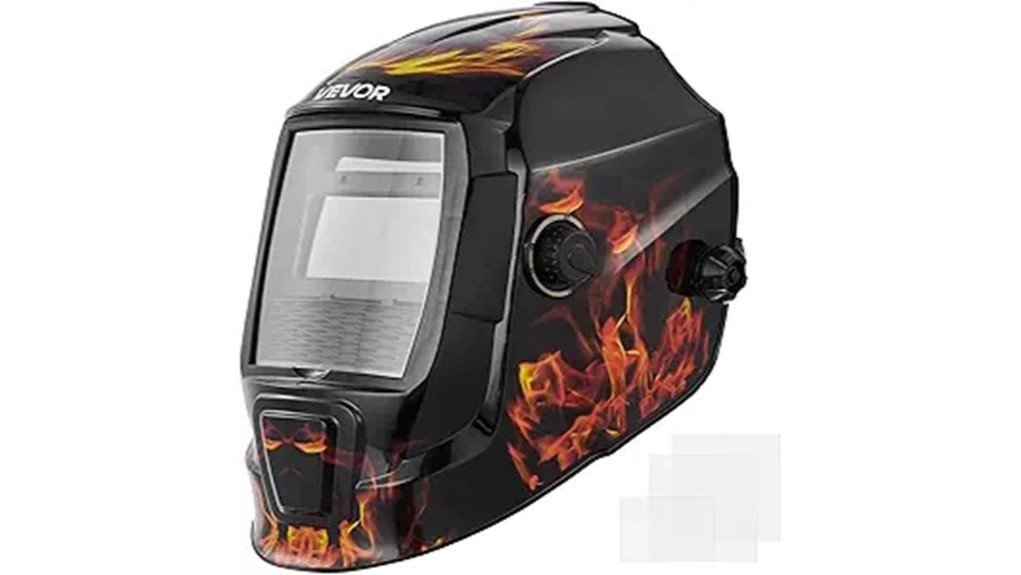
Arc flash, poor visibility, and an uncomfortable hood can make even simple welding jobs harder than they need to be. The VEVOR Welding Helmet gives you an auto-darkening lens, a 3.66 x 1.69-inch viewing screen, and adjustable Shade 4/9-13 coverage for common TIG, MIG, ARC, and grinding work. This review helps you decide if its true color lens, fast response, and budget-friendly setup fit your shop. It is a strong pick for home and light workshop use, but you should compare higher-end helmets if you need all-day industrial performance or strict jobsite certification.
Quick Verdict
Rating: Recommended with caveats
Best For: DIY welders, beginners, and light shop users who want clearer viewing and automatic lens darkening
Bottom Line: The VEVOR Welding Helmet offers helpful visibility, true color viewing, and fast auto-darkening for general welding work. Its main tradeoff is that the smaller 3.66 x 1.69-inch window and 2-sensor setup are less advanced than larger 4-sensor helmets.
| Specification | Detail |
|---|---|
| Brand | VEVOR |
| ASIN | B0FPM3ZVBL |
| Series / Variant | CRIUS Series style, exact color or pattern may vary by listing option |
| Product Type | Auto-darkening welding helmet |
| Viewing Screen | 3.66 x 1.69 inches |
| Lens Type | True color auto-darkening lens |
| Arc Sensors | 2 arc sensors |
| Optical Clarity | 1/1/1/1 rating claimed in the supplied article, confirm on the live listing if this is critical |
| Switching Speed | 1/20000 seconds auto-darkening response claimed in the supplied article |
| Shade Range | DIN 4/9-13 |
| Power Source | Solar-powered with battery support |
| Supported Work | TIG, MIG, ARC welding, and grinding tasks listed for this style of helmet |
| Build | Heat- and impact-resistant shell as described in the supplied article |
| Best Use | Home garage welding, beginner practice, repair work, and light shop fabrication |
What Is the VEVOR Welding Helmet?
The VEVOR Welding Helmet is an auto-darkening protective hood made for welding tasks that expose your eyes and face to bright arcs, sparks, and heat. Its lens changes from a lighter state to a darker welding shade when the sensors detect an arc, so you do not need to flip the helmet up and down between every tack.
This specific version focuses on a 3.66 x 1.69-inch true color viewing screen, 2 arc sensors, and Shade 4/9-13 adjustment. That makes it better suited to DIY welding, learning, repair work, and light fabrication than nonstop industrial production.
The main appeal is simple: you get automatic darkening and improved color visibility without moving into the price range of premium welding helmets. The limitation is that larger VEVOR models and higher-end brands may give you a wider view, more sensors, and stronger long-shift comfort.
Key Features That Matter in Real Welding Work
Viewing Screen and True Color Lens
The 3.66 x 1.69-inch viewing area gives you a workable view of the weld joint, puddle, and nearby material. It is not the largest screen in VEVOR’s helmet lineup, but it is a clear step up from fixed-shade helmets that force you to lift the hood for every setup change.
The true color lens helps reduce the heavy green tint common on older welding filters. That can make it easier to see joint edges, bead shape, and surface condition, especially when you are learning how heat and travel speed affect the weld puddle.
2 Arc Sensors and Auto-Darkening Response
This version uses 2 arc sensors to detect welding light and trigger the auto-darkening filter. The supplied article lists a 1/20000-second switching speed, which is fast enough for general garage and light shop welding when the sensors have a clear line of sight to the arc.
The 2-sensor setup is one reason this helmet fits the value category. It can work well for straightforward welding positions, but a 4-sensor helmet may be more forgiving when your hand, workpiece, or fixture partially blocks the arc.
Before You Buy: Check the exact live Amazon listing before ordering, because VEVOR sells similar helmets with different viewing sizes, sensor counts, shade ranges, colors, and patterns. Do not assume a 4-sensor or larger-screen version if the selected option says 3.66 x 1.69 inches and 2 arc sensors.
Adjustable Shade Control
The DIN 4/9-13 range covers a light grinding mode and darker welding shades for common welding processes. That flexibility helps when you move between fitting, grinding, tacking, and welding during the same project.
You still need to choose the correct shade for the process, amperage, and material you are welding. A helmet can improve protection and visibility, but it does not replace safe setup, proper PPE, or the shade guidance in the product manual.
Comfort and Fit Adjustments
The adjustable headgear helps you set the helmet height, tightness, and viewing angle before you start welding. A better fit matters because a loose helmet can drop during setup, while an overtightened helmet can cause pressure during longer sessions.
For short garage projects, the helmet should feel easy to wear and adjust. For full-shift professional welding, you may want to compare premium helmets with more refined headgear, larger viewing areas, and stronger replacement lens support.
Safety, Lens Use, and Material Notes
This helmet is designed to help protect your eyes and face from welding light, UV/IR exposure, sparks, and heat during appropriate use. You should still wear safety glasses under the hood, use proper gloves, cover exposed skin, and follow the welding machine and helmet instructions.
Auto-darkening helmets depend on clear sensors, clean cover lenses, and enough power to work correctly. Before each welding session, check that the lens darkens properly, the cover lens is not badly scratched, and the battery or solar support is working as expected.
If your workplace requires a specific safety certification, confirm that the exact helmet variant meets that requirement before you buy. Product families can look similar online while carrying different ratings, accessories, and lens assemblies.
Who Should Buy It?
Best For
- DIY welders working on gates, brackets, frames, and garage repairs
- Beginners learning MIG, stick, or basic TIG technique
- Budget-focused users who want true color viewing and automatic darkening
Skip If
- You want a larger panoramic viewing screen for complex fabrication
- You need 4 arc sensors for more blocked-angle welding positions
- Your jobsite requires a specific certification that is not shown on the live listing
Pros and Cons
Pros
- Auto-darkening lens helps reduce repeated hood flipping during welding
- True color viewing makes the weld area easier to read than older green-tint lenses
- DIN 4/9-13 range supports grinding and common welding shade settings
- Solar-powered design with battery support reduces frequent battery concerns
- Adjustable headgear helps you tune fit before longer garage sessions
Cons
- 3.66 x 1.69-inch viewing screen is smaller than many larger-view helmets
- 2 arc sensors may be less forgiving than 4-sensor designs in blocked positions
- Exact color, pattern, accessories, and certification details may vary by listing option
Pro Tip: Test the auto-darkening lens before every session by exposing the sensors to a safe bright test source or using the helmet’s test function if the exact model includes one. Clean sensors and cover lenses help the helmet respond more reliably.
How It Performs in Real Use
For DIY Workshop Projects
The VEVOR helmet works well for small fabrication jobs where you need to tack, check alignment, and continue welding without lifting your hood every few seconds. The true color lens helps you see edges and surface prep more clearly, which matters on repair brackets, small frames, and metal furniture projects.
For Beginner Welding Practice
Beginners benefit from automatic darkening because it helps them keep both hands steady while starting an arc. You can focus more on travel speed, stick-out, electrode angle, and puddle control instead of timing the hood flip.
For TIG, MIG, and Stick Welding
The shade range gives you enough flexibility for many common welding setups, but you should match the shade to your amperage and process. TIG work can demand clear puddle visibility, so the true color lens is helpful, but the smaller viewing window may feel limiting during detailed bench work.
For Grinding and Cleanup
The DIN 4 light setting can help when you move from welding to grinding or cleanup work. Still, you should confirm the selected mode before striking an arc again, because welding in the wrong mode can expose your eyes to unsafe brightness.
Setup Tips Before First Use
Adjust the head strap before you strike your first arc. Set the top strap so the viewing window lines up naturally with your eyes, then tighten the rear knob enough to keep the helmet stable without creating pressure points.
Check the shade setting, sensitivity, and delay controls if your exact helmet version includes those adjustments. Start with a conservative darker setting when you are unsure, then adjust only within the helmet manual’s guidance.
Keep spare cover lenses available if you weld often. Scratched or spatter-covered lenses can make a good helmet feel blurry and can hide the weld puddle at the worst time.
Is It Worth the Price?
The VEVOR Welding Helmet sits in the budget to entry-level category, but it gives you several features that matter in real use: auto-darkening, true color viewing, adjustable shade coverage, and a wearable headgear system. That makes it a strong value for the price if you weld occasionally or want a practical first helmet.
You get the most value if you work on home repairs, basic fabrication, welding practice, or weekend shop projects. The helmet is less compelling if you need a large viewing screen, 4 sensors, premium optics, or verified workplace compliance for daily production welding.
For most DIY users, this helmet is worth considering because it solves the biggest frustrations of cheap fixed-shade hoods. For professional welders, it is better viewed as a backup, starter, or light-duty option.
How It Compares to Alternatives
Compared with basic fixed-shade welding helmets, the VEVOR model is easier to use because the lens darkens automatically when you strike an arc. That saves time during tack welding and helps beginners maintain a steady position.
Compared with larger-view helmets from VEVOR, YesWelder, Lincoln Electric, or Miller, this version is more basic. Those alternatives may offer larger lens areas, 4 sensors, stronger headgear, and broader replacement lens support, while the VEVOR 3.66 x 1.69-inch model makes the most sense when price and simple auto-darkening matter most.
Frequently Asked Questions
Is the VEVOR Welding Helmet good for beginners?
Yes, it is a good beginner option because the auto-darkening lens reduces the need to flip the hood before each arc start. The true color view also helps you see the joint and puddle more clearly while learning.
Can you use it for TIG welding?
Yes, it can be used for TIG welding when you choose the correct shade setting for your amperage and work conditions. For very precise TIG work, a larger viewing area or higher-end optical system may feel better.
Does this helmet have 2 or 4 arc sensors?
The 3.66 x 1.69-inch version tied to this review is listed as a 2 arc sensor helmet. VEVOR sells similar-looking helmets with 4 sensors, so check the selected Amazon option before you buy.
What shade range does it use?
This version is listed with a DIN 4/9-13 shade range. DIN 4 is useful for grinding or setup work, while DIN 9-13 covers common welding shade settings.
Does the helmet protect against UV and IR light?
Auto-darkening welding helmets are designed to filter harmful welding light, including UV and IR exposure, when used correctly. Always follow the helmet manual, wear safety glasses underneath, and confirm the exact safety rating if your workplace requires one.
Is the 3.66 x 1.69-inch viewing area large enough?
It is large enough for many garage and light repair jobs, especially if you work in simple positions. If you weld out of position, work on complex fixtures, or want more peripheral view, compare larger-view helmets before buying.
What common mistake should you avoid with this helmet?
Do not assume every VEVOR welding helmet listing has the same lens size, sensor count, shade range, or accessories. Match the ASIN, selected color or pattern, and listed specs before placing your order.
Who should skip this VEVOR helmet?
Skip it if you need a premium helmet for full-time production welding, a larger panoramic lens, or a verified certification for a regulated jobsite. It is better for DIY, training, backup use, and lighter shop work.
The Bottom Line
The VEVOR Welding Helmet is a solid choice if you want an affordable auto-darkening hood for DIY welding, beginner practice, and light shop projects. Its strengths are true color viewing, automatic darkening, and a useful DIN 4/9-13 range, while its main limits are the smaller viewing window and 2-sensor design. Skip it if you need a larger professional helmet for all-day industrial welding or a specific workplace certification.
Ready to Buy?
Check the latest price, selected variant, and product details before you decide.