Disclosure: As an Amazon Associate, we earn from qualifying purchases. If you click a link on this page and make a purchase, we may receive a small commission at no extra cost to you.
Cracked plastic parts can be frustrating because glue often fails on bumpers, trim pieces, toys, panels, and other molded items. The 220W Plastic Welder Kit is built for repairs that need heat, staples, and filler rods instead of surface adhesive alone. This review helps you decide if its fast 1-3 second heating, 1,000 included hot staples, and 92 welding rods make sense for your garage or home repair work. It is a strong fit for hands-on plastic repairs, but you still need correct plastic identification, careful heat control, and basic safety habits to get clean results.
Quick Verdict
Rating: 8.3/10, Recommended with caveats
Best For: DIYers, hobbyists, and garage users repairing cracked ABS, PE, bumpers, trim, toys, and household plastics.
Bottom Line: The 220W Plastic Welder Kit gives you a useful mix of fast heating, hot staples, and welding rods in one repair set. It is not a magic fix for every plastic crack, so check material compatibility and practice on scrap before repairing visible or load-bearing parts.
| Specification | Detail |
|---|---|
| Product name | 220W Plastic Welder Kit |
| Amazon ASIN from existing link | B0BFL9P48N |
| Product type | 2-in-1 plastic repair welder and hot stapler kit |
| Power | 220W |
| Heating time | Article-supported claim: 1-3 seconds |
| Included staples | 1,000 hot staples |
| Included rods | 92 plastic welding rods |
| Supported plastic types | Article mentions ABS and PE, plus various compatible plastics |
| Common repair uses | Automotive bumpers, instrument panels, plastic furniture, toys, and other household plastic items |
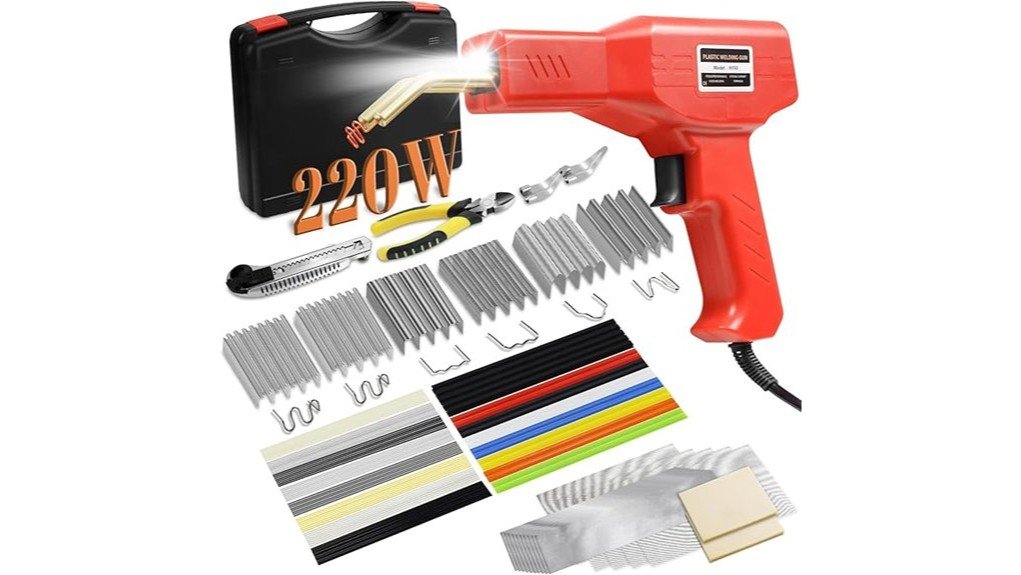
| Included tools | Plastic welding gun, staples, welding rods, and utility knife |
| Storage note | Compact kit design with portable storage referenced in the source article |
| Safety note | Use heat protection, allow the tool to cool before storage, and follow the product instructions. |
What Is the 220W Plastic Welder Kit?
The 220W Plastic Welder Kit is a repair tool set made for reinforcing cracked plastic with heated staples and filling or reshaping damaged areas with plastic welding rods. The original article describes it as a 2-in-1 kit, which means you get both hot stapling support and rod-based plastic repair in the same set.
The kit is aimed at buyers who want to fix common plastic damage without immediately replacing the whole part. That can include automotive bumpers, instrument panels, trim pieces, broken toys, plastic furniture, and similar items made from compatible plastics such as ABS and PE.
Its main selling point is speed. The article states that the welder reaches working heat in 1-3 seconds, which can help when you have several cracks, tabs, or small sections to reinforce.
Who Should Buy It?
Best For
- DIY users who repair cracked plastic parts around the garage or home.
- Automotive hobbyists working on bumpers, trim, panels, and similar non-structural plastic pieces.
- Buyers who want a kit with both staples and welding rods rather than buying consumables separately.
Skip If
- You need a verified commercial-duty plastic welding system for constant shop use.
- You are repairing safety-critical, pressurized, or load-bearing parts that need professional evaluation.
- You do not know the plastic type and cannot test compatibility before applying heat.
Before You Buy: Plastic welders work best when the plastic type, rod material, and repair method match. Do not assume this kit will repair every plastic, especially unknown plastics, thin cosmetic pieces, or parts exposed to heavy stress.
Key Takeaways
- The 220W power rating and 1-3 second heating claim make this kit faster than many lower-powered repair tools listed in the original comparison.
- The 2-in-1 kit includes 1,000 hot staples and 92 plastic welding rods, giving you both reinforcement and filler options.
- Article-supported compatibility includes ABS and PE, which are common in automotive and household plastic repairs.
- The compact kit layout helps if you need a repair tool that can move between your workbench, garage, and on-site jobs.
- The biggest limitation is compatibility. You still need to match the repair method to the plastic and avoid unsafe repairs on critical parts.
Design and Build Quality
The design focuses on utility rather than fancy controls. You get a plastic welding gun, hot staples, welding rods, and a utility knife, which covers the basic workflow for many cracked plastic repairs.
The 220W output is the most important build-related detail in the article. Higher power can help the tool reach working temperature faster, which is useful when you are inserting several staples along a cracked bumper tab or filling multiple small splits.
The kit is also described as compact and portable. That matters if you want to store it in a garage cabinet or carry it to a vehicle, workshop, or job site instead of keeping it fixed on a bench.
Performance and Heating Speed
Performance starts with heat-up time. The source article claims the 220W Plastic Welder heats in 1-3 seconds, compared with 15-30 seconds for a 50W machine and 5-10 seconds for a 100W machine.
| Power Rating | Article-Supported Heating Time | Buyer Impact |
|---|---|---|
| 220W | 1-3 seconds | Best for faster repairs and repeated staple placement. |
| 100W | 5-10 seconds | Usable, but slower during multi-point repairs. |
| 50W | 15-30 seconds | Better suited to occasional light work if speed is not a concern. |
Fast heat is helpful, but it also requires control. Too much heat in one spot can warp thin plastic, widen a crack, or leave a rough finish that needs extra trimming and sanding.
Staples, Rods, and Accessories
The strongest value point is the included consumable count. The kit includes 1,000 hot staples, which gives you enough reinforcement pieces for multiple repair jobs before you need refills.
The 92 plastic welding rods add another repair option. Staples are useful for bridging and strengthening cracks, while rods are better for adding plastic material, filling gaps, or rebuilding small missing sections when the rod material matches the part.
The included utility knife helps with trimming, shaping, and cleaning rough plastic edges. You may still need extra supplies, such as sandpaper, clamps, side cutters, gloves, eye protection, and a clean work surface.
Fit and Plastic Compatibility
The article mentions ABS and PE compatibility, which covers many common repair situations. ABS often appears in trim, housings, and molded parts, while PE is common in many everyday plastic items.
Compatibility is not automatic, though. Plastic parts can look similar but behave differently under heat. If the plastic is unknown, test a hidden area or scrap section before repairing the visible face.
For car parts, check the stamped plastic code on the back of the piece when available. That small mark can help you choose the right rod and decide if stapling, rod welding, or replacement is the better route.
How It Performs in Real Use
For Automotive Bumper Repairs
The kit makes the most sense for non-structural bumper cracks, tabs, and plastic trim repairs where reinforcement matters. Hot staples can help hold the crack together from behind, while rods can support filling and shaping when compatible.
For Household Plastic Items
For toys, plastic furniture, storage bins, and appliance housings, the kit can be a practical alternative to throwing the item away. The repair quality depends on the plastic type, part thickness, and how much stress the area sees after repair.
For Workbench and Hobby Projects
The fast heating claim is useful when you are making several small repairs in one session. You can move from one crack to the next without waiting long between staples, which keeps simple repair jobs from dragging out.
For On-Site or Mobile Repairs
The compact kit format helps if you need to bring the welder to a vehicle or work area. You still need a safe power source, ventilation, stable part support, and enough cooling time before packing the tool away.
How to Use It Correctly
Start by cleaning the damaged area. Dirt, grease, old adhesive, paint dust, and moisture can weaken the repair or make the plastic melt unevenly.
For cracks, align the broken edges first. Use clamps or tape when needed, then apply staples from the back side when possible so the repair is less visible from the front.
For rod welding, match the rod to the plastic type as closely as you can. Move slowly, avoid overheating one area, and build the repair in small passes instead of trying to fill a large gap at once.
Pro Tip: Practice on scrap plastic before repairing a visible car part. This helps you learn how quickly the staple sinks, how the rod melts, and how much pressure the plastic can handle before it warps.
Safety and Material Notes
This tool uses heat, so treat it like a hot repair tool rather than a simple glue gun. Wear eye protection, heat-resistant gloves when needed, and keep loose wires, rags, and solvents away from the work area.
Use the welder in a well-ventilated space and avoid breathing fumes from heated plastic. Different plastics can give off different odors and vapors, so stop if the material smokes heavily or behaves in an unusual way.
Do not use this kit as your only repair method for safety-critical parts, pressurized tanks, fuel-related parts, electrical enclosures that require insulation, or anything that could injure someone if the repair fails. In those cases, ask a qualified professional or replace the part.
Customer Support and Warranty Information
The source article says customer assistance is available for questions, missing components, and product issues. It also mentions warranty coverage for defects in materials and workmanship, but it does not provide a specific term.
Because warranty terms can vary by seller and listing update, confirm the current support details on Amazon before buying. This is especially important if you are purchasing the kit for frequent use rather than one repair project.
Pros and Cons
Pros
- 220W output with an article-supported 1-3 second heating claim.
- Includes 1,000 hot staples for multiple crack reinforcement jobs.
- Includes 92 plastic welding rods for filling and rebuilding compatible plastics.
- Works for article-supported ABS and PE plastic repair applications.
- Useful for both automotive and household plastic repairs.
Cons
- Brand, dimensions, weight, and exact warranty term were not stated in the source article.
- Requires correct plastic identification and heat control to avoid weak or warped repairs.
- Not ideal for safety-critical, pressurized, or heavy load-bearing plastic parts.
Is It Worth the Price?
The 220W Plastic Welder Kit looks like a strong value for the price if you plan to repair more than one plastic item. The included 1,000 staples and 92 rods make it more complete than a bare welding gun.
It is worth considering if you care about fast heat-up, basic portability, and having both reinforcement staples and filler rods in one package. The most value goes to DIYers who repair car trim, bumpers, bins, toys, or plastic furniture often enough to use the consumables.
It is not the best fit if you only need one tiny repair or if the damaged part should be replaced for safety reasons. In those cases, a simpler tool, replacement part, or professional repair may make more sense.
How It Compares to Alternatives
Compared with lower-powered 50W and 100W plastic repair machines referenced in the article, the 220W kit is positioned around faster heating and more efficient repeated use. That makes it better for buyers who do not want long waits between staples.
Compared with basic adhesive repairs, this kit can add internal reinforcement through hot staples. Adhesive may still be easier for very small cosmetic cracks, but stapling and rod welding are more useful when the crack needs added strength and shape support.
Frequently Asked Questions
What types of plastic can the 220W Plastic Welder work with?
The source article specifically mentions ABS and PE compatibility. For best results, check the plastic code on the damaged part and match the welding rod to that material when possible.
Can this kit repair a cracked car bumper?
It can be useful for non-structural bumper cracks and tabs when the plastic is compatible. Work from the back side when possible, and do not rely on it for parts that affect crash safety.
What comes in the kit?
The article lists 1,000 hot staples, 92 plastic welding rods, a plastic welding gun, and a utility knife. Check the current Amazon listing before ordering because package contents can vary by seller or listing update.
Is the plastic welder portable enough for on-site repairs?
Yes, the article describes the kit as compact and portable. You still need a safe power source, stable work area, ventilation, and time for the tool to cool before storage.
How long does it take to heat up?
The article states a 1-3 second heating time for the 220W welder. Actual feel can depend on the staple, plastic thickness, ambient conditions, and how long you hold the tool in place.
Can beginners use this plastic welder?
Beginners can use it, but practice matters. Try it on scrap plastic first so you can learn heat control, staple depth, rod melting, and trimming before repairing a visible part.
Who should skip this kit?
Skip it if you need a verified industrial-duty machine, if the part is safety-critical, or if the plastic type is unknown and cannot be tested. It is also not ideal when replacement is safer or cheaper than repair.
The Bottom Line
The 220W Plastic Welder Kit is a recommended option for DIY plastic repairs when you want fast heating, plenty of staples, and welding rods in one kit. It is best for automotive and household plastic parts made from compatible materials, but you should skip it for safety-critical repairs or unknown plastics you cannot test.