As an Amazon Associate I earn from qualifying purchases. Buying through these links costs you nothing extra.
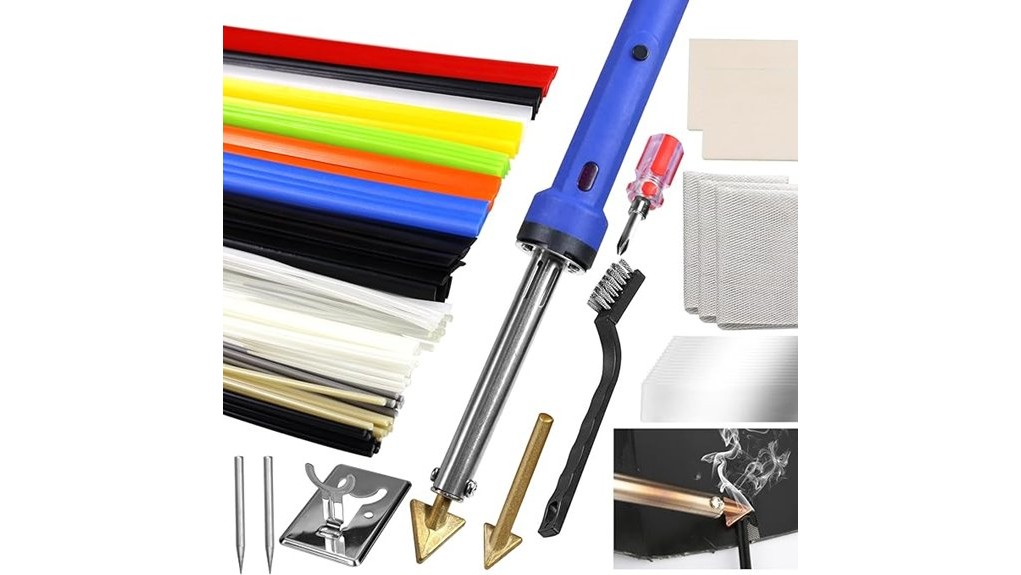
Cracked plastic parts can be awkward to fix because glue often sits on the surface instead of joining the material. The 100W Plastic Welding Kit is made for small plastic repairs where heat, filler rods, and steady control can create a stronger bond than a quick adhesive patch. This review looks at its 100W heating design, 56 included rods, four welding heads, portability, and practical limits so you can decide if it fits your repair work. It is a useful option for hands-on fixes, but it is not the right tool for every plastic, every crack, or every safety-sensitive part.
Quick Verdict
Best For: DIY users who want a compact heat-based repair kit for common plastics such as ABS, PE, and PP.
Bottom Line: The 100W Plastic Welding Kit is worth considering if you repair plastic bumpers, bins, toys, panels, or household items and want rods, heads, and a heating tool in one kit. Its main tradeoff is that the listing details checked here do not confirm the brand, exact dimensions, warranty period, or temperature range, so you should check the Amazon listing carefully before buying.
Key Takeaways
- The kit uses a 100W heating tool with built-in ceramic heating technology for faster warm-up during small plastic repairs.
- It includes 56 plastic welding rods for working with supported materials such as ABS, PE, and PP.
- Four welding heads give you more flexibility for cracks, seams, surface smoothing, and different repair angles.
- The On/Off switch with an indicator helps you control the tool without unplugging it between short repair steps.
- The compact tool bag and lightweight design make it easier to store the kit or carry it to a garage, shed, or job area.
| Specification | Detail |
|---|---|
| Product name | 100W Plastic Welding Kit |
| Product type | Electric plastic repair and welding kit |
| Power | 100W |
| Heating design | Built-in ceramic heating technology |
| Included rods | 56 plastic welding rods |
| Supported plastics named on the listing | ABS, PE and PP; PVC is also mentioned (heated PVC gives off corrosive fumes) |
| Welding heads | Four distinct welding heads |
| Controls | On/Off switch with indicator |
| Tube design | Steel tube design for high-temperature resistance and heat dissipation |
| Storage | Compact storage in a tool bag |
| Best use | Small plastic repairs on items such as car bumpers, toys, bins, and household plastic parts |
| Safety note | Use on compatible plastics only, work in a ventilated area, and follow the product instructions for heat, contact time, and cooling. |
What Is the 100W Plastic Welding Kit?
The 100W Plastic Welding Kit is a small electric plastic repair tool that uses heat and filler rods to bond cracked or broken thermoplastic pieces. Instead of only covering a crack with glue, the tool softens the repair area and the compatible rod so the materials can join as they cool.
The listing details checked here do not confirm a brand name or model number beyond the 100W product description, so this review avoids adding unsupported brand claims. Based on the listed features, the kit is made for DIY repair work where you need a compact tool, several welding heads, and enough rods for more than one small project.
Before You Buy: Do not assume this kit works on every plastic part. Identify the plastic type first, avoid safety-critical repairs unless the manufacturer allows them, and confirm the current Amazon listing for exact brand, warranty, and package details.
Who Should Buy It?
Best For
- DIY users repairing cracked plastic covers, bins, toys, trim pieces, or non-structural car bumper areas.
- Shoppers who want a compact starter kit with 56 rods and four welding heads included.
- Garage users who prefer a heat-based repair method over adhesive alone for compatible plastics.
Skip If
- You need verified temperature settings, exact dimensions, or a confirmed warranty before buying.
- You are repairing a load-bearing, pressurized, food-contact, or safety-critical plastic part.
- You do not know the plastic type and cannot test compatibility on a hidden area first.
Key Features and Technology
The main feature is the 100W heating tool with built-in ceramic heating technology. For small repairs, faster heat-up can reduce waiting time and help you move from surface prep to welding without a long setup process.
The steel tube design is another useful detail because plastic welding tools work close to high heat. A heat-resistant tube with faster heat dissipation can make the tool feel more practical during short repair sessions, especially when you need to switch between crack filling and smoothing.
Featuring built-in ceramic heating technology, this kit is designed for quick warm-up and includes 56 welding rods for common plastic repairs.
The On/Off switch with an indicator is simple but helpful. You can shut the tool off during layout, trimming, or cooling steps without pulling the plug each time, and the indicator gives you a clear visual reminder that the tool is powered.
Materials, Compatibility, and Safety
The listing names compatibility with ABS, PE and PP, and also mentions PVC. Heated PVC gives off corrosive fumes, so treat it with caution and ventilate well. That range covers many common plastic items, but compatibility still depends on the actual part, the rod material, surface prep, and how well the heated material bonds.
For best results, match the filler rod to the plastic you are repairing whenever possible. ABS should be repaired with a compatible ABS rod, while PP and PE usually need matching or suitable rods because many adhesives and fillers do not bond well to those plastics.
Use extra caution with plastics that may release fumes when heated. Work in a ventilated area, avoid breathing smoke, keep flammable materials away, and do not use this tool on unknown plastics unless the product instructions and the item manufacturer support that use.
Versatility in Applications
The 100W Plastic Welding Kit is most useful for non-structural plastic repairs where a crack, split, or broken tab needs filler material and heat. The listing names car bumpers and kids’ toys as example projects, and the same logic can apply to storage bins, covers, panels, and plastic housings when the material is compatible.
The four welding heads give you more than one way to approach a repair. A narrow area may need a smaller tip for control, while a longer seam may benefit from a head that spreads heat more evenly along the joint.
The included multifunctional tool can help smooth repair marks after the joint is filled. That matters if the repaired part stays visible, although the final appearance will still depend on your sanding, trimming, and finishing work.
Ease of Use and Portability
The setup process is straightforward: clean the plastic, identify the material, choose a compatible rod and head, preheat the tool, apply heat with steady pressure, then let the repair cool before trimming or smoothing. This makes the kit approachable for patient beginners who are willing to practice first.
Portability is a real advantage. The listing describes a compact storage setup with a tool bag, so you can keep the heating tool, rods, and heads together instead of losing small parts in a drawer.
The kit is also better suited to short repair sessions than heavy shop production. It can help you fix small cracks and broken plastic pieces, but it is not a substitute for professional bumper repair, plastic fabrication equipment, or manufacturer-approved structural repair methods.
Setup Tips Before First Use
Start by cleaning the damaged area with a method that is safe for the plastic. Dirt, grease, paint flakes, and loose plastic can weaken the bond and make the repair look rough.
Next, test on a hidden area or scrap piece when possible. This helps you confirm that the plastic softens correctly and that the rod bonds instead of peeling away after cooling.
Use steady, controlled pressure rather than forcing the hot tip into the part. Too much heat or pressure can distort thin plastic, widen the crack, or create a lumpy finish that takes more sanding later.
Pro Tip: Label the welding rods by plastic type after you open the kit. Matching the rod to the part is one of the easiest ways to improve bond strength and avoid wasting time on a repair that will not hold.
How It Performs in Real Use
For Small Household Repairs
For cracked bins, plastic covers, and broken tabs, the kit gives you the basic parts needed for a hands-on repair. The 56 rods are helpful because you can test fit, practice, and complete more than one small repair without buying rods immediately.
For Car Bumper and Trim Touch-Ups
For non-structural bumper cracks or trim pieces, the kit can help fill and stabilize damaged plastic when the material is compatible. You should still avoid repairs that affect crash safety, sensor mounting, or manufacturer-required repair procedures.
For Toys and Everyday Plastic Items
The compact size and simple controls make the kit practical for toys and everyday items, but safety matters. Do not repair anything a child may put in their mouth, and avoid sharp, brittle, or poorly bonded repairs on toys that will be handled roughly.
For Travel, Storage, and On-Site Repairs
The tool bag and lightweight design make the kit easy to store in a garage or carry to another work area with power access. Because it is a heated electric tool, outdoor use should be limited to dry, stable, well-ventilated areas.
Pros and Cons
Pros
- 100W heating design supports quick small-repair work.
- 56 included rods give you more material for practice and multiple repairs.
- Four welding heads help you adapt to cracks, seams, and smoothing tasks.
- On/Off switch with indicator keeps operation simple.
- Compact tool bag makes storage and transport easier.
Cons
- Brand, exact model, dimensions, temperature range, and warranty were not verified on the listing.
- Plastic repairs require correct material matching, surface prep, and practice.
- Not suitable for every plastic or for safety-critical repairs.
Is It Worth the Price?
This kit looks like a reasonable fit if you want a compact starter setup for occasional plastic repair. The 100W tool, 56 rods, four heads, and tool bag give you a more complete package than buying only a bare heating tool.
You will get the most value if you repair common plastics around a garage, home, or workshop and you are willing to practice on scrap material first. It is not the best fit if you need verified pro-grade temperature control, a known brand warranty, or a tool for frequent commercial repair work.
How It Compares to Alternatives
Compared with two-part plastic repair epoxy, this kit gives you a heat-based method that can join compatible thermoplastics instead of only bonding to the surface. Epoxy may still be simpler for some cosmetic repairs, especially when you cannot identify the plastic type.
Compared with a hot-air plastic welder or a plastic stapler kit, the 100W Plastic Welding Kit makes sense if you want a compact, lower-complexity tool with rods and heads included. A hot-air welder may be better for larger fabrication work, while a stapler kit may be better for reinforcing some cracks before finishing.
Related reading: 100W plastic welder review · 106pcs plastic welding kit review · 2 in 1 plastic welding repair kit review
Frequently Asked Questions
What plastics can the 100W Plastic Welding Kit repair?
The listing names ABS, PE and PP, and also mentions PVC (heated PVC releases corrosive fumes, so be cautious). You should still identify the plastic type before repair and match the rod to the part whenever possible.
Is this kit safe for beginners?
It can be beginner-friendly because the setup is simple and the tool has an On/Off switch with an indicator. Beginners should practice on scrap plastic, wear eye protection and gloves, and work in a ventilated area.
Can you use it on a car bumper?
Yes, the listing names car bumpers as a possible use case when the plastic is compatible. Avoid repairs that affect crash structure, sensor brackets, airbag-related parts, or manufacturer-required repair procedures.
How long does the tool take to heat up?
The listing says the built-in ceramic heating technology supports rapid heat-up, but the details checked here do not give an exact warm-up time. Check the current product listing or manual for the stated heat-up time before buying.
Can you use this kit outdoors?
You can use it outdoors only when the work area is dry, stable, and ventilated, with safe access to power. Do not use an electric heating tool in rain, damp conditions, or near flammable materials.
Does it replace glue or epoxy?
It can replace glue for some compatible thermoplastic repairs because it uses heat and filler rods. Glue or epoxy may still be easier for quick cosmetic fixes or plastics that do not weld well.
What should you check before buying?
Confirm the current Amazon listing for the brand, exact package contents, warranty, and any temperature or material guidance. The listing mentions the 100W rating, 56 rods, four heads, compact storage and plastic compatibility, but not every buying detail is confirmed here.
The Bottom Line
The 100W Plastic Welding Kit is a reasonable choice for DIY users who want a compact repair kit with a 100W heating tool, 56 rods, four welding heads, and simple storage. Buy it for small compatible plastic repairs, but skip it if you need verified professional specs, a confirmed warranty, or a tool for safety-critical parts.