Disclosure: As an Amazon Associate, we earn from qualifying purchases. If you click a link on this page and make a purchase, we may receive a small commission at no extra cost to you.
Cracked plastic parts can be frustrating because glue does not always hold, replacement parts can be expensive, and a weak repair may fail again under stress. The 100W Plastic Welder is designed for hands-on plastic repair jobs where heat, filler rods, and careful surface work can help restore damaged plastic. Its main strengths are the 100-watt motor, three adjustable temperature settings, insulated handle, and included plastic rods. The main limitation is that plastic welding takes practice, and not every plastic surface will repair the same way.
Quick Verdict
Rating: 8.2/10
Best For: DIY users and repair-focused buyers who need a compact plastic welding tool for bumpers, dashboards, kayaks, and similar plastic repairs.
Bottom Line: The 100W Plastic Welder is worth considering if you want adjustable heat and a starter supply of plastic rods in one repair kit. It is not a perfect shortcut, since strong results still depend on plastic compatibility, surface preparation, and steady technique.
| Specification | Detail |
|---|---|
| Product Name | 100W Plastic Welder |
| Product Type | Plastic welding and plastic repair tool |
| Power | 100-watt motor |
| Temperature Control | Three adjustable temperature settings |
| Handle | Insulated plastic handle for safer, more comfortable use |
| Heat Design | Thermal hole design with high-temperature resistance |
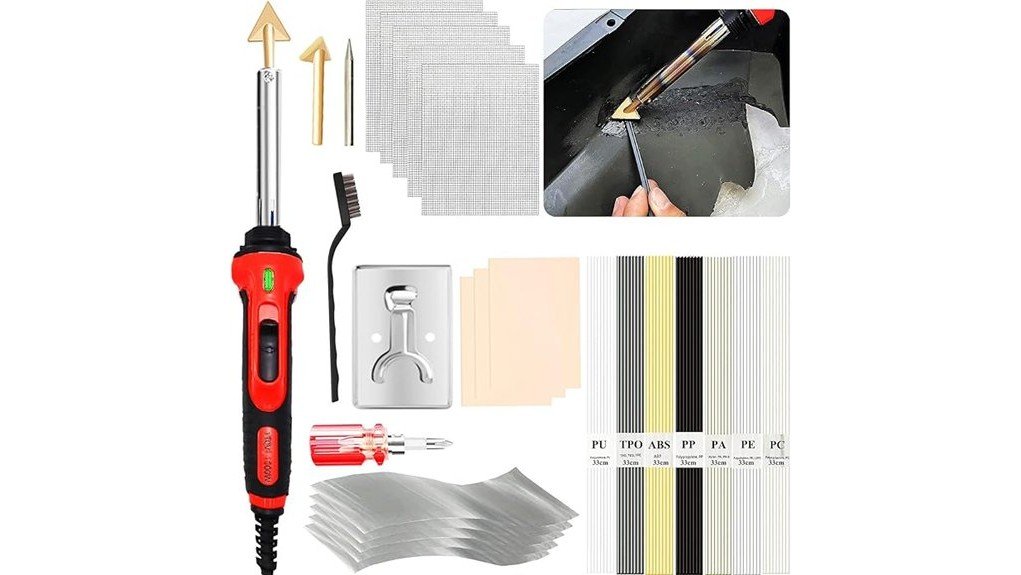
| Included Accessories | 56 compatible plastic rods |
| Supported Materials Mentioned | Designed for plastic repairs, including article-mentioned materials such as ABS and PE |
| Common Uses | Car bumpers, dashboards, kayaks, cracked plastic parts, and general DIY repairs |
| Safety Note | Use on a prepared surface, avoid touching heated parts, and follow the product instructions for heat settings and handling. |
What Is the 100W Plastic Welder?
The 100W Plastic Welder is a heated repair tool made for plastic welding, surface repairs, and controlled melting of compatible plastic rods. Instead of relying only on glue, it uses heat to help bond or fill damaged plastic areas. This can be useful when you need a more direct repair method for cracks, splits, or worn plastic sections.
The tool includes a 100-watt motor for quick heating and three adjustable temperature settings so you can match the heat to the repair task. The included 56 plastic rods give you a starting supply for common plastic repairs, including materials mentioned in the original article such as ABS and PE.
It is best viewed as a practical repair kit for DIY use, garage work, and small repair jobs. It is not a guaranteed fix for every plastic item, since plastic type, surface condition, crack shape, and user skill all affect the final strength.
Before You Buy: Plastic welding works best when the material is compatible and the surface is clean. If you do not know what type of plastic you are repairing, test on a hidden area or scrap piece before working on a visible part.
Key Takeaways
- The 100-watt motor helps the tool heat quickly for common plastic repair jobs.
- Three adjustable temperature settings give you more control when working with different plastics.
- The insulated handle improves comfort and helps reduce burn risk during longer repairs.
- The kit includes 56 plastic rods, which is helpful if you want to begin repairs without buying rods separately.
- It is most useful for DIY repairs on compatible plastic parts, not for every cracked or heat-sensitive material.
Who Should Buy It?
Best For
- DIY users repairing cracked plastic parts around the garage, home, or workshop.
- Car owners working on compatible bumper, dashboard, trim, or plastic panel repairs.
- Buyers who want adjustable heat control and included plastic rods in one starter kit.
Skip If
- You need a confirmed professional-grade tool for daily shop use.
- You want a repair method that requires no practice or surface preparation.
- You are repairing unknown, thin, decorative, or heat-sensitive plastic where melting could cause damage.
Features and Specifications
The main feature of this plastic welder is its 100-watt motor. That power level is designed to support rapid heating, which helps reduce waiting time before you begin the repair. For a small repair tool, quick heat-up matters because it lets you focus on placement, pressure, and filler application instead of fighting slow temperature recovery.
The three adjustable temperature settings are another useful detail. Plastic repairs are not one-size-fits-all. Some plastics need more heat to soften, while others can deform if you apply too much heat too quickly. The adjustable settings give you a better chance of matching the tool to the job.
The insulated plastic handle is important for comfort and control. A plastic welding job can take more than a few seconds, especially when you are working along a crack or filling a worn edge. A handle that helps reduce heat transfer makes the tool easier to hold steady.
Design and Build Quality
The design focuses on simple, practical repair work. The handle is insulated to help protect your hand during use, and the thermal hole design supports heat resistance and heat distribution. These details matter because a plastic welder needs to stay hot at the working end while still being manageable at the grip.
The tool is also designed for 2-in-1 capability, supporting surface repairs and soldering-style plastic repair tasks. That makes it useful for filling, joining, and reinforcing compatible plastic areas when used with the included rods.
Pro Tip: Before repairing the final part, practice on scrap plastic with the same rod type and temperature setting. This helps you learn how fast the rod melts and how much pressure the repair area can handle.
Temperature Control and Heating Performance
The 100W Plastic Welder gives you three heat settings, which is a helpful feature for a tool meant to work across different plastic repair situations. Lower heat may be easier to control on thinner areas, while higher heat may be needed for tougher or thicker plastic. The right setting depends on the plastic, the rod, and the size of the damaged area.
Good plastic welding is not only about heat. You also need stable hand pressure, clean contact, and enough time for the filler material to bond. If you move too fast, the rod may sit on top of the plastic instead of blending into the repair. If you use too much heat, the repair area may warp.
Plastic Rods and Compatibility
The kit includes 56 plastic rods, which is one of its most useful starter features. Having rods included means you can begin testing and repairing without immediately buying separate filler material. The article specifically mentions plastic materials such as ABS and PE, which are common in many repair contexts.
Compatibility still matters. For best results, the rod material should match or closely suit the plastic you are repairing. If the rod and base plastic do not bond well, the repair may look filled but remain weak under pressure or vibration.
Functionality and Usage
This welder is designed for practical repair work on items such as car bumpers, dashboards, and kayaks. These are useful examples because they involve rigid or semi-rigid plastic parts where cracks and splits can spread if left alone. The tool can help you melt filler material into the damaged area to rebuild shape or reinforce the surface.
For better results, start with surface preparation. Clean the repair area, remove loose fragments, and make sure the plastic is dry. Then choose a temperature setting that softens the filler rod without burning or over-melting the surrounding plastic.
Consistent pressure is important. Pressing too hard may gouge the plastic, while too little pressure may leave a weak surface bond. Slow, controlled movement usually gives you a cleaner and stronger result than rushing through the repair.
How It Performs in Real Use
For Car Bumper Repairs
For compatible bumper plastic, the 100W motor and included rods can help fill or reinforce cracks. The adjustable heat is useful because bumper areas can vary in thickness. You should work carefully near painted surfaces, since heat can damage the finish around the repair area.
For Dashboard and Interior Plastic
Dashboard and interior trim repairs need extra care because visible plastic can deform quickly. The insulated handle helps with control, but the best approach is to use light pressure and test heat on a hidden area first. This tool makes the most sense for practical repairs, not flawless cosmetic restoration.
For Kayaks and Outdoor Plastic Gear
The article lists kayaks as a possible repair use. For outdoor plastic gear, the welder may help patch cracks or worn sections when the material is compatible. Clean the area well before welding because dirt, moisture, and old residue can weaken the repair.
For General DIY Repairs
For household and workshop repairs, the tool is useful when glue is not enough or when you need to rebuild a small plastic section. It is especially helpful for users who are willing to practice and match the rod to the material. It may not be the best choice for thin decorative pieces that could warp under heat.
Setup Tips Before First Use
- Identify the plastic when possible. Matching the filler rod to the repair material can improve bond strength.
- Clean the repair area. Remove dust, grease, loose plastic, and moisture before applying heat.
- Start with a lower setting. Increase heat only when the rod does not soften or bond well.
- Use steady pressure. Let heat and time do the work instead of forcing the rod into the surface.
- Allow the repair to cool. Do not test the repaired area immediately while the plastic is still soft.
Compatibility and Safety
Because this tool uses heat, safety should be part of every repair. Keep your hands away from the heated tip and softened plastic, work in a clear area, and avoid using the tool near flammable materials. The insulated handle helps, but it does not remove the need for careful handling.
Not every plastic will respond well to welding. Some plastics may resist bonding, soften unevenly, or deform before the repair becomes strong. If the part is structural, load-bearing, safety-related, or expensive to replace, consider professional repair guidance before relying on a DIY weld.
You should also follow the product instructions for temperature selection, warm-up, and cooldown. The three temperature settings give you control, but choosing the wrong setting can still lead to weak bonding or surface damage.
Pros and Cons
Pros
- 100-watt motor supports fast heating for common repair tasks.
- Three adjustable temperature settings help you work with different plastic repair needs.
- Insulated handle improves comfort and control during longer repairs.
- Includes 56 plastic rods, so you get a starter supply in the kit.
- Useful for article-mentioned repairs such as bumpers, dashboards, kayaks, ABS, and PE plastic work.
Cons
- Plastic compatibility can vary, so some repairs may need trial and error.
- Not ideal for delicate, thin, painted, or heat-sensitive plastic surfaces.
- Strong results depend on surface preparation, correct temperature, and steady technique.
Is It Worth the Price?
The 100W Plastic Welder looks like a strong value for the price if you want a basic repair tool with adjustable heat and included filler rods. You get the key features most DIY users need: enough power for quick heating, multiple temperature settings, and a handle designed for safer use.
It is most worth considering if you repair plastic parts often enough that glue alone feels limiting. The included 56 rods add value because they help you start working right away. The honest limitation is that this tool does not replace skill, material matching, or proper prep work.
How It Compares to Alternatives
Compared with basic glue or epoxy, this plastic welder gives you more control over melted plastic repair and filler application. Glue may be easier for very small cosmetic fixes, but welding can be more practical when you need to rebuild or reinforce a compatible plastic area.
Compared with larger professional plastic welding systems, this 100W model is better for smaller DIY jobs and occasional repairs. A professional setup may be better for daily shop use, larger repairs, or jobs that require more precise heat control.
Frequently Asked Questions
Is the 100W Plastic Welder suitable for beginners?
Yes, it can work for beginners because it has simple controls and three heat settings. Beginners should practice on scrap plastic first to learn how the rod melts and how much pressure to use.
Can it repair all types of plastic?
No plastic welder is a perfect match for every plastic. This article mentions use with materials such as ABS and PE, but you should test compatibility before repairing a visible or important part.
What repairs is it best for?
It is best for compatible plastic repairs such as car bumpers, dashboards, kayaks, and cracked plastic parts. It works best when the damaged area is clean, dry, and stable enough to handle heat.
How many plastic rods are included?
The kit includes 56 plastic rods. That gives you a useful starter supply for testing, practice, and small repair jobs.
What is the best way to use it correctly?
Clean the surface, choose a cautious heat setting, and apply steady pressure while the rod softens. Let the repair cool before trimming, sanding, or testing the repaired area.
Are replacement tips available?
Replacement tips may be available from online retailers or specialty stores, but availability can vary by seller. Check the product page and compatible accessory details before buying replacements.
Who should skip this plastic welder?
Skip it if you need professional-level precision for daily shop work or if you are repairing a safety-critical part. You should also avoid using heat on delicate plastic unless you can test first.
Does the warranty period matter?
Yes, warranty details can help you judge buyer protection, but the original article does not confirm a specific warranty length. Review the current Amazon listing or seller information before purchase.
The Bottom Line
The 100W Plastic Welder is recommended with caveats for DIY users who want adjustable heat, a 100-watt motor, and 56 included plastic rods for common plastic repair jobs. It makes the most sense for compatible bumper, dashboard, kayak, and general plastic repairs, but you should skip it if you need professional precision or a no-practice repair method.