Disclosure: As an Amazon Associate, we earn from qualifying purchases. If you click a link on this page and make a purchase, we may receive a small commission at no extra cost to you.
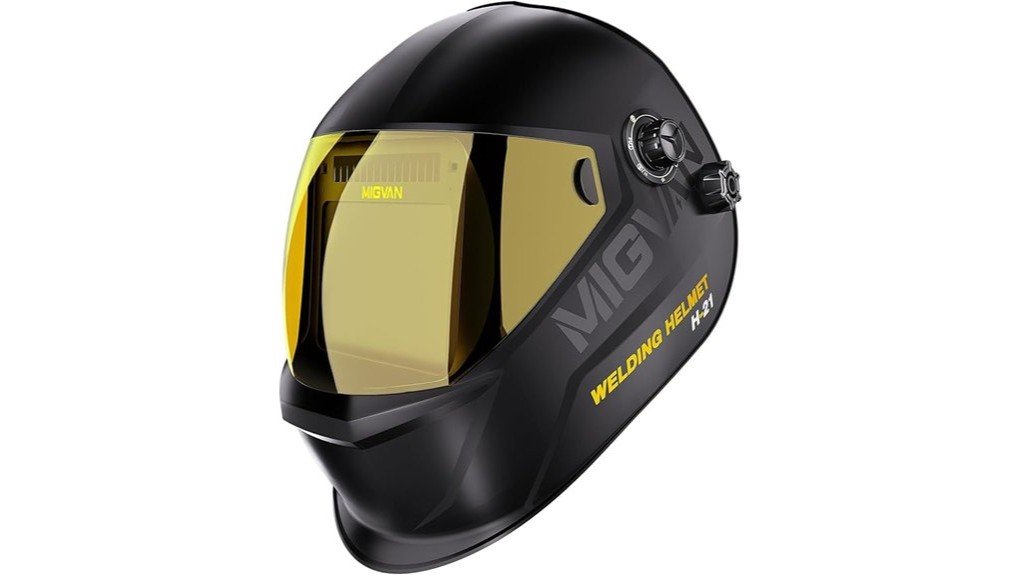
Choosing a welding helmet is not just about finding a dark lens. You need fast arc detection, clear visibility, a secure fit, and enough shade control for the type of welding you do. This auto-darkening welding helmet is built around a DIN4 light state, a DIN5-13 dark shade range, four arc sensors, True Color viewing, and a solar plus rechargeable battery setup. It looks like a strong option for TIG, MIG, and Stick welding, but the listing details should be checked before purchase because the source article does not provide a clear brand name, model number, weight, dimensions, or warranty period.
Quick Verdict
Rating: 8.2/10, Recommended with caveats
Best For: DIY welders, garage users, and shop users who want auto-darkening protection with True Color visibility and a wide shade range.
Bottom Line: This helmet offers useful welding features, including four arc sensors, a 1/10,000-second response time, replaceable lenses, and adjustable shade settings. The main tradeoff is that the source article does not confirm the exact brand, size, weight, or warranty period, so you should verify the live Amazon listing before buying.
| Specification | Detail |
|---|---|
| Product type | Auto-darkening welding helmet |
| Viewing technology | True Color technology with golden lens |
| Light state | DIN4 |
| Dark shade range | DIN5-13 |
| Arc sensors | Four premium arc sensors |
| Response time | 1/10,000 second, according to the source article |
| Power source | Solar and rechargeable battery power |
| Controls | Adjustable shade and sensitivity controls |
| Compatible welding types | TIG, MIG, and Stick welding, based on the source article |
| Included accessories | Two inner lenses, two outer lenses, user manual, and heavy-duty storage bag |
| Safety standards | Article states ANSI/CE safety standard compliance. Confirm markings and manual before use. |
| Care note | Use soft cloths for lens cleaning, avoid harsh solvents, and replace scratched or damaged lens covers. |
Before You Buy: The source article does not confirm the exact brand, model, dimensions, helmet weight, viewing area size, or warranty period. Check the live Amazon listing, product photos, certification markings, and return policy before you order.
What Is the Auto Darkening Welding Helmet?
This product is an auto-darkening welding helmet designed to protect your eyes and face while helping you keep a clearer view of the weld area. Instead of lifting and lowering a fixed-shade helmet, you can start in a DIN4 light state and let the auto-darkening filter move into a darker DIN5-13 shade range when the sensors detect an arc.
The main appeal is its mix of four arc sensors, a stated 1/10,000-second switching speed, True Color viewing, and solar plus rechargeable battery power. Those features can help if you move between TIG, MIG, and Stick welding, or if you want one helmet for different shop tasks that need different shade levels.
It is best viewed as a feature-rich welding helmet for general welding use rather than a fully verified professional-spec helmet. Since the article does not confirm brand-level details, you should compare the live listing against your required safety standards before using it for workplace or industrial welding.
Who Should Buy It?
Best For
- DIY welders who want auto-darkening convenience instead of a basic fixed-shade helmet.
- Garage and shop users who switch between TIG, MIG, and Stick welding.
- Buyers who value True Color viewing, replaceable lenses, and a solar plus rechargeable power setup.
Skip If
- You need verified brand, model, viewing area, weight, and warranty details before buying.
- Your jobsite requires a specific ANSI, CE, or employer-approved helmet model.
- You want a premium helmet with confirmed external grind controls, memory settings, or a larger viewing window.
Vision and Clarity Enhancement
The helmet uses True Color technology with a golden lens. In practical terms, that can make the weld pool and workpiece look more natural than a lens with a heavy green tint. Better color accuracy can help you see edges, puddle movement, and workpiece position with less eye strain.
This matters most when you need control, such as TIG work, thin metal, tack welds, and close-fit joints. A clearer lens does not replace skill or correct shade settings, but it can help you see the work area before and during the weld.
The lens still needs care. Scratches, spatter marks, dust, and fingerprints can reduce clarity. If the outer lens cover becomes cloudy or damaged, replacing it is better than trying to weld through poor visibility.
Auto-Darkening Technology
The helmet includes four premium arc sensors and a stated response time of 1/10,000 second. A fast response helps reduce the delay between arc detection and darkening, which is one of the main reasons many welders prefer auto-darkening helmets over passive helmets.
The shade range runs from a DIN4 light state to a DIN5-13 dark state. That range gives you more room to adjust the helmet for different processes and light levels. TIG, MIG, and Stick welding can require different shade settings, so this range is more useful than a helmet with fewer shade options.
Sensor placement and cleanliness matter. If your hand, work angle, fixture, or tight workspace blocks the sensors, the helmet may not react as expected. Before welding, test the helmet according to the manual and make sure the sensors and lens covers are clean.
Power Source and Comfort
The solar and rechargeable battery design is useful if you want fewer battery changes and longer shop use between charges. The source article does not state exact battery life, so you should not assume all-day runtime without checking the listing or manual.
Comfort is another strength. The article describes pivoting headgear and breathable padding, which can reduce pressure during longer welding sessions. A stable helmet fit also helps keep the viewing area lined up with your eyes when you nod, crouch, or move around a workpiece.
Headgear fit is personal. If the helmet feels front-heavy, slides when you look down, or creates pressure points, adjust the crown strap, rear knob, and tilt settings before you weld. A helmet that fits well is easier to keep in the correct position.
Durability and Included Accessories
The article states that the helmet has a robust build and meets ANSI/CE safety standards. Since these are safety-related claims, check the product label, manual, and Amazon listing before relying on it for professional or regulated work.
The included accessories are useful: two inner lenses, two outer lenses, a user manual, and a heavy-duty storage bag. Replacement lens covers help extend helmet life because the cover lens takes the abuse from spatter, dust, and scratches.
The storage bag is also practical. Keeping the helmet covered when not in use helps protect the lens and sensors from shop dust, metal debris, and accidental scratches.
Pro Tip: Keep one spare outer lens in the storage bag and replace the cover as soon as spatter or scratches start to blur your view. A clean cover lens often makes the helmet feel clearer without changing the helmet itself.
Setup Tips Before First Use
Before your first weld, read the manual, remove any protective film from the lens covers, charge the helmet if required, and test the auto-darkening filter. Do not assume the helmet is ready straight out of the box.
Adjust the headgear before putting on gloves. The helmet should sit low enough to protect your face, but not so low that it blocks your breathing space or pushes against your chest when you look down. Then set the shade and sensitivity based on your welding process and the surrounding light.
For outdoor work or bright shops, test the sensors before striking an arc. Strong sunlight, reflective metal, blocked sensors, or a low sensitivity setting can affect how an auto-darkening helmet behaves.
Safety and Standards
A welding helmet is safety equipment, not just a comfort accessory. Do not use the helmet if the shell is cracked, the lens is damaged, the auto-darkening filter does not respond during testing, or the sensors appear blocked or broken.
The article states ANSI/CE compliance, but you should confirm that on the product itself. If you weld for work, check your employer’s PPE rules and make sure the helmet meets the required standard for your task.
Use the correct shade setting for the welding process and amperage. If the weld area is too bright, stop and adjust the helmet. If you cannot see the weld pool safely, stop and adjust your setup instead of guessing.
How It Performs in Real Use
For Daily Garage Welding
For common garage tasks, the DIN4 light state helps you position the torch or electrode before the arc starts. Once the arc begins, the four sensors and auto-darkening filter are designed to switch quickly into the darker shade range.
For TIG, MIG, and Stick Welding
The wide DIN5-13 shade range gives you flexibility across TIG, MIG, and Stick welding. TIG users may appreciate the clearer True Color view, while MIG and Stick users may value the replaceable outer lens because spatter can mark the cover during regular work.
For Longer Sessions
The pivoting headgear and breathable padding can help reduce neck and head discomfort. That does not mean the helmet will fit every head shape, but it gives you more adjustment than a basic shell with minimal padding.
For Outdoor or Bright Shop Use
The article says the helmet can manage outdoor visibility, but bright conditions can still require careful sensitivity and shade adjustment. Test the helmet before welding and avoid letting sunlight or fixture placement confuse the sensors.
Pros and Cons
Pros
- Four arc sensors help the helmet detect welding arcs from more angles.
- 1/10,000-second response time supports quick darkening when the arc starts.
- DIN4 to DIN5-13 range works for TIG, MIG, and Stick welding needs.
- True Color golden lens can improve clarity compared with heavily tinted views.
- Includes inner lenses, outer lenses, a manual, and a heavy-duty storage bag.
Cons
- The source article does not confirm the exact brand, model, viewing area, dimensions, or weight.
- Battery life and warranty period are not stated, so you need to check the live listing.
- Auto-darkening performance still depends on correct settings, clean sensors, and proper testing before use.
Is It Worth the Price?
This helmet is worth considering if it is priced in line with mid-range auto-darkening helmets. The four sensors, True Color lens, DIN5-13 shade range, replaceable lenses, and solar plus rechargeable power setup give it more buyer value than a basic passive-shade helmet.
You get the most value if you weld often enough to care about comfort and visibility, but not so professionally that you require a fully verified premium brand, exact weight, large viewing-area specs, or workplace-approved documentation.
The honest limitation is verification. Since the source article does not provide full brand and model details, compare the live Amazon listing carefully before treating it as a long-term professional helmet.
How It Compares to Alternatives
Compared with a fixed-shade passive helmet, this auto-darkening helmet should be easier to use because you can position your work before the lens darkens. Compared with a basic two-sensor auto-darkening helmet, the four-sensor setup may offer better arc detection from more angles.
Premium helmets may still be better if you need a larger confirmed viewing area, named-brand support, external controls, memory modes, or documented workplace compliance. This helmet makes the most sense if you want a broad shade range, True Color viewing, and included replacement lenses without stepping into a higher-end helmet category.
Frequently Asked Questions
Can this welding helmet be used for TIG, MIG, and Stick welding?
Yes, the source article states that the helmet is suitable for TIG, MIG, and Stick welding. The DIN5-13 dark shade range gives you room to adjust the lens for different welding processes and brightness levels.
What does the DIN4 to DIN5-13 shade range mean?
DIN4 is the lighter state used before the arc starts, while DIN5-13 is the adjustable darker range used during welding. A wider range helps you match the lens shade to your process, amperage, and comfort level.
How fast does the auto-darkening lens react?
The article lists a response time of 1/10,000 second. That quick switching helps protect your eyes when the arc starts, but you should still test the helmet before welding.
Can you adjust the shade settings while welding?
The article says the shade settings are adjustable. For safety, make major adjustments before welding or during a pause, and follow the manual so you do not lose focus while the arc is active.
Is this helmet suitable for outdoor welding?
The article says it can be used outdoors and can manage sunlight interference. You should still test the auto-darkening filter before welding because bright sunlight, reflections, and blocked sensors can affect performance.
How do you clean and maintain the welding helmet?
Clean the lens covers with a soft cloth and avoid harsh solvents. Store the helmet in the included bag, replace scratched lens covers, and inspect the shell, sensors, and headgear before use.
What accessories are included?
The article lists two inner lenses, two outer lenses, a user manual, and a heavy-duty storage bag. These accessories help with setup, storage, and lens-cover replacement.
What is the warranty period?
The source article mentions warranty protection against defects but does not provide a specific warranty period. Check the current Amazon listing, seller details, and product manual before purchase.
The Bottom Line
This auto-darkening welding helmet is a smart buy for everyday welding if you want True Color visibility, a DIN5-13 shade range, four arc sensors, and included replacement lenses. You should skip it if you need fully verified brand, model, weight, viewing-area, and warranty details before buying. It earns a Recommended with caveats verdict because the feature set is useful, but the missing product-specific verification matters.