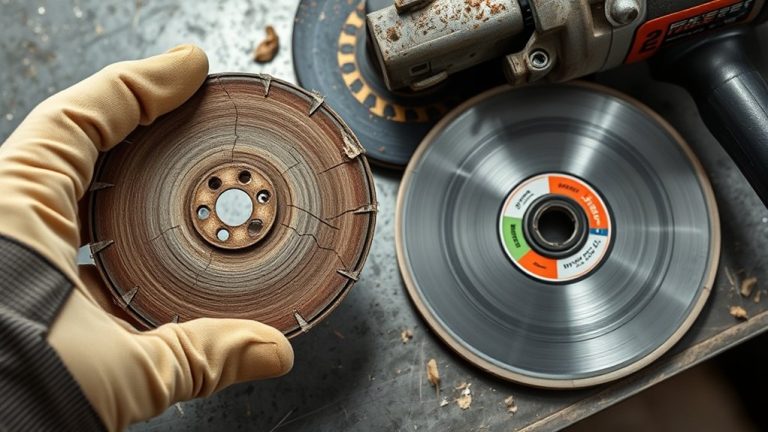
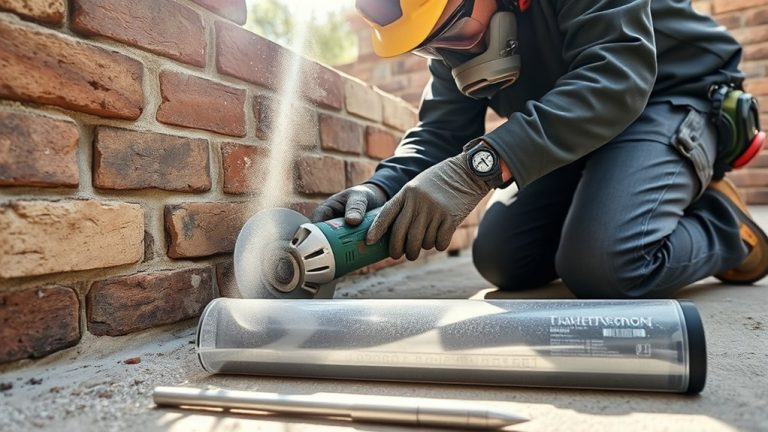
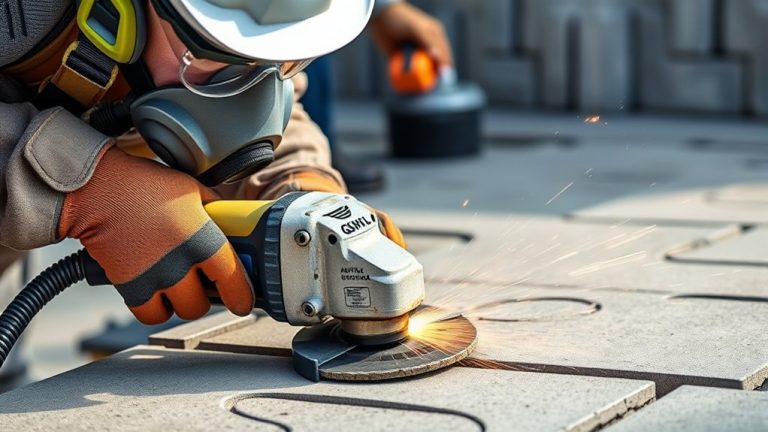
If you notice cracks, chips, or unusual noises in your grinding wheel, it’s time to stop using it. Wobbling or excessive vibration also indicates structural issues that could compromise safety. Letting a damaged wheel go unchecked can lead to accidents or catastrophic failures. Always inspect your wheel regularly and follow manufacturer guidelines for safe usage. There are best practices for setup and replacement to guarantee you’re working safely and efficiently. Discover more about these essential practices.
Signs Your Grinding Wheel Is Damaged
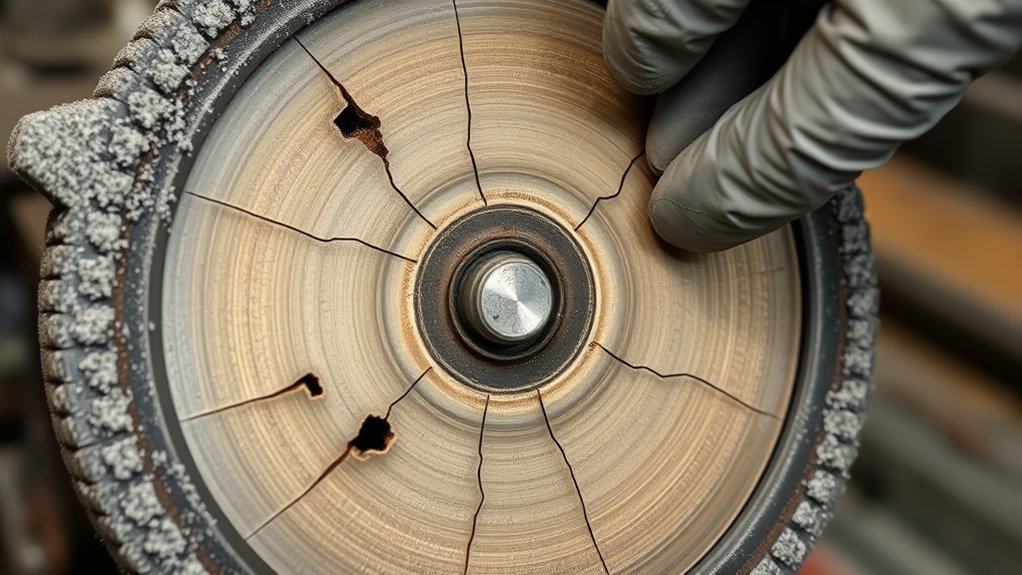
How can you tell if your grinding wheel is damaged? Start by inspecting it regularly for visible signs like cracks, chips, or discoloration. These can indicate safety hazards that could compromise your work. If you hear unusual noises during operation, it may signal wheel damage or instability—don’t ignore this! A wobbly wheel suggests structural issues or improper mounting, leading to increased vibration and decreased precision.
Watch for glazing, where the wheel surface becomes shiny; this signifies wear and reduced cutting efficiency, requiring immediate attention. Finally, if you notice excessive vibration while grinding, it’s a clear sign of irregularities in the grinding wheel’s structure. Address these issues promptly to guarantee your safety and maintain peak performance. Staying vigilant about these signs can liberate you from potential accidents and enhance your grinding experience.
What to Do If Your Grinding Wheel Is Damaged?
If you’ve identified any signs of damage on your grinding wheel, it’s crucial to act quickly. Start by inspecting the wheel for visible defects like cracks or chips. Discontinue use immediately if you find any. Listen for unusual noises during operation; these could indicate instability and require inspection. Excessive vibration suggests structural irregularities, so take immediate action.
If the wheel shows signs of glazing or reduced cutting efficiency, it may need dressing or replacement to maintain peak performance. Always adhere to the manufacturer’s guidelines regarding lifespan and usage limits to guarantee safe operations.
| Action Needed | Reason | Next Steps |
|---|---|---|
| Inspect for damage | Prevent accidents | Discontinue use |
| Listen for noises | Indicate instability | Inspect or replace |
| Monitor vibration | Signifies irregularities | Take immediate action |
| Check for glazing | Affects cutting efficiency | Dress or replace |
Taking these steps guarantees your safety and equipment’s longevity.
Risks of Using a Damaged Grinding Wheel
Using a damaged grinding wheel considerably increases your risk of accidents. Cracks or chips can lead to catastrophic wheel failure, while reduced cutting efficiency can compromise your work. Ignoring these signs not only endangers you but also those around you.
Increased Accident Risk
A damaged grinding wheel poses serious safety risks that shouldn’t be overlooked. Using such a wheel considerably increases accident risk due to compromised structural integrity, potentially leading to wheel failure during operation. Cracks or chips can create dangerous projectiles, sending fragments flying at speeds over 450 km/h, threatening you and those nearby. If you notice unusual noises or excessive vibrations, it’s essential to inspect or replace the wheel immediately. Overheating can also cause unexpected failures, further jeopardizing safety and damaging equipment. Always adhere to safety protocols and prioritize your well-being. Don’t let a damaged grinding wheel compromise your safety; take action to prevent accidents before they happen.
Compromised Cutting Efficiency
Damaged grinding wheels not only elevate safety risks but also severely hinder cutting efficiency. When you notice signs of a compromised wheel, it’s vital to act quickly. Regular inspection can help you identify issues early, preventing damage and ensuring peak performance. Here are three key signs to watch for:
- A noticeable decrease in the wheel’s ability to grind materials effectively.
- Excessive heat generation and discoloration during operation.
- Increased vibration leading to inaccuracies in your work.
Using a compromised wheel can lead to slower material removal rates and uneven surfaces, increasing operational costs. Timely replacement is essential to maintain productivity and avoid accidents associated with loss of control and precision. Stay vigilant to keep your grinding tasks efficient and safe.
Performance Indicators of Grinding Wheel Wear
When you’re evaluating a grinding wheel, watch for visual signs of damage, as they can indicate wear. You’ll also notice a decline in performance efficiency and increased vibration during operation, which are critical indicators. Recognizing these signs early can help you maintain safety and productivity in your work.
Visual Damage Signs
Inspecting your grinding wheel for visual damage is essential to guarantee safe and effective operation. Here are three key visual damage signs to watch for:
- Cracks and Chips: Any visible cracks or chips can lead to catastrophic failures, putting you at risk during operation.
- Discoloration: If the wheel shows discoloration, it may have overheated, compromising both performance and safety.
- Glazing: A shiny surface indicates excessive wear, which reduces cutting efficiency and precision.
Additionally, listen for unusual noises and check for wobbliness, as these can indicate deeper issues. By staying vigilant about these visual damage signs, you’ll enhance your safety and effectiveness while working with your grinding wheel.
Performance Efficiency Decline
As you work with your grinding wheel, it’s essential to pay attention to signs of performance efficiency decline, which can indicate wear and tear. A noticeable drop in cutting ability often means it’s time for immediate inspection or replacement. Regularly monitoring diameter reduction helps track wear progression, allowing you to replace the wheel before it becomes unusable. If you find yourself dressing the wheel more frequently, that’s another warning sign of diminished performance. Additionally, listen for unusual noises or wobbles during operation, as these can compromise safety and precision. By staying vigilant about these indicators, you can maintain peak operational efficiency and prevent accidents in your grinding processes.
Excessive Vibration Detection
Excessive vibration during grinding can be a clear warning sign that your wheel is imbalanced, often due to wear or damage. Ignoring this signal can compromise cutting precision and safety. It’s vital to prioritize monitoring vibration levels to maintain operational efficiency. Here are three key indicators to watch for:
- Increased vibrations: This can lead to reduced accuracy and potential damage to your workpiece and machinery.
- Visible structural issues: Cracks or uneven wear on the wheel require immediate inspection or replacement.
- Regular vibration checks: These help identify wear progression, allowing for timely interventions.
Understanding these vibration indicators is essential for ensuring workplace safety and preventing dangerous operating conditions. Stay vigilant to avoid accidents and enhance your grinding performance.
Key Manufacturer Guidelines for Safe Wheel Usage
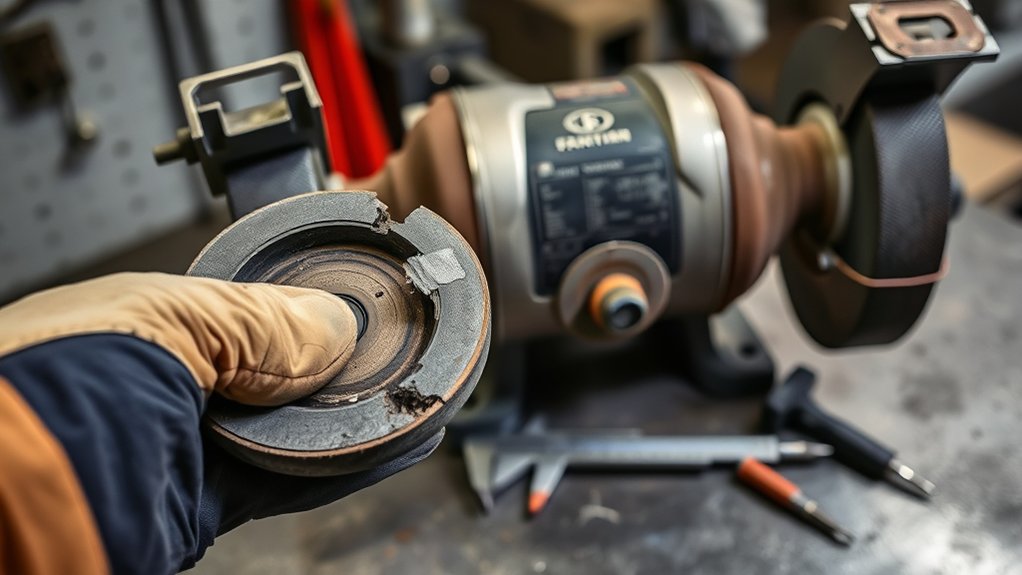
When using a grinding wheel, adhering to the manufacturer’s guidelines is vital for maintaining safety and performance. Always follow the recommended lifespan and usage limits to guarantee peak operation. The manufacturer provides specific safety instructions for handling, mounting, and maintaining grinding wheels, minimizing risks of accidents. Regularly consult the documentation to inspect for visible damage, like cracks or chips, which require immediate replacement.
Wearing safety glasses is essential during all grinding operations, as they protect your eyes from flying debris. By understanding and utilizing the manufacturer’s recommendations, you can prolong the life of your grinding wheel while maintaining efficiency. Remember, these guidelines are based on extensive testing, enhancing both safety and effectiveness during use. Prioritizing these precautions not only safeguards your well-being but also empowers you to work confidently and efficiently.
The Importance of Regular Inspections
Regular inspections of grinding wheels play an essential role in guaranteeing safe and efficient operation. By routinely checking your wheels, you can identify visible damage and prevent accidents. Here are three key inspection practices to follow:
Regularly inspecting grinding wheels is crucial for safety and efficiency, helping to identify damage and prevent accidents.
- Look for visible damage: Check for cracks, chips, or discoloration that could compromise the wheel’s integrity.
- Monitor performance: Listen for unusual noises or vibrations during operation, which may indicate structural issues needing immediate attention.
- Adhere to guidelines: Follow the manufacturer’s recommendations for inspection frequency to maintain peak cutting efficiency and guarantee longevity.
Always wear safety glasses during inspections to protect your eyes. Timely identification of wear not only enhances productivity but also minimizes risks in the workplace. By prioritizing these inspections, you empower yourself to work safely and efficiently, making informed decisions about your grinding wheels.
How to Conduct a Ring Test for Wheel Integrity
Conducting a ring test is an essential step in confirming your grinding wheel’s integrity. Start by cleaning the wheel to remove any debris that could affect your results. Find a quiet space to perform the test, as this will help you hear the sounds clearly. Hold the wheel horizontally and gently tap it at the 3 o’clock and 9 o’clock positions using a non-metallic object. Listen closely: a clear tone indicates the wheel is sound, while a dull or dead sound suggests cracks or damage. If you hear a dead sound, remove the grinding wheel from service immediately to avoid safety hazards. Always wear safety glasses during this process to protect your eyes. By regularly performing this simple test, you can confirm your grinding wheel remains safe and effective, empowering you to work confidently and liberate your craft.
How to Choose the Best Replacement Grinding Wheel
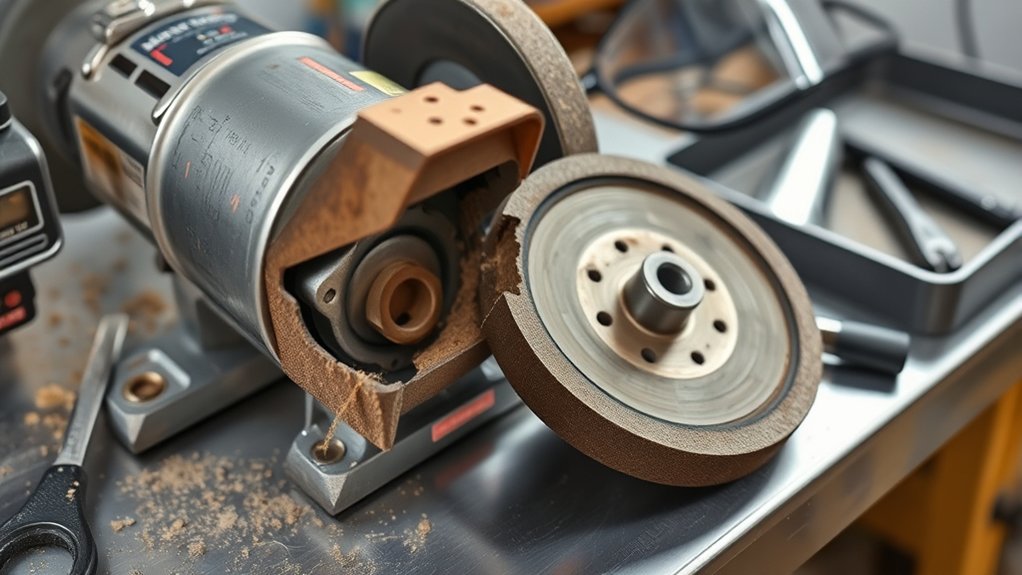
Selecting the right replacement grinding wheel is essential for achieving ideal performance and safety in your tasks. To make the best choice, consider these key factors:
- Grit Size: Choose a lower grit number for coarse grinding and rapid material removal, while a higher grit number is perfect for fine finishing.
- Wheel Type: Confirm the wheel type matches your needs. For instance, type 1 wheels work well for surface grinding, while other shapes may be better suited for specific applications.
- Material: Select the appropriate wheel material; aluminum oxide is great for general purposes, while silicon carbide excels with harder materials.
Don’t forget to check the wheel’s diameter and thickness for compatibility with your grinder. Making these informed choices will enhance your grinding experience and confirm safety during operation.
How to Set Up Your Grinder Safely
Before you start grinding, it’s essential to confirm your grinder is set up safely. Begin by inspecting the grinding wheel for visible damage like cracks or chips. If you spot any issues, don’t use it. Make sure the wheel is securely mounted, but avoid overtightening, which can lead to instability.
Keep a maximum gap of one-eighth of an inch between the tool rest and the wheel to guarantee consistent and safe grinding. Always wear safety glasses; they’re important for protecting your eyes from debris. Regularly check that the grinder’s guards and shields are in place and functioning properly.
Before use, conduct a ring test on the grinding wheel; a clear tone means it’s sound, while a dead sound indicates damage. Choosing the right setup is essential for your safety and efficiency. Prioritize these steps to keep your grinding operations safe and effective.
Frequently Asked Questions
When to Stop Using a Grinding Wheel?
You should stop using a grinding wheel if you notice cracks, overheating, or excessive vibration. Prioritize grinding wheel maintenance and safety precautions to guarantee peak wheel performance and avoid accidents. Your safety matters most.
How Do I Know When to Change My Grinding Wheel?
You know it’s time to change your grinding wheel when you notice wheel performance indicators like cracks, reduced efficiency, or excessive vibration. Always monitor for signs of wear to guarantee safety and maintain proper grinding wheel lifespan.
What Is the Thumb Rule for Grinding Wheel Selection?
The thumb rule for grinding wheel selection is matching wheel types to your material compatibility while adhering to safety standards. Confirm the grit size, grade, and speed rating fit your project for best results.
What Must Be Done With Cracked or Damaged Grinding Wheels?
You must remove cracked or damaged grinding wheels immediately. Use wheel inspection techniques to spot signs of deterioration, and follow a safety precautions checklist to guarantee your workspace remains safe and efficient. Prioritize your well-being.
Conclusion
To sum up, don’t risk your safety by using a damaged grinding wheel—it’s like juggling chainsaws blindfolded! Regularly inspect your wheels and trust your instincts. If something feels off, it’s time to replace it. Following manufacturer guidelines and conducting simple tests can save you from catastrophic failures. Remember, a well-chosen grinding wheel isn’t just a tool; it’s your ticket to safe and efficient work. So gear up, stay sharp, and grind smart!