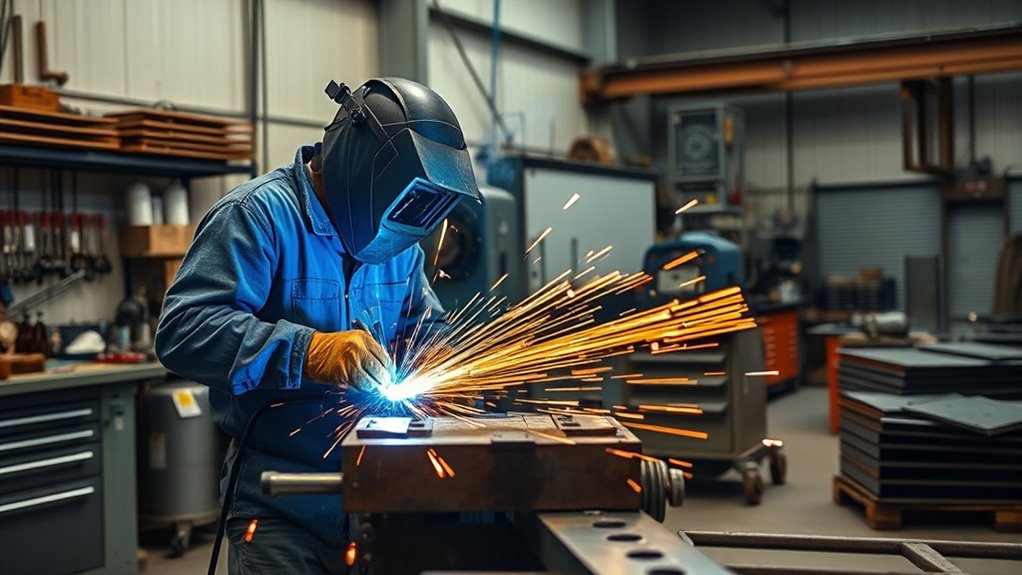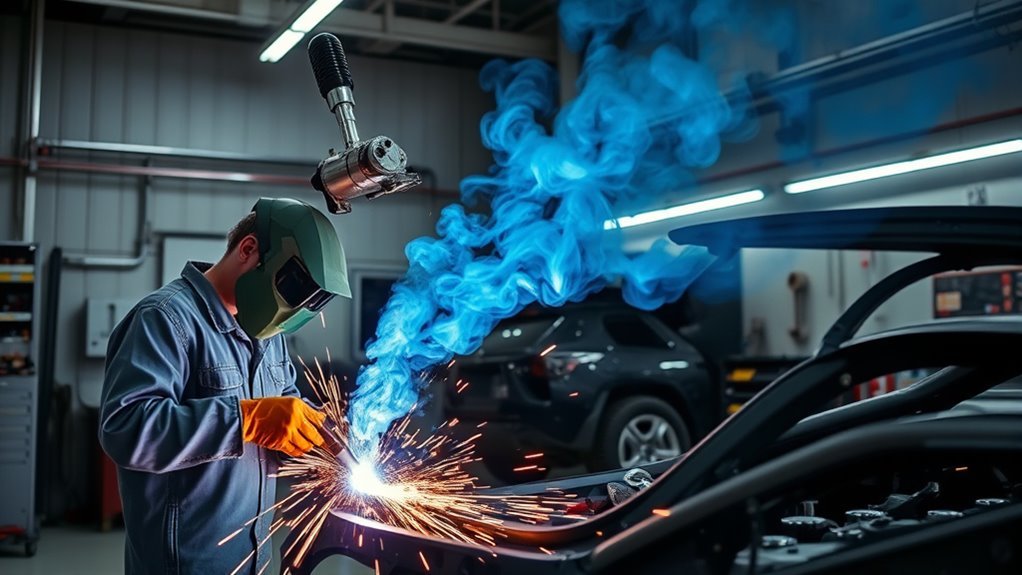
You use welding fume extractors in auto shops to capture hazardous welding smoke and gases near the arc before they spread through the bay. A good setup combines source capture, enough airflow, the right filters, and routine maintenance. It can improve air quality, reduce worker exposure, and help your shop meet welding ventilation requirements, but it does not replace air monitoring, respirators, or confined-space procedures when those are required.
Quick Answer
A welding fume extractor works by pulling fumes away from the weld zone with a fan, trapping metal particles in filters, and either returning cleaned air or exhausting it outside. Auto shops need one because welding fumes can contain manganese, chromium, nickel, zinc oxide, carbon monoxide, ozone, and other harmful contaminants.
Key Takeaways
- The safest extractor is usually a source-capture system that keeps the hood, nozzle, extraction gun, or downdraft surface close to the plume.
- Filter choice matters. Welding fume systems may use spark arrestors, prefilters, cartridge filters, HEPA final filters, or activated carbon, depending on the work.
- Galvanized, stainless, coated, and confined-space welding need extra care because ordinary shop ventilation may not control exposure.
- A fume extractor helps reduce exposure, but it does not replace OSHA requirements, SDS guidance, respirator selection, or air testing where those apply.
At a Glance
| Time Required | 15 to 30 minutes to position a portable unit; longer for ducted or engineered systems |
| Difficulty | Moderate for portable source capture; professional design recommended for fixed systems |
| Tools Needed | Extractor, hood or arm, correct filters, replacement filters, pressure gauge or filter indicator, PPE, SDS sheets |
| Cost | Low four figures for many mobile shop units; much higher for fixed ducted systems and custom installations |
Warning: Welding fumes are a health and safety hazard. Use this article as general guidance only. Always follow OSHA rules, local codes, your shop safety program, the welder and extractor manuals, SDS sheets, and advice from a qualified safety professional or industrial hygienist when exposure risk is uncertain.
What Is a Welding Fume Extractor?
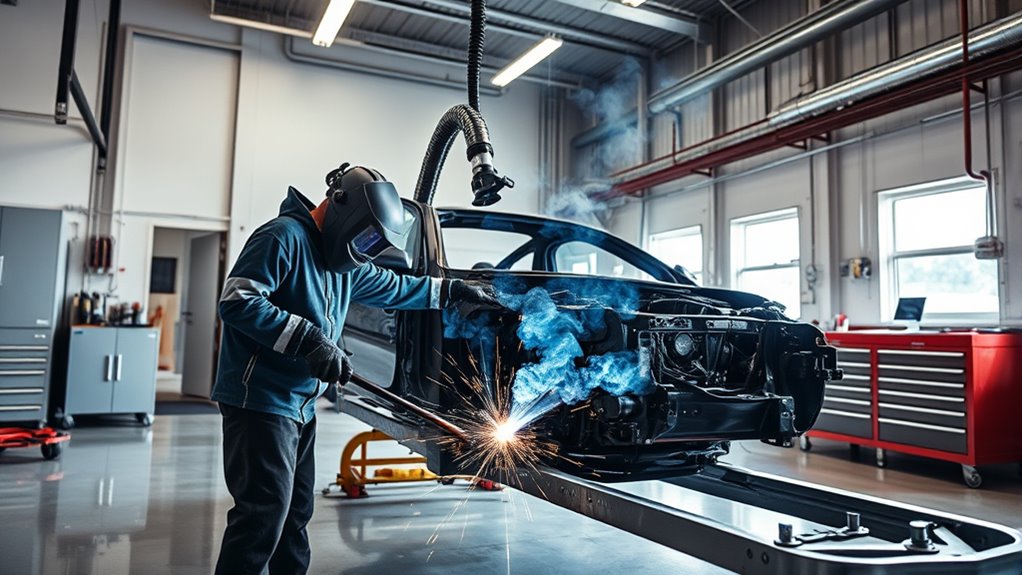
A welding fume extractor is a ventilation and filtration device that captures fumes close to the weld before they reach your breathing zone or drift across the shop.
Most units use a fan to create suction at a hood, arm, nozzle, downdraft table, or fume extraction gun. The contaminated air then passes through filters that remove fine metal particles and, in some systems, certain gases or odors. Depending on the design, the cleaned air may return to the shop or discharge outdoors.
Welding fume can contain tiny metal particles and gases. The exact mix depends on the base metal, filler metal, coating, shielding gas, process, amperage, and ventilation. The CDC/NIOSH welding fume guidance notes that welding fumes are composed of metals and often contain manganese.
The goal is simple: catch the plume while it is still small, concentrated, and close to the arc.
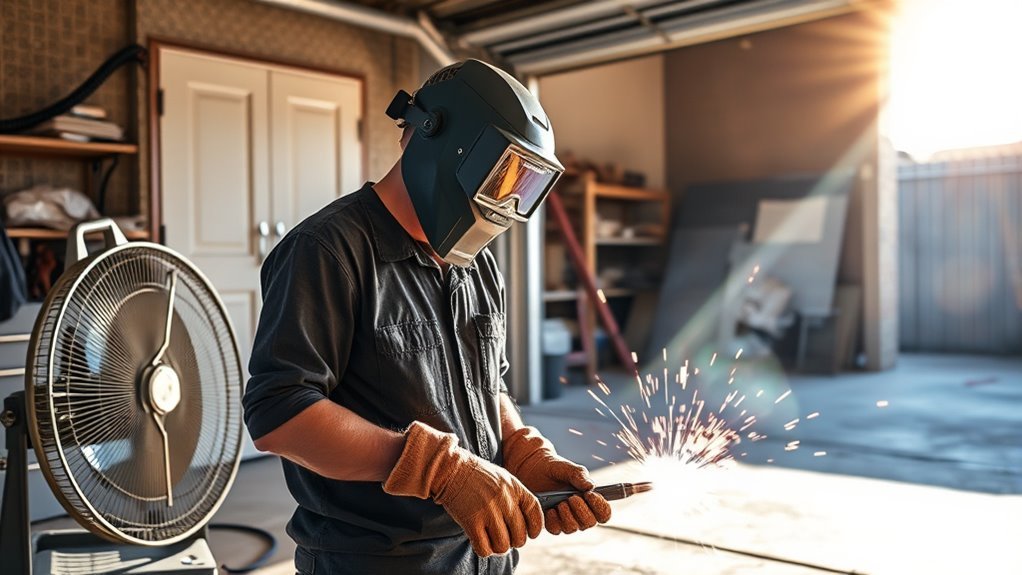
A fume extractor is not the same as a room fan. A fan can move smoke away from your face, but it can also spread contaminants through the building. A proper extractor captures the plume, filters it, and controls where the air goes.
Why Auto Shops Need Welding Fume Extraction
Auto shops need welding fume extraction because collision repair, exhaust work, fabrication, patch panels, and frame repairs can expose workers to metal fumes and gases in tight, busy spaces.
Even short welds can matter when you repeat them all day. MIG welding mild steel can release iron oxide and manganese-containing fume. Stainless steel can create chromium and nickel hazards. Galvanized metal can release zinc oxide fumes. Coated or painted metal can add toxic residues, especially if old paint, primer, undercoating, sealer, or corrosion protection is heated.
The Health and Safety Executive says welding fume risks must be controlled and lists local exhaust ventilation, respiratory protective equipment, PPE, good general ventilation, and worker training as key controls. The IARC Monographs Volume 118 evaluates welding and welding fumes as carcinogenic hazards.
Cleaner air also helps your daily workflow. Less smoke means better visibility, less eye and throat irritation, less odor, and fewer fumes drifting into customer areas, offices, parts rooms, and neighboring bays.
Note: “Cleaner-looking air” is not proof that exposure is controlled. Fine welding particles can remain hazardous even when the visible smoke looks light.
How Do Welding Fume Extractors Work?
Welding fume extractors work by combining capture, airflow, filtration, and maintenance. Each part has to work correctly, or the system loses effectiveness.
| Stage | What Happens | Why It Matters |
|---|---|---|
| Capture | The hood, arm, nozzle, table, or extraction gun pulls the plume away from the arc. | Capture is strongest when the inlet is close to the fume source. |
| Airflow | The fan moves contaminated air through the unit at a rated CFM. | Too little airflow misses fumes. Too much airflow can disturb shielding gas. |
| Filtration | Filters trap particles. Some systems add carbon or specialty media for certain gases or odors. | The filter must match the fume, process, and exposure risk. |
| Discharge | Cleaned air recirculates or contaminated air exhausts outdoors through ductwork. | Some fumes should not be recirculated without proper filtration and exposure review. |
| Maintenance | Filters, seals, hoses, arms, and collection trays are checked and serviced. | Loaded filters reduce airflow and can let exposure rise. |
For local exhaust hoods, OSHA 1910.252 describes movable hoods placed as near as practicable to the work and lists airflow needs that rise as the hood moves farther from the arc. That is why a small change in hood position can make a large difference.
Pro Tip: Start with the hood close enough to catch the plume without pulling shielding gas away from the weld. Watch the smoke path during a test weld and adjust the arm before production work starts.
Fixed, Source-Capture, or Wearable Systems?
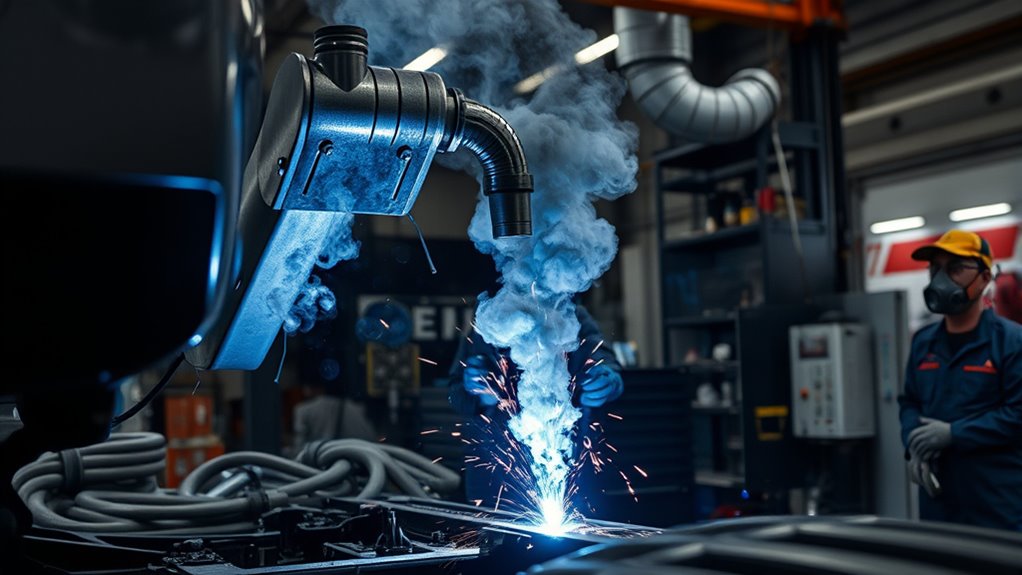
Choosing between fixed, portable, source-capture, and wearable systems depends on your shop layout, weld frequency, materials, and exposure risk.
| System Type | Best For | Main Limitation |
|---|---|---|
| Fixed ducted system | High-volume welding areas, dedicated fabrication rooms, and multiple stations. | Higher cost, design work, duct maintenance, and less flexibility. |
| Portable extraction arm | Collision shops, mobile repair bays, light fabrication, and mixed workstations. | Only works well when the arm is positioned close to the plume. |
| Downdraft table | Bench fabrication, brackets, panels, small parts, and grinding dust control. | Less useful for large vehicle-mounted work or vertical welds. |
| Fume extraction gun | MIG welding where capture directly at the gun is practical. | Can feel bulkier and must be adjusted so weld quality is not affected. |
| PAPR or wearable respirator | Personal respiratory protection when engineering controls are not enough or while they are being installed. | Protects the wearer, but does not clean the whole shop air. |
For many auto shops, a portable source-capture unit is the easiest starting point. You can roll it between bays, position the arm near a rocker panel, quarter panel, exhaust repair, or small fabrication job, then move it out of the way when the lift or vehicle changes.
Products Worth Considering

Fume-Free Workspace in Minutes: The KQZ B1 Fume Extractor equips a high-efficiency centrifugal motor with 168 m³/h airflow. Strong instant suction captures fumes and fine particles. H13 HEPA filter with coal-based activated carbon delivers full purification for a safer working environment

Fume-Free Workspace in Minutes: The KQZ B1 Fume Extractor equips a high-efficiency centrifugal motor with 168 m³/h airflow. Strong instant suction captures fumes and fine particles. H13 HEPA filter with coal-based activated carbon delivers full purification for a safer working environment

99.91% Purification Efficiency: The VEVOR solder fume extractor is equipped with a robust 150W DC motor. The device produces an impressive airflow of 165 CFM, ensuring efficient and effective air purification. The device boasts an exceptional smoke purification rate of 99.91%, ensuring that users can once again enjoy fresh air.
What Fumes Do Auto Shops Need to Catch?
What your extractor needs to capture depends on the work. Auto shops often weld mild steel, stainless parts, galvanized brackets, aluminum panels, exhaust components, and coated sheet metal. Each one can create a different exposure problem.
| Material or Job | Possible Contaminants | Shop Action |
|---|---|---|
| Mild steel MIG or stick welding | Iron oxide, manganese-containing fume, fine particles | Use source capture and keep the inlet close to the plume. |
| Stainless steel welding | Chromium, nickel, and possible hexavalent chromium | Use stronger controls and check applicable OSHA chromium requirements. |
| Galvanized metal | Zinc oxide fume and metal fume fever risk | Remove coating where allowed, capture fumes at the source, and do not rely on milk or folk remedies. |
| Painted, primed, or coated panels | Paint decomposition products, lead or chromate risks in some older coatings, smoke and irritating gases | Strip coatings safely before welding and review SDS information. |
| Aluminum welding | Aluminum oxide particles and ozone, especially with some TIG work | Use capture that does not disturb shielding gas and maintain good ventilation. |
| Confined or enclosed vehicle areas | Concentrated fumes, oxygen displacement, carbon monoxide, shielding gas buildup | Treat as a high-risk task and follow confined-space procedures when applicable. |
Hexavalent chromium deserves special attention in stainless and chromium-containing alloys. OSHA explains that hexavalent chromium can cause cancer and that a major source of exposure is hot work such as welding on stainless steel and other chromium-containing alloy steels. See OSHA’s hexavalent chromium overview for compliance details.
Warning: Never use oxygen for ventilation. OSHA states that oxygen must never be used for ventilation. Use clean respirable air and approved ventilation methods instead.
How to Choose the Right Fume Extractor for Your Shop
To choose the right fume extractor, match the system to your shop size, weld process, materials, airflow needs, filter type, and maintenance capacity. Do not buy on CFM alone. A high-CFM unit with the hood too far away can perform worse than a smaller unit positioned correctly.
Products Worth Considering
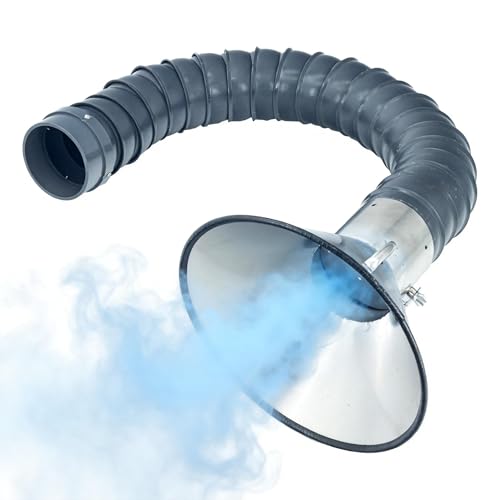
3.3ft long adjustable flexible hose duct, 4 inch diameter.(Connector: 110mm OD,100 ID)

3.3ft long adjustable flexible hose duct, 75mm OD, 68mm ID
3.3ft long adjustable flexible hose duct, 50mm OD, 45mm ID
Shop Size and Layout
Your layout determines whether you need a portable unit, fixed ducting, a downdraft bench, or several capture points. A small collision shop with changing work areas usually benefits from a mobile extractor with an articulated arm. A fabrication corner with steady production work may justify a fixed hood, booth, or ducted source-capture system.
Look at where welders actually stand, where the vehicle blocks airflow, and how often the job moves. If the arm cannot reach the plume without crossing a walkway or blocking a lift, workers are less likely to use it correctly.
Capture Method Options
Choose the capture method that fits the weld position:
- Articulated arms work well when the hood can sit close to the weld and stay there.
- Extraction guns capture directly at the MIG gun and can help when arms are hard to position.
- Downdraft tables are useful for bench work, brackets, small panels, and grinding dust.
- Fixed hoods or booths are stronger for repeat work in one location.
- PAPR systems protect the individual worker but do not remove fumes from the room.
For source capture, placement is everything. OSHA describes local exhaust hoods that are placed as near as practicable to the work and designed to maintain airflow toward the hood in the welding zone. As the hood moves farther away, the required airflow rises sharply.
Airflow and Hood Placement
CFM is useful only when paired with hood design and distance. A hood near the arc can capture a plume with less airflow than a hood placed far away. Long hoses, loaded filters, crushed ducts, and leaky seals can reduce actual airflow at the inlet.
| Hood Position | Practical Meaning |
|---|---|
| Close to the plume | Best capture, less wasted airflow, easier control. |
| Too far from the arc | Needs more airflow and may still miss fumes. |
| Too much suction at gas-shielded weld | Can disturb shielding gas and increase weld defects. |
| Blocked by panel, lift, or vehicle body | Air may take the easy path and leave the plume behind. |
Filtration and Maintenance
Filter selection should match the contaminant. Many welding extractors use a spark arrestor or metal mesh prefilter, then a cartridge or main particulate filter. Some add HEPA final filtration. Activated carbon may help with certain gases and odors, but it is not a substitute for a properly rated particulate filter for metal fume.
For general HVAC systems, ASHRAE recommends MERV 13 where the system can handle it, with MERV 14 or better preferred in some contexts. For welding fume extractors, use the manufacturer’s filter rating, pressure-drop limits, and approved replacement filters instead of assuming a household-style MERV label is enough.
Inspect the extractor on a set schedule. Check the arm joints, hood, hoses, seals, collection tray, spark arrestor, filter loading indicator, and exhaust path. If airflow drops, fumes escape, or the filter alarm activates, stop and service the unit before continuing production welding.
Noise, Portability, and Power
A unit that is too loud, too heavy, or awkward to position will not get used consistently. Before you buy, check the noise rating, wheel quality, arm reach, power requirements, replacement filter cost, and how easy it is to empty or change filters without spreading dust.
For a busy auto shop, the best extractor is not always the largest one. It is the one your team can place correctly every time.
Common Fume Extractor Mistakes to Avoid
- Putting the hood too far away: The farther the hood sits from the plume, the harder it is to capture fumes.
- Aiming the fan at your face: This may clear your view while pushing fumes across the shop.
- Ignoring shielding gas: Excessive suction near MIG or TIG welds can disrupt shielding and create porosity.
- Using the wrong filter: A filter made for nuisance dust may not be suitable for welding fumes.
- Recirculating unknown fumes: Coated, stainless, galvanized, or lead-containing work may need special controls.
- Skipping maintenance: A clogged filter can reduce capture and increase exposure.
- Relying on milk after galvanized welding: Milk does not control zinc oxide fume. Capture the fume, avoid exposure, and use proper PPE.
Maintenance Checklist for Auto Shop Fume Extractors
Use a written checklist so the extractor stays dependable instead of becoming another ignored shop tool.
| When | What to Check |
|---|---|
| Before welding | Arm position, hood direction, hose damage, filter indicator, power cord, and visible airflow. |
| Daily or each shift | Spark arrestor, dust tray, unusual noise, weak suction, loose joints, and blocked inlets. |
| Weekly | Filter loading, gaskets, seals, arm balance, caster condition, and duct or hose leaks. |
| As specified by manufacturer | Filter replacement, airflow testing, electrical inspection, and any required service records. |
When you change filters, treat the dust as potentially hazardous. Avoid shaking filters in the shop, wear appropriate PPE, and follow the extractor manual and your waste-handling rules.
How Do Fume Extractors Keep Your Shop Safer?
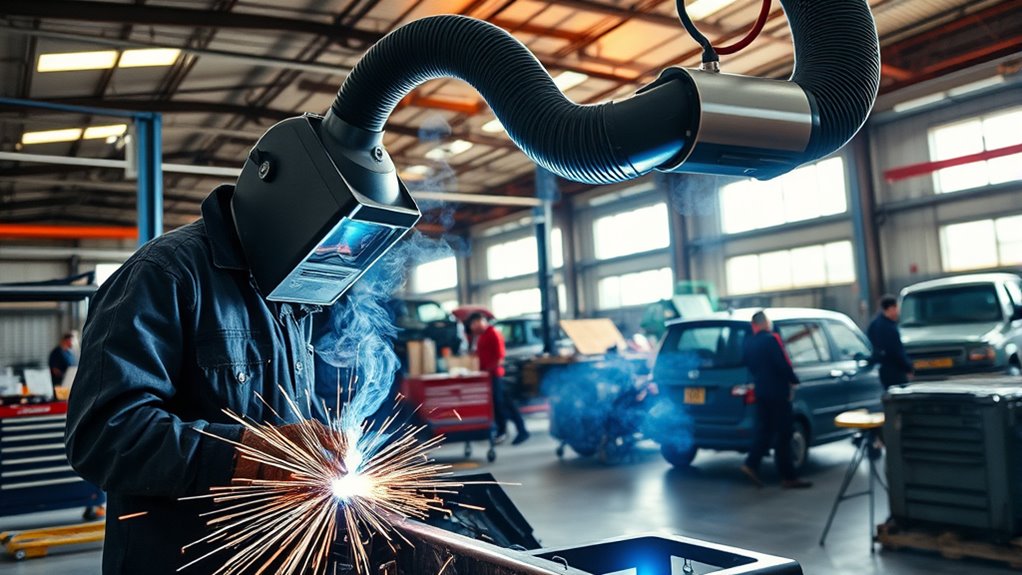
Fume extractors keep your shop safer by reducing the amount of welding fume that reaches workers, nearby technicians, and other parts of the building. They also help keep smoke away from the weld area, which can improve visibility and reduce irritation.
In the hierarchy of controls, source capture is an engineering control. That matters because it removes contaminants before workers rely only on a mask or respirator. PPE still has a place, but it should not be the only plan when better engineering controls are practical.
For auto shops, better fume control can support:
- Cleaner air around the weld bay
- Less visible smoke drifting to other workstations
- Better comfort during repetitive welding
- Lower risk from metal fumes and gases
- Stronger documentation for safety inspections and worker training
- More consistent use of safe welding procedures
When Fume Extraction Is Not Enough
A fume extractor is important, but some jobs need more than a portable unit. You may need exposure monitoring, a written respiratory protection program, supplied-air respiratory protection, fixed ventilation, or a professional ventilation design when the work involves high-risk materials or spaces.
Pay special attention to:
- Confined spaces: Welding in tanks, enclosed vehicle cavities, pits, trailers, or other restricted spaces can cause toxic buildup or oxygen problems.
- Stainless steel: Chromium and nickel hazards may require specific exposure controls.
- Galvanized metal: Zinc oxide fumes can cause metal fume fever symptoms.
- Old coatings: Lead, chromates, cadmium, solvents, undercoating, and other residues can create serious hazards when heated.
- Recurring production welding: Repeated exposure may justify air sampling and engineered ventilation.
OSHA requires adequate ventilation for welding and cutting in confined spaces to prevent toxic accumulation or oxygen deficiency. If your shop cannot verify safe air, do not guess. Stop and get qualified safety help.
Frequently Asked Questions
Do welding fume extractors work?
Yes, welding fume extractors work when they are sized, positioned, and maintained correctly. The hood or nozzle must be close enough to capture the plume, the airflow must match the job, and the filters must be in good condition. A poorly placed extractor can miss most of the fumes.
Why do they say to drink milk after welding galvanized metal?
That advice comes from an old belief that milk helps after zinc oxide exposure. Do not rely on it. Milk does not capture fumes or make galvanized welding safe. The safer approach is to avoid the exposure, remove the coating where allowed, use source extraction, maintain ventilation, and wear the required respiratory protection.
How much does a welding fume extractor cost?
Costs vary widely. Small shop and mobile units often start in the low four figures, while larger mobile arm systems, downdraft tables, fixed ductwork, and engineered multi-bay systems can cost much more. Budget for filters, maintenance, ductwork, installation, and any air testing, not just the machine.
How does a fume extractor work?
A fume extractor uses a fan to pull contaminated air into a hood, arm, nozzle, table, or extraction gun. The air passes through filters that trap fine particles. Some units add special media for certain gases or odors. The unit then returns filtered air or exhausts it outside.
Can I use a regular shop fan instead of a fume extractor?
No. A shop fan may move smoke away from your face, but it can also spread welding fumes through the shop. Use source capture, local exhaust, or a properly designed ventilation system that controls where contaminated air goes.
Do I still need a respirator if I have a fume extractor?
Sometimes, yes. A fume extractor can reduce exposure, but respirators may still be required for certain materials, confined spaces, poor capture conditions, or exposure levels above limits. Respirator use should follow OSHA rules, fit testing, cartridge selection, and your shop safety program.
Conclusion
A welding fume extractor is one of the most useful safety upgrades you can add to an auto shop, but only when it is chosen and used correctly. Keep the capture point close to the plume, match the filters to the work, maintain airflow, and take high-risk jobs seriously. For mild steel, stainless, galvanized, aluminum, and coated auto parts, the right extraction setup helps you keep smoke under control, protect your crew, and make each welding bay cleaner and safer to work in.
Sources
- OSHA 1910.252, Welding, Cutting, and Brazing General Requirements — ventilation, confined-space ventilation, oxygen warning, and local exhaust hood guidance.
- CDC/NIOSH, Welding Fumes and Manganese — welding fume composition and manganese-related health concerns.
- HSE, Welding Fume: Protect Your Workers — fume control methods, LEV, RPE, PPE, ventilation, and training.
- HSE, Health Risks From Welding — acute and chronic welding fume health risks, confined-space risks, and material-specific hazards.
- OSHA, Hexavalent Chromium Overview — chromium hazards and exposure during hot work on stainless and chromium-containing alloys.
- IARC Monographs Volume 118 — evaluation of welding and welding fumes as carcinogenic hazards.