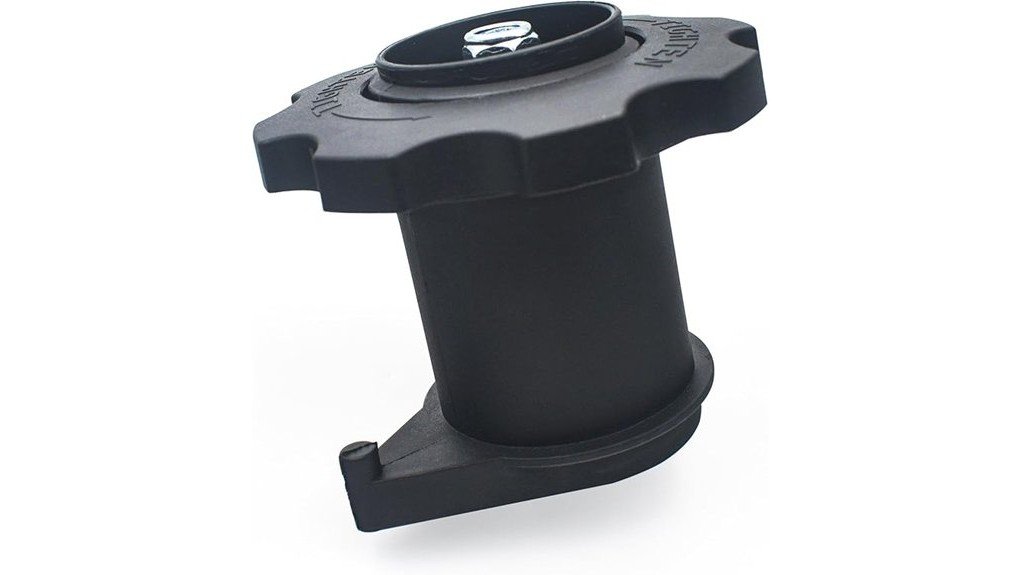
The Gearlinton wire spool adapter hub is a small plastic-and-metal hub that lets 4 inch and 8 inch MIG wire spools sit on a machine spindle, with Miller Millermatic and Hobart Handler listed as compatible. In this wire spool adapter hub review, drawn from the Amazon listing, it is worth considering if your spool does not fit your spindle, as long as the spindle dimensions match.
Gearlinton wire spool adapter hub specs at a glance
| Item | Per the listing |
|---|---|
| Brand | Gearlinton |
| Type | MIG wire spool adapter hub |
| Listed spool sizes | 4 and 8 inch |
| Materials | Plastic and metal |
| Listed weight and size | 3.2 oz; 4 x 2 x 2 in |
| Named machines | Miller Millermatic, Hobart Handler |
What a spool hub does and who needs one
A spool adapter fills the gap between a wire spool’s center hole and the machine’s spindle. It keeps the spool centered so it unwinds smoothly instead of wobbling or catching.
You need one if you switched spool size or brand, or if your spindle is made for a different spool than the one you bought. Many welders use 4 inch spools on small machines and 8 inch spools on bigger ones, which is why the sizes matter.
How to check it fits your machine
- Measure your spindle diameter and note how the spool locks on (a nut, a clip or a spring).
- Measure the spool’s center hole and the width of the spool.
- Compare with the listing dimensions and what the hub is designed for.
- Check whether the hub has a keyway or flats that line up with your spindle.
- Check the machine’s manual for the maximum spool size it supports.
The listing names two machine families, but spindles change between models and years. Do the measurements.
Pros and limitations
- Pros: Very light; simple solution when a spool does not fit; covers both small and large spool sizes per the listing.
- Limitations: Plastic parts near hot spatter can wear, no load rating is given, and it does not fix the wire tension that actually causes tangles.
Using the hub for smooth feeding
- Seat the spool fully and make sure it spins freely by hand.
- Adjust spool brake tension so it stops when you stop the trigger, no more.
- Keep the wire path free of sharp bends and keep spatter off the hub.
- Inspect the hub for cracks before large spools, which are heavier.
Alternatives and related guides
- If wire still feeds poorly, check the drive roller and liner.
- Planning wire? See the ER70S-6 MIG wire review.
- Gasless option: AWT flux core wire review.
Frequently Asked Questions
What spool sizes does this adapter hub handle?
The listing says 4 and 8 inch spools. Spool bore, hub width and spindle size all matter, so check your spool’s center hole and your machine’s spindle diameter against the listing before trusting a general size claim.
Is the Gearlinton hub compatible with Miller and Hobart machines?
The listing names Miller Millermatic and Hobart Handler models. Spindle diameter and tension hardware differ by model and year, so compare your spindle to the listing’s dimensions or the seller’s compatibility notes before ordering.
Does an adapter hub prevent wire tangling?
It helps the spool sit and rotate squarely, which supports smooth feeding. Tangles and bird-nesting usually come from too much spool tension, drive roll tension or a worn liner, so the hub is only part of the answer.
Can I use it with solid and flux-core wire?
A spool hub just holds the spool, so it works with either as long as the spool fits. Set spool tension so the spool stops quickly when you release the trigger without dragging, and follow your welder manual for the wire type.
Verdict
A cheap adapter that is useful only when your spool and spindle do not match. Measure first, then buy.