Disclosure: As an Amazon Associate, we earn from qualifying purchases. If you click a link on this page and make a purchase, we may receive a small commission at no extra cost to you.
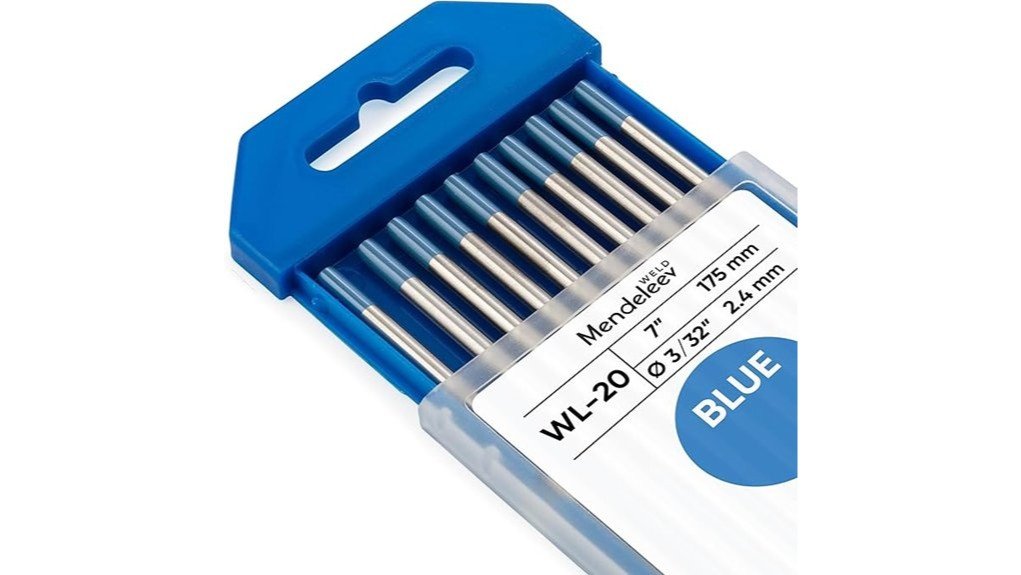
A weak or contaminated tungsten can make TIG starts erratic, widen the arc, and force you to stop for repeated grinding. The MENDELEEV STYLE WL-20 Blue Tungsten Electrode is a 3/32-inch, 2% lanthanated option sold as a 10-pack for AC and DC TIG welding. Its main strengths are broad material compatibility, reliable arc starting, and the convenience of using one tungsten type for many shop jobs. The main caution is that Amazon listing details can change, so confirm the rod length, seller, and package contents before ordering.
Quick Verdict
Rating: 8.2/10, Recommended with caveats
Best For: TIG welders who want a versatile 3/32-inch, 2% lanthanated tungsten for mixed AC and DC work.
Bottom Line: This 10-pack is a practical choice for welders who value stable starts, a focused arc, and non-thoriated tungsten. It is less appealing when you need a confirmed rod length, a traceable certification package, or a different diameter for a narrow amperage range.
WL-20 Blue Tungsten Electrode at a Glance
| Specification | Detail |
|---|---|
| Brand or storefront | MENDELEEV STYLE |
| Manufacturer listed | Mendeleed Inc |
| Model | WL-20_2.4_3/32 |
| Product type | Non-consumable tungsten electrode for TIG/GTAW welding |
| Composition | 2% lanthanated tungsten, WL-20 / EWLa-2 |
| Diameter | 3/32 inch, approximately 2.4 mm |
| Color code | Blue |
| Quantity | 10 electrodes |
| Current compatibility | AC and DC TIG applications with suitable machine settings |
| Included components | Tungsten electrodes |
| Standard claimed by listing | AWS A5.12M/A5.12:2009 |
| Length | Not confirmed in the matched listing details, verify before purchase |
| Best use | General TIG fabrication, repair, practice, steel, stainless steel, and supported AC aluminum work |
| Storage | Keep clean, dry, labeled, and protected from oil, dust, and impact |
What Is the WL-20 Blue Tungsten Electrode?
The MENDELEEV STYLE WL-20 is a non-consumable electrode that carries the TIG arc. It does not melt into the joint like filler rod. You use it inside a compatible TIG torch, while shielding gas protects the electrode and weld area from the atmosphere.
This version uses a 3/32-inch diameter and a blue color band, which identifies 2% lanthanated tungsten. That combination is commonly chosen for general work because it can support both AC and DC welding when the torch parts, polarity, amperage, gas flow, and machine settings match the job.
The pack is aimed at DIY welders, fabrication shops, repair technicians, and learners who want several spare electrodes ready for grinding and quick replacement. Its strongest selling point is versatility. You can prepare several tips for different tasks instead of stopping to regrind one contaminated electrode during a project.
Key Takeaways
- The matched product record identifies a 10-pack of 3/32-inch, 2% lanthanated WL-20 electrodes.
- Blue 2% lanthanated tungsten is a broad-use choice for AC and DC TIG welding.
- The 3/32-inch diameter is useful for many general shop jobs, but it is not ideal for every amperage range.
- Arc quality depends on correct grinding, clean gas coverage, suitable torch parts, and uncontaminated base metal.
- The electrode creates the arc and does not replace the filler rod required by many joints.
- You should confirm rod length, current seller details, and any certification paperwork before buying.
Who Should Buy It?
Best For
- Welders who want one tungsten type for mixed AC and DC TIG projects.
- DIY and shop users whose torch accepts 3/32-inch collets and collet bodies.
- Buyers who want a 10-pack so they can keep clean, pre-ground spares ready.
Skip If
- Your torch uses a different electrode diameter or you need a smaller tungsten for very low-current work.
- You require a confirmed rod length, batch certificate, or manufacturer warranty before purchase.
- You are shopping for filler metal rather than a non-consumable TIG electrode.
Before You Buy: Check that your torch has a 3/32-inch collet, collet body, and back-cap setup. Also confirm the electrode length and 10-piece quantity on the live Amazon page because listing details can change.
Features and Benefits of the WL-20 Blue Tungsten Electrode
2% Lanthanated Composition
WL-20 blue tungsten contains lanthana added to the tungsten electrode. This type is widely used as an all-purpose TIG option because it can start cleanly, hold a stable arc at low and high settings, and work across common metals when the machine is configured correctly.
It also gives you a non-thoriated alternative to red tungsten. That does not make grinding dust harmless, so you still need eye protection, dust control, and careful cleanup whenever you sharpen an electrode.
3/32-Inch General-Purpose Diameter
The 3/32-inch, or roughly 2.4 mm, diameter is a practical middle size. It is commonly used for general fabrication because it covers more shop work than a very small electrode while remaining easier to control than a larger high-current tungsten.
Diameter still needs to match the task. A smaller tungsten can make very low-current starts easier, while a larger size may be more suitable when your procedure calls for sustained high amperage. Use your welder manual and electrode chart rather than assuming one size fits every joint.
AC and DC Flexibility
This electrode is listed for AC and DC TIG use. That makes it useful when you switch between AC aluminum work and DC welding on carbon steel, stainless steel, or other supported metals.
The electrode does not choose the correct settings for you. AC balance, frequency, polarity, amperage, shielding gas, cup size, and torch cooling all affect tip condition and weld quality. A good tungsten can improve consistency, but it cannot correct poor preparation or the wrong process setup.
Ten Electrodes for Faster Changeovers
A 10-pack gives you enough electrodes to prepare several tips before work begins. That is useful during practice, fabrication, or repair jobs because a dipped or contaminated tungsten should be removed and reground rather than used until the arc becomes unstable.
You can also separate electrodes by task. For example, keep one labeled group for clean aluminum work and another for steel or stainless practice. This reduces cross-contamination and makes troubleshooting easier.
How It Performs in Real Use
For Daily Shop Welding
For mixed repair and fabrication, the main advantage is not having to change tungsten type every time you move between common AC and DC jobs. A 3/32-inch WL-20 can serve as a dependable bench default when its diameter fits your amperage and torch setup.
For Aluminum on AC
On a modern AC TIG machine, 2% lanthanated tungsten can maintain a controlled tip and stable arc. Clean the oxide layer, use the correct gas flow, and watch the electrode during longer beads. Excessive electrode-positive balance or amperage can overheat the tip.
For Steel and Stainless on DC
With DC electrode negative, a clean lengthwise-ground point helps direct the arc into the joint. Results are best when you remove oil, paint, moisture, and scale before welding and select filler that matches the base metal and procedure.
For Learning TIG Control
Beginners benefit from keeping several prepared electrodes nearby. When you dip the tip, swap it immediately and continue practicing with a clean one. This makes it easier to tell the difference between a technique problem and an arc problem caused by contamination.
How to Use It Correctly
- Confirm fit: Make sure your torch, collet, collet body, and back cap accept 3/32-inch tungsten.
- Prepare the tip: Grind with marks running lengthwise toward the point, not around the electrode.
- Choose suitable geometry: Use a consistent point and add a small flat when your procedure or amperage calls for it.
- Set the machine for the metal: Match current type, polarity, AC balance, amperage, and gas flow to the workpiece.
- Protect the tip: Keep a short, controlled arc and avoid contacting the puddle or filler rod.
- Regrind after contamination: Remove contaminated material before returning the electrode to service.
Pro Tip: Pre-grind several electrodes before a long session and store them in separate labeled tubes for clean and contaminated tips. You can swap quickly without mixing a dipped electrode back into your ready-to-use supply.
Common Mistakes to Avoid
- Grinding around the electrode: Circular scratches can encourage an unstable or wandering arc.
- Using a shared dirty wheel: Steel, aluminum, or abrasive contamination can transfer to the tungsten.
- Running the wrong diameter: An electrode that is too large or too small for the current can make starting and tip control harder.
- Ignoring post-flow: Removing shielding gas too soon can oxidize a hot tip and shorten useful life.
- Continuing after a dip: A contaminated tip should be changed or reground instead of used through the rest of the bead.
Compatibility and Safety
Use this electrode only with a compatible TIG welding machine and torch. Follow your welder manual for current range, polarity, AC settings, gas flow, duty cycle, torch cooling, and consumable size. The AWS standard stated in the listing describes electrode classification requirements, but it does not guarantee compatibility with every machine or welding procedure.
Welding and grinding expose you to intense light, heat, sparks, fumes, electrical hazards, and fine particles. Wear suitable eye, face, skin, hearing, and respiratory protection for the task. Use ventilation or local exhaust where needed, keep guards in place, and remove flammable materials from the work area.
For additional technical guidance, review Miller’s tungsten selection and preparation guide and OSHA’s welding hazard guidance. Your employer’s safety program, machine manual, and approved welding procedure take priority over general advice.
Storage and Care
Keep unused electrodes dry and protected from shop dust, oil, impact, and mixed-metal grinding debris. A rigid tube or divided case is better than leaving loose rods in a drawer where the tips can chip or become contaminated.
Label the container with diameter and tungsten type. If you cut electrodes for a short back cap, keep the cut pieces separate and mark them clearly. Do not bend an electrode to break it, since hidden cracks can affect arc stability.
Pros and Cons
Pros
- 2% lanthanated composition supports stable starts and broad AC/DC use.
- 3/32-inch diameter is a practical size for many general TIG jobs.
- Ten-piece pack lets you keep several clean, pre-ground spares ready.
- Non-thoriated option for welders who prefer to avoid red thoriated tungsten.
- Useful across steel, stainless, aluminum, practice, and repair setups when correctly configured.
Cons
- Rod length is not clearly confirmed in the matched listing details.
- 3/32 inch is not the best diameter for every low-current or high-current procedure.
- Performance still depends heavily on grinding, cleanliness, gas coverage, and machine setup.
Is It Worth the Price?
This WL-20 pack is worth considering when you want a general-purpose tungsten type and enough spares to avoid repeated setup delays. The best value comes from the combination of 2% lanthanated composition, 3/32-inch size, and a 10-electrode quantity rather than from a special accessory or premium case.
Compare the price per electrode with established welding brands, then check whether the live listing confirms the length and any certification paperwork you need. It is a smart buy for everyday TIG practice and mixed shop work, but it is not the best fit for buyers who need full batch traceability or a highly specific electrode size.
How It Compares to Alternatives
Compared with pure green tungsten, 2% lanthanated blue tungsten is generally more flexible on modern TIG machines and offers stronger starting and arc stability across AC and DC work. Pure tungsten still appears in some older AC setups, but it is less attractive as a one-type shop solution.
Compared with red 2% thoriated tungsten, WL-20 avoids thorium while remaining suitable for broad TIG use. Gray 2% ceriated tungsten is also worth comparing for low- and medium-current work. Choose among them based on your power source, procedure, metal, and preferred arc behavior rather than color alone.
Frequently Asked Questions
What is WL-20 blue tungsten used for?
WL-20 blue tungsten is a 2% lanthanated, non-consumable electrode used to create and control the TIG welding arc. It can be used in supported AC and DC applications when the electrode size, torch parts, gas, and machine settings match the job.
How many electrodes are included?
The matched product record lists 10 tungsten electrodes. Confirm the quantity on the live Amazon page before checkout because sellers can revise titles, bundles, and package details.
Can a 3/32-inch WL-20 electrode weld aluminum?
Yes, 2% lanthanated tungsten can be used for AC TIG aluminum on a suitable machine. Clean the aluminum, select proper AC balance and gas flow, and make sure 3/32 inch fits the current range in your welder manual.
Is 3/32 inch a good all-purpose tungsten size?
It is a common general-purpose size for many shop projects. Very low-current work may start more easily with a smaller electrode, while sustained high-current work may require a larger diameter or a different procedure.
How should you grind WL-20 tungsten?
Grind toward the tip so the scratches run parallel with the electrode centerline. Use a clean dedicated wheel, keep guards and dust controls in place, and regrind after the tip touches the puddle or filler rod.
Does this tungsten replace filler rod?
No. The tungsten carries the arc and should not be intentionally melted into the joint. Use the correct filler alloy when the joint design and welding procedure require added metal.
How should tungsten electrodes be stored?
Store clean electrodes in a dry, labeled tube or divided case. Keep ready-to-use tips separate from contaminated or cut electrodes so you do not return a damaged tip to the torch by mistake.
Who should skip this WL-20 pack?
Skip it when your torch does not accept 3/32-inch tungsten, your procedure requires another classification, or you need a confirmed length and traceable batch documents before purchase. It is also the wrong product when you need filler rod rather than an electrode.
The Bottom Line
The MENDELEEV STYLE WL-20 Blue Tungsten Electrode is recommended with caveats for welders who want a 10-pack of versatile 3/32-inch, 2% lanthanated tungsten for AC and DC TIG work. Its main strengths are broad usefulness, stable arc behavior, and enough spare electrodes for efficient changeovers. Skip it if you need a different diameter, confirmed rod length, or documented batch traceability before ordering.
Ready to Buy?
Check the latest price, electrode length, seller, and package details before you decide.