Quick Answer
CMT welding is a low-heat, controlled short-circuit GMAW process used in automotive manufacturing to join thin sheet metal, aluminum components, and some aluminum-to-steel assemblies. The wire retracts during each short circuit, helping lower spatter, heat input, distortion, and post-weld cleanup when the procedure is set correctly.
Key Takeaways
- CMT is best suited for thin automotive sheet metal, aluminum panels, galvanized steel parts, and carefully engineered dissimilar-metal joints.
- Its main advantage is lower heat input, which helps reduce distortion, burn-through, and spatter on lightweight vehicle structures.
- CMT still requires clean material, accurate fit-up, correct shielding gas, trained operators, and validated welding procedures.
- It is not always the best choice for thick structural sections that need deep penetration in a single pass.
What Is CMT Welding in Automotive Manufacturing?
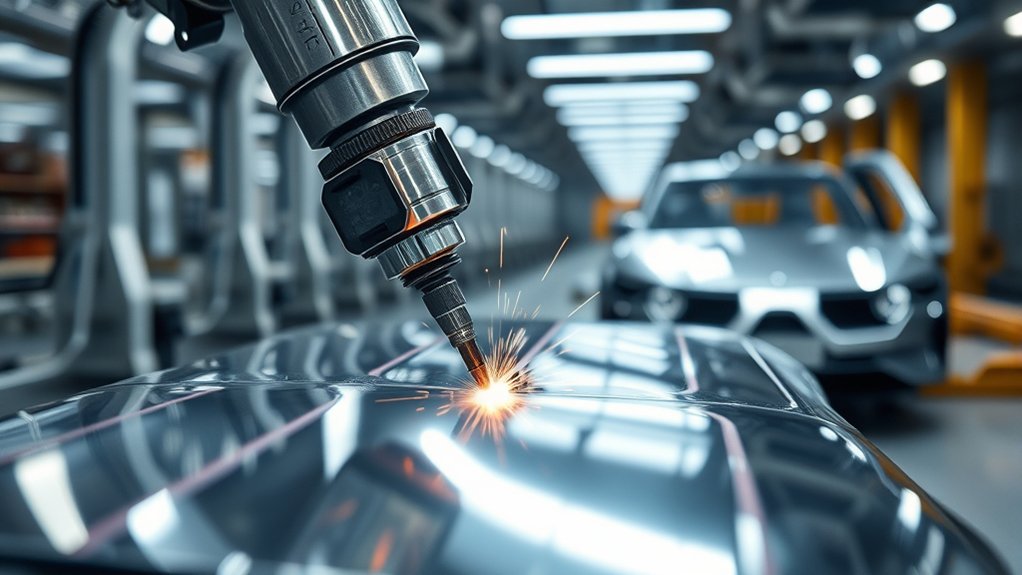
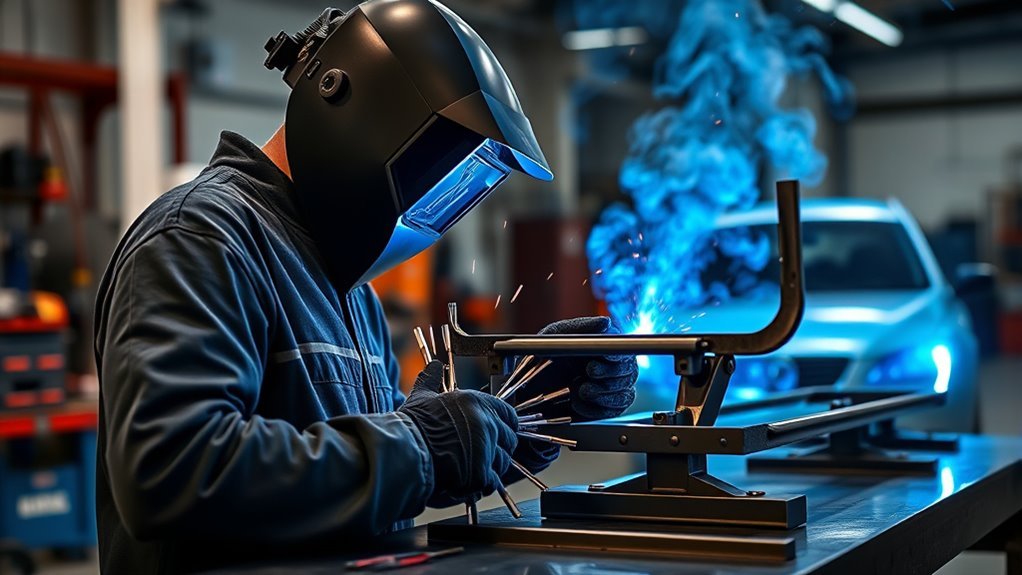
Cold Metal Transfer welding is a controlled short-circuit transfer process based on GMAW, often called MIG welding in shop settings. In a standard short-circuit process, the wire touches the weld pool, current rises, and the droplet transfers. In CMT, the power source and wire feeder react more precisely. The wire briefly retracts as the droplet detaches, so the arc adds less heat to the joint.
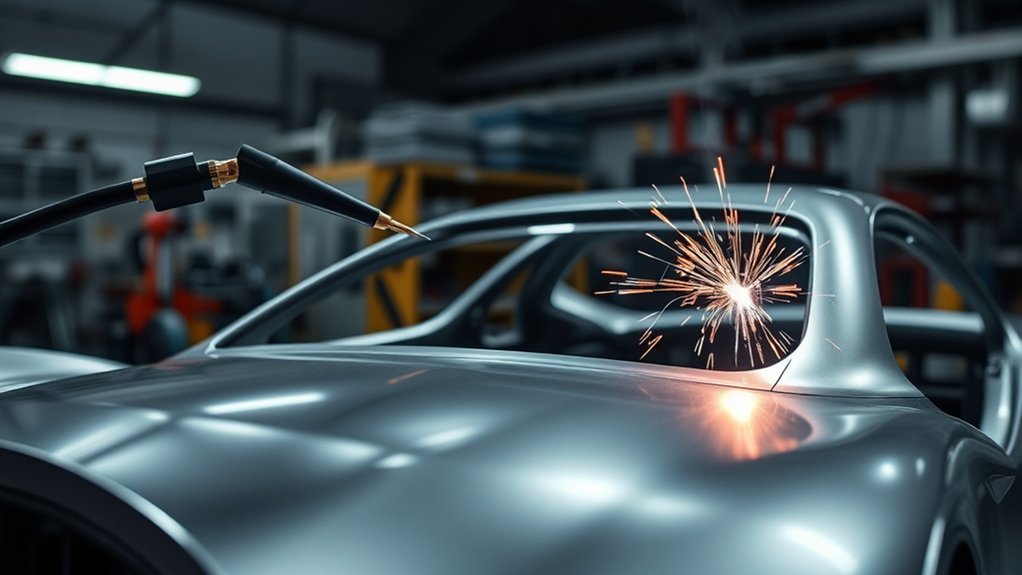
That controlled wire motion is why CMT is useful for automotive parts made from thin steel, aluminum sheet, aluminum extrusions, and coated materials. Vehicle manufacturers use lighter materials to improve efficiency, range, and performance, but those same materials can warp, burn through, or lose strength if too much heat enters the panel. CMT helps manage that heat while still producing a repeatable weld.
CMT is also valuable in automated production cells because robots can repeat torch angle, wire position, travel speed, and arc length more consistently than manual welding. That repeatability matters when the same body bracket, battery tray, seat structure, or panel joint must be welded thousands of times with the same quality.
How CMT Welding Works
CMT welding works by combining digital power control with a mechanically controlled wire movement. The wire advances toward the weld pool, creates a short circuit, and then retracts during droplet transfer. This reduces the peak current needed to separate the droplet and helps keep the weld pool cooler.
The process depends on four main controls:
- Wire feed and retraction: The wire does not only feed forward; it also pulls back in a controlled rhythm to help detach the droplet.
- Current control: The machine lowers current during transfer, which reduces heat input and spatter.
- Arc length control: Stable arc length helps produce consistent bead shape and penetration.
- Shielding gas coverage: Argon-based shielding gas, sometimes mixed with carbon dioxide or oxygen depending on the material and procedure, protects the molten weld from nitrogen and oxygen in the air.
Note: CMT is not a plug-and-play fix for every joint. The machine program, filler wire, base metal coating, gap size, torch angle, and shielding gas must match the approved welding procedure.
Advantages of CMT Welding for Automotive Manufacturing
CMT welding offers several advantages for automotive manufacturing because it solves common problems found in thin and lightweight materials. The biggest benefit is heat control. Lower heat input helps reduce panel distortion, burn-through, and excessive heat-affected zones on thin sheet metal.
CMT can also reduce spatter compared with many conventional short-circuit transfer settings. Less spatter means less grinding, less cleanup, fewer cosmetic defects, and less risk of spatter sticking to nearby fixtures or finished surfaces. In high-volume production, that can improve cycle efficiency and reduce rework.
Another major benefit is design flexibility. CMT can be used for aluminum components and, with the correct procedure, some aluminum-to-steel joints. This matters because modern vehicles often combine high-strength steel, galvanized steel, cast aluminum, extruded aluminum, and sheet aluminum in the same structure.
The real value of CMT in automotive work is not just a cleaner bead. It is the ability to control heat while joining thin, lightweight, and sometimes dissimilar materials.
CMT Welding vs. Traditional Methods: Key Differences
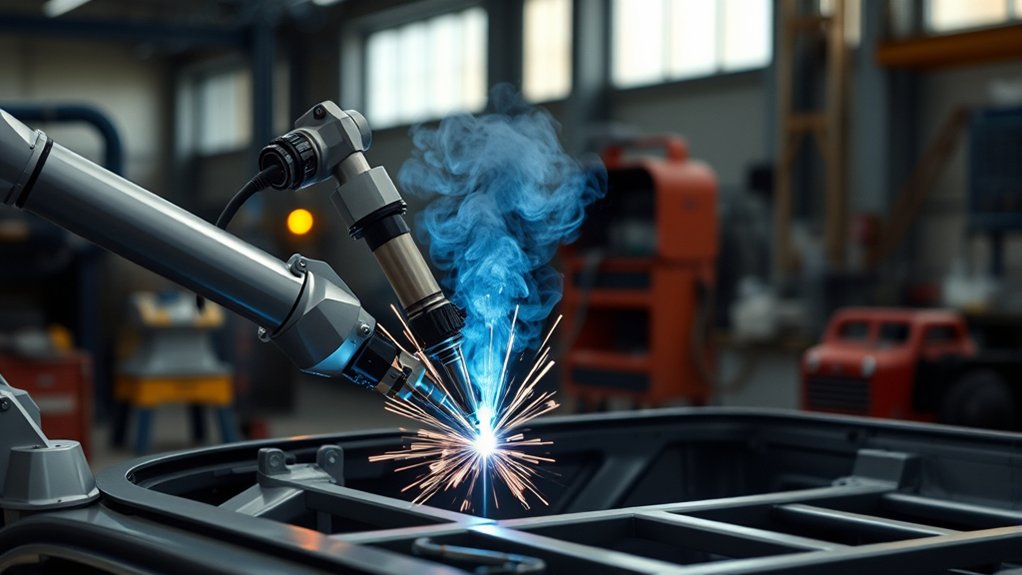
CMT is often compared with MIG, TIG, pulsed GMAW, resistance spot welding, and laser welding. The best process depends on material thickness, joint design, cosmetic requirements, production volume, and cost.
| Process | Best Use | Main Limitation |
|---|---|---|
| CMT welding | Thin sheet, aluminum, coated steel, low-spatter joints, automation | Needs specialized equipment and validated settings |
| Short-circuit MIG/GMAW | General fabrication and repair work | More spatter and heat variation if settings are not tight |
| Pulsed GMAW | Aluminum and stainless work needing controlled heat | Still may add more heat than CMT on very thin joints |
| TIG welding | High-precision welds and prototypes | Slower for production lines |
| Resistance spot welding | Overlapped steel sheet in body-in-white production | Less flexible for some aluminum and mixed-material joints |
| Laser or laser-hybrid welding | Fast, precise seams in high-volume cells | Higher equipment cost and tighter fit-up requirements |
Products Worth Considering
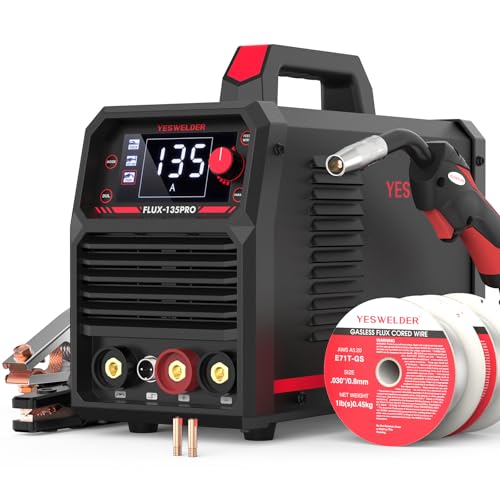
READY OUT OF THE BOX: Start welding immediately! It masterfully handles Gasless Flux Core MIG, Stick, and Lift TIG (Extra Lift TIG torch required). This budget-friendly 3-in-1 machine includes extra E71T-GS .030''&.035'' flux core wires, known for its smooth arc and high feedability. Say goodbye to heavy shielding gas cylinders—perfect for outdoor, windy, or all-position welding.

💪200A POWER & PORTABLE DESIGN: Weld metals up to 1/4" thick (0.06-0.2") including stainless steel, alloy steel, carbon steel, and copper. Compact size (8.6x4.1x5.5") and ultra-lightweight (5 lbs) with shoulder strap make it easy to carry for jobs anywhere – high altitude, indoors, or outdoors. Enjoy extended welding sessions without overheating, backed by a solid 60% duty cycle for professional results.
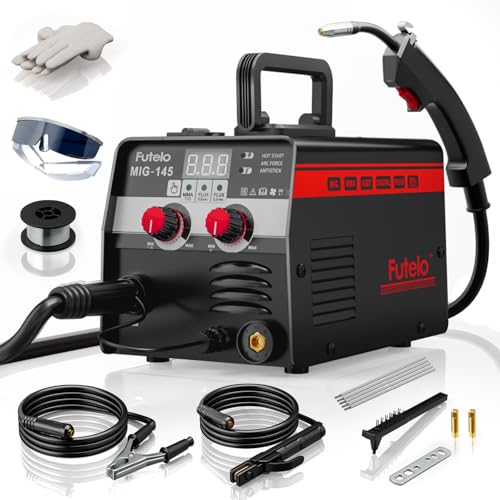
【3-IN-1 WELDER】Compact 3 in 1 welder combines MIG welder, Stick, and Lift TIG welding machine functions to tackle a wide range of welding tasks. With 30–145A output and support for carbon and stainless steel (1–5mm), it’s ideal for home DIY, repairs, and outdoor metal work. (NOTE: TIG torch not included—please purchase separately)
Where Is CMT Welding Used in Automotive?
Automotive manufacturers use CMT where low heat, low spatter, and repeatability matter. It is especially useful when a part is too thin or heat-sensitive for a hotter process but still needs a strong metallurgical joint.
| Application | Why CMT Helps |
|---|---|
| Aluminum body panels | Reduces distortion and helps prevent burn-through on thin sheet |
| Battery trays and EV structures | Supports lightweight aluminum assemblies with controlled heat |
| Galvanized steel brackets | Can reduce spatter and heat while still requiring fume control and coating-aware procedures |
| Aluminum-to-steel joints | Allows carefully controlled joining where intermetallic layer thickness must be managed |
| Seat frames, brackets, and reinforcements | Provides repeatable welds with less cleanup in robotic cells |
| Prototype and low-volume vehicle builds | Helps engineers test lightweight joints before scaling production |
Setup Factors That Affect CMT Weld Quality
CMT weld quality depends on more than the welding machine. The best results come from a complete procedure that controls the material, joint, machine program, robot path, and inspection plan.
- Base metal condition: Aluminum oxide, zinc coating, oil, adhesive residue, and stamping lubricant can cause porosity or inconsistent wetting.
- Joint fit-up: Gaps, mismatch, and poor clamping can change penetration and bead shape, especially on thin sheet.
- Filler wire: The wire alloy must match the base materials, strength requirement, corrosion target, and approved procedure.
- Shielding gas: Gas composition and flow must match the material and arc program. Poor coverage can cause oxidation, porosity, and weak welds.
- Torch angle and stickout: Small changes can affect arc stability, penetration, and bead width.
- Robot path and travel speed: Automated CMT depends on consistent motion, start/stop control, crater fill, and fixture repeatability.
- Heat management: Part thickness, weld length, sequence, and cooling time all affect distortion and residual stress.
Pro Tip: For automotive production, qualify the full joint, not just the bead appearance. A clean-looking CMT weld can still fail if penetration, fusion, or intermetallic control is poor.
Common Challenges in CMT Welding for Automotive
CMT welding reduces many problems, but it does not remove them completely. Manufacturers still need skilled setup, procedure testing, and process monitoring.
- Insufficient penetration: Low heat input helps thin material, but it can be a problem on thicker joints or structural parts that need deep fusion.
- Porosity in aluminum: Moisture, oil, oxide, or poor shielding gas coverage can trap gas in the weld.
- Dissimilar-metal brittleness: Aluminum-to-steel joints can form brittle intermetallic compounds if heat and dilution are not controlled.
- Coating-related fumes: Galvanized steel and coated parts require ventilation and fume-control planning.
- Fixture sensitivity: Small gaps or clamp changes can affect a low-heat process more than expected.
- Training and equipment cost: CMT needs compatible power sources, wire-drive systems, programs, and operators who understand the process.
Safety and Quality Checks for CMT Welding
CMT is a lower-heat process, but it is still arc welding. Operators and nearby workers need proper PPE, ventilation, hot-work controls, and eye protection. OSHA’s eye and face protection rule requires suitable protection against flying particles, molten metal, and injurious light radiation, along with filter lenses appropriate for the welding operation.
Warning: Never treat CMT as a low-risk process just because it runs cooler than some other arc processes. Use the correct helmet shade, gloves, flame-resistant clothing, ventilation, and approved procedures for coated or dissimilar metals.
Quality checks should match the part’s purpose. Cosmetic brackets may only need visual inspection and dimensional checks, while structural joints may require macroetch testing, peel or chisel testing, bend testing, tensile testing, leak testing, or nondestructive inspection. In production, manufacturers often monitor current, voltage, wire feed, travel speed, gas flow, and robot position to catch drift before it becomes scrap.
What’s Next for CMT Technology in Automotive?
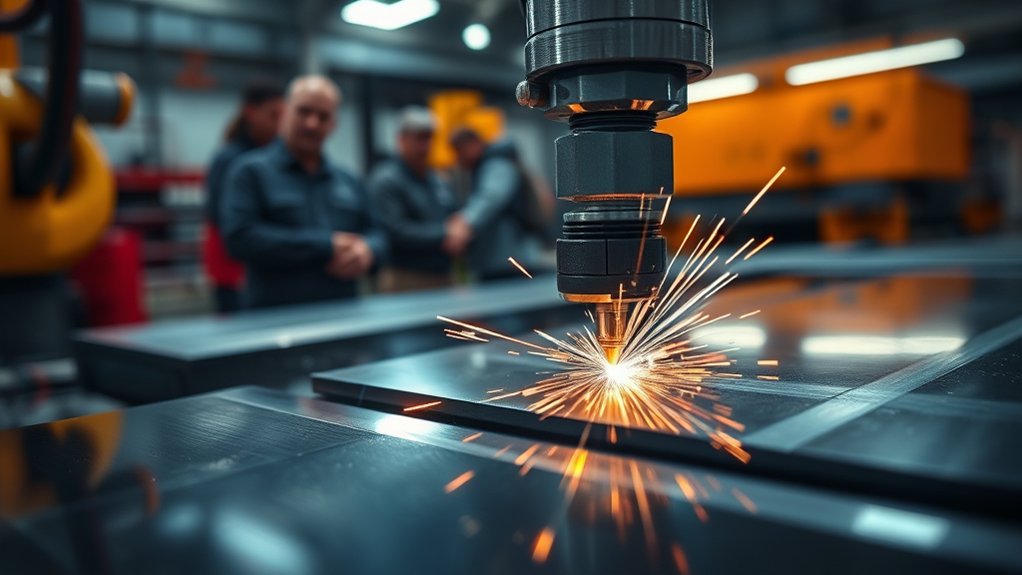
CMT technology will likely keep growing as vehicle designs use more lightweight and mixed-material structures. EV platforms, aluminum battery enclosures, multi-material body assemblies, and robotic production cells all benefit from processes that manage heat while staying repeatable.
Future development is moving in three main directions:
- Better automation: More sensors, closed-loop control, and data logging can help detect defects and reduce variation in production.
- Hybrid joining: CMT may be paired with lasers, adhesives, mechanical fasteners, or brazing strategies when one process alone cannot meet all design needs.
- More mixed-material joining: Automakers will continue looking for reliable ways to join aluminum, steel, castings, extrusions, and coated materials without adding excess weight.
Getting Started With CMT Welding
To get started with CMT welding, first decide whether the joint truly benefits from low heat input. CMT is a strong candidate for thin panels, aluminum parts, low-spatter cosmetic seams, and dissimilar-metal development work. It may not be the best first choice for heavy sections, simple steel brackets, or repairs where standard MIG welding already meets the requirement.
Equipment and Prerequisites
A proper CMT setup usually needs a compatible power source, controlled wire-feeding system, correct torch package, matched filler wire, shielding gas supply, clean fixtures, and a validated weld program. In automotive production, the setup is often robotic because repeatability is one of CMT’s biggest strengths.
Parameter Development Checklist
- Confirm base metal grade, thickness, coating, and cleanliness.
- Select the correct filler wire and wire diameter.
- Choose the shielding gas required by the procedure.
- Set wire feed, arc length, travel speed, torch angle, and contact-tip-to-work distance.
- Test bead shape, penetration, porosity, distortion, and mechanical strength.
- Document the approved settings so the process can be repeated.
Typical Use Cases
Typical automotive use cases include aluminum panel joining, thin sheet repair development, lightweight brackets, battery tray components, galvanized sheet assemblies, seat structures, and aluminum-to-steel transition joints. In each case, CMT is chosen because heat control and repeatability matter as much as weld strength.
Frequently Asked Questions
What is Cold Metal Transfer welding?
Cold Metal Transfer welding is a controlled short-circuit GMAW process. The wire moves forward into the weld pool, then retracts during droplet transfer. This helps reduce current peaks, heat input, spatter, and distortion on thin or heat-sensitive materials.
Is CMT the same as MIG welding?
CMT is related to MIG welding because it is based on gas metal arc welding with a consumable wire and shielding gas. The difference is that CMT uses controlled wire retraction and digital arc control to manage each short circuit more precisely than standard short-circuit MIG.
Why is CMT useful for automotive aluminum?
Automotive aluminum is often thin and sensitive to excess heat. CMT helps limit distortion, burn-through, and spatter while still allowing a repeatable welded joint. Clean material preparation and correct shielding gas are still essential because aluminum is prone to oxide and porosity problems.
Can CMT weld aluminum to steel?
CMT can be used in some aluminum-to-steel joining applications, but it requires a qualified procedure. Heat input, filler selection, coating condition, and joint design must be controlled because aluminum and steel can form brittle intermetallic layers if the process is poorly managed.
What are the four main GMAW metal transfer modes?
The four primary GMAW transfer modes are globular, short-circuiting, spray, and pulsed-spray. CMT is a controlled short-circuit process that modifies how the droplet transfers by coordinating current control with wire movement.
What safety gear do you need for CMT welding?
Use a welding helmet with the correct filter shade, safety glasses, gloves, flame-resistant clothing, and proper ventilation. CMT still creates arc radiation, hot metal, fumes, and electrical hazards, so it should be treated as a full arc-welding process.
Conclusion
CMT welding is a strong fit for modern automotive manufacturing because it helps control heat, spatter, and distortion in lightweight materials. It is especially useful for thin aluminum, coated steel, robotic production, and some dissimilar-metal joints. The best results come from a qualified procedure, clean material, accurate fit-up, proper shielding gas, and inspection that proves the weld is sound below the surface.
Sources
- Fronius — Cold Metal Transfer welding process — supports CMT process description and wire-control concept.
- Selvi, Vishvaksenan, and Rajasekar — “Cold metal transfer (CMT) technology: An overview” — supports CMT process advantages, applications, and technical background.
- Pickin and Young — “Evaluation of cold metal transfer (CMT) process for welding aluminium alloy” — supports CMT use with aluminum welding.
- SAE Technical Paper — “The CMT Process: News and Its Advantages in Industry” — supports industrial CMT advantages and manufacturing relevance.
- OSHA 1910.133 — Eye and face protection — supports welding eye and face protection requirements.