Disclosure: As an Amazon Associate, we earn from qualifying purchases. If you click a link on this page and make a purchase, we may receive a small commission at no extra cost to you.
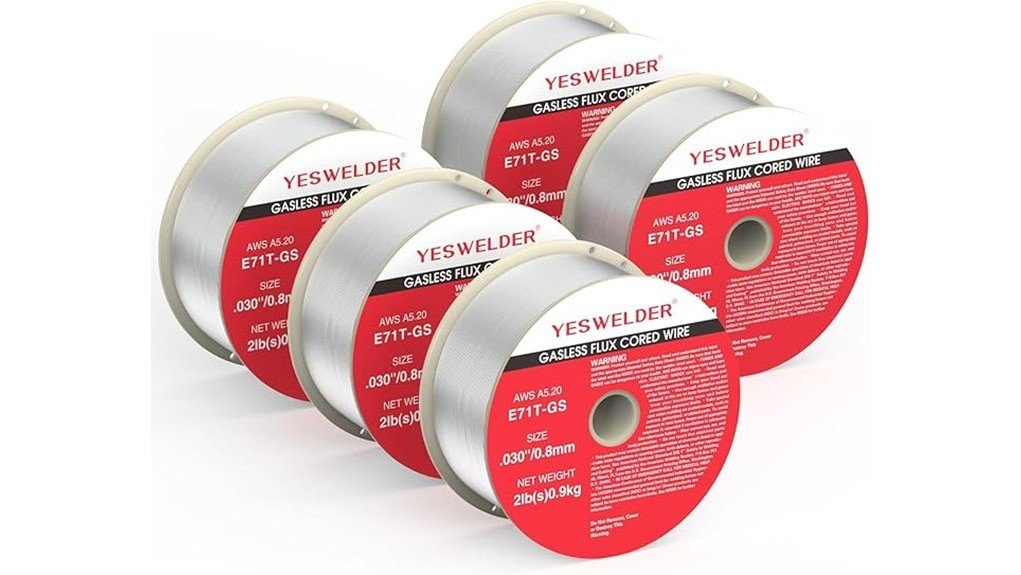
Flux core wire is one of the easiest ways to weld mild steel without carrying a gas bottle, but the wire still has to match your machine, material, and jobsite. The YESWELDER Flux Core MIG Wire E71T-GS is a self-shielded .030-inch wire sold on a 2-pound spool for small shop jobs, outdoor repairs, and portable welding setups. This review helps you decide whether its gasless design, compact spool size, and reported low-spatter performance fit the way you weld. It is a strong option for hobby and repair work, but it is not the best choice if you need a large production spool or a solid MIG wire finish with no slag cleanup.
Quick Verdict
Rating: 8.4/10, Recommended with caveats
Best For: DIY welders, mobile repair work, outdoor mild steel jobs, and small flux-core MIG machines that accept .030-inch wire.
Bottom Line: YESWELDER E71T-GS is worth considering if you want a portable gasless wire with stable feeding and easy setup. The tradeoff is that flux-cored welding creates slag and fumes, so you still need cleanup, ventilation, and correct machine settings.
| Specification | Detail |
|---|---|
| Brand | YESWELDER |
| Model / Variant | E71T-GS |
| Product Type | Flux core MIG welding wire |
| Design | Self-shielded, gasless flux-cored wire |
| Wire Diameter | .030 inch |
| Spool Weight | 2 pounds |
| Spool Material | ABS plastic spool |
| Base Metal Use | Carbon steel and low-alloy structural steel, based on the source article |
| Welding Style | Single-pass and multi-pass welding where your machine and project allow it |
| Best Use | Outdoor welding, automotive repair, light fabrication, and portable repair work |
| Safety Note | Use proper PPE, ventilation, and the settings recommended by your welder and wire label. |
What Is the YESWELDER Flux Core MIG Wire E71T-GS?
The YESWELDER Flux Core MIG Wire E71T-GS is a gasless welding wire made for flux-cored MIG welding. Instead of relying on an external gas bottle, the wire uses its flux core to help shield the weld puddle while you work. That makes it useful when you need a simpler setup for outdoor jobs, repairs away from the shop, or a small machine that is already set up for flux-core welding.
The article-supported version reviewed here uses a .030-inch diameter and a 2-pound spool. That combination makes sense for smaller welders and hobby machines because it is easier to store and carry than a large production spool. The wire is described as having stable arc behavior, low spatter, good feedability, full slag formation, and easier slag removal.
Before You Buy: Confirm that your welder accepts .030-inch flux-cored wire and a 2-pound spool. You may also need the correct drive roller, contact tip, polarity setting, and tension adjustment for flux-core use.
Who Should Buy It?
Best For
- You want gasless wire for outdoor work, windy jobsites, or mobile repairs.
- You use a flux-core capable MIG welder that accepts .030-inch wire.
- You need a small spool for automotive repair, brackets, hobby fabrication, or occasional shop use.
Skip If
- You want a no-slag weld finish for thin cosmetic sheet metal or paint-ready bodywork.
- Your machine does not support flux-cored wire or does not accept 2-pound spools.
- You need a larger spool for long production runs or repeated daily fabrication.
Welding Performance and Arc Stability
The main buying reason for this wire is its simple, self-shielded performance. The source article describes the YESWELDER E71T-GS wire as having exceptional arc stability, low spatter, high feedability, and a clean bead appearance. Those traits matter because a steadier arc is easier to control, especially when you are learning travel speed, torch angle, and contact-tip distance.
The .030-inch diameter is a practical size for many compact MIG and flux-core machines. It gives you more control than a heavier wire on small repair work, while still offering enough deposition for brackets, frames, and light fabrication when your welder has the output to support the job.
Gasless Outdoor Use
This is a self-shielded flux-cored wire, so it does not require a separate shielding gas bottle. That is the key advantage over solid MIG wire when you need to weld outside, work around light air movement, or take your machine to a driveway, farm, trailer, or jobsite. You still need to protect the work area from unsafe conditions, but you do not have to manage a gas cylinder for basic flux-core work.
The gasless design also helps with portability. A 2-pound spool takes up little space in a toolbox or welder cart, and it is easier to keep as a backup spool than a larger industrial roll. The limitation is that flux-cored wire leaves slag, so every pass needs visual inspection and cleanup before you paint, coat, or stack another weld pass.
Material Compatibility and Project Fit
The article positions this wire for carbon steel and low-alloy structural steel. That makes it a fit for common mild-steel projects, such as repair brackets, small frames, shop fixtures, outdoor gates, and basic fabrication. It is also described as useful for automotive repairs, though you should be careful with thin panels because heat control and burn-through become harder on light-gauge metal.
For thicker or load-bearing work, your weld quality depends on more than the wire. You still need the right machine output, clean base metal, proper joint fit-up, correct settings, and enough practice to avoid porosity, cold lap, slag inclusion, or lack of fusion. When the repair is structural or safety-critical, use a qualified welding professional.
Spool Design and Handling
The 2-pound spool uses ABS plastic, according to the source article. A durable plastic spool helps protect the wire during storage and handling, and the smaller size is easier to load into compact machines that are designed for small rolls. It also makes sense for welders who do not go through wire quickly.
Before loading the spool, check that the wire feeds smoothly from the roll and that the spool spins without binding. Set the drive tension only as tight as needed to feed the wire. Too much pressure can deform flux-cored wire, while too little tension can cause slipping and inconsistent feeding.
How It Performs in Real Use
For Outdoor Repairs
This wire is at its best when a gas bottle would be awkward. It is a practical choice for driveway repairs, fence work, trailer touch-ups, and other jobs where portability matters. The self-shielded design helps you keep the setup simple, but you should still avoid welding in gusty, dirty, wet, or unsafe conditions.
For Automotive and Garage Work
For automotive brackets, small frame patches, and garage fixtures, the .030-inch diameter gives you useful control. It can be easier for occasional welders than heavier wire, but it is not always the best choice for thin cosmetic body panels. Solid wire with shielding gas often leaves a cleaner finish on thin sheet metal because there is no slag to remove.
For Metal Fabrication
In light fabrication, the wire works well when you need steady feeding and repeatable weld beads on carbon steel. It is better suited to practical fabrication than show-quality cosmetic welds. Plan time for slag removal, brushing, and inspection between passes.
For Backup and Portable Use
The 2-pound spool is a useful size to keep in a small shop, truck, or home garage. It gives you enough wire for repairs and practice without storing a large roll that may sit unused for a long time. Store it in a dry place to reduce the risk of contamination and feeding problems.
Setup Tips Before First Use
Start by checking your welder manual and the wire label. Match the contact tip to .030-inch wire, use a flux-core compatible drive roller when your machine requires one, and set polarity according to your welder and wire instructions. Many self-shielded flux-core wires use a different polarity than solid MIG wire, so do not assume your last MIG setup is correct.
Run a short test bead on scrap metal before starting the actual repair. Adjust wire speed and voltage until the arc sounds steady and the bead wets into the base metal. If the wire stubs into the work, burns back, or makes excessive spatter, stop and adjust settings before continuing.
Pro Tip: Keep a wire brush, chipping hammer, and scrap test coupon beside the welder. Flux-cored wire performs better when you clean the joint first and remove slag before judging the next pass.
Safety and Fume Control
Flux-cored welding creates smoke, sparks, UV light, and hot metal. Wear a welding helmet with the correct shade, welding gloves, flame-resistant clothing, and closed-toe leather footwear. Keep flammable materials away from the work area, and protect bystanders from arc flash with distance or welding screens.
Ventilation matters, even outdoors. Keep your head out of the plume, avoid breathing welding fumes, and do not weld in a confined space without proper ventilation and training. If the metal has paint, oil, plating, solvent residue, or unknown coatings, stop and identify the hazard before welding.
Pros and Cons
Pros
- Self-shielded design removes the need for an external gas bottle.
- .030-inch diameter is practical for many compact flux-core welders.
- 2-pound spool is easy to transport, store, and load into small machines.
- Article-supported performance claims include stable arc behavior, low spatter, and good feedability.
- Suitable for common carbon steel repair and fabrication tasks when used with the right settings.
Cons
- Leaves slag that must be removed before inspection, coating, or additional passes.
- Not ideal if you want the cleanest finish on thin cosmetic sheet metal.
- Small spool size may not be efficient for heavy daily production work.
Is It Worth the Price?
YESWELDER E71T-GS offers strong value for the price if you need a small spool of gasless flux-core wire for occasional welding, repairs, and practice. The 2-pound size keeps the purchase practical for hobby welders who do not want to store a larger roll.
It is a smart buy for everyday repair use if your machine accepts .030-inch flux-cored wire and you prefer a simple no-gas setup. It is not the best fit if you want a production-size spool, a no-slag finish, or a wire chosen for a certified structural procedure.
How It Compares to Alternatives
Compared with solid MIG wire, this YESWELDER flux-core wire is more convenient for outdoor and portable welding because it does not need external shielding gas. Solid MIG wire is often better when you care most about bead appearance, thin sheet metal control, and less cleanup after the weld.
Compared with gas-shielded flux-cored wire, this self-shielded wire keeps the setup simpler and easier to move. Gas-shielded flux-cored wire may be a better match for controlled shop work on thicker material when you already have the correct gas setup and machine capacity.
Frequently Asked Questions
Does YESWELDER E71T-GS need shielding gas?
No. This is described as self-shielded flux-cored wire, so it does not need a separate gas bottle. You still need good ventilation, correct settings, and safe welding practices.
What machines can use this .030-inch flux-core wire?
Use it with a MIG or flux-core welder that supports .030-inch flux-cored wire and the spool size. Check your welder manual for drive roller type, contact tip size, spool fit, and polarity.
Is it good for beginners?
Yes, it can be beginner-friendly because the gasless setup is simple and portable. Beginners should practice on scrap metal first, then adjust wire speed, voltage, travel angle, and stickout before welding the final project.
Can you use it indoors?
You can use flux-cored wire indoors only with proper ventilation and safe work practices. Flux-core welding produces fumes, so avoid confined spaces and keep your breathing zone away from the smoke plume.
What metals is this wire meant for?
The source article supports use on carbon steel and low-alloy structural steel. Do not assume it is suitable for stainless steel, aluminum, cast iron, or coated metals unless your wire label and welding procedure confirm it.
How does it compare to solid MIG wire?
This flux-cored wire is better for simple outdoor and portable setups because it does not need gas. Solid MIG wire may be better for thin sheet metal, cleaner bead appearance, and projects where you want less post-weld cleanup.
What common mistakes should you avoid?
Avoid using the wrong polarity, the wrong contact tip, too much drive tension, or dirty base metal. Also avoid welding over slag, paint, oil, or unknown coatings because those mistakes can weaken the weld and create unsafe fumes.
The Bottom Line
The YESWELDER Flux Core MIG Wire E71T-GS is a solid pick if you want a portable .030-inch gasless wire for carbon steel repairs, outdoor jobs, and small-shop fabrication. Skip it if you need a no-slag cosmetic finish, a large production spool, or a wire for a safety-critical job without a qualified welding procedure. Its main strength is simple self-shielded use, while its main limitation is the cleanup and fume control that come with flux-cored welding.