Disclosure: As an Amazon Associate, we earn from qualifying purchases. If you click a link on this page and make a purchase, we may receive a small commission at no extra cost to you.
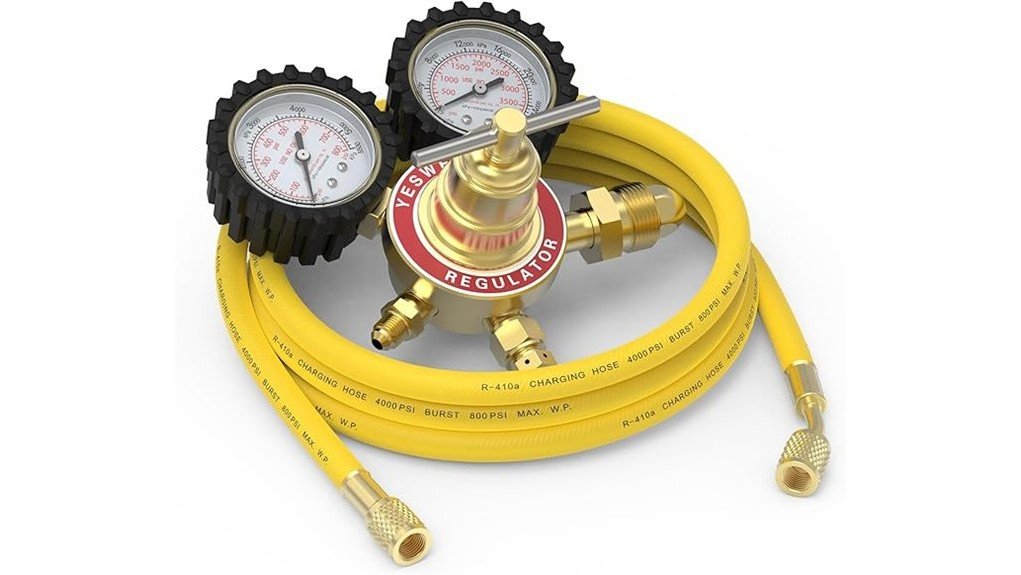
Pressure testing and nitrogen purging both depend on steady control. The YESWELDER Nitrogen Regulator is built for HVAC work, leakage checks, inertization, brazing, and soldering setups where you need a CGA580 inlet and a 1/4-inch male flare outlet.
This review helps you decide whether the 0-800 PSI version is the right fit for your work. Its biggest strengths are the brass body, dual-gauge layout, T-shaped adjustment handle, and included hose. The main limitation is simple: you still need to confirm your cylinder, hose, fittings, and job requirements before using any high-pressure nitrogen setup.
Quick Verdict
Rating: 8.4/10
Best For: HVAC technicians, refrigeration work, nitrogen purging, leak checks, and pressure testing tasks that need a CGA580 nitrogen regulator.
Bottom Line: The YESWELDER Nitrogen Regulator is worth considering if you need a practical 0-800 PSI nitrogen regulator with a brass body, dual gauges, and a 1/4-inch male flare outlet. Skip it if your setup requires a different cylinder connection, a certified industrial regulator, or a flowmeter-style tool instead of a pressure regulator.
| Specification | Detail |
|---|---|
| Brand | YESWELDER |
| Product Type | Nitrogen regulator with hose |
| Style Reviewed | 0-800 PSI version |
| High-Pressure Gauge | 0-4000 PSI |
| Outlet Pressure Gauge | 0-800 PSI |
| Inlet Connection | CGA580 |
| Outlet Fitting | 1/4-inch male flare fitting |
| Body Material | Brass |
| Adjustment Style | T-shaped manual adjustment handle |
| Included Accessory | Listed with a 60-inch gas hose |
| Best Use | HVAC purging, inertization, pressure testing, leakage testing, brazing, and soldering support work |
| Safety Note | Use only with compatible cylinders, fittings, and job requirements. Follow the product instructions and safe compressed-gas handling practices. |
What Is the YESWELDER Nitrogen Regulator?
The YESWELDER Nitrogen Regulator is a pressure regulator made for nitrogen service tasks, especially HVAC and refrigeration work. It uses a CGA580 inlet connection, which is a common fitting for nitrogen cylinders, and it has a 1/4-inch male flare outlet for connecting to compatible service hoses or setups.
The 0-800 PSI outlet gauge gives you a wide pressure range for jobs that need more than a basic low-pressure regulator. The 0-4000 PSI high-pressure gauge helps you monitor cylinder-side pressure. That distinction matters because the high-pressure gauge is not the normal working outlet pressure you send into a system.
The brass body and T-shaped handle make the regulator feel more work-focused than a very light-duty tool. You still need to use it with care, because nitrogen cylinders and pressure testing can create real safety risks when fittings, hoses, or procedures are wrong.
Key Takeaways
- The YESWELDER Nitrogen Regulator is best suited for HVAC purging, pressure tests, leakage tests, inertization, brazing, and soldering support tasks.
- The 0-800 PSI outlet gauge gives you more range than many lower-pressure nitrogen regulators.
- The 0-4000 PSI gauge helps you monitor cylinder-side pressure, not normal outlet delivery pressure.
- The CGA580 inlet and 1/4-inch male flare outlet make it useful for many nitrogen service setups, but you still need to confirm compatibility.
- The brass body, T-shaped handle, and included 60-inch hose add practical value for field and shop use.
Who Should Buy It?
Best For
- HVAC technicians who need nitrogen for purging, pressure testing, or leak checks.
- Users who want a 0-800 PSI outlet gauge rather than a lower-pressure-only setup.
- Buyers who need a CGA580 inlet and 1/4-inch male flare outlet in one regulator kit.
Skip If
- Your gas cylinder does not use a CGA580 connection.
- You need a flowmeter for SCFH-based purging instead of a pressure regulator.
- Your work requires a regulator with documented certifications or job-specific compliance paperwork.
Before You Buy: Confirm your cylinder connection, hose rating, outlet fitting, and required test pressure before purchase. A regulator that fits one nitrogen setup may not fit every cylinder, hose, manifold, or service procedure.
Design and Build Quality
The YESWELDER Nitrogen Regulator uses a brass body, which gives it a solid, work-ready feel. Brass also makes sense for a pressure regulator because it is durable enough for regular shop and field handling when you treat the tool properly.
The T-shaped adjustment handle is one of the more useful design details. It gives your hand more surface area than a small knob, so you can make controlled adjustments while watching the gauge. That helps when you want to bring pressure up gradually instead of overshooting your target.
The dual-gauge layout also improves usability. One gauge shows the high-pressure side, while the other shows the outlet pressure range. This makes it easier to monitor both the cylinder side and the regulated side during setup.
Pressure Control and Gauge Layout
The outlet pressure gauge is the key working gauge for most buyer decisions. On this version, the low-pressure outlet gauge reads 0-800 PSI, which gives you room for demanding HVAC pressure tests and nitrogen service tasks.
The high-pressure gauge reads 0-4000 PSI. Treat this as the cylinder-side gauge, not as a target pressure for the system you are testing. Your actual test pressure should come from the equipment manufacturer, job procedure, local code, or professional guidance.
This wide gauge range makes the regulator useful, but it also means you need good habits. Bring pressure up slowly, watch the outlet gauge closely, and do not use hoses or components below the pressure required for the job.
Pro Tip: Before you connect the regulator to a system, back out the adjustment handle, secure the cylinder upright, and open the cylinder valve slowly while standing to the side of the regulator face.
Connections and Compatibility
The CGA580 inlet is one of the most important compatibility details. This connection is commonly used with nitrogen cylinders, so it helps the regulator match many HVAC nitrogen setups. Still, you should check the cylinder valve before buying because not every gas cylinder uses the same connection.
The outlet side uses a 1/4-inch male flare fitting. That makes the regulator easier to pair with compatible HVAC service hoses and accessories. If your current hose, manifold, or adapter uses a different fitting, you may need the correct rated adapter or a different regulator.
The included 60-inch gas hose adds convenience because you do not have to start with only the regulator body. It also gives you more working space around the cylinder. Even so, you should confirm the hose rating and condition before using it for any pressure test.
Applications and Usability
The YESWELDER Nitrogen Regulator fits several practical uses. It can help with HVAC purging, pressure tests, leakage tests, inertization, brazing, and soldering support work. For many buyers, the most useful role will be HVAC service because nitrogen is commonly used to pressure test and purge lines.
- HVAC purging: Helps move nitrogen through lines during service tasks when your process calls for it.
- Pressure testing: Lets you regulate nitrogen pressure while checking system integrity.
- Leakage testing: Supports controlled pressure checks when you need to find or confirm leaks.
- Brazing and soldering support: Can help maintain a nitrogen flow in compatible setups when the work calls for it.
The regulator is simple enough for experienced DIY users to understand, but it is not a casual tool. High-pressure gas work requires the right fittings, the right pressure rating, and safe cylinder handling.
How It Performs in Real Use
For HVAC Pressure Testing
The 0-800 PSI outlet gauge gives you useful room for HVAC pressure-test procedures that need higher pressure than a basic regulator can show. The T-shaped handle helps you raise pressure in small steps, which matters when you are watching for leaks or pressure drop.
For Nitrogen Purging
For purging, the regulator gives you controlled pressure from the cylinder through the outlet fitting. If your job requires flow measured in SCFH, you may still need a compatible flowmeter or flow indicator because this tool is primarily a pressure regulator.
For Leakage Checks
Leak checks benefit from steady adjustment and clear gauge visibility. The YESWELDER regulator gives you a practical gauge setup for monitoring regulated pressure while you inspect fittings, joints, or service connections.
For Field and Shop Use
The brass body, included hose, and manual adjustment handle make this regulator useful in both shop and field settings. The tradeoff is that it still needs careful storage, clean fittings, and regular visual checks before use.
Setup Tips Before First Use
- Check that your nitrogen cylinder uses the CGA580 connection before attaching the regulator.
- Inspect the hose, fitting threads, gauges, and regulator body for visible damage before each use.
- Back out the adjustment handle before opening the cylinder valve.
- Open the cylinder valve slowly and watch the gauges as pressure enters the regulator.
- Use only hoses, manifolds, and components rated for the pressure you plan to use.
- Close the cylinder valve when work is finished, then relieve pressure according to safe procedure.
Safety Notes for Nitrogen and Compressed Gas
Nitrogen is useful because it is inert for many service tasks, but it still requires caution. In poorly ventilated spaces, nitrogen can displace oxygen. Use it in suitable work areas and follow your product instructions, job procedure, and workplace safety rules.
Compressed gas cylinders should stay secured upright during use, storage, and transport unless a specific short handling step requires otherwise. A cylinder that falls can damage the valve, regulator, or hose and create serious risk.
You should also avoid standing directly in front of the regulator face when opening a cylinder valve. Stand to the side, open the valve slowly, and never force mismatched fittings together.
Pros and Cons
Pros
- 0-800 PSI outlet gauge gives you a wide working range for many nitrogen service tasks.
- 0-4000 PSI high-pressure gauge helps you monitor the cylinder-side pressure.
- CGA580 inlet and 1/4-inch male flare outlet fit many HVAC nitrogen setups.
- Brass construction and T-shaped adjustment handle support regular field or shop use.
- Included 60-inch hose adds convenience for setup and positioning.
Cons
- Not a flowmeter, so it may not replace SCFH-based purging tools.
- Only fits setups that match the CGA580 inlet and 1/4-inch male flare outlet.
- Requires careful compressed-gas handling and pressure-rated accessories.
Is It Worth the Price?
The YESWELDER Nitrogen Regulator offers strong value for the price if you need a practical nitrogen regulator for HVAC purging, pressure testing, and leak checks. The main value comes from the wide 0-800 PSI outlet gauge, brass body, CGA580 inlet, 1/4-inch male flare outlet, T-shaped handle, and included hose.
It makes the most sense for buyers who already know their setup requires this connection style and pressure range. It is not the best fit if you need a premium industrial regulator with documented compliance paperwork, a different cylinder connection, or a flowmeter for precise flow readings.
How It Compares to Alternatives
Compared with a 0-600 PSI nitrogen regulator, this 0-800 PSI version gives you more outlet gauge range for higher-pressure service tasks. That extra range can be useful, but it also makes safe pressure control more important.
Compared with a nitrogen flow meter, this tool focuses on pressure regulation rather than flow measurement. Compared with general argon or CO2 welding regulators, it is a better match for nitrogen service when your cylinder and fittings match the CGA580 and 1/4-inch male flare setup.
Frequently Asked Questions
Is the YESWELDER Nitrogen Regulator good for HVAC pressure testing?
Yes, it is designed for nitrogen tasks such as HVAC purging, pressure tests, and leakage tests. The 0-800 PSI outlet gauge gives you a wide range, but you should always follow the equipment manufacturer’s pressure limits and safe work procedures.
What connection does this nitrogen regulator use?
It uses a CGA580 inlet connection and a 1/4-inch male flare outlet fitting. Check your cylinder valve, hose, manifold, and adapters before buying because mismatched fittings should not be forced together.
Does the 0-4000 PSI gauge mean it outputs 4000 PSI?
No. The 0-4000 PSI gauge is the high-pressure gauge for the cylinder side. The reviewed version has a 0-800 PSI outlet gauge for regulated output pressure.
Can I use this regulator with gases other than nitrogen?
The product is marketed as a nitrogen regulator, so you should treat nitrogen as its intended use. Do not use it with another gas unless the manufacturer, cylinder supplier, or qualified professional confirms that the regulator, seals, fittings, and pressure range are appropriate.
Does it include a hose?
The 0-800 PSI version is listed with a 60-inch gas hose. Check the current product listing and package details before purchase because bundled accessories can vary by seller or listing option.
Is this a good choice for nitrogen purging while brazing?
It can support nitrogen purging and brazing-related work when your setup uses compatible fittings. If your procedure requires a specific flow rate, you may need a separate flowmeter or flow indicator.
How should I maintain the regulator?
Keep the fittings clean, inspect the hose and gauges before use, and store the regulator where it will not be dropped or contaminated. Do not oil regulator fittings, force threads, or use damaged pressure equipment.
Who should skip this regulator?
Skip it if your cylinder does not use CGA580, your system needs a different outlet fitting, or your work requires certified industrial documentation not stated on the listing. Also skip it if you need flow measurement rather than pressure regulation.
The Bottom Line
The YESWELDER Nitrogen Regulator is a smart buy for HVAC and service users who need a CGA580 nitrogen regulator with a 0-800 PSI outlet gauge, 1/4-inch male flare outlet, brass body, and included hose. Its main strength is practical pressure control for nitrogen service tasks, while its main limitation is compatibility and safety responsibility.
Buy it if your cylinder, hose, and job requirements match this setup. Skip it if you need a flowmeter, a different gas connection, or a regulator with job-specific certification details.