Disclosure: As an Amazon Associate, we earn from qualifying purchases. If you click a link on this page and make a purchase, we may receive a small commission at no extra cost to you.
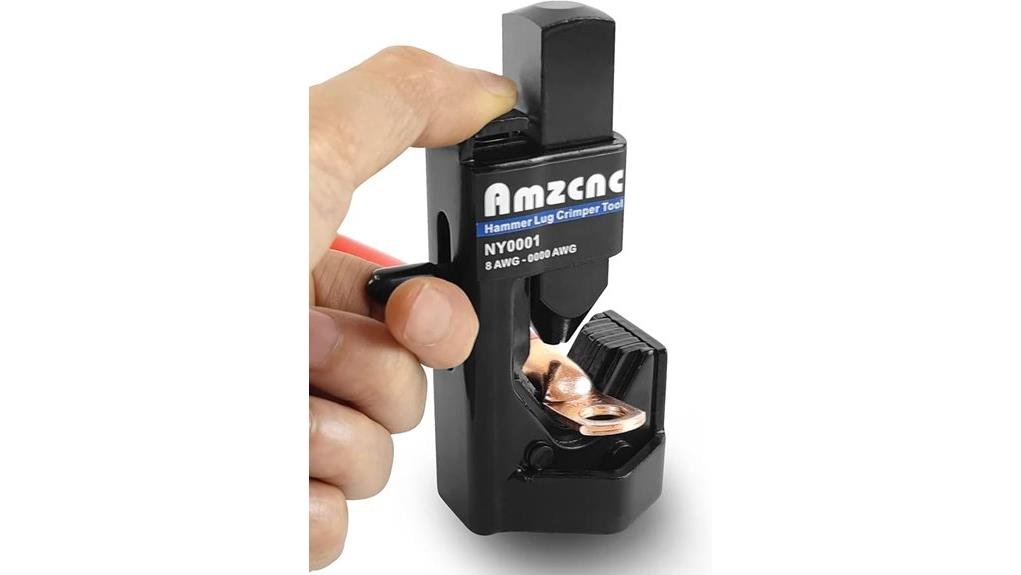
Crimping heavy battery, inverter, or welding cable lugs can get frustrating when the connector shifts, the cable is thick, or your tool does not apply enough force. The AMZCNC Hammer Lug Crimper Tool is a simple hammer-style crimper made for uninsulated terminals from 8 AWG to 4/0 AWG. It uses a reinforced steel body and works with either a hammer or a shop vise, which makes it a practical option for garage, shop, and field projects. This review helps you decide if its low-part design and wide wire range fit your work, or if you would be better served by a hydraulic or ratcheting crimper.
Quick Verdict
Rating: 8.4/10
Best For: DIYers, mechanics, welders, and shop users who need a basic crimper for large uninsulated cable lugs.
Bottom Line: The AMZCNC Hammer Lug Crimper is a strong value if you want a durable, simple tool for 8 AWG to 4/0 AWG lugs. The main tradeoff is that it needs careful cable alignment, a stable surface, and a hammer or vise instead of the smoother feel of a hydraulic crimper.
| Specification | Detail |
|---|---|
| Brand | AMZCNC |
| Product type | Hammer lug crimper tool |
| Design | Hammer-operated or shop-vise-operated crimping design |
| Wire size range | 8 AWG to 4/0 AWG |
| Terminal compatibility | Uninsulated terminal types and cable lugs |
| Material | Reinforced steel |
| Recommended striking tool | 2 to 4 lb sledgehammer, based on the source article |
| Best use | Battery cables, welding cable work, and heavy electrical wiring projects |
| Support note | Source article states free returns and exchanges for manufacturing defects |
| Safety note | Use gloves, eye protection, a stable work surface, and the correct lug size for the cable. |
What Is the AMZCNC Hammer Lug Crimper Tool?
The AMZCNC Hammer Lug Crimper Tool is a compact crimping tool for large uninsulated cable lugs. Instead of using a long ratcheting handle or a hydraulic pump, it uses impact force from a hammer or pressure from a shop vise to compress the lug around the wire.
Its biggest appeal is simplicity. The reinforced steel construction is meant to handle repeated impact, and the design avoids loose parts that can get lost or weaken the tool during use. For buyers working with battery cables, welding leads, inverter cables, or similar heavy-gauge wiring, the 8 AWG to 4/0 AWG range covers many common large-lug jobs.
This is not a precision automatic crimper that does the setup for you. You still need to choose the correct lug, insert the wire fully, align the terminal in the crimper, and apply controlled force. Used carefully, it can make solid mechanical crimps without requiring a large powered tool.
Who Should Buy It?
Best For
- DIY users making or repairing battery cables in a garage or workshop.
- Welders and mechanics who need a rugged crimper for 8 AWG to 4/0 AWG uninsulated lugs.
- Buyers who prefer a simple steel tool that can be used with a hammer or shop vise.
Skip If
- You need a ratcheting or hydraulic crimper for more controlled, repeatable pressure.
- You work mostly with small wire sizes below 8 AWG.
- You need a tool specifically made for insulated terminals unless your terminal instructions confirm compatibility.
Before You Buy: This tool is designed around heavy uninsulated lugs from 8 AWG to 4/0 AWG. It also needs impact force or vise pressure, so it is not the best choice if you want one-handed operation or a tool that automatically controls the crimp cycle.
Key Takeaways
- The AMZCNC Hammer Lug Crimper is made for wire sizes from 8 AWG to 4/0 AWG.
- It is best suited for uninsulated terminals used in battery, welding, and heavy electrical cable work.
- The reinforced steel body supports high-impact use and helps the tool hold up under repeated hammer strikes.
- You can use it with a hammer or a shop vise, which gives you more flexibility in a garage or workshop.
- It is simple and durable, but proper alignment and safety gear matter every time you crimp.
Features and Specifications
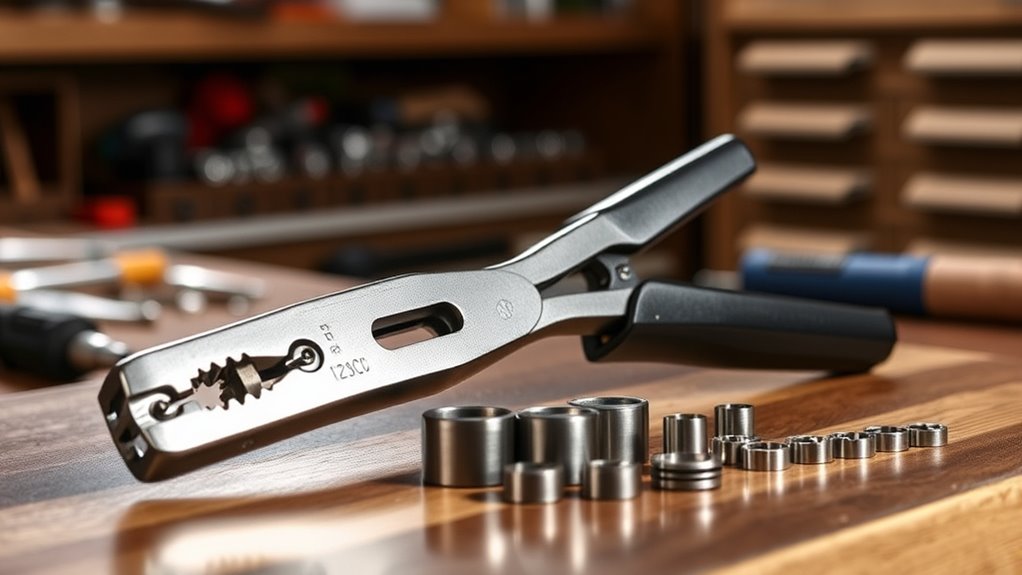
Wide 8 AWG to 4/0 AWG Crimping Range
The key specification is the 8 AWG to 4/0 AWG wire range. That makes the tool useful for many heavy-cable projects, including battery leads, welding cable connections, and other high-current cable assemblies where smaller hand crimpers are not enough.
This range is especially helpful if you handle more than one cable size. Instead of buying a separate tool for every large wire gauge, you get one hammer-style crimper that can cover common lug sizes in the article-supported range.
Reinforced Steel Construction
The body is described as reinforced steel, which matters because a hammer lug crimper takes direct impact during use. A weaker tool can deform, loosen, or become inconsistent over time. Steel construction gives this AMZCNC model the strength buyers expect for garage and shop work.
The source article also notes that the tool avoids loose parts. That is useful in a busy workspace because there are fewer small pieces to misplace, fewer springs to break, and fewer parts to check before each use.
Hammer or Vise Operation
You can operate the crimper with a hammer, and the source article specifically mentions a 2 to 4 lb sledgehammer for best crimping efficiency. You can also use a shop vise, which may feel more controlled if you prefer steady pressure over repeated strikes.
The hammer method is fast and simple, but it does require a stable surface. The vise method can help you keep the lug aligned, but it depends on having enough room and a sturdy vise mounted to a bench.
Performance and Usability
The AMZCNC Hammer Lug Crimper performs best when you prepare the cable and lug before you apply force. Strip the cable cleanly, insert the wire fully into the lug barrel, place the lug straight in the crimping channel, and apply force evenly.
Because the tool is manually driven, the final crimp depends partly on your technique. That is not a flaw unique to this model, it is normal for hammer-style crimpers. The benefit is that you get a strong, simple tool without needing a hydraulic pump or a large ratcheting frame.
Ease of Use
The basic process is easy to understand. You place the terminal in the tool, insert the stripped cable, then use a hammer or vise to compress the lug. This makes the tool approachable for skilled DIY users who are comfortable working with heavy wire.
Beginners can use it, but they should practice on spare cable and lugs before doing a critical connection. Good crimps need the right terminal size, clean wire strands, and enough compression to hold the cable securely.
Connection Consistency
The source article highlights consistent connections, which is one of the main reasons buyers choose a dedicated lug crimper over pliers, a punch, or a vise alone. A purpose-built crimper helps shape the lug around the cable more evenly.
Still, consistency depends on matching the lug to the wire size. A loose lug, damaged wire, or crooked placement can create a weak connection even with a strong crimper. Always inspect the finished crimp before installing it in a vehicle, battery system, welder, or electrical project.
How It Performs in Real Use
For Battery Cable Projects
For battery leads and large terminal ends, the 8 AWG to 4/0 AWG range is the main advantage. The tool can help you crimp heavy uninsulated lugs used on battery cables, inverter cables, and similar high-current setups.
For Welding Cable Work
Welding cable is often thick, flexible, and difficult to crimp with light-duty tools. The AMZCNC crimper’s hammer-style design is a good match for shop users who need a direct, impact-based tool for large lugs.
For Garage and Field Repairs
The design is simple enough for a garage, service truck, or small workshop. Since it does not rely on a battery, plug, or hydraulic fluid, it can be useful when you need a basic crimping solution in a practical work setting.
For Long-Term Use
Reinforced steel gives the tool a better chance of holding up to repeated impact. To keep it working well, store it dry, wipe off metal debris, and check the contact surfaces for damage before important crimping jobs.
How to Use It Correctly
Start by confirming that your wire and terminal are within the 8 AWG to 4/0 AWG range. Use only a lug that matches the cable size, then strip the insulation cleanly so the wire strands fit fully inside the lug barrel.
- Place the crimper on a flat, solid surface or position it securely in a shop vise.
- Insert the uninsulated lug into the crimping area.
- Slide the stripped cable into the lug until it bottoms out.
- Check that the lug and wire are straight before applying force.
- Use controlled hammer strikes or steady vise pressure to complete the crimp.
- Inspect the finished crimp and confirm the wire does not pull out.
Pro Tip: Make a test crimp on a spare lug and cable before working on your final connection. This helps you learn how much force the tool needs and shows whether your lug size matches the cable correctly.
Safety and Compatibility Notes
Wear safety glasses and gloves when using any hammer-style crimper. Striking metal can create chips, slips, or bounce-back, especially if the tool is not sitting flat. Keep your hands away from the striking area and never hold the lug where the tool compresses.
This AMZCNC tool is described for uninsulated terminal types. Do not assume it is correct for insulated terminals, small electronics terminals, or specialty connectors unless the terminal maker or product instructions say so. For vehicle, battery, welding, and electrical work, follow the cable, lug, and equipment instructions because a poor crimp can create heat, resistance, or connection failure.
Durability and Warranty
Durability is one of the strongest points of this tool. The reinforced steel construction is built for impact use, and the simple design reduces the risk of problems from loose parts or broken springs.
The source article also states that AMZCNC offers customer support that includes free returns and exchanges for manufacturing defects. That is helpful for buyers who want some protection if the tool arrives with a defect or does not perform as expected. Always check the current seller terms before buying because marketplace policies can change.
Pros and Cons
Pros
- Supports a wide 8 AWG to 4/0 AWG range for large cable lugs.
- Reinforced steel body is suitable for repeated hammer impact.
- Works with either a hammer or a shop vise.
- Simple design avoids loose parts that can get lost or fail.
- Useful for battery, welding, and heavy electrical cable projects.
Cons
- Requires a hammer or vise, so it is less convenient than a self-contained crimper.
- Manual results depend on correct lug sizing, cable prep, and alignment.
- Not ideal for small wires, insulated terminals, or buyers who need hydraulic precision.
Is It Worth the Price?
The AMZCNC Hammer Lug Crimper is best viewed as a budget-friendly, work-focused tool for heavy lugs. It gives you a wide crimping range and reinforced steel construction without the extra size or complexity of a hydraulic crimper.
It is a smart buy for everyday garage or shop use if you only need occasional large-lug crimps and you already have a hammer or vise. The value is weaker if you crimp lugs all day, need highly repeatable production results, or prefer a smoother tool that controls the compression stroke for you.
How It Compares to Alternatives
Compared with hydraulic lug crimpers, this AMZCNC tool is simpler and easier to store, but it requires more manual setup and impact force. A hydraulic crimper may be better if you need controlled pressure for frequent professional work.
Compared with ratcheting cable crimpers, the hammer design is better suited to large, simple lug work but less comfortable for repetitive crimping. The AMZCNC Hammer Lug Crimper makes the most sense if you want a durable, low-part tool for occasional to regular heavy cable projects.
Frequently Asked Questions
What wire sizes can the AMZCNC Hammer Lug Crimper handle?
The source article lists a wire size range of 8 AWG to 4/0 AWG. That range makes it suitable for many large battery, welding, and heavy electrical cable lugs.
What types of terminals can this crimper handle?
It is described for uninsulated terminal types and lugs. Do not assume it fits insulated terminals or specialty connectors unless your terminal instructions confirm that style of crimping.
Do you need a hammer to use it?
You can use it with a hammer, and the source article mentions a 2 to 4 lb sledgehammer for efficient crimping. You may also use a shop vise if you prefer steady pressure and have a strong bench setup.
Is this tool suitable for beginners?
Yes, it can be beginner-friendly because the operation is simple. New users should practice on spare lugs first, wear eye protection, and inspect the crimp before using it on a real cable assembly.
Can it be used for electrical wiring projects?
It can be used for heavy electrical cable projects that match the tool’s wire range and terminal type. For code-sensitive electrical work, battery systems, or vehicle wiring, follow the equipment instructions and use professional help when needed.
How heavy is the crimper tool itself?
The source article does not provide an exact tool weight. It does describe the tool as portable and manageable, but you should check the current listing details if exact weight matters for your kit or service bag.
What safety precautions should you take while using it?
Wear gloves and safety glasses, keep the tool on a stable surface, and keep your hands clear of the crimping and striking area. Check the tool for damage before use and do not strike it at an angle.
Who should skip the AMZCNC Hammer Lug Crimper?
Skip it if you need a crimper for small wires, insulated terminals, or frequent production work where hydraulic control is more useful. It is also not ideal if you do not have a safe surface for hammering or a solid shop vise.
The Bottom Line
The AMZCNC Hammer Lug Crimper Tool is worth considering if you need a tough, simple crimper for 8 AWG to 4/0 AWG uninsulated lugs. It is best for battery, welding, and heavy cable projects where a hammer or vise setup is practical. Skip it if you need hydraulic precision, small-wire compatibility, or a tool made for insulated terminals.