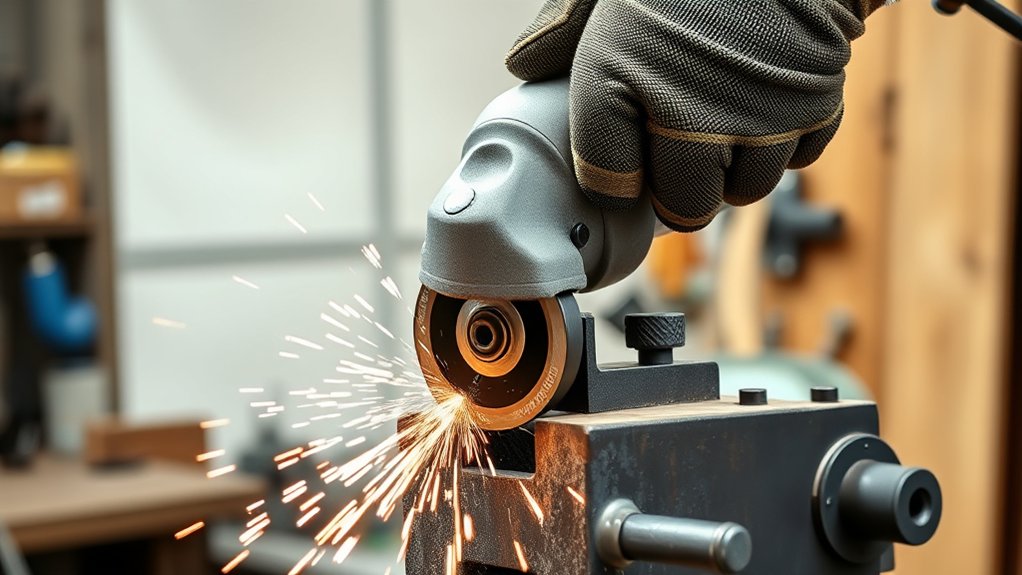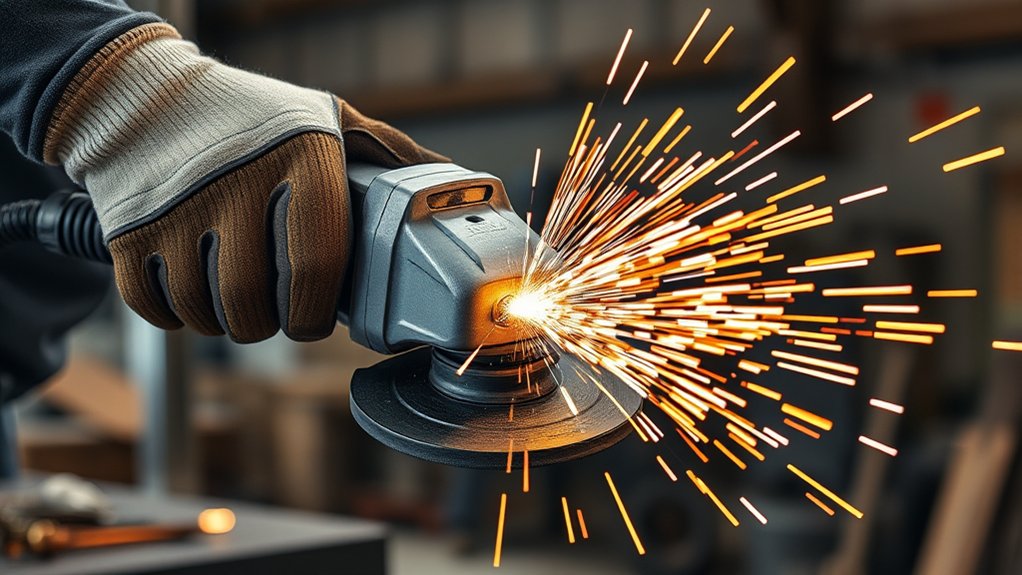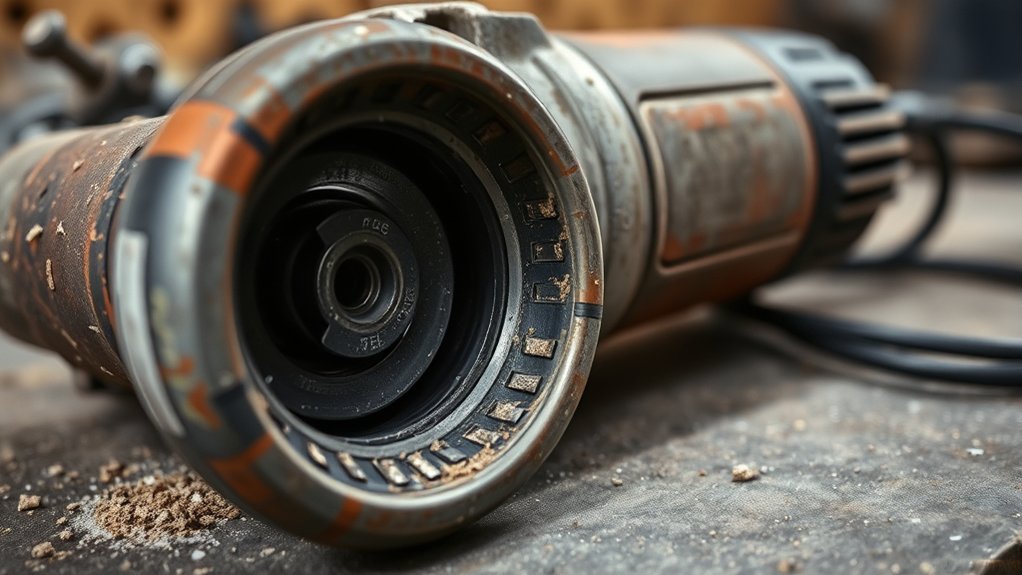
Blocked angle grinder cooling vents can make the motor run hot, lose speed, or trigger protective shutdown. Disconnect the power, let the grinder cool, and remove loose exterior debris with a soft nonmetal brush. Use clean, dry compressed air only when the model manual permits it. If the vents are already clear, inspect the wheel, operating pressure, electrical or battery supply, bearings, and pneumatic air supply before restarting.
Last updated: July 22, 2026
Technical review: [VERIFY: add the real reviewer name and relevant power-tool, fabrication, repair, or occupational-safety experience]
Quick Answer
Angle grinder cooling vents must stay clear so the motor and electronics can shed heat. Unplug the tool or remove the battery before cleaning, brush away loose debris, and use clean, dry compressed air only when the manufacturer allows it. Stop using a grinder that smells burnt, repeatedly shuts down, develops abnormal noise or vibration, or becomes unusually hot again after basic corrections.
Key Takeaways
- Check vents before each use and clean them after dusty grinding, cutting, paint removal, or masonry work.
- Disconnect power before inspection, and never push tools or metal objects through vent slots.
- Use only the wheel size, accessory type, guard, and rated speed approved for the grinder.
- For pneumatic grinders, match the tool’s required PSI, loaded CFM, hose size, fittings, filtration, and lubrication instructions.
- Treat repeated overheating, burning smells, smoke, rough bearings, damaged wiring, or heavy, irregular, or suddenly increased internal sparking as service problems.
At a Glance
| Time Required | About 5–10 minutes for an exterior vent check and cleaning |
| Difficulty | Easy exterior maintenance; internal repairs require a qualified technician |
| Tools Needed | Soft nonmetal brush, lint-free cloth, flashlight, eye protection, and regulated clean, dry air only if the manual permits it |
| Typical Cost | Usually no added cost if you already have the approved cleaning supplies |
Why Angle Grinder Cooling Vents Matter
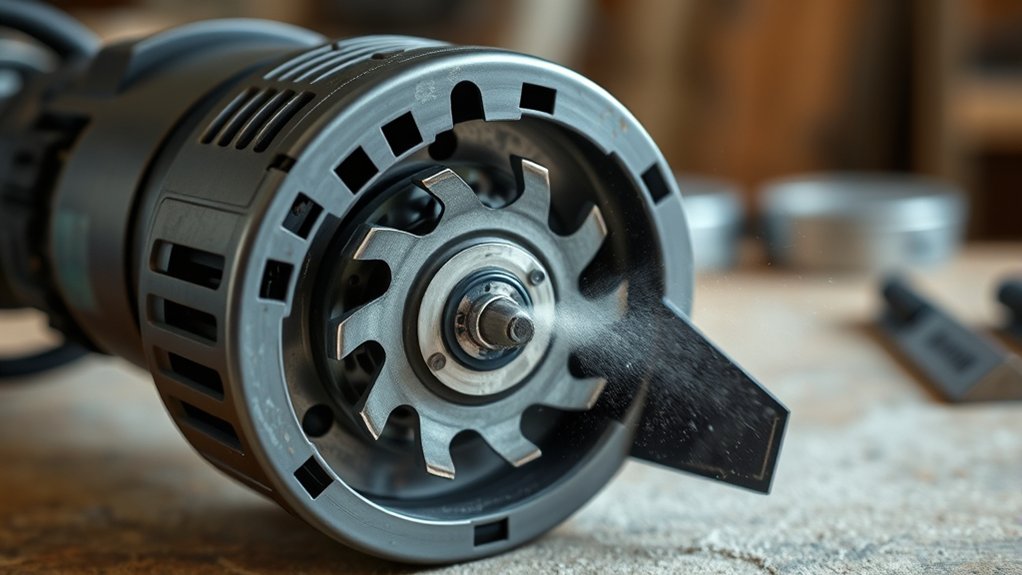
Electric angle grinders use intake openings, an internal fan, and exhaust vents to move heat away from the motor and electronic controls. Heat from the bearings and gearcase also transfers through the housing. When fine dust packs around the openings, cooling airflow drops and the grinder may lose performance, activate overload protection, or overheat.
Manufacturers use different airflow designs. Bosch describes direct-motor cooling and directed airflow on one corded grinder. Milwaukee lists debris baffles and a multi-port exhaust on one corded model, while some Milwaukee cordless models use L-shaped intake vents. These features reduce debris entry or improve exhaust flow, but they do not replace inspection and model-specific maintenance.
Pneumatic grinders work differently. Compressed air powers the vane motor and leaves through an exhaust. A restricted hose, undersized fitting, clogged filter, leak, water-contaminated line, or weak compressor can reduce speed and torque even when the tool itself is clean.
Cooling problems are often a symptom, not the full diagnosis. A blocked vent, overloaded wheel, incorrect accessory, voltage drop, weak battery, failing bearing, or inadequate pneumatic air supply can create similar power-loss symptoms.
How Do Angle Grinder Cooling Vents Work?
Cooling vents provide a controlled path for air to enter and leave an electric grinder. The fan draws air across heat-producing components. Clear openings help the grinder maintain speed and reduce heat stress on insulation, brushes, switches, batteries, and electronic controls.
What Are the Benefits of Unrestricted Airflow?
Good airflow helps a grinder maintain a steadier operating temperature during cutting, grinding, wire brushing, and surface preparation. It also allows overload and temperature-protection systems to respond to actual load instead of heat trapped by blocked openings.
Airflow cannot make an angle grinder immune to overload. Pressing too hard, using a loaded or unsuitable wheel, twisting a cutting disc, or forcing a cut can create heat faster than the cooling system can remove it.
How Can You Prevent Vent-Related Overheating?
Check intake and exhaust openings before and after dusty work. Paint, rust, concrete, mortar, metal filings, polishing debris, and abrasive dust can collect quickly. Keep your hand, clothing, rags, tape, and workbench clutter away from the airflow path while the grinder runs.
For an air grinder, use the pressure and airflow stated on the tool label or in the manual. Model requirements vary. Ingersoll Rand, for example, lists separate loaded air-consumption, average air-consumption, inlet-size, free-speed, and minimum-hose-size values for its 301B and 307B die grinders. Compressor tank size alone does not show whether the system can supply the tool continuously.
Warning: The accessory’s rated speed must be at least as high as the grinder’s maximum speed. Use the correct guard, wheel type, wheel diameter, flange, and locknut. An overspeed, damaged, or incorrectly mounted wheel can break and throw fragments.
| Aspect | Why It Matters | Safe Check |
|---|---|---|
| Cooling airflow | Helps an electric motor and its controls shed heat | Keep intake and exhaust slots clean and uncovered |
| Rated RPM | Prevents an accessory from being driven above its limit | Compare the tool nameplate with the wheel label |
| Electrical supply | Voltage drop can reduce power and increase motor heating | Follow the manual’s extension-cord gauge and length requirements |
| Air consumption | Supports steady pneumatic speed and torque | Match PSI, loaded CFM, hose size, and fitting size to the manual |
How Can You Tell When Grinder Airflow Is Restricted?
Poor cooling may appear before a grinder fails, but no single symptom proves that its vents are blocked. Stop and inspect the tool when its behavior changes.
- The motor housing becomes hotter than it normally does during the same type of work.
- The tool slows during light or moderate pressure.
- Dust is visibly packed around intake or exhaust openings.
- You notice a burnt smell, smoke, a new electrical odor, or heavy or irregular internal sparking.
- The grinder repeatedly shuts down or activates overload or temperature protection.
- The wheel stalls more often, vibrates, or produces a new grinding, squealing, or bearing noise.
- A pneumatic grinder will not reach normal free speed or loses torque under load.
| Symptom | Possible Causes | First Action |
|---|---|---|
| Hot motor housing and weak speed | Blocked vents, heavy pressure, loaded wheel, voltage drop, or failing motor | Stop, disconnect power, cool the tool, and inspect the vents and accessory |
| Repeated electronic shutdown | Overload, over-temperature protection, weak battery, binding, or internal fault | Release the trigger, remove the load, let the tool and battery cool, and follow the manual’s reset procedure |
| Air grinder lacks torque | Low delivered CFM, pressure drop, small hose, leak, clogged filter, moisture, or poor lubrication | Measure pressure at the tool while air is flowing and inspect the full air path |
| Burnt smell, smoke, or heavy sparking | Damaged brushes, windings, switch, cord, bearing, or wiring | Remove the tool from service and arrange qualified repair |
| Hot gearcase but normal motor speed | Normal gear heat, extended load, bearing wear, or lubrication problem | Compare with normal behavior and stop if heat rises rapidly or noise develops |
Fast diagnostic order: Check where the heat is concentrated, inspect the vents, inspect the accessory, reduce pressure, verify the electrical or battery supply, and then check bearings or pneumatic airflow. Change one variable at a time so you can identify the actual cause.
How Do You Clean Angle Grinder Cooling Vents Safely?
Routine exterior cleaning is simple, but you must isolate the energy source first. Do not open the housing unless the manufacturer authorizes user service and you have the required training.
- Disconnect the energy source. Unplug a corded grinder, remove the battery from a cordless grinder, or disconnect and bleed the air hose from a pneumatic grinder.
- Let the tool cool. Wait until the housing is comfortable to handle. Do not continue if smoke or a persistent burnt odor remains.
- Inspect the exterior. Use a flashlight to check intake slots, exhaust openings, switch areas, battery contacts, the pneumatic air inlet, and the area around the guard.
- Brush away loose debris. Use a dry, soft, nonmetal brush. Keep pointed tools, screws, wire, picks, and other conductive objects out of the openings.
- Use compressed air only when allowed. Follow the exact model manual. Use clean, dry air from outside the housing and position the tool so loosened debris can leave instead of being driven deeper.
- Clean removable vent covers only as instructed. Some models use a dust cover or removable screen at the intake. Remove and reinstall it only according to the manual.
- Wipe the housing. Use a lint-free cloth. Do not flood the tool, spray solvent into vents, or immerse any part of the grinder.
- Recheck before use. Confirm that the guard, side handle, flange, locknut, wheel, cord, battery, hose, and fittings remain in safe condition.
Warning: In U.S. workplaces, OSHA requires compressed air used for cleaning to remain below 30 psi under static, dead-end conditions. Effective chip guarding and appropriate PPE are also required. A compliant safety nozzle may use a higher supply pressure only if the pressure remains below the limit when its outlet is blocked. Never use compressed air to clean your skin or clothing.
Pro Tip: Hold the grinder so loosened dust has a clear path out of the vent. Wear eye protection and keep bystanders away because metal grit and abrasive particles can become airborne during cleaning.
Products Worth Considering

Used by the Pros - Professional Grade 7 inch diameter Medium Yellow rotary scrub brush, floor scrubber, and shower scrubber from Drill Brush Power Scrubber. The 7 inch diameter power bathroom scrubber is great for large area shower cleaning, grout cleaning, tile cleaning. Commercial cleaners use this rotary cleaning brush as a go to tile and grout brush for tile floors, shower walls, and all other large area scrubbing tasks. Created for professional cleaners now available to everyone.

Compatibility -- Fits all 4-1/2" angle grinders and grinders with 5/8"-11 threaded arbors. Easy to mount wire wheel for angle grinder for both professionals and DIY users. Do wear protective gear before operation for safe rust removal and cleaning!!!

✅ ENHANCED CLEANING EFFICIENCY WITH DURABLE BRISTLES: The Nanoskin 5" Rotary Brush features resilient blue nylon bristles designed for deep and thorough cleaning. Engineered for durability, these bristles effectively remove stubborn dirt and debris without causing damage to surfaces. This makes the brush an essential tool for automotive detailing as well as general home cleaning tasks.
How Often Should You Clean Grinder Vents?
Follow the interval in the exact model manual. Work involving conductive metal dust, concrete, mortar, coatings, or heavy surface preparation may require more frequent cleaning than light, occasional use.
| When | What to Do |
|---|---|
| Before each use | Check vents, wheel condition, guard, side handle, cord or battery, and pneumatic connections |
| After dusty work | Clean the exterior and vent openings after the tool is disconnected and cool |
| At the manual’s stated interval | Perform the specified vent, cord, battery, hose, fitting, filter, moisture, and service checks |
| Whenever performance changes | Stop work and troubleshoot before using the grinder again |
Manual examples: One DEWALT grinder manual calls for blowing dirt from the vents with clean, dry air at least weekly and daily during extensive flap-disc metal work. A Makita XAG03 manual says the tool and its air vents must be kept clean and describes cleaning the removable intake dust cover. These are model-specific examples, not universal intervals.
What Common Mistakes Block Grinder Airflow?
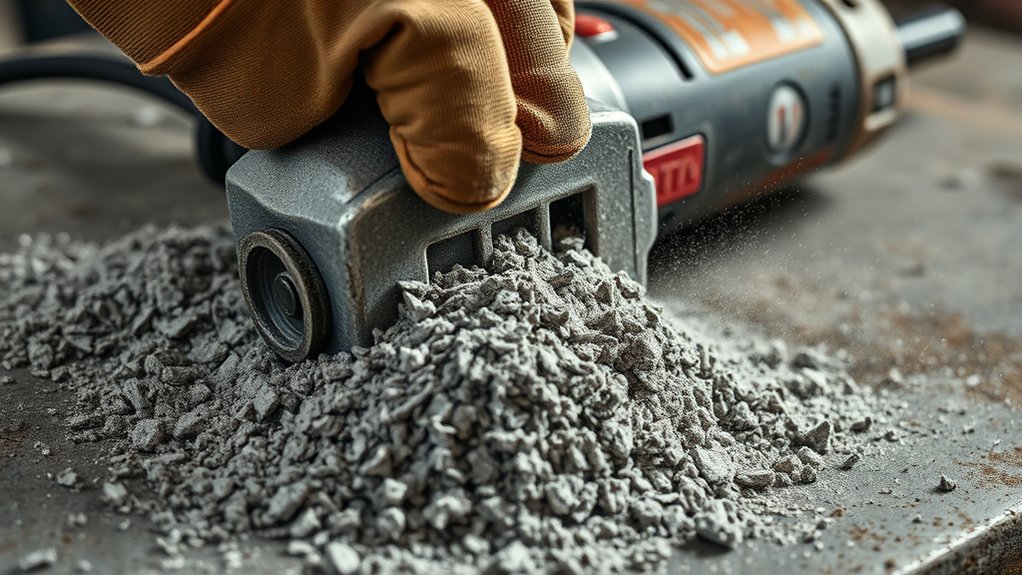
Many airflow problems begin with ordinary habits: setting the grinder in loose dust, gripping over an intake, storing it without cleaning, or continuing after the housing becomes unusually hot. Tight corners can also trap exhaust heat and direct debris back toward the intake.
Pneumatic grinders can lose airflow before the air reaches the motor. Kinked hoses, long undersized hose runs, restrictive quick-connects, clogged filters, leaks, water in the line, and inadequate delivered CFM can all reduce performance.
- Holding a hand, glove, rag, clothing, or tape over cooling slots.
- Running the grinder after dust packs around the openings.
- Using compressed air without manufacturer approval, chip guarding, or eye protection.
- Blowing debris deeper into the tool or inserting pointed objects through vents.
- Using an extension cord that does not meet the manual’s gauge and length requirements.
- Using a hose, filter, or fitting that cannot support a pneumatic tool’s loaded airflow.
- Ignoring a hot smell, repeated shutdown, unusual vibration, or rough bearing sound.
- Pressing harder when the wheel slows instead of correcting the cause.
Why Does an Angle Grinder Overheat When the Vents Are Clear?
Some warmth at the gearcase and motor housing is normal during use. Stop when the temperature rises much faster than usual, the housing becomes uncomfortable to handle, motor speed changes, protective shutdown activates, or odor, smoke, abnormal vibration, new noise, or heavy sparking appears.
Clear vents cannot correct every source of heat. Excessive pressure, a dull or loaded accessory, incorrect wheel selection, voltage drop, a weak or overheated battery, worn brushes, damaged windings, dry or worn bearings, and gear problems can all raise temperature.
Excess heat can reduce motor efficiency, damage insulation, accelerate brush wear, stress electronic controls, and shorten bearing life. A cordless grinder may reduce output or shut down to protect the tool or battery. A corded grinder may slow, smell hot, or damage internal parts if the overload continues.
Heat can also affect control. When the wheel slows, users often press harder. That adds friction and increases the chance of binding or kickback. A worn, loaded, or incorrect accessory can create the same cycle even when the vents are clear.
Do not force the grinder to compensate for heat-related power loss. Stop, isolate the tool, let it cool, clean the vents, inspect the accessory, and verify the power source. Restart with lighter pressure only after you identify and correct the cause.
Note: There is no universal cooling time. Wait until the tool returns to its normal handling temperature and follow any reset or cooldown procedure in the model manual. A grinder that quickly overheats again needs further diagnosis.
Where Should You Use an Angle Grinder?
Use an angle grinder in a dry, well-lit area with enough room to control the tool and direct sparks safely. Clear the floor and bench of loose debris, cords, hoses, paper, sawdust, solvents, fuel, and oily rags. Secure the workpiece so you can keep both hands on the grinder.
What Workspace Conditions Are Safest?
Position yourself so the guard is between your body and the wheel and the spark stream travels away from people, flammable material, glass, vehicles, and finished surfaces. Do not use a grinder in an atmosphere containing combustible gas, vapor, or dust unless the work has been assessed and controlled for that hazard.
Give the intake and exhaust openings free space. Avoid burying the rear of the tool in clothing or using it inside a small enclosure where hot exhaust and dust can recirculate.
What Safety Precautions Are Required?
Wear safety glasses and use a face shield when the task can throw fragments. Add hearing protection, well-fitting gloves, nonflammable work clothing, and suitable footwear. Keep loose clothing, jewelry, hair, and drawstrings away from the wheel.
Respiratory protection depends on the material and exposure. Grinding concrete, brick, mortar, stone, or engineered stone can release respirable crystalline silica. In one concrete-grinding study, NIOSH measured worker exposure at 35 to 55 times its recommended exposure limit and found that a local-exhaust shroud attached to the grinder reduced exposure.
NIOSH identifies cutting and grinding silica-containing materials as dust-generating work, while OSHA requires specified silica-control methods for covered construction tasks. Depending on the task, controls may include a compatible shroud, dust extractor, approved wet method, ventilation, exposure assessment, and correctly selected respiratory protection.
Warning: Do not assume a basic dust mask protects against every coating, metal, silica dust, or fume. Identify the material, review its safety information, use engineering controls first, and follow applicable workplace respiratory-protection requirements.
Which Accessories Support Safe Airflow and Dust Control?
Electric grinders do not need add-on cooling devices. Their useful airflow-related accessories are dust-control systems approved for the tool and task, such as a compatible guard or shroud and a correctly sized dust extractor. Never attach a homemade duct, fan, filter, or cover that changes the designed vent path.
For pneumatic angle and die grinders, air preparation matters. Use components that meet the pressure, airflow, hose-size, and lubrication instructions for the exact model.
- An air filter or filter-regulator to reduce debris and control pressure.
- A moisture separator and regular compressor-tank draining.
- A hose with at least the minimum inside diameter listed by the manufacturer.
- Full-flow fittings and quick-connects that do not leak or create excessive restriction.
- An in-line lubricator or manual oiling routine only when the tool instructions require it.
- A pressure gauge located close enough to measure pressure at the tool while air is flowing.
Do not exceed the safe operating pressure of the tool, hose, filters, valves, or fittings. Higher pressure is not a safe substitute for inadequate CFM or an undersized air line.
Products Worth Considering
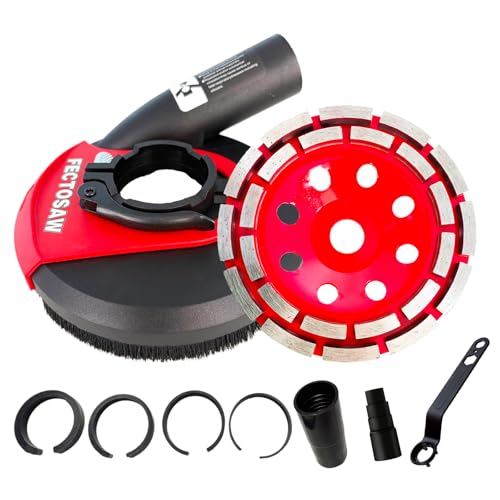
Complete Grinding & Dust Control Kit Includes a dust shroud and diamond grinding cup wheel, providing efficient surface grinding and dust collection in one ready-to-use set.

High Compatibility:Suitable for Angle Grinder under main brand 4-1/2''/5",adapt to 48-51mm Angle grinder front cap and easy to install.Allows collection of harmful dust suface grinding application.

Angle grinder dust extraction suitable for the front cover of most 48-51mm angle grinders. Can be installed on most 5"/4.5" angle grinders.The thickness of Diamond Grinding Disc should not more than 25mm or less than 15mm.
How Do You Troubleshoot Angle Grinder Airflow and Overheating?
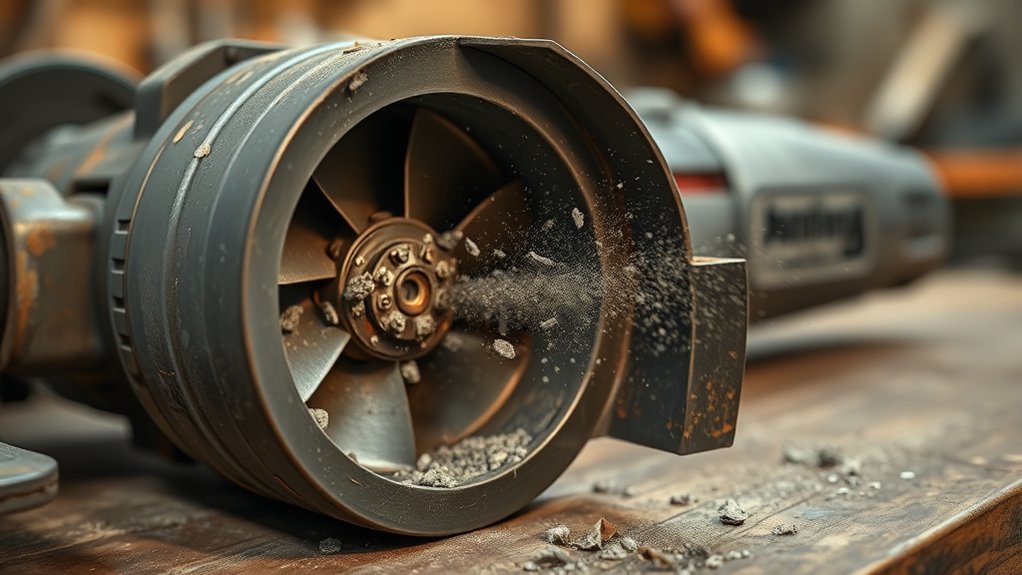
Start with the simplest and safest checks. Never troubleshoot a powered grinder while its wheel is turning.
- Disconnect power or air. Remove the plug, battery, or hose and wait for the wheel to stop completely.
- Identify where the heat is concentrated. Compare the motor housing, battery area, and gearcase with the tool’s normal behavior.
- Inspect the wheel and guard. Confirm the accessory is undamaged, correctly mounted, suitable for the task, and rated for the tool’s maximum speed.
- Check the vents. Remove loose exterior debris with a soft brush and use clean, dry air only as the manual permits.
- Review operating pressure. If the grinder was slowing, reduce force and let the wheel work at its intended speed. Do not repeatedly restart into a binding cut.
- Check the electrical supply. Inspect the cord, plug, battery, and charger. Use only an extension cord whose gauge and maximum length meet the manual. Check for damaged connections, voltage drop, and shared high-load circuits.
- Check a cordless tool’s reset conditions. Let the tool and battery cool, verify the battery charge, remove the binding or overload, and follow the manufacturer’s reset steps.
- Check the pneumatic supply. Verify pressure at the tool while air is flowing, loaded CFM, hose size, fittings, leaks, filter condition, moisture, and required lubrication.
- Test cautiously. After the grinder is cool and passes inspection, run it at no load in a protected area while standing out of the wheel’s plane. Stop immediately if abnormal heat, odor, noise, vibration, shutdown, or sparking returns.
Pro Tip: Compare the grinder’s behavior with a known-good, compatible wheel and, for pneumatic tools, a measured air supply. Changing one variable at a time makes the real restriction easier to identify.
When Should You Stop and Get Professional Service?
Exterior vent cleaning is routine maintenance. Internal electrical, motor, switch, bearing, gear, and wiring repairs are different. Remove the grinder from service when you find any of the following:
- Smoke, a persistent burnt odor, melted plastic, or discolored wiring.
- Heavy, irregular, or suddenly increased sparking inside the housing.
- A switch that operates inconsistently or fails to stop the tool correctly.
- A cracked housing, damaged cord, loose spindle, or missing guard parts.
- Grinding, squealing, knocking, or rough bearing noise.
- Repeated overheating after the vents, accessory, load, battery, voltage, and supply have been corrected.
- A pneumatic tool that leaks internally, runs away, sticks at the throttle, or cannot hold normal speed with a verified air supply.
Use a qualified repair person and manufacturer-approved replacement parts. Do not bypass overload protection, guards, switches, thermal controls, or other safety devices.
Frequently Asked Questions
Will a 20-gallon air compressor run a die grinder?
It may run one for short or intermittent work, but tank size is not the deciding specification. Compare the grinder’s loaded CFM and required PSI with the compressor’s delivered CFM at that pressure. Also check hose diameter, fittings, duty cycle, and pressure drop at the tool.
How many CFM does an air angle grinder need?
There is no single CFM requirement for every grinder. Use the loaded-air-consumption value, operating pressure, inlet size, and minimum hose size for the exact model. Measure pressure while the tool is running because normal static tank pressure does not prove that enough air reaches the grinder under load.
Should you wear a respirator when using an angle grinder?
Wear suitable respiratory protection when the hazard assessment, material information, exposure level, or workplace rules require it. Use dust collection, wet methods where approved, or ventilation first. The correct respirator and filter depend on whether the task creates silica, metal particles, coating debris, ordinary dust, or fumes.
How often should you clean angle grinder cooling vents?
Inspect the vents before each use and clean them after dusty work. Frequent masonry cutting, paint removal, rust grinding, or metal finishing may require cleaning after every session. Follow the model manual whenever it gives a specific interval or cleaning method.
Can you blow out angle grinder vents with compressed air?
Only when the manufacturer permits it. Disconnect the tool, wear eye protection, use clean and dry air, keep the nozzle outside the housing, and direct debris away from people. Workplace cleaning must also follow applicable pressure, chip-guarding, and PPE requirements.
Why does my angle grinder overheat even when the vents are clean?
Possible causes include excessive pressure, a dull or incorrect accessory, voltage drop, an undersized extension cord, a weak or overheated battery, failing brushes, damaged windings, worn bearings, or a gear problem. Air grinders may also suffer from inadequate loaded CFM, pressure loss, leaks, water, or incorrect lubrication.
Is it normal for an angle grinder to get hot?
Some warmth at the motor housing and gearcase is normal during grinding or cutting. Stop when the temperature rises unusually fast, the housing becomes uncomfortable to handle, speed drops, protection activates, or you notice burning odor, smoke, abnormal vibration, new noise, or heavy sparking.
How long should an overheated grinder cool down?
Use the cooldown or reset procedure in the manual. If no time is stated, keep the grinder disconnected until the housing and battery return to their normal handling temperature. Do not restart it if a burnt smell, smoke, unusual noise, heavy sparking, or repeated shutdown remains.
Conclusion
Clear angle grinder cooling vents help an electric motor release heat, while a correctly sized air system helps a pneumatic grinder maintain speed and torque. Inspect the vents before use, clean the exterior after dusty work, keep the airflow path uncovered, and avoid forcing a slowing wheel.
Restart only after the grinder is cool, the cause is corrected, and a no-load test is normal. If heat, odor, shutdown, noise, vibration, or abnormal sparking returns, remove the tool from service and arrange qualified repair.
Sources
- OSHA: Safe Use of Portable and Hand-Held Power Tools — guards, wheel inspection, rated speed, maintenance, disconnection, and PPE.
- OSHA 29 CFR 1910.242 — compressed-air cleaning pressure, chip guarding, and PPE.
- OSHA Interpretation of the 30 PSI Cleaning Rule — static or dead-end pressure explanation.
- OSHA 29 CFR 1926.1153 — silica controls for covered construction work.
- NIOSH: Control of Crystalline Silica Dust When Grinding Concrete — measured exposure and local-exhaust-shroud findings.
- DEWALT DWE43066/DWE43113/DWE43115/DWE43116 Manual — vent cleaning, overload protection, accessory speed, and voltage-drop guidance.
- Makita XAG03 Instruction Manual — air-vent and removable intake dust-cover maintenance.
- Milwaukee 6130-33 Product Information — debris baffles and multi-port exhaust design.
- Bosch GWS13-50 Product Information — direct-motor cooling and directed airflow design.
- Ingersoll Rand 301B/307B Specifications — model-specific loaded air consumption, inlet, speed, and hose requirements.
- Ryobi Support: Why an Angle Grinder Keeps Cutting Out — overload, over-temperature, ventilation, and operating-angle causes.