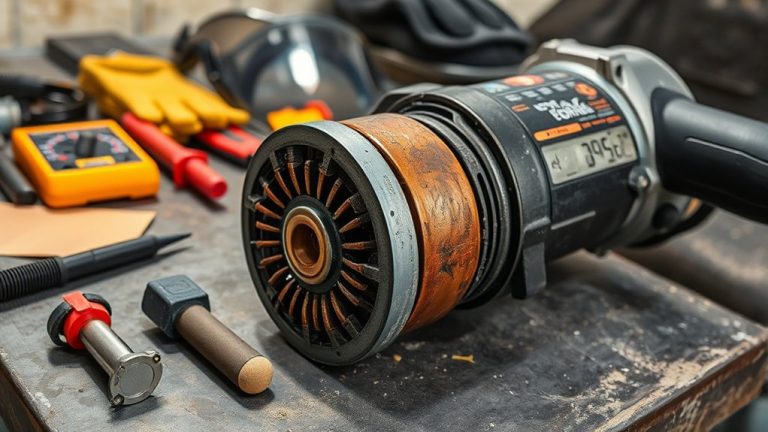
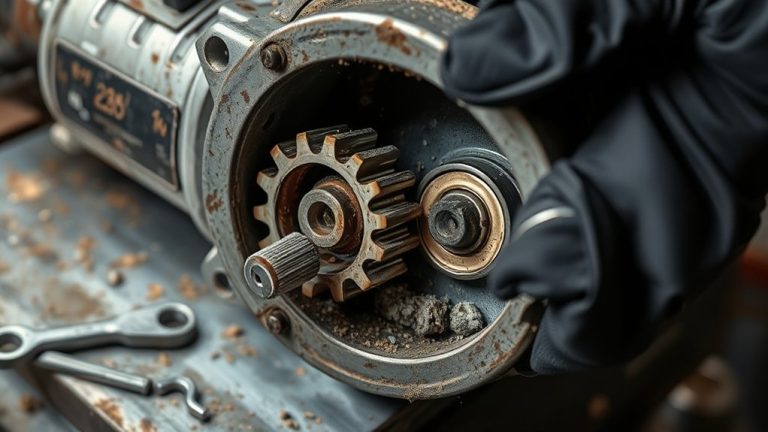
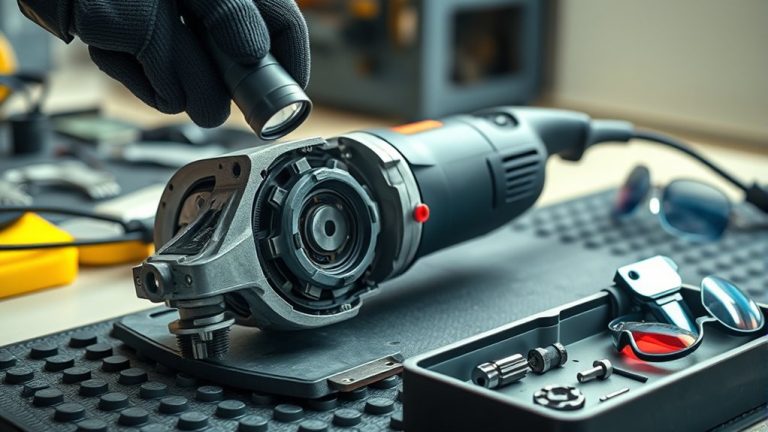
Angle grinder armature failure shows up with symptoms like inconsistent motor performance, unusual noises, and overheating. Pay attention to resistance values ranging from 1.6 to 6.3 ohms; deviations can signal issues. Guarantee proper grounding to prevent electrical shocks and erratic behavior. Regular cleaning and inspection of connections are essential for longevity. By knowing these signs and taking precautions, you’ll improve safety and efficiency. Discover more effective maintenance strategies and troubleshooting techniques.
Common Symptoms of Angle Grinder Armature Failure
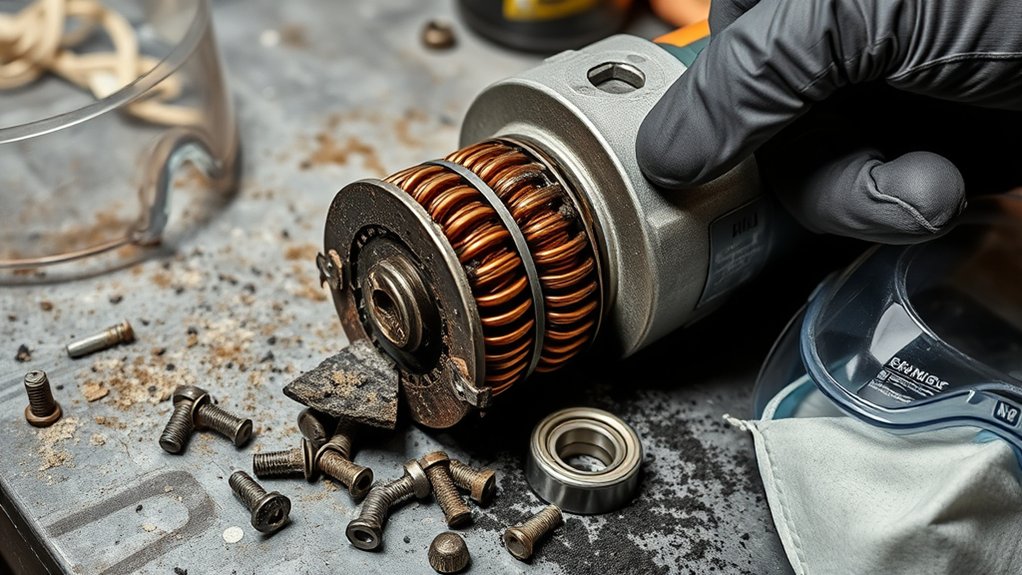
When diagnosing angle grinder armature failure, you’ll often notice several key symptoms that indicate underlying issues. Inconsistent motor performance is a primary red flag, often reflected by fluctuating resistance measurements—from 1.6 to 6.3 ohms. Such variability suggests a compromised armature. A zero resistance reading during your armature inspection signals complete failure, meaning the armature can no longer function properly.
Grounding issues can exacerbate erratic behavior, underscoring the importance of secure connections to the commutator. You might also observe resistance readings like 0.77, 1.1, and 2.9 ohms, which further point to problems with the armature or its connections, impacting overall functionality. Additionally, symptoms like overheating or unusual noises during operation are often traceable to these failures. Regular testing practices are essential to identify these issues and maintain peak motor performance, ensuring your angle grinder operates reliably.
How to Identify Electrical Issues in Your Grinder
To identify electrical issues in your grinder, start by monitoring resistance values in the armature, which should range from 1.6 to 6.3 ohms. Use a non-digital tester to verify commutator connections show zero resistance, as any deviation may indicate grounding problems. Proper grounding techniques are essential; without them, you could experience erratic readings and performance issues.
Common Electrical Symptoms
Identifying common electrical symptoms in your angle grinder is essential for maintaining its performance and longevity. Watch for these signs to conduct effective motor diagnostics and address power fluctuations:
- Inconsistent Power Delivery: Notice fluctuating resistance readings between 1.6 to 6.3 ohms, indicating possible armature issues.
- Zero Resistance Readings: This could suggest a short circuit in the armature or commutator connections.
- Grounding Issues: Improper grounding may lead to erratic performance, with resistance readings from 0.77 to 3.6 ohms.
- Overheating or Unusual Noises: These symptoms signal the need for thorough testing of the armature and commutator.
Testing Resistance Values
Testing resistance values in your angle grinder is vital for pinpointing electrical issues that could affect performance. During armature testing, resistance measurements typically range from 1.6 to 6.3 ohms. Readings markedly deviating from this range, such as 1.7, 2.8, or 3.6 ohms, can indicate potential problems. A zero resistance reading signals a short circuit, while infinite resistance suggests grounding issues at the commutator connections. Use a non-digital tester for accurate results, ensuring quality connections with alligator clips for reliability. Variability in resistance readings—from 0.77 to 2.9 ohms—highlights the importance of consistent testing methods. Remember, grounding the armature is vital for accurate resistance measurement, helping you avoid electrical failures.
Grounding Importance Explained
While it may seem straightforward, grounding plays an essential role in the performance and safety of your angle grinder. Proper grounding techniques guarantee reliable operation and help prevent electrical issues. Here’s how to identify grounding problems:
- Check Resistance Readings: Aim for consistent resistance values; deviations like zero or infinite resistance indicate potential grounding faults.
- Inspect Connections: Verify all grounding connections are secure; poor contact can lead to variable readings from 1.6 to 6.3 ohms.
- Use a Non-Digital Tester: This tool can effectively gauge resistance levels, confirming grounding integrity.
- Regular Maintenance: Frequent inspections of grounding connections are vital for peak armature functionality and to avert electrical failures.
Importance of Grounding Your Angle Grinder
Grounding your angle grinder is vital for safe and efficient operation, as it prevents electrical shocks and minimizes the risk of short circuits in the armature and commutator connections. Implementing effective grounding techniques, like connecting the commutator to a reliable ground, guarantees consistent resistance measurements, which can fluctuate between 1.6 to 6.3 ohms. Regularly checking for grounding integrity is essential; poor connections can lead to varying resistance readings, with some tests revealing zero resistance—indicative of potential failure points.
Grounding directly impacts the functionality of the armature. Failures in grounding can result in performance issues, highlighting the need for meticulous attention during testing procedures. By adhering to proper grounding practices, you not only prolong the lifespan of your angle grinder but also greatly enhance electrical safety, mitigating risks associated with electrical faults. Prioritize grounding to guarantee a safer and more efficient tool operation.
How to Test Armature Resistance
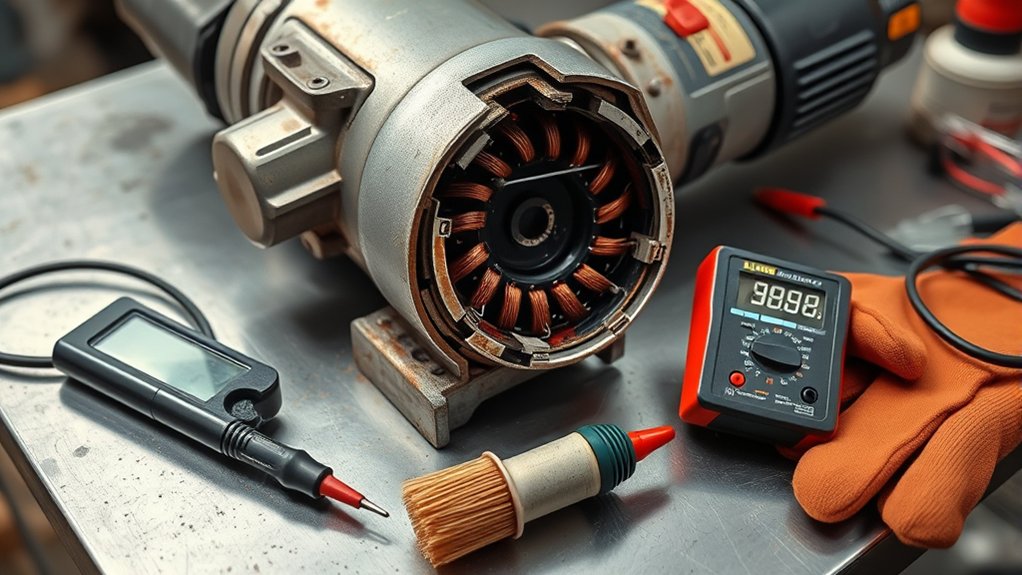
To effectively assess armature resistance, you’ll want to use a non-digital tester for accurate measurements. Resistance values should typically range between 1.6 to 6.3 ohms, with common readings like 1.7, 2.8, and 3.6 ohms indicating functionality. Follow these steps for reliable armature testing:
- Confirm proper grounding of the armature and commutator connections.
- Connect your non-digital tester to the armature leads.
- Record the resistance measurement while maintaining consistent testing methods.
- Investigate any readings of zero or infinite resistance, as these may indicate grounding issues or a faulty armature.
Pay meticulous attention to detail in your resistance measurement process. Fluctuations can occur, so maintaining connection integrity is vital for accurate results. Understanding these measurements is fundamental for troubleshooting and guaranteeing peak performance of your angle grinder.
Essential Maintenance Tips for Prolonging Your Angle Grinder’s Life
To extend your angle grinder’s lifespan, prioritize regular cleaning procedures to remove dust and debris that can affect performance. Proper storage practices also play an essential role; keep the tool in a dry, secure location to prevent moisture-related damage. By implementing these maintenance strategies, you’ll enhance reliability and reduce the likelihood of armature failure.
Regular Cleaning Procedures
Regular cleaning procedures are essential for maintaining your angle grinder’s performance and longevity. To guarantee peak functionality, follow this maintenance checklist:
- Clean Air Vents: Regularly remove dust buildup to prevent overheating.
- Test Resistance Values: Use a non-digital tester; readings should stay between 1.6 to 6.3 ohms.
- Inspect Commutator Connections: Clean these regularly to avoid resistance fluctuations and enhance reliability.
- Check All Connections: Confirm alligator clips and connections are free from corrosion and dirt.
Establish a consistent cleaning frequency to greatly improve your angle grinder’s durability and performance. By adhering to these procedures, you empower your tool for a longer, more efficient lifespan.
Proper Storage Practices
Maintaining your angle grinder’s performance goes beyond regular cleaning; proper storage practices are equally essential. Store your grinder in dry, dust-free conditions to prevent moisture and debris from causing corrosion or damage to the armature and commutator. Use a protective case or padded bag to shield the tool from physical impacts, ensuring the integrity of its components. Always store the grinder with the power switch in the off position to prevent accidental activation and potential injury. Regularly inspect and clean the storage area to eliminate contaminants that could affect performance. Finally, keep the grinder away from extreme temperatures and humidity, as these can harm electrical components and lead to resistance fluctuations, ultimately shortening its lifespan.
Use Your Angle Grinder Safely
Using an angle grinder safely is essential for preventing accidents and injuries. Adhering to angle grinder safety guidelines and PPE requirements can make a significant difference in your work environment. Here are four critical safety tips to keep in mind:
Using an angle grinder safely is crucial for avoiding accidents; follow safety guidelines and PPE requirements to enhance your work environment.
- Wear PPE: Always use safety goggles, gloves, and a dust mask to protect against flying debris and harmful dust.
- Grounding: Verify your angle grinder is properly grounded, especially in damp conditions, to prevent electrical shock.
- Correct Attachments: Use the appropriate wheel or attachment for your specific task to avoid wheel breakage and potential injury.
- Grip and Stance: Maintain a firm grip with both hands and stand steadily to prevent losing control during operation.
Troubleshooting Common Grinder Issues
Even with proper safety measures in place, angle grinders can experience issues that affect their performance. When troubleshooting, start with resistance readings. Fluctuations between 1.6 to 6.3 ohms might indicate electrical problems, while zero resistance could signal a short circuit. Check your connections; poor quality can lead to variability between 0.77 and 2.9 ohms. Confirm that alligator clips are secure during testing to avoid misleading results.
Additionally, if you notice vibration issues, inspect the armature for wear or damage, as this can contribute to overheating problems. Proper grounding techniques are essential for accurate commutator readings; improper grounding leads to erratic performance. Regularly using non-digital testers to check resistance can help you catch early signs of armature failure, keeping your grinder functioning safely and effectively. Taking these steps helps maintain performance and guarantees a smoother grinding experience.
Frequently Asked Questions
How to Tell if an Armature Is Bad?
To tell if an armature’s bad, conduct an armature inspection during grinder maintenance. Look for fluctuating resistance readings, zero resistance, or inconsistent values indicating potential short circuits or grounding issues affecting the tool’s performance.
What Causes an Angle Grinder to Stop Working?
If your angle grinder’s gone on strike, check for motor overheating, power source issues, and blade wear. Regular angle grinder maintenance can save you from unexpected downtime and liberate your projects from frustration.
What Is an Armature in a Grinder?
An armature in a grinder comprises components like windings and a commutator, vital for converting electrical energy into mechanical energy. Its functions directly affect performance, making it essential for efficient tool operation and maintenance.
What Are Signs My Grinder Needs Repair?
Grinder glitches, like growing noise or power dips, demand diligent maintenance. If resistance readings fluctuate or hit zero, it’s time for repair techniques. Stay sharp, and guarantee your grinder’s performance remains powerful and precise.
Conclusion
To sum up, recognizing the signs of armature failure is like reading the warning signals on a dashboard; ignoring them could lead to more serious issues. By routinely testing resistance and ensuring proper grounding, you can extend your angle grinder’s lifespan and maintain its performance. Remember, safety’s not just a precaution—it’s your shield against accidents. With diligent maintenance and awareness, your angle grinder can continue to be the reliable tool you rely on for precision and power.