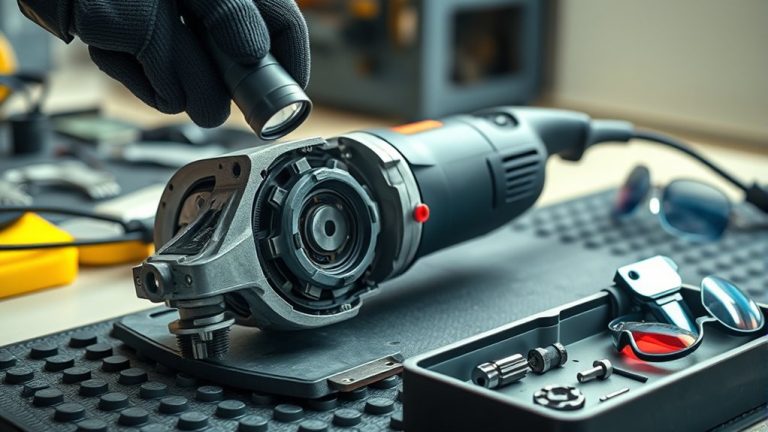
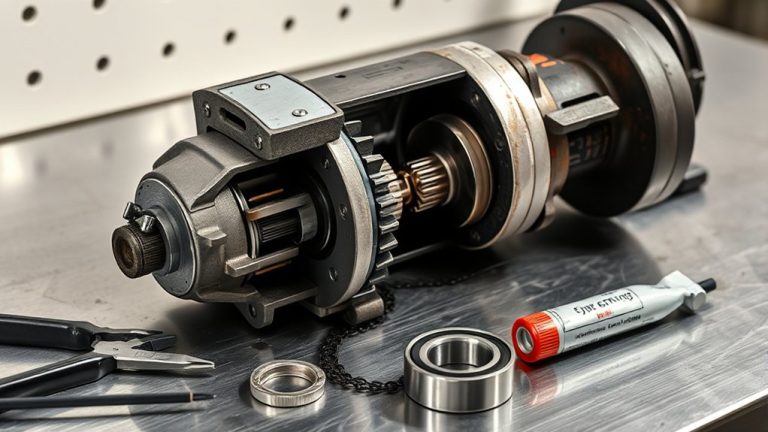
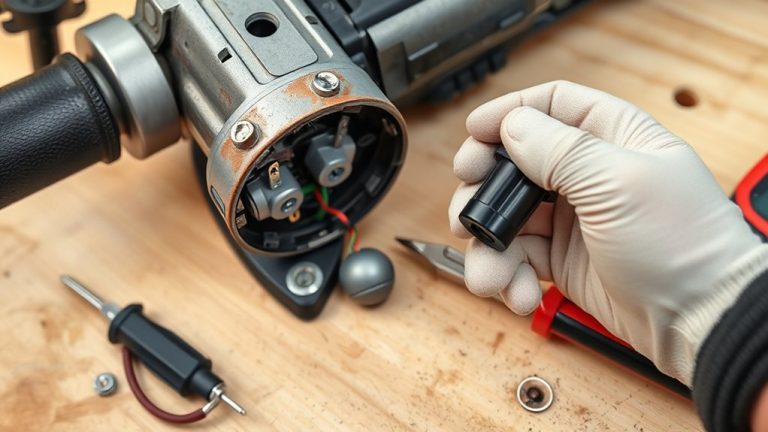
Angle grinder bearing failure can lead to severe performance issues and safety hazards. Look for symptoms like excessive vibration, unusual noises, and high temperatures over 82 °C (180 °F). These signs often indicate wear, contamination, or lubrication problems. Regularly monitor temperature and vibration levels, and guarantee proper lubrication to minimize risks. Ignoring these warnings can result in costly repairs. To understand more about maintenance and solutions to these issues, keep exploring the topic further.
Identifying and Troubleshooting Common Signs of Bearing Failure
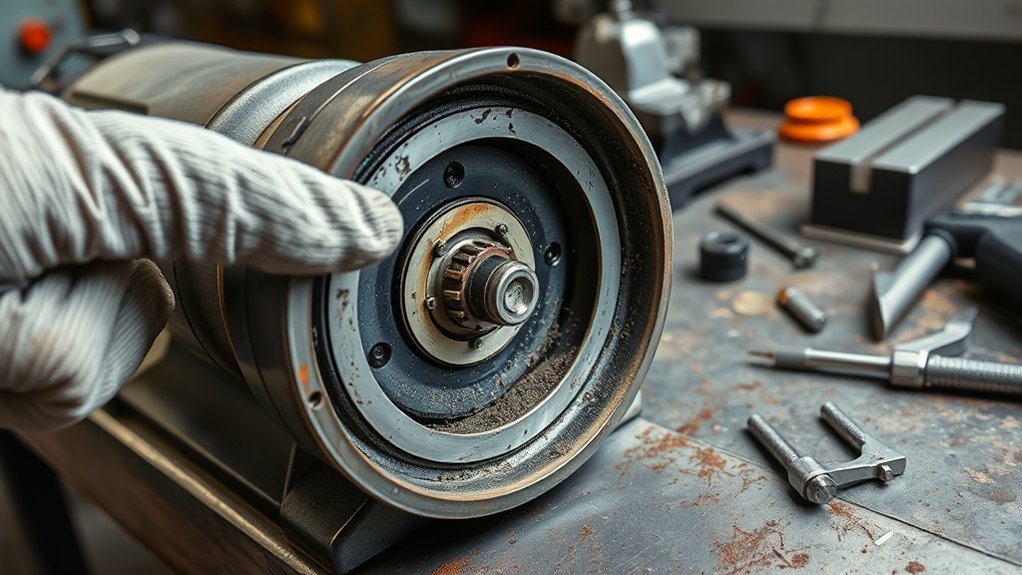
When operating an angle grinder, it’s crucial to recognize the early signs of bearing failure to prevent costly repairs and downtime. One of the most important indicators is excessive vibration during operation; this often stems from abrasion or machining errors affecting the raceway. Additionally, pay attention to unusual noises like grinding or squealing, which signal worn bearings and require immediate inspection. These signs of wear can escalate quickly, leading to more severe damage if ignored. Lack of proper lubrication is another common cause of failure; insufficient or contaminated lubricant increases friction, exacerbating wear. To maintain peak grinder performance, regular maintenance is essential. Monitor temperature, vibration, and noise patterns consistently to catch issues early. By staying vigilant, you can extend the lifespan of your angle grinder and guarantee it operates smoothly, freeing you from the burdens of unexpected breakdowns.
Products Worth Considering


UNIVERSAL FIT: This set of 4 replacement wheels features 3 different size axles to fit a variety of luggage and carts with outer diameters of 1.8inch/45mm, wheels house wider than 0.8inch/21mm.

Why You Should Keep an Eye on Bearing Temperatures
Monitoring bearing temperatures is essential for ensuring the longevity and efficiency of your angle grinder. Keeping these temperatures at or below 82 °C (180 °F) can prevent premature failure and avoid costly repairs. Here’s why you should prioritize this:
- Identify Excessive Wear: Rising temperatures signal potential bearing issues, indicating excessive wear or lubrication problems.
- Routine Temperature Testing: Utilizing infrared sensors for regular checks helps catch abnormal conditions before they escalate.
- Reduce Friction: Failing bearings increase friction, leading to higher operating temperatures that can damage surrounding components.
- Extend Lifespan: Implementing routine temperature checks enhances performance and extends the lifespan of your bearings.
Understanding How Vibration Levels Signal Bearing Problems?
Vibration levels serve as crucial indicators of bearing health in your angle grinder, as excessive vibrations often point to underlying damage. Increased vibration over time is a significant warning sign of impending bearing failure, necessitating immediate inspection. Utilizing the ISO 15242 standard for measuring vibration helps you identify abnormal patterns that could signal bearing issues.
Monitoring vibration with specialized tools allows you to detect early signs of bearing wear, enabling timely maintenance and replacement. Regular checks can prevent catastrophic failures, ensuring that your angle grinder operates smoothly and efficiently. By staying vigilant about vibration levels, you not only extend the lifespan of your equipment but also enhance your overall safety during operation. Don’t overlook these critical indicators; they’re your best defense against costly repairs and downtime. Prioritizing vibration monitoring is a proactive step toward maintaining peak performance in your angle grinder.
Why Lubrication Is Crucial for Bearings
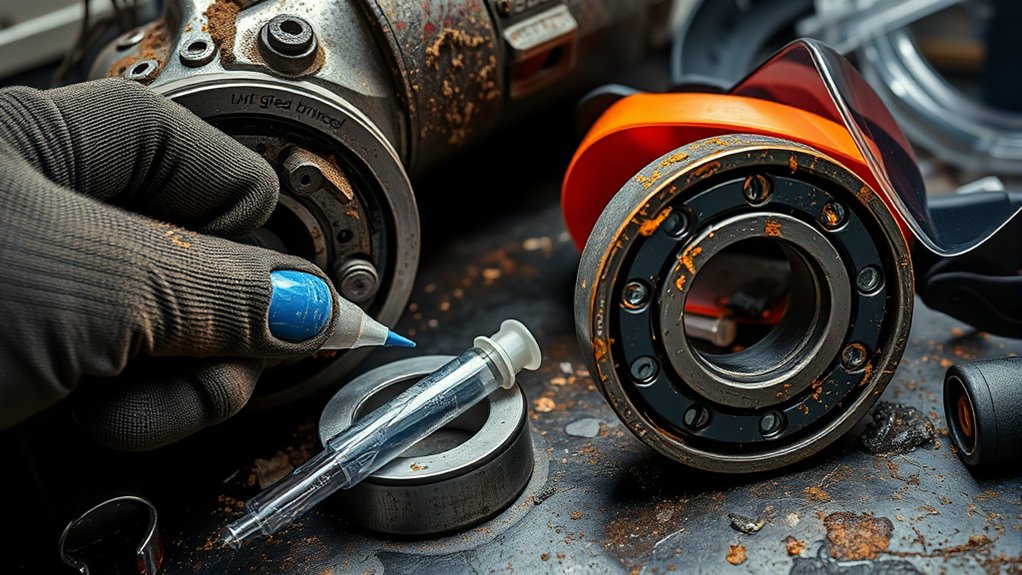
Lubrication is essential for maintaining bearing performance and longevity. The type of lubricant you choose directly affects friction levels and heat generation, impacting overall efficiency. Sticking to a regular lubrication schedule helps prevent wear and guarantees peak operation, minimizing the risk of failure.
Lubricant Type Matters
Choosing the right lubricant for bearings is crucial, as it directly impacts performance and longevity. The wrong lubricant can lead to insufficient lubrication, increasing friction and heat, ultimately causing premature failure. To guarantee peak performance, consider the following:
- Lubricant Type: Match the lubricant to the specific temperature and load requirements of your bearings.
- Contaminated Lubricants: Avoid introducing foreign particles during relubrication, as they can cause abrasion.
- Regular Monitoring: Check the condition of the lubricant periodically to make sure it remains effective.
- Cleanliness: Maintain a clean environment during lubrication to prevent contamination.
Regular Lubrication Schedule
Establishing a regular lubrication schedule is essential for guaranteeing bearing performance and longevity. Regular lubrication minimizes friction, keeping operating temperatures below 82 °C (180 °F) and extending the lifespan of your bearings. Insufficient lubrication leads to excessive wear and increased heat, risking premature failure.
| Maintenance Action | Frequency | Purpose |
|---|---|---|
| Inspect lubricant levels | Weekly | Check for sufficiency |
| Replace contaminated grease | Monthly | Guarantee peak performance |
| Lubricate bearings | Based on usage | Maintain efficiency |
| Monitor operating temps | Weekly | Identify potential issues |
| Document maintenance logs | Ongoing | Track performance trends |
This structured approach guarantees you can catch issues early, and proper maintenance can help prevent costly repairs.
Identifying Contamination and Its Impact on Bearings
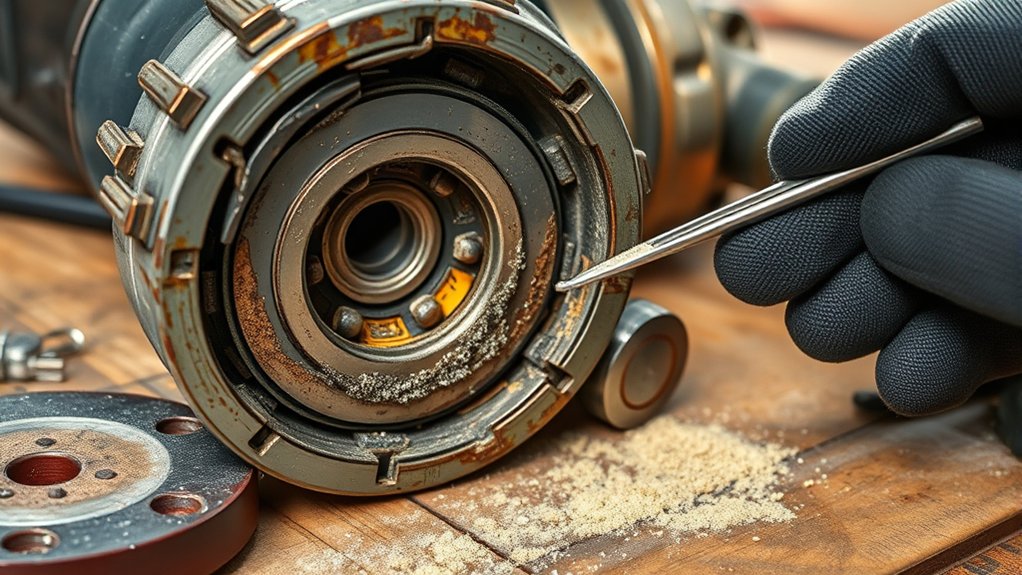
Contamination can drastically impact bearing performance in angle grinders. You need to identify the types of contaminants, such as dirt or moisture, and understand how they affect bearing life. Implementing effective prevention strategies is essential to maintain ideal bearing function and longevity.
Types of Contaminants
When contaminants like dust, dirt, and moisture infiltrate bearings, they can significantly impair performance and lead to premature failure. It’s essential to identify these contaminants early to protect your angle grinder’s bearings. Here are the main types to keep in mind:
- Dust and Dirt: Often enter through poor seals, causing increased wear.
- Moisture: Can emulsify lubricants, compromising lubrication effectiveness.
- Foreign Particles: Contaminate lubricants, reducing their ability to minimize wear.
- Chemical Contaminants: Introduced during maintenance or cleaning, they can accelerate degradation.
Regular inspection and maintenance can help you spot these contaminants and guarantee peak bearing performance, ultimately extending the life of your angle grinder.
Effects on Bearing Life
Contaminants can drastically impact the lifespan of your angle grinder’s bearings. When foreign particles infiltrate the lubricant, they cause excessive noise and increase friction, leading to elevated operating temperatures. This accelerates wear and results in worn bearings, which can signal impending failure. Regular inspection for signs of contamination is essential, as even minimal dirt can compromise performance.
| Signs of Contamination | Impact on Bearings |
|---|---|
| Excessive noise | Increased friction |
| Unpredictable vibrations | Accelerated wear |
| Discoloration of lubricant | Reduced lifespan |
| Visible dirt | Potential for accidents |
Prevention Strategies for Contamination
To maintain the integrity of your angle grinder’s bearings, implementing effective prevention strategies is essential. Contamination can lead to premature wear and failure, so take these steps to protect your bearings:
- Inspect Seals Regularly: Confirm seals are intact to prevent dust and debris from entering the lubrication system.
- Use Clean Lubricants: Always apply suitable lubricants and avoid introducing foreign particles during relubrication.
- Avoid High-Pressure Washing: This can emulsify lubricants, mixing contaminants that degrade performance.
- Implement Proper Lubrication Techniques: Regularly lubricate bearings according to manufacturer guidelines to enhance reliability.
Recognizing Noises as Warning Signs of Bearing Failure
How can you tell if your angle grinder is on the brink of bearing failure? Unusual sounds like grinding or squealing are primary indicators that warrant immediate inspection. High-pitched noises often signal inadequate lubrication or excessive friction, which can lead to visible damage over time. Pay close attention to changes in noise patterns; a sudden increase in volume or pitch usually means the situation is deteriorating.
Familiarizing yourself with the normal operational sounds is essential for early detection. Regular monitoring can help you guarantee peak performance and extend your grinder’s lifespan. Below is a summary of common noise indicators:
| Noise Type | Possible Cause | Action Required |
|---|---|---|
| Grinding Noise | Worn bearings | Inspect and lubricate |
| Squealing Noise | Insufficient lubrication | Lubricate or replace bearings |
| High-Pitched Noise | Excessive friction | Check for visible damage |
| Sudden Volume Increase | Deteriorating condition | Immediate inspection needed |
Always wear safety goggles while operating your angle grinder.
Safety Tips for Maintaining Angle Grinder Bearings
While angle grinders are essential tools for various applications, maintaining their bearings is crucial for guaranteeing safety and performance. By following these safety tips, you can prevent common issues and enhance the longevity of your angle grinder:
- Regular Inspections: Routinely check bearings for unusual noises or vibrations to identify potential failures early.
- Proper Lubrication: Use the correct type and amount of lubricant; insufficient or contaminated lubrication is a frequent cause of bearing failure.
- Temperature Monitoring: Utilize infrared sensors to confirm bearing temperature stays below 82 °C (180 °F) to avoid overheating and damage.
- Cleanliness: Keep the grinder free from contaminants; foreign particles can cause abrasion and greatly shorten bearing lifespan.
Products Worth Considering

Material: Chisel Tool Steel
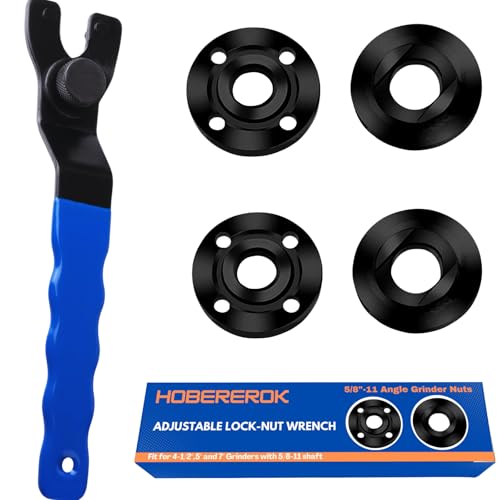
[ Universal Adjustable Angle Grinder Wrench & Nut Kit] Solve the problem of lost or missing wrenches. This versatile set includes 1 adjustable wrench that fits major brands like DeWalt, Milwaukee, and Makita, plus 4 replacement flange nuts (2 inner, 2 outer).. Perfect for DIY, workshops, and professional grinder parts replacement.

Material: The wrench is made of high-quality hard carbon steel, which is wear-resistant, and has a long service life. The handle is wrapped in rubber, which makes the grip feel comfortable
Best Maintenance Practices to Prevent Bearing Issues
Effective maintenance practices are vital for preventing bearing issues in angle grinders. Start by regularly monitoring bearing temperatures, keeping them at or below 82 °C (180 °F) to avoid overheating and potential failure. Implement routine inspections, as these can help you identify visible contaminants that greatly reduce bearing lifespan and performance. Additionally, performing vibration analysis according to ISO 15242 standards allows for early detection of wear or damage.
Proper lubrication is essential; make certain you’re using the correct type and amount of lubricant, as insufficient lubrication is a common cause of bearing failure. Consider utilizing infrared temperature sensors for continuous monitoring, enabling timely identification of abnormal temperature spikes. By adhering to these best practices, you can maintain peak bearing performance and prevent major damage, guaranteeing your angle grinder operates efficiently for years to come.
Effective Solutions for Bearing Problems
Maintaining ideal bearing performance is key to addressing any issues that arise. Here are effective solutions for common bearing problems:
- Monitor Bearing Temperature: Regularly check that the bearing temperature stays below 82 °C (180 °F) to prevent overheating and failure.
- Assess Vibration Levels: Use ISO 15242 standards to accurately measure excessive vibration, which often indicates bearing damage.
- Ensure Proper Lubrication: Apply the correct type and amount of lubricant; both insufficient and excessive lubrication can lead to failure.
- Inspect for Contamination: Regularly check for visible contamination, as dirt and foreign particles can drastically reduce bearing lifespan.
Products Worth Considering

【Value Sets】The grinder nut set includes 1 angle grinder wrench and 6 angle grinder nuts (3 inner flange nuts, 3 outer flange nuts). Please check size and compatibility before ordering. Please contact us with any questions or concerns. We prioritize your satisfaction .

Part Number: 02-04-0620 Ball Bearin , 608-2RS-C3

Extend Your Reach -- Instantly extend your angle grinder to reach tight, narrow, and hard-to-access areas. Ideal for bumpers, behind wheels, door handles, emblems, and corners—no more missed spots while keeping your hands safer in confined spaces.
When to Get Professional Help for Bearing Replacement
Recognizing the signs of bearing failure is vital, as addressing these issues promptly can prevent further damage to your angle grinder. If you experience excessive vibration or hear unusual grinding or squealing noises, it’s time to seek professional help for bearing replacement. Regular temperature checks can also alert you; readings above 82 °C (180 °F) indicate a need for intervention. Contaminated lubrication or visible debris requires immediate assessment to guarantee safety and avoid costly repairs.
| Signs of Bearing Failure | Recommended Action |
|---|---|
| Excessive vibration or unusual noises | Consult a professional for replacement |
| High temperature readings | Get professional intervention immediately |
| Visible contaminants | Seek expert help to assess and replace |
Neglecting these signs can lead to significant safety hazards and reduced tool efficiency, making professional evaluation essential for maintaining peak performance.
Frequently Asked Questions
How to Identify Bearing Failure?
To identify bearing failure, apply vibration analysis techniques, listen for unusual sounds, and perform visual inspections. Following bearing maintenance tips and troubleshooting procedures can help you address common grinder issues before they escalate.
What Are Signs My Grinder Needs Repair?
If your grinder vibrates excessively, makes unusual noises, or runs hot, it’s time for repair. Follow grinder maintenance tips, address common repair issues, and apply proper usage techniques to extend your tool’s lifespan.
What Happens When a Bearing Fails?
When a bearing fails, you’ll experience increased friction, excessive heat, and unusual noises. Regular maintenance, proper lubrication, and timely replacement of bearing types guarantee longevity and peak performance in your equipment.
What Causes an Angle Grinder to Stop Working?
When your angle grinder’s motor runs like a tired engine, you might face power loss, overheating problems, or brush wear. These issues can halt operation, leaving you stranded mid-project, longing for freedom in your work.
Conclusion
To sum up, keeping a close eye on your angle grinder’s bearings can save you from catastrophic failures that threaten your projects. By monitoring temperatures, vibrations, and lubrication, you’ll catch issues before they explode into major problems. Regular maintenance isn’t just a good idea; it’s essential for longevity and peak performance. Don’t let neglect turn your powerful tool into a mere paperweight. If you’re ever in doubt, getting professional help can be a game-changer for your equipment’s health.