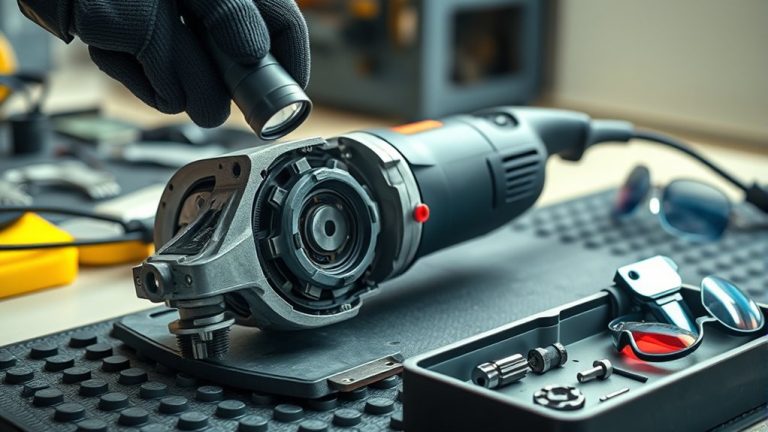
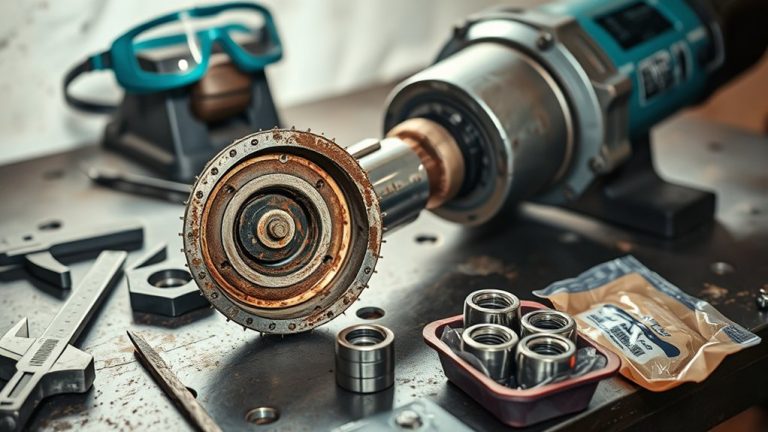
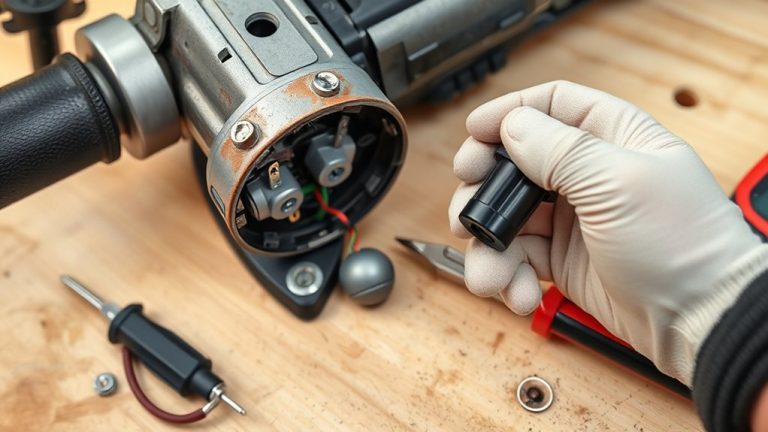
To replace bearings in your angle grinder, start by identifying issues like unusual noises or excessive vibrations. Gather essential tools such as screwdrivers and a bearing puller. Disassemble your grinder carefully, checking for wear. Make certain the new bearings are correctly seated and lubricated during reassembly. Implement a regular maintenance schedule to enhance performance and longevity. By following these steps, you can guarantee your angle grinder operates efficiently, and you’ll uncover more tips on effective maintenance practices.
Identifying Bearing Problems: Key Signs to Look For
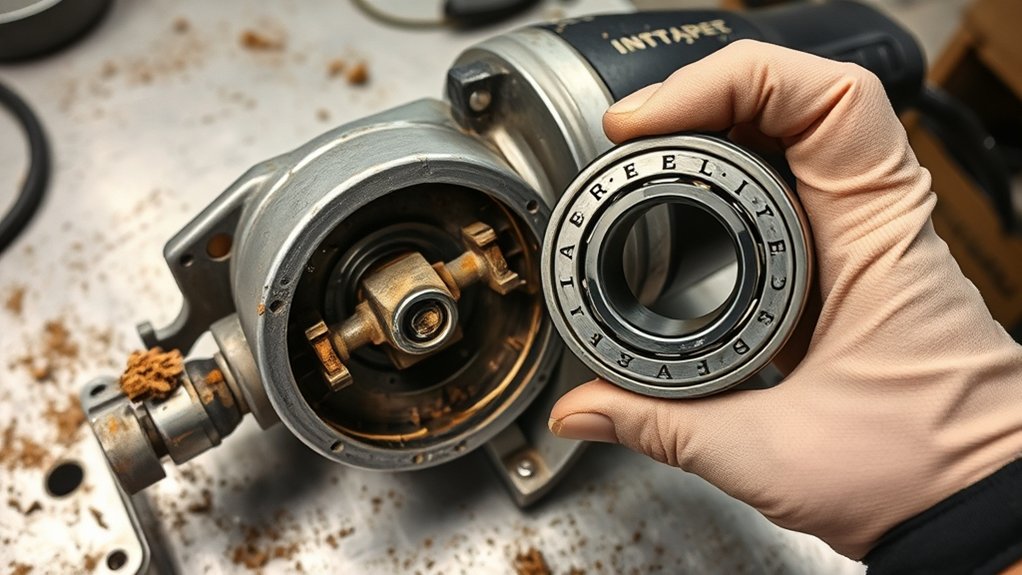
When you’re using an angle grinder, it’s crucial to be aware of the signs that indicate bearing problems. Listen for unusual noises, like grinding or rattling. These sounds often signal failing bearings that could compromise your tool’s performance. Additionally, check for excessive vibration during operation; this can indicate that the bearings are worn or damaged, affecting stability and safety. Inspect the spindle assembly for any play or noticeable wobbling, as movement here can further confirm bearing issues. Monitor the tool’s overall performance; decreased power or overheating typically links back to defective bearings impacting the motor’s efficiency. Finally, visually examine the bearing for rust or wear—these signs are clear indicators that it’s time for a replacement. By staying vigilant for these signs, you can maintain your angle grinder’s effectiveness and safety, allowing you to work with confidence and liberation.
Essential Tools for Angle Grinder Bearing Replacement
To successfully replace bearings in your angle grinder, you’ll need specific hand tools, including a screwdriver set and a bearing puller. Additionally, implementing recommended safety equipment, like goggles and gloves, is essential to protect yourself during the process. Having these tools at your disposal not only streamlines the repair but also enhances your safety and efficiency.
Products Worth Considering

2 inches and 3 inches bearing separators

Carbon Steel Material - The 2 Inch bearing gear puller is made of high-quality carbon steel material, the point of the mandrill through a special heat treatment process, solid for long service life with great performance.

1. VERSATILE BEARING PULLER: This Orion Motor Tech bearing puller set enables you to complete a wide range of pulling jobs, ideal for removing large or small bearings on front and rear wheel hub axle shafts, as well as gears, pulleys, and steering wheels
Required Hand Tools
Replacing the bearings in an angle grinder requires a specific set of hand tools to guarantee the job is done efficiently and correctly. You’ll need a set of screwdrivers and pliers for removing screws and components, along with a socket wrench for more secure fittings. A hammer or mallet is essential for tapping the new bearing into place, ensuring a snug fit in the assembly. To safely extract the old bearing, a bearing puller can prevent damage to surrounding parts. Before disassembly, use carb cleaner to clean the tool’s exterior, minimizing contamination. Finally, keep lubrication grease on hand for reassembly, ensuring peak performance of your angle grinder post-repair.
Recommended Safety Equipment
Though bearing replacement in an angle grinder can seem straightforward, ensuring your safety throughout the process is paramount. Adhering to a protective equipment checklist is essential to minimize risks. Here are some safety gear essentials you shouldn’t overlook:
- Safety goggles: Eye protection importance can’t be overstated; they shield against flying debris.
- Gloves: Use them to prevent cuts and abrasions when handling sharp components.
- Dust mask: Protects you from inhaling harmful dust or fumes, especially when using cleaners.
Additionally, keep a torque wrench handy to secure screws properly during reassembly, along with pliers and a flathead screwdriver for efficient disassembly. By prioritizing safety, you empower yourself to complete the task confidently and effectively.
Disassembling Your Angle Grinder: A Step-By-Step Guide
To disassemble your angle grinder effectively, you’ll need specific tools to streamline the process. Start by following a step-by-step approach, ensuring you address each component methodically. Don’t forget to prioritize safety precautions to protect yourself and prevent damage to the grinder.
Products Worth Considering

[7PCS 5/8"-11 Angle Grinder Nut Wrench Replacement Kit] 1 piece angle grinder wrench and 6 angle grinder nuts (3 inner flange nuts, 3 outer flange nuts) for lock nut removal, wheel/disc replacement.Compatible with most arbor grinders and lock nuts, Perfect for home DIY, workshop projects, and professional grinder parts replacement

Adjustable Lock-nut Grinder Wrench

Genuine, OEM Dewalt Replacement Part
Tools Required For Disassembly
Disassembling your angle grinder effectively requires a few essential tools. Being well-prepared guarantees efficient disassembly techniques and promotes tool organization.
- Screwdriver Set: Various sizes to remove screws securing components.
- Pliers: For gripping and manipulating internal parts.
- Socket Wrench: Necessary for loosening nuts and bolts.
Before you begin, clean the exterior with carb cleaner. Keep a container handy to organize screws and small parts, preventing loss during the process. Additionally, have a replacement bearing, specifically a 608 Z or 608 Zed, ready for installation. When reinstalling, use a soft mallet to gently tap the new bearing into place, assuring it seats correctly without damaging surrounding components. Proper preparation streamlines your disassembly and replacement workflow.
Step-By-Step Disassembly Process
Start by cleaning the exterior of your angle grinder with carb cleaner to eliminate any dirt or debris that could compromise the disassembly process. Next, employ proper disassembly techniques by removing the back cover—unscrew the two sets of screws carefully to avoid damaging any components. Once open, conduct bearing identification by closely examining the spindle and bearing assembly for any issues, particularly the bearing behind the pinion gear. Detach the pinion gear to access the bearing for replacement, making sure you don’t damage surrounding parts during this step. After replacing the bearing, verify it’s properly seated before reattaching the pinion gear. Following these maintenance tips will guarantee a smooth reassembly and peak grinder performance.
Safety Precautions To Consider
Before diving into the disassembly of your angle grinder, it’s crucial to prioritize safety. Proper safety training and awareness can prevent accidents and guarantee a smooth process. Here are key precautions to follow:
- Always disconnect the power source to prevent accidental activation.
- Wear safety goggles and gloves to shield yourself from debris and sharp edges.
- Organize your workspace; a clean, well-lit area helps you avoid losing components.
Familiarize yourself with the tool’s manual for specific disassembly instructions and safety warnings. Keeping a container handy for screws and small parts aids in workspace organization, preventing mix-ups. By implementing these safety measures, you not only protect yourself but also enhance your efficiency during the disassembly process.
Angle Grinder Bearing Replacement: Techniques for a Proper Fit
Replacing the bearing in your angle grinder requires precision to guarantee a proper fit and ideal performance. Start by verifying you’ve correctly identified the faulty bearing, typically a 608 Z or 608 Zed, and sourced an appropriate replacement. When installing the new bearing, utilize bearing alignment techniques to confirm it’s seated correctly. Use a soft-faced hammer for tapping it into place—this prevents damage to both the bearing and surrounding components.
Before reattaching the pinion gear, double-check that the bearing is fully seated and aligned. This step is essential for smooth operation. Regularly inspect the condition of the new bearing and adjacent parts during the replacement process to avoid future failures. Finally, apply proper greasing methods to the bearing and other moving parts; this enhances longevity and performance, guaranteeing your angle grinder operates at its best.
Products Worth Considering

1.Specification model: 608ZZ inner diameter: 8mm, outer diameter: 22mm, thickness: 7mm. Each 10pcs bearing is sold in one package.
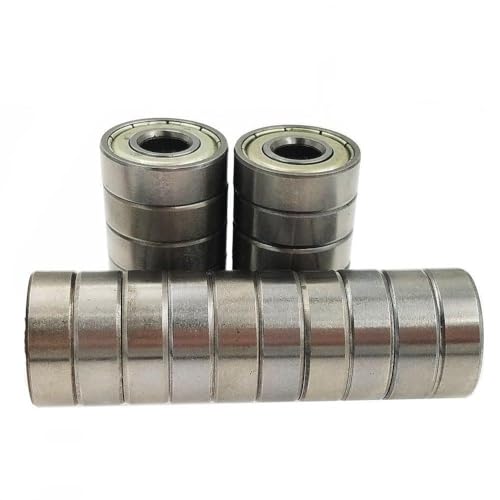
Single-row bearing for supporting radial loads

608zz Bearings: Single-row bearing for supporting radial and axial loads.
How to Reassemble Your Angle Grinder for Optimal Performance
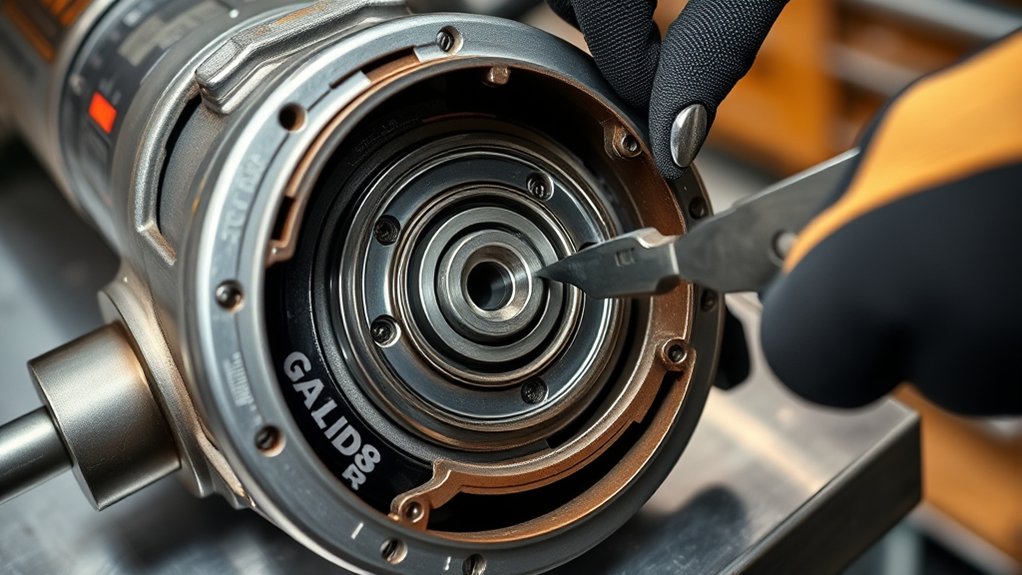
With the bearing properly installed and secured, reassembling your angle grinder becomes the next critical step in guaranteeing peak performance. Follow these essential steps to achieve ideal functionality:
- Brush alignment tips: Carefully handle the brushes during reassembly to prevent damage. Confirm they’re properly aligned for ideal electrical contact.
- Grease application techniques: Apply a suitable grease to all moving components to enhance performance and reduce friction during operation.
- Cover replacement importance: Replace the brush covers after securing the brushes. This protects internal parts from debris and potential damage.
Before powering on your tool, conduct a thorough final assembly check. Verify that all components are aligned and securely fastened. Don’t forget to confirm the bearing is correctly seated and the pinion gear is reattached. This precision will facilitate smooth operation and prolong the longevity of your angle grinder.
Essential Maintenance Tips for Your Angle Grinder
To maintain your angle grinder’s efficiency and extend its lifespan, regular upkeep is essential. Implement effective cleaning techniques to remove debris buildup that can cause overheating and premature wear. Make it a habit to inspect the bearings every few months; early detection of wear can save you from extensive repairs.
Incorporate a lubrication method that involves applying grease to moving parts during maintenance, which guarantees smooth operation and minimizes friction. Establish a maintenance schedule that includes these checks and lubrication tasks, allowing you to stay proactive.
Additionally, keep spare bearings and brushes on hand for quick repairs, reducing downtime when issues arise. Always handle your angle grinder carefully during maintenance to protect sensitive components. By following these practices, you empower your angle grinder to perform at its best, leading to sustained efficiency and longevity.
Troubleshooting Common Issues After Bearing Replacement
After performing maintenance and bearing replacement, it’s important to keep an eye out for any irregularities in your angle grinder’s operation. Here are some common issues to troubleshoot:
- Listen for unusual noises; persistent grinding or rattling may indicate improper installation.
- Monitor vibrations; excessive shaking can signal misalignment or a poorly seated bearing.
- Check for overheating; excessive heat might suggest lubrication issues or bearing problems.
Engage in bearing noise diagnostics to identify and address any sound anomalies. Employ vibration analysis techniques to assess performance stability; excessive vibrations often hint at underlying issues. Conduct an overheating causes investigation to confirm your grinder operates efficiently. Regularly test the bearing’s smoothness by spinning the spindle. Any resistance could point to installation errors or faulty components. By staying vigilant, you can maintain peak performance and extend your angle grinder’s lifespan.
Keeping Your Angle Grinder in Top Shape: Best Practices
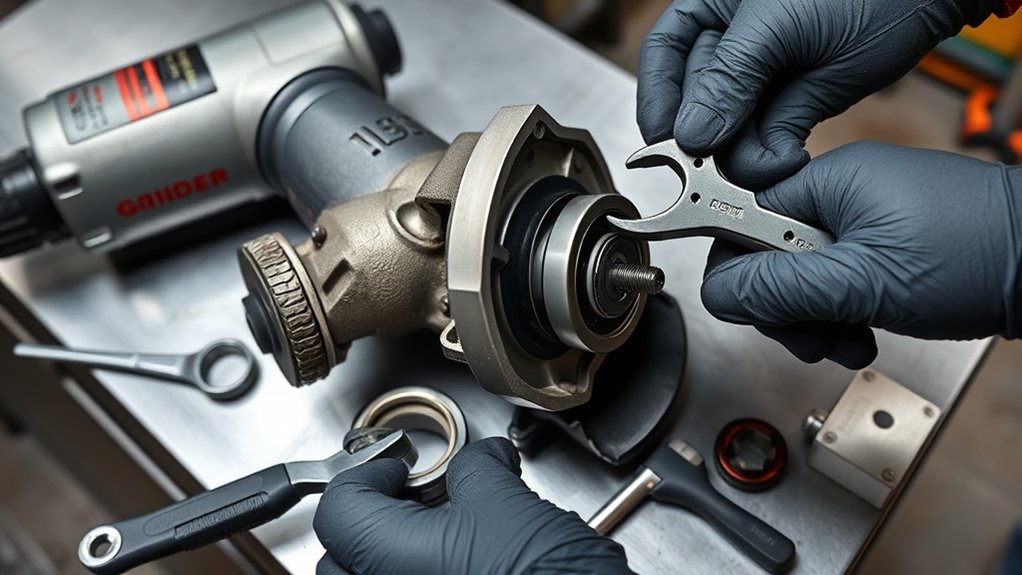
Maintaining your angle grinder in ideal condition is essential for guaranteeing its performance and longevity. Start with regular cleaning techniques to prevent dust and debris from accumulating, which can lead to wear on internal components. Frequently check the condition of your bearings; early detection of wear can save you time and costs on repairs.
During maintenance, apply high-quality grease to moving parts for smooth operation and enhanced longevity. Handle brushes carefully when performing repairs, as these sensitive components directly affect your grinder’s performance.
To minimize downtime, keep spare parts like bearings and brushes on hand for quick and efficient repairs. These grinder maintenance tips will not only enhance your tool’s performance but also empower you to tackle projects without interruption. With diligent care, you can guarantee your angle grinder remains a reliable ally in your endeavors.
Frequently Asked Questions
How to Remove Bearing From Angle Grinder?
To remove the bearing from your angle grinder, disassemble the tool, inspect for issues, and use a bearing puller. Follow troubleshooting tips for different bearing types to guarantee effective angle grinder maintenance and peak performance.
How to Replace a Wheel Bearing Step by Step?
Replacing a wheel bearing’s like solving a puzzle. First, gather tools and identify bearing types. Safely disassemble, replace the bearing, and follow maintenance tips for longevity. Reassemble, ensuring everything aligns perfectly before testing your work.
What Are Common Angle Grinder Mistakes?
Common angle grinder mistakes include neglecting safety measures, misidentifying bearings, overlooking component conditions, improperly seating bearings, and rushing reassembly. Following bearing maintenance tips and troubleshooting common issues guarantees peak performance and enhances safety throughout your repairs.
How to Pull a Bearing Out Without a Puller?
If you’re tackling a stubborn bearing, heat the housing to expand it. Use DIY methods like a flathead screwdriver and lubricate with penetrating oil. This extraction technique minimizes damage, ensuring smooth removal without specialized bearing tools.
Conclusion
Now that you’ve navigated the intricate process of replacing your angle grinder’s bearings, envision the power that awaits you. Each turn of the tool, once sluggish, now hums with precision and efficiency. But remember, maintaining this newfound performance is essential. Will you heed the maintenance tips and keep your grinder in peak condition? The choice is yours—ensure your tool’s longevity and reliability, or risk it faltering at the most pivotal moment. The outcome lies in your hands.