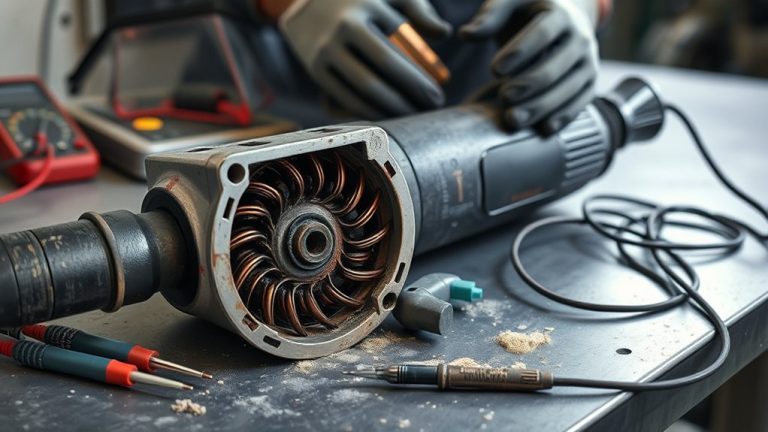
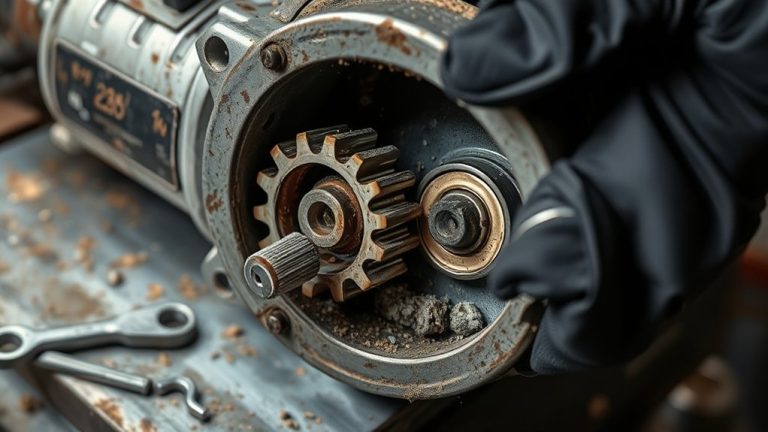
To identify angle grinder commutator wear symptoms, look for dark streaks, grooving, and excessive sparking during operation. These signs indicate issues like poor brush tension or damaged carbon brushes. Regular inspections help you maintain performance and safety. Remember to disconnect the power before cleaning and check for uneven wear. Keeping the commutator clean and inspecting components can prevent costly repairs. If you’re keen on ensuring your grinder runs smoothly, there’s much more to explore on proper maintenance practices.
How to Identify Angle Grinder Commutator Wear Symptoms?
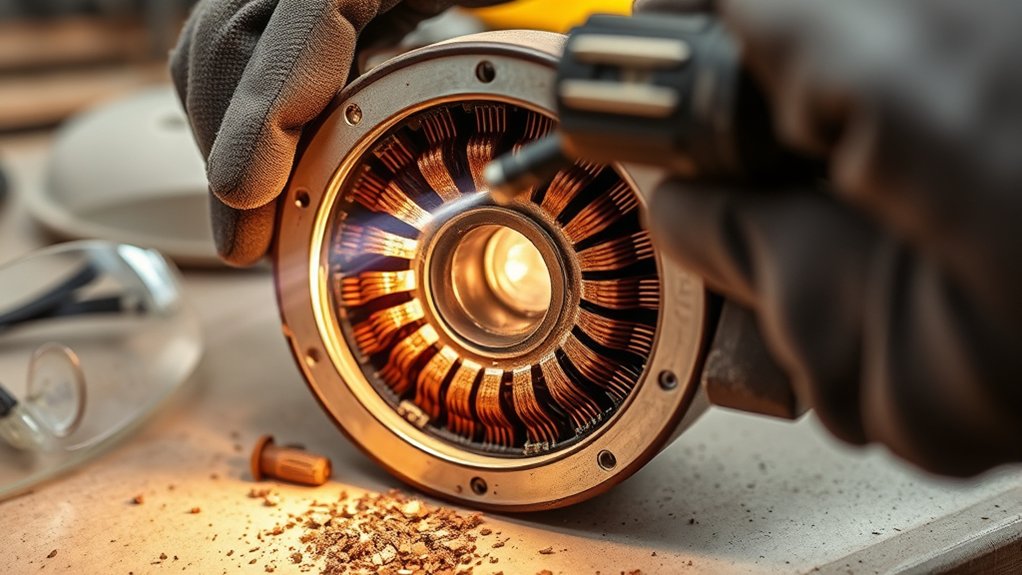
How can you quickly spot commutator wear in your angle grinder? Start by inspecting for dark streaks along the brush path on the commutator. These may indicate metal migration, hinting at potential wear issues. Look for alternating light and dark markings, which suggest conductor position problems linked to electrical overload or contamination. Grooving on the commutator surface is another clear sign; it results from abrasive dust and can increase electrical resistance, leading to overheating. Additionally, keep an eye out for excessive sparking during operation; this could signal worn carbon brushes that compromise commutator performance. Regularly clean the commutator to prevent carbon fouling, as it can hinder efficiency and cause premature tool failure. By staying vigilant about these symptoms, you can maintain your angle grinder’s performance and extend its lifespan.
Key Signs of Commutator Problems
While operating your angle grinder, it’s crucial to be aware of key signs indicating commutator issues that can affect performance. Ignoring these symptoms can lead to reduced efficiency and increased brush wear. Here are some critical indicators to watch for:
- Faint charcoal streaks on the commutator suggest normal performance, while dark spots indicate potential problems.
- A dark streak along the brush path may signal metal migration due to insufficient brush tension or contamination.
- Look for a threaded appearance on the commutator, which can cause rapid brush wear if excessive metal transfer occurs.
- Grooving from abrasive dust can increase electrical resistance and may lead to arcing if not addressed.
Regular inspections of the commutator, particularly near the motor housing, help maintain peak performance and prevent severe damage. Stay vigilant to guarantee your angle grinder operates efficiently.
How to Inspect Your Angle Grinder’s Commutator
To keep your angle grinder running smoothly, you need to regularly inspect the commutator for signs of wear and damage. Look for visible issues like streaking or grooving, which can indicate electrical problems or abrasive damage. Use a multimeter to check for continuity, guaranteeing the commutator functions properly with consistent electrical flow.
Pay attention to uneven wear patterns or darkened areas, as these can signal poor contact with the carbon brushes or potential electrical overload. If you notice any of these symptoms, take action immediately to prevent further poor performance.
Before reassembling your grinder, verify the brush alignment and shim washer placement are correct to maintain peak contact and performance. Regular inspections not only extend the life of your angle grinder but also enhance its efficiency and reliability in your projects.
How to Clean Your Angle Grinder Commutator: Step-by-Step
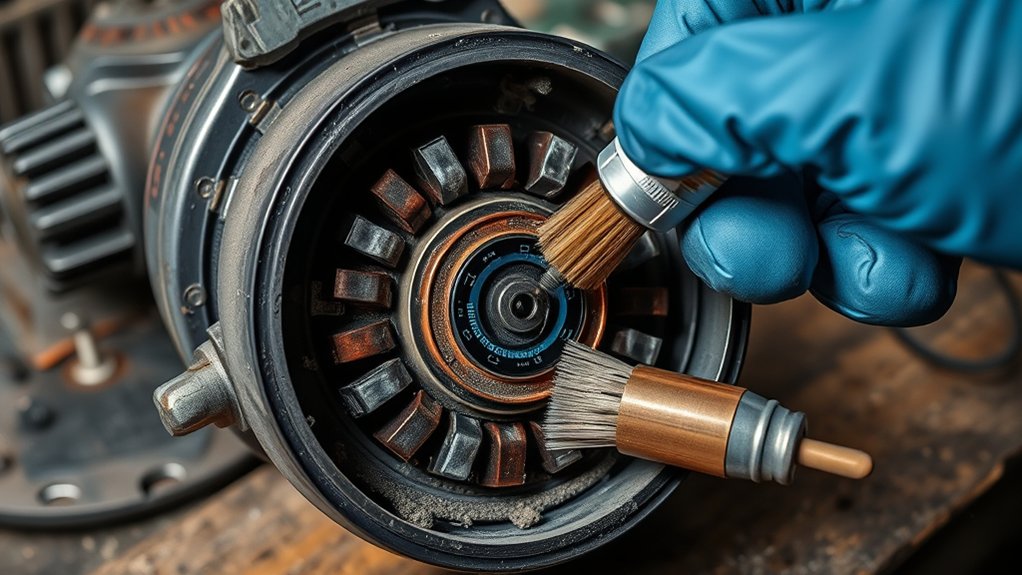
Cleaning your angle grinder’s commutator is essential for maintaining its performance and longevity. Follow these steps to guarantee a thorough clean:
Cleaning the commutator of your angle grinder is vital for optimal performance and durability.
- Disconnect the angle grinder from the power source.
- Carefully remove the armature from the motor housing, noting shim washer placement and brush alignment.
- Use 150 grit Emory cloth to gently sand the commutator surface while stabilizing the armature in a drill chuck at a slow speed.
- After sanding, apply brake cleaner to eliminate any residue, inspecting the commutator for debris or damage.
Keep an eye out for worn carbon brushes, as they can affect performance if not addressed. Once everything is clean and inspected, reassemble the components in their original configuration. Conduct a performance test to guarantee it runs smoothly. Regular cleaning will help extend the life of your angle grinder and maintain its efficiency.
Stay Safe: Tips for Working on Your Angle Grinder
Guaranteeing safety while working on your angle grinder is vital for both your well-being and the tool’s performance. Always disconnect the grinder from the power source before performing any maintenance or repairs. This simple step prevents accidental starts and keeps you safe.
Wear appropriate personal protective equipment (PPE) like safety goggles, gloves, and a dust mask to shield yourself from flying debris and dust. A well-ventilated workspace free of flammable materials further minimizes risks during operation.
Regularly inspect your angle grinder, paying close attention to the carbon brushes and commutator, as these components are essential for safe and efficient performance. Following the manufacturer’s guidelines for usage and maintenance not only extends the lifespan of your grinder but also guarantees you operate it safely. Prioritize these safety measures to empower yourself while using this versatile tool.
Signs You Need to Replace Your Angle Grinder’s Commutator
How can you tell if your angle grinder’s commutator is wearing out? Recognizing these signs early can save you from costly repairs and downtime.
- Visible grooves or scoring: Increased electrical resistance can lead to overheating.
- Consistent sparking or smoke: These are strong indicators that the commutator is worn or damaged.
- Dark streaks along the brush path: This suggests metal migration, signaling deterioration.
- Uneven or burnt appearance: A serious sign of wear that requires immediate replacement.
If you notice reduced power or stalling, it’s likely the commutator is failing, impacting your tool’s performance. Regularly inspect the commutator and carbon brushes for these symptoms to maintain efficiency and safety. Addressing these issues promptly can help guarantee that your angle grinder operates at peak performance.
Tips for Maintaining Your Angle Grinder for Longevity
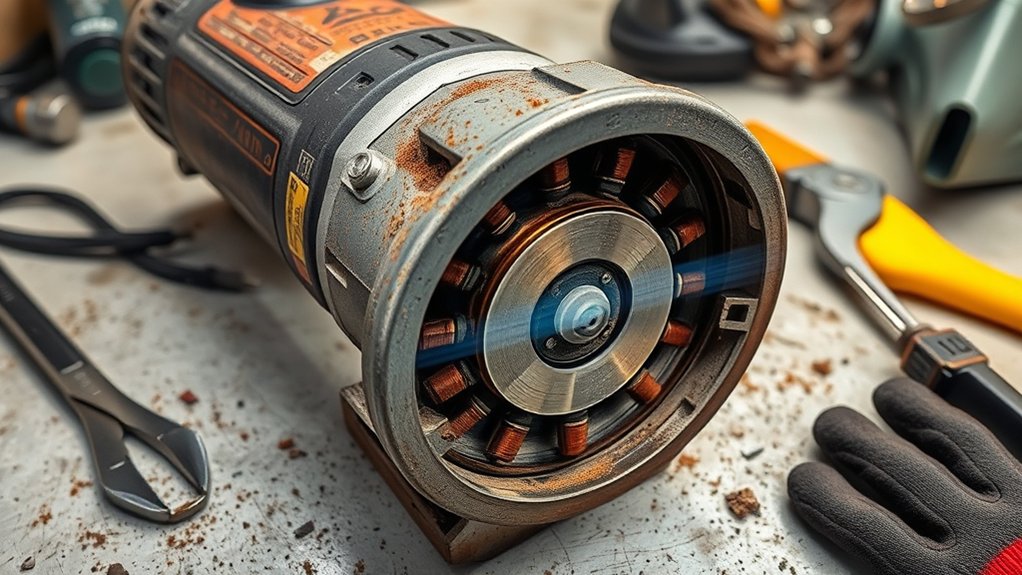
To keep your angle grinder in top shape and extend its lifespan, regular maintenance is crucial. Start by inspecting and cleaning the commutator with 150 grit Emory cloth to remove carbon buildup, which enhances electrical contact and efficiency. Pay close attention to the carbon brushes; check for wear and replace them when they drop below 50% of their original size to guarantee consistent power delivery. Store your angle grinder in a clean, dry environment to prevent dust and moisture accumulation, which can damage the motor and lead to premature wear. Additionally, lubricate moving parts as recommended by the manufacturer to reduce friction. Finally, perform routine maintenance checks, including cleaning the brush holders and verifying you’re using the tool within its specified capacity. This proactive approach will help you avoid excess wear and maintain peak performance over time.
Frequently Asked Questions
What Happens if Carbon Brushes Are Worn?
If carbon brushes are worn, you’ll experience intermittent power loss, excessive sparks, and a burning smell. Regular brush replacement methods and proper carbon brush maintenance are essential to avoid further damage and guarantee peak tool performance.
What Are the Defects of a Commutator?
A commutator can suffer from uneven wear, heavy film buildup, and grooving. Diagnosing commutator problems early through regular maintenance helps you avoid common commutator issues, ensuring peak performance and extending your tool’s lifespan.
Should a Commutator Be Smooth and Concentric?
Yes, a commutator should be smooth and concentric. Regular commutator maintenance helps identify wear indicators, ensuring peak grinding efficiency and preventing issues like overheating, which can ultimately extend your tool’s lifespan.
What Is a Commutator and How Does It Work?
A commutator converts alternating current to direct current in motors. It guarantees smooth operation by reversing current flow. Regular maintenance, like cleaning, enhances its function. Troubleshooting wear patterns helps maintain efficiency and performance.
Conclusion
In conclusion, recognizing angle grinder commutator wear is essential for peak performance and safety. Ignoring the signs can lead to frustrating malfunctions, while timely inspections and maintenance can extend your tool’s lifespan. Just as a well-tuned engine runs smoothly, a properly cared-for commutator guarantees efficiency and reliability. So, keep an eye on those symptoms, stay proactive in your upkeep, and enjoy the power of your angle grinder without the worry of unexpected failures.