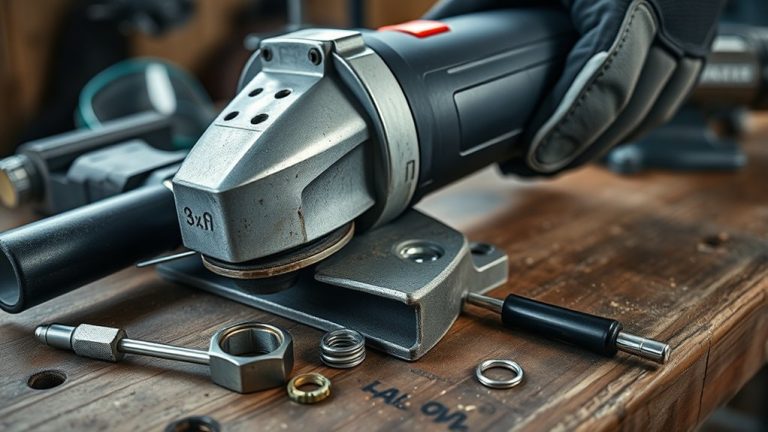
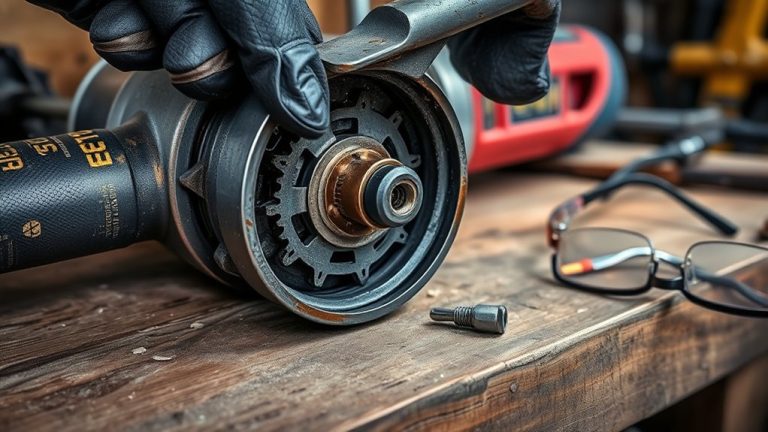
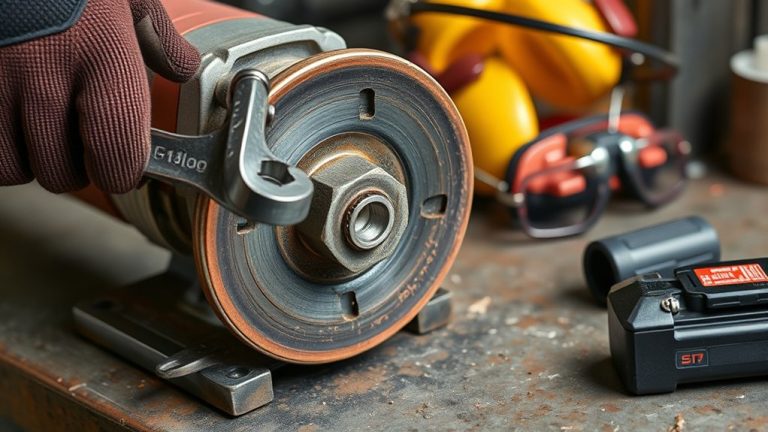
If your angle grinder cuts crooked, check for misaligned blades or excessive pressure. Inspect for uneven wear, damaged wheels, or wrong blade types. Make certain the cutting guard is aligned and that you’re maintaining steady pressure while cutting. Electrical issues can also affect performance, so verify the power supply and switch functionality. Safety gear, including goggles and gloves, is essential. For thorough insights on troubleshooting and maintenance, further examination of specific practices is needed.
Why Your Angle Grinder Cuts Crooked and How to Fix It
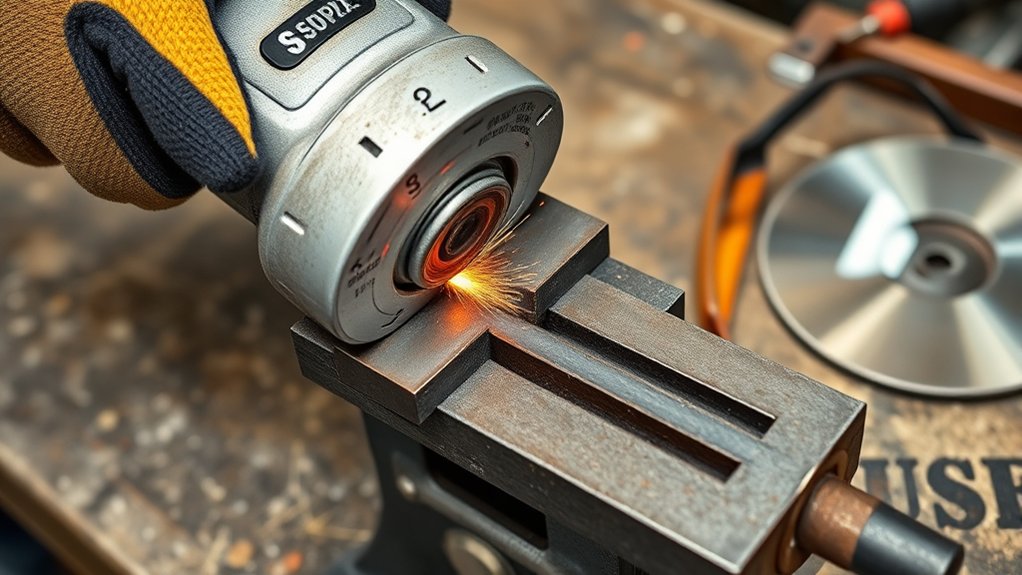
When you notice your angle grinder cutting crooked, it’s often due to a few key factors that can be easily addressed. First, check the blade alignment; a misaligned or loosely mounted blade can lead to inaccuracies. Make sure it’s securely positioned relative to the workpiece. Next, consider the pressure you’re applying. Excessive force can cause the grinder to veer off course—maintain a steady hand and let the tool do the work.
Inspect the grinding wheel for signs of wear; cracks or damage can lead to uneven cuts, so replace worn wheels promptly. Additionally, using the wrong blade type for your material can hinder cutting efficiency. Finally, regularly inspect your angle grinder for mechanical issues like bearing wear or spindle alignment. These checks can prevent crooked cuts and enhance your overall cutting precision, empowering you to achieve the flawless results you desire.
How to Identify Uneven Blade Wear
Ensuring your angle grinder cuts accurately means paying close attention to blade wear, which can greatly affect performance. Uneven wear typically shows as discrepancies in the blade’s edge. To identify this issue, inspect the blade for visible signs and use a caliper to measure thickness at various points. Significant variations indicate compromised blade life. Additionally, monitor cutting efficiency; if you notice excessive vibration or a drop in performance, it’s likely due to uneven wear.
Here’s a quick reference table for identifying uneven blade wear:
| Inspection Method | Signs of Uneven Wear | Recommended Action |
|---|---|---|
| Visual Inspection | One side sharper or worn | Replace or realign blade |
| Thickness Measurement | Variations in thickness | Adjust mounting or replace |
| Performance Monitoring | Vibration or efficiency drop | Check technique and pressure |
Is Your Cutting Guard Misaligned?
Check the alignment of your cutting guard regularly to guarantee accurate cuts and enhance safety. If you notice any misalignment, adjust the guard position according to the manufacturer’s specifications and secure it firmly. Using a level surface during this process can help prevent cutting inaccuracies and protect you from potential hazards.
Alignment Check Process
To maintain peak cutting performance, verifying the alignment of your cutting guard is essential. A properly aligned guard guarantees your grinder blades operate efficiently, preventing crooked cuts and unsafe conditions. Follow these steps for a thorough check:
- Securely mount the cutting guard and inspect it for stability.
- Use a straightedge or ruler to confirm the guard is parallel to your intended cutting line.
- Refer to the manufacturer’s guidelines for specific alignment procedures tailored to your angle grinder model.
Regularly inspecting alignment not only enhances cutting precision but also promotes safety. If adjustments are needed, make them promptly to maintain the integrity of your work. Proper alignment is your first step toward liberation from crooked cuts.
Adjusting Guard Position
Misalignment of the cutting guard can severely impact your angle grinder’s performance, resulting in crooked cuts and unsafe working conditions. To guarantee ideal alignment, check that the guard is positioned according to the manufacturer’s specifications, allowing a clear view of the cutting line while maintaining safety. Regularly inspect the guard for wear or damage that could compromise its functionality. If adjustments are needed, loosen the securing screws, reposition the guard, and tighten the screws firmly to prevent any movement during operation. Always wear appropriate personal protective equipment (PPE) when adjusting or operating the grinder to shield yourself from sparks and debris. Proper alignment of the guard is essential for effective and safe cutting.
Ensuring Secure Attachment
Verifying the cutting guard is securely attached to your angle grinder is essential for peak performance and safety. Misalignment can lead to uneven cuts and increase the risk of accidents. Here’s how to confirm proper attachment:
- Confirm the guard aligns with the grinding wheel to prevent misalignment.
- Regularly inspect for damage or deformation that may compromise security.
- Tighten the guard according to the manufacturer’s specifications to avoid shifting during use.
Additionally, check attachment points for wear or looseness; a loose guard can cause vibrations, resulting in crooked cuts. Familiarize yourself with the specific adjustments required for your angle grinder model, as different brands may have unique alignment mechanisms. Prioritize these checks to enhance your tool’s effectiveness and your safety.
How to Maintain Steady Pressure for Better Cuts
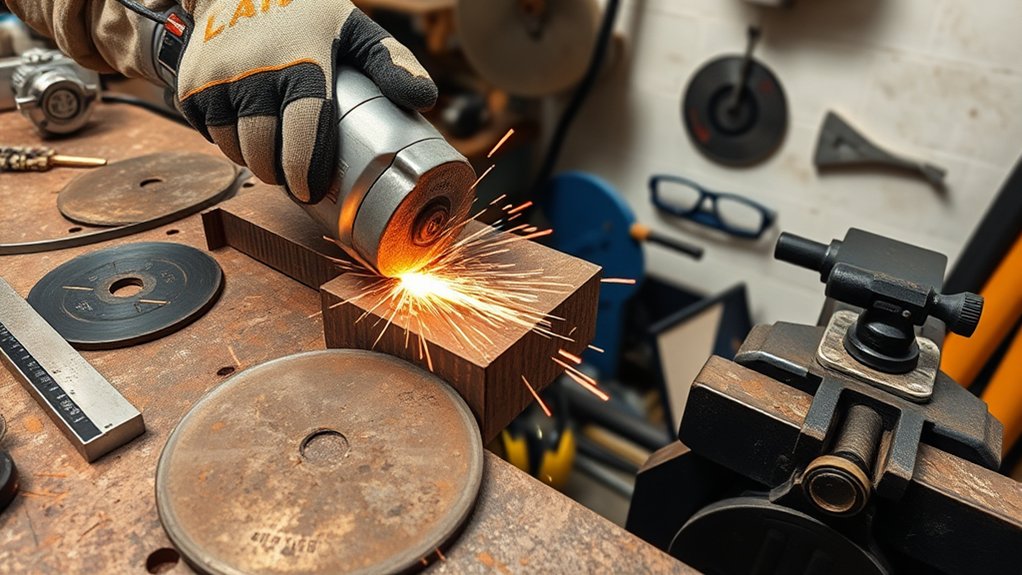
To achieve better cuts with your angle grinder, you need to focus on proper grip technique and even pressure distribution. Consistently maintain the correct angle while cutting, as this enhances efficiency and keeps your cuts straight. Monitoring your body position and pressure will help you avoid fatigue and guarantee a steady, controlled cut.
Proper Grip Technique
A proper grip technique is essential for achieving clean, precise cuts with an angle grinder. To maintain control and improve your cutting accuracy, focus on these key aspects:
- Firm Grip: Use both hands to hold the grinder securely, reducing sideways movement.
- Stable Stance: Position your feet shoulder-width apart for balance and stability while working.
- Consistent Pressure: Apply even pressure along the cut line; avoid excessive force to prevent uneven cuts.
Regularly check your grip and stance throughout the process, making necessary adjustments. By mastering these techniques, you’ll enhance your efficiency and achieve the liberation of precision in your work with angle grinders.
Even Pressure Distribution
When you maintain even pressure distribution while using an angle grinder, you greatly enhance the quality of your cuts. This technique prevents uneven cuts by ensuring consistent contact with the material. Apply steady, moderate pressure; excessive force can lead to blade binding and overheating, compromising cut quality. Regularly inspect the workpiece and grinding wheel for alignment, as misalignment can cause uneven pressure and crooked cuts. Use both hands for better control and stability, allowing you to maintain even pressure throughout the grinding operations. Finally, practice smooth, controlled movements to avoid creating valleys or irregularities. Mastering these techniques will liberate your skills, enabling you to achieve precise, clean cuts with confidence.
Consistent Angle Maintenance
Maintaining a consistent angle while using an angle grinder is essential for achieving clean, precise cuts. Here are key strategies to help you maintain steady pressure and improve your results:
- Use Both Hands: This stabilizes the grinder, minimizing tilt and promoting a uniform cut.
- Select the Right Wheel: Choose a grinding wheel that matches the material for ideal performance and reduced crooked cuts.
- Adjust Speed Settings: Match the grinder’s speed to the material type; slower speeds enhance precision on harder surfaces.
Why Choosing the Right Blade Matters
Choosing the right blade for your angle grinder is vital for achieving ideal cutting results and maintaining tool longevity. Selecting a blade tailored to the material being cut prevents uneven cuts and minimizes wear. For instance, diamond blades are specifically designed for concrete or masonry, enhancing cutting efficiency and reducing overheating risks.
Moreover, using blades with suitable tooth count and geometry guarantees smoother cuts while minimizing vibration, which can lead to crooked results. Regularly inspecting your grinding wheel for wear—such as chipping or dullness—is essential for maintaining precision.
Always adhere to manufacturer guidelines regarding RPM and compatibility. This compliance prevents issues like wobbling and inaccurate cuts, which can compromise both safety and performance. Ultimately, the right blade not only improves your results but also extends the life of your grinder, empowering you to tackle projects with confidence.
How to Troubleshoot Electrical and Mechanical Issues
To troubleshoot electrical and mechanical issues with your angle grinder effectively, start by confirming it receives a consistent power supply. Check the outlet, power cord, and connections for any visible damage.
Next, focus on these crucial areas:
- Inspect the Switch: A faulty switch can cause intermittent operation. Use a multimeter to test for continuity.
- Verify Wheel Installation: Confirm the grinding wheel is securely mounted and aligned. Misalignment can lead to crooked cuts.
- Examine for Mechanical Issues: Inspect the spindle and flanges for wear or damage, as these components are essential for stable wheel rotation.
Lastly, open the grinder to check for broken connections or damaged wiring that may cause electrical inconsistencies. By methodically addressing these factors, you can enhance the performance and safety of your angle grinder, confirming it operates as intended.
Essential Maintenance Tips for Angle Grinders
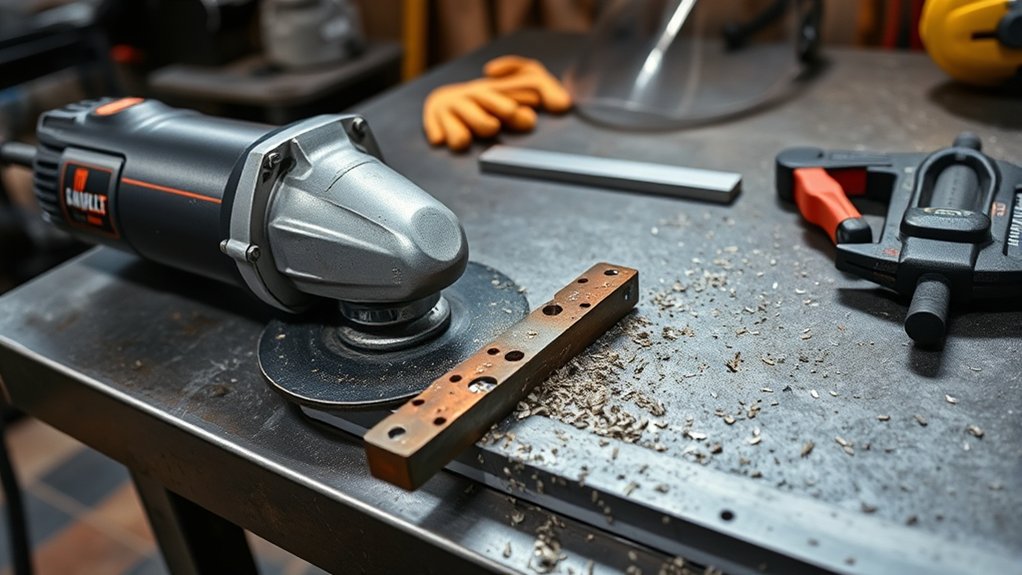
Regular maintenance is essential for guaranteeing your angle grinder operates efficiently and safely. Start by regularly inspecting blades for wear; cracks and chips can compromise cutting precision and pose safety hazards. Clean the air vents and cooling systems to prevent overheating, which can diminish performance and shorten tool lifespan. Store blades in a dry, cool environment using protective cases or hangers to avoid edge damage and premature wear.
Always adhere to manufacturer guidelines for RPM and blade types to enhance efficiency and minimize operational risks. Before each use, conduct visual inspections of power cords and switches to identify any potential electrical issues that could jeopardize safety. By implementing these maintenance tips, you not only extend the life of your tool but also guarantee a safer working environment, allowing you to focus on your projects with confidence and liberation.
What Safety Gear Do You Need Before You Start?
Before operating your angle grinder, wearing the right safety gear is essential to protect yourself from potential hazards. Neglecting this can lead to serious injuries. Here’s what you need:
Wearing the right safety gear is crucial when using an angle grinder to prevent serious injuries.
- Safety goggles: Protect your eyes from flying debris and sparks generated during grinding.
- Ear protection: Use earmuffs or earplugs to prevent hearing damage from the angle grinder’s loud noise.
- Heavy-duty gloves: Shield your hands from sharp edges and heat produced by the grinder.
Additionally, consider using a dust mask or respirator to filter harmful particles and guarantee you wear sturdy, non-slip footwear for stability. These precautions not only enhance your safety but also allow you to focus on your work without distraction. Investing in proper safety gear empowers you to operate confidently and effectively, minimizing risks and maximizing productivity. Always prioritize your well-being before you start any project.
When to Get Professional Help
While you may feel inclined to tackle every issue with your angle grinder, certain problems warrant professional assistance. If you’ve adjusted blade alignment and mounting yet still face crooked cuts, it’s time for expert evaluation. Inconsistent performance, like intermittent operation or failure to start, often signals internal wiring or switch faults that require a technician’s expertise.
Excessive vibration or wobbling during use can indicate serious blade damage or spindle misalignment, issues that professionals can address more safely. Persistent overheating, especially if it leads to smoke or burning smells, often hides deeper problems best diagnosed by a specialist.
If you’re uncomfortable with electrical repairs or lack the necessary tools for internal inspections, seeking professional help is essential. Ensuring safety and effective resolution not only liberates you from frustration but also prolongs the life of your angle grinder. Don’t hesitate—sometimes, expert intervention is your best course of action.
Frequently Asked Questions
What Happens When a Grinder Wheel Is Unbalanced?
When your grinder wheel’s unbalanced, you’ll experience wheel vibration that creates safety risks. This leads to inconsistent cuts, increased wear on components, and potential kickback, jeopardizing both your project and your safety. Regular checks are essential.
How to Cut Perfectly Straight With an Angle Grinder?
To cut perfectly straight with an angle grinder, employ precise cutting techniques and alignment methods. Use a straight edge, maintain steady pressure, and let the wheel do the work—your cuts will feel like magic!
What Are the Two Common Faults That Occur With Grinding Wheels?
The two common faults with grinding wheels are wheel wear, which reduces efficiency, and binding issues, causing overheating and vibration. Regular inspections and proper techniques can help mitigate these problems for peak performance.
What Causes Angle Grinder Kickback?
Angle grinder kickback hits like a surprise wave, catching you off guard. It’s caused by binding blades, operator error, or worn parts. For kickback prevention, maintain grip and follow safety tips to stay in control.
Conclusion
In conclusion, addressing crooked cuts with your angle grinder requires a multifaceted approach. You must assess blade wear, align the cutting guard, and maintain steady pressure. You should also choose the right blade, troubleshoot mechanical issues, and follow essential maintenance practices. By prioritizing safety gear and knowing when to seek professional help, you can achieve precise cuts consistently. Ultimately, embracing these strategies not only enhances your craftsmanship but also guarantees a safer working environment.