An angle grinder with a diamond blade is your go-to tool for cutting tile, stone, and concrete. Choose blades based on material compatibility: continuous rim for tile and segmented for concrete. Verify the blade’s size matches your grinder for effective performance, and apply consistent pressure without forcing the cut. Cooling the blade, preferably with water, enhances durability. Always inspect your blade for wear signs to maintain efficiency. Continue exploring to discover more tips for peak cutting performance.
Essential Features of Diamond Blades for Angle Grinders
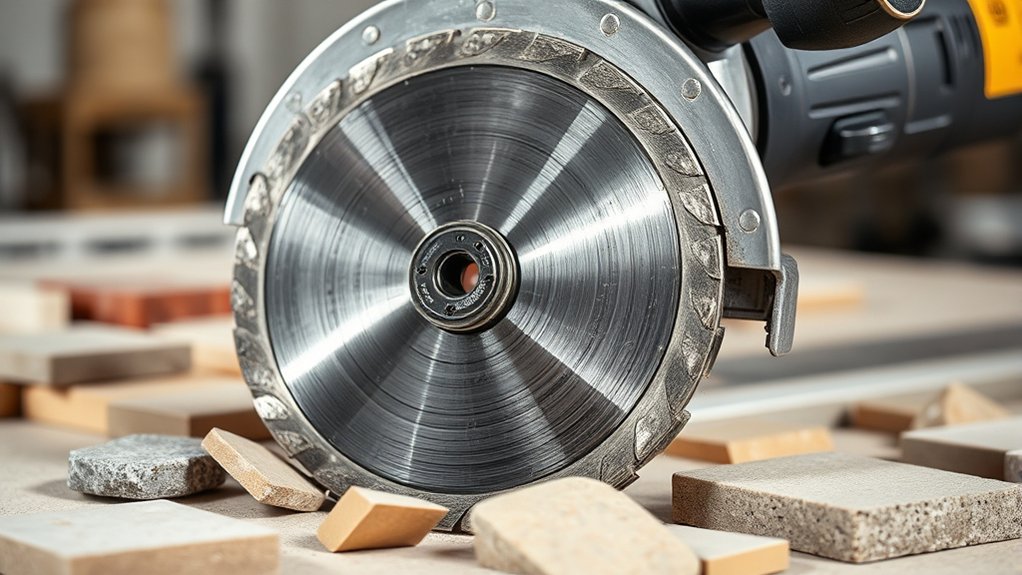
When you choose a diamond blade for your angle grinder, it’s essential to take into account several important features that directly impact performance and efficiency. First, consider the edge type; a continuous rim blade is ideal for tile cutting, providing smooth cuts with minimal chipping. The blade diameter should match your angle grinder’s specifications, typically ranging from 4 to 7 inches, ensuring best cutting speed and safety. High-quality diamond blades use industrial diamonds embedded in a sturdy bond material, enhancing cutting efficiency and longevity. Additionally, look for blades with cooling holes or slots that help dissipate heat, reducing wear and preventing overheating. Regular maintenance is critical; inspect your blade for wear and use water during cuts to maximize performance. By understanding these features, you can select the right diamond blade for your angle grinder, liberating your tile cutting experience and enhancing your project outcomes.
Choosing the Right Diamond Blade for Your Project
Selecting the right diamond blade for your project hinges on understanding the specific materials you’ll be cutting and the desired outcome. For tile materials, opt for continuous rim blades that provide clean cuts, while segmented blades excel with concrete and stone, offering efficient chip removal. Consider blade size carefully; it directly affects cutting depth and must match your angle grinder specifications for ideal performance. Edge types also matter—turbo blades strike a balance between speed and smoothness, making them versatile across various materials. If you’re tackling wet cutting applications, make sure you choose a wet cutting blade designed to manage water flow, which reduces heat and extends the blade’s life. Finally, always verify the maximum operating speed of the diamond blades and make sure it aligns with your angle grinder’s RPM to prevent damage and guarantee safe operation. Choosing the right diamond blade is vital for achieving your project’s goals effectively.
Techniques for Using Diamond Blades With Angle Grinders
Mastering the use of diamond blades with angle grinders requires a careful approach to technique and safety. First, verify your diamond blade is securely installed, and that your angle grinder matches the blade size—typically between 4 to 7 inches. When tile cutting, apply gentle and consistent pressure; let the blade set its own pace to prevent overheating and prolong its life. For peak cutting techniques, avoid forcing the blade through material, as this can lead to breakage. Regularly inspect the blade for wear, like dullness or cracks, to maintain cutting performance and safety precautions during operation. Additionally, consider using water to cool the blade while cutting harder materials like stone or porcelain tile, which minimizes dust and enhances your working conditions. By following these techniques, you’ll verify effective and safe cutting while liberating your craftsmanship.
Top Maintenance Tips to Extend Your Diamond Blade’s Life
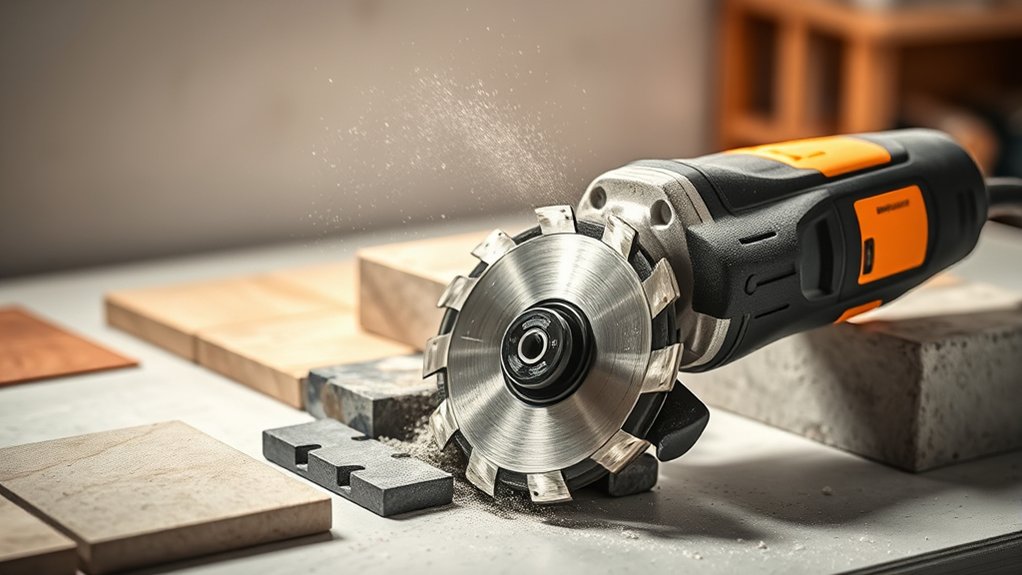
Maintaining your diamond blade is just as important as using it correctly. Regularly inspect your blade for cracks, wear, or loss of flatness; catching damage early guarantees peak cutting performance. Use water during cutting to cool the blade, reducing heat and friction, which helps preserve the integrity of the diamond particles and extends its life. Avoid forcing the blade through materials; let it set its own pace to minimize wear and enhance efficiency. If your blade starts to feel dull, utilize cleaning blocks to expose fresh diamond particles, boosting cutting power without needing a replacement. Always match your diamond blade to the material you’re cutting—use continuous rim blades for tile and segmented blades for concrete—to maximize performance and longevity. By following these maintenance tips, you’ll guarantee your diamond blade remains effective for all your cutting projects.
Signs Your Diamond Blade Needs Replacement?
If you notice a decrease in cutting speed, your diamond blade may be losing its effectiveness due to worn diamond particles. Visible wear, such as missing diamonds or a smooth edge, is another clear sign that it’s time for a replacement. Ignoring these indicators can lead to poor performance and compromised results in your projects.
Decreased Cutting Speed
When you notice a significant decrease in cutting speed, it’s a clear sign your diamond blade may need replacement. This reduced cutting power often indicates dullness, as the blade struggles to penetrate materials effectively. You might observe increased heat generation or experience hopping and chattering during operation, which are signs of wear. While applying more pressure might seem to temporarily restore speed, it risks further damage to the blade. Remember, even if some diamonds remain, a blade with worn edges can’t perform efficiently. Regularly inspect your blade condition for signs of dullness and loss of cutting power. Staying proactive about these indicators will guarantee you maintain peak performance and prolong the life of your diamond blade.
Visible Diamond Wear
Visible wear on a diamond blade is a clear indicator that it’s time for a replacement. When the diamond segments are worn down, you’ll notice a smooth edge that can’t cut effectively. This deterioration affects both performance and safety.
Watch for these signs of visible wear:
- Reduced cutting speed: If the blade struggles to penetrate, it’s likely losing its cutting power.
- Hopping or chattering: This indicates dullness or damage, leading to uneven cuts.
- Excessive heat generation: Increased heat during use signals that the blade can’t maintain efficiency.
Safety Tips for Using Angle Grinders With Diamond Blades
When using angle grinders with diamond blades, it’s essential to prioritize safety by wearing appropriate personal protective equipment like goggles and gloves. You should also master proper cutting techniques to maintain control and prevent accidents. Regular maintenance of both the blade and grinder is critical to guarantee peak performance and longevity.
Essential Safety Gear
Safety gear is essential for anyone using an angle grinder with a diamond blade. Protecting yourself from potential hazards should be your top priority. Here’s what you need:
- Safety goggles: Always wear them to shield your eyes from flying debris and dust.
- Hearing protection: Use earplugs or earmuffs to guard against the loud noise produced by the grinder.
- Dust mask: A respirator is vital to prevent inhalation of harmful particles, especially when cutting concrete or tile.
Additionally, wear fitted clothing and sturdy, non-slip footwear to reduce the risk of accidents. Don’t forget to keep a first aid kit nearby and familiarize yourself with basic first aid procedures. Being prepared can make all the difference in ensuring a safe working environment.
Proper Cutting Techniques
To achieve clean and precise cuts with an angle grinder equipped with a diamond blade, it’s essential to follow proper cutting techniques. First, verify the diamond blade is securely installed and aligned with the angle grinder to prevent accidents and enhance cutting efficiency. Apply gentle, consistent pressure while cutting; this prevents tile breakage and promotes blade longevity, allowing the blade to work at its own pace. Always wear appropriate safety equipment, such as goggles, gloves, and a mask, to shield yourself from dust and debris. Periodically let the blade cool by spinning it freely, which prevents overheating. Regularly inspect the diamond blade for signs of wear, replacing it when performance diminishes, similar to maintaining a tile saw for peak results.
Blade and Grinder Maintenance
Maintaining your angle grinder and diamond blade is essential for guaranteeing ideal performance and safety during cutting tasks. Regular blade maintenance not only boosts cutting efficiency but also prolongs the lifespan of your tools. Here’s how to keep everything in top shape:
- Guarantee the diamond blade is securely installed and compatible with your angle grinder.
- Regularly inspect for wear, cracks, or dullness.
- Use safety gear like goggles, gloves, and respiratory protection to shield against debris.
When cutting, apply consistent pressure and use proper cooling methods, such as water for wet cutting. This prevents overheating and enhances the durability of your diamond blade, making your cutting tasks safer and more efficient.
Frequently Asked Questions
Can I Cut Tile With a Diamond Blade Grinder?
Yes, you can cut tile with a diamond blade grinder. Choose the right diamond blade type, consider tile thickness, employ proper cutting techniques, follow safety precautions, and maintain the blade for peak performance and longevity.
Will a Diamond Blade Cut Stone?
Yes, a diamond blade cuts stone effectively. Guarantee you choose the right blade for the stone types, practice proper cutting techniques, maintain the blade for durability, and follow safety precautions to achieve ideal results.
What Type of Angle Grinder Blade for Tile?
For tile cutting, choose a continuous rim blade for ceramics or a segmented blade for porcelain. Prioritize grinder safety and employ proper cutting techniques, matching blade types to tile materials for ideal results.
How to Cut Tile Trim With Angle Grinder?
To cut tile trim effectively, choose the right blade, mark your line, and secure the tile. Remember angle grinder safety, apply consistent pressure, and explore tile cutting techniques for your DIY home projects.
Conclusion
In the world of cutting, a diamond blade is your trusty sword, slicing through tile, stone, and concrete with precision. By understanding its essential features and choosing the right blade for your project, you’ll guarantee a smooth, efficient cut. Remember to maintain your blade, watch for signs of wear, and always prioritize safety. With these tips, you’ll keep your angle grinder and blade in top form, turning tough materials into manageable pieces with ease.