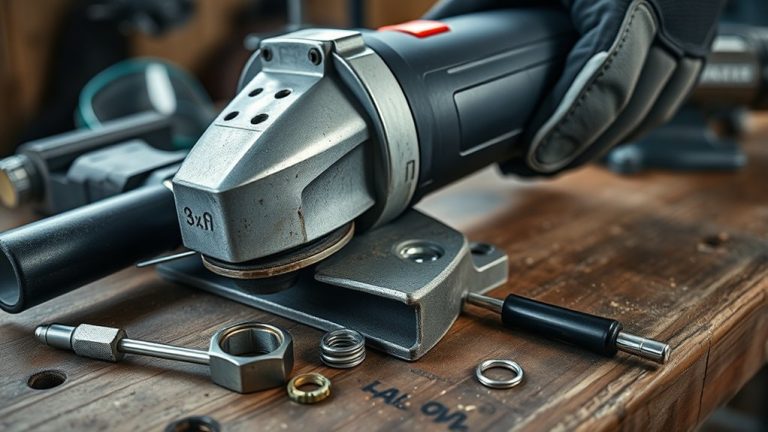
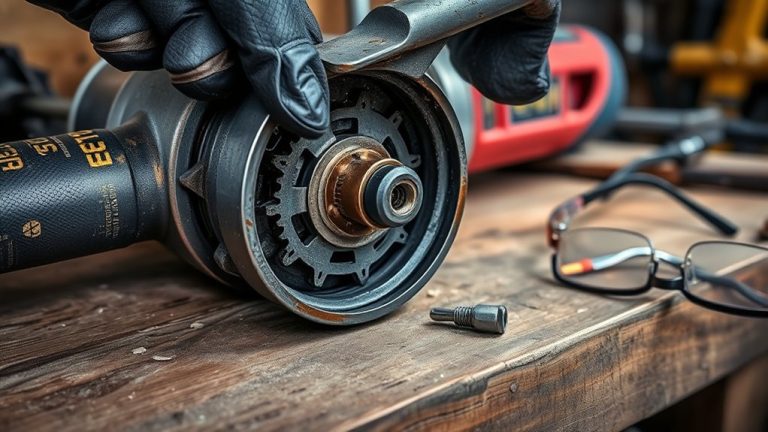
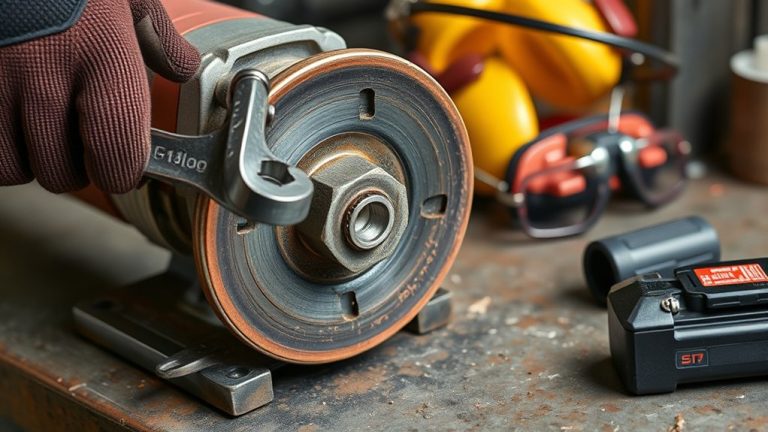
If your angle grinder disc keeps loosening, it could stem from several factors like incorrect flange nut thickness, worn spindle threads, or excessive vibration during use. Proper mounting techniques are essential; always engage the spindle lock when tightening the nut and check for wear regularly. Safety gear is vital to protect yourself from debris and injury. Maintain your tool consistently and if problems persist, you may need professional assistance or additional insights to troubleshoot effectively.
Understanding the Loosening Issue: Common Symptoms and Concerns
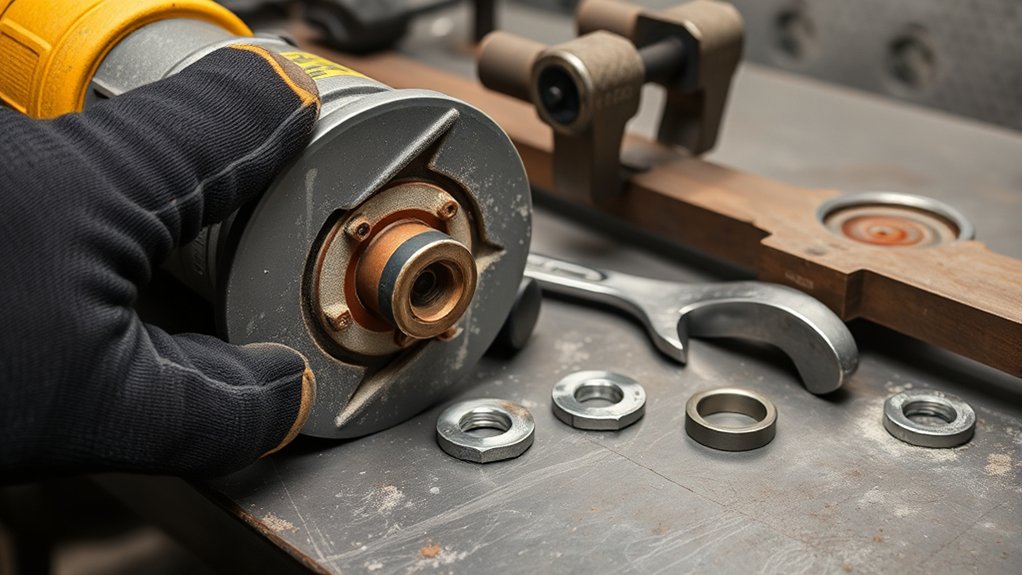
When using an angle grinder, you might notice that the discs can loosen unexpectedly, which poses significant safety risks. Loosened discs can result in dangerous situations, such as the disc flying off during operation. Users frequently report feeling a slight give in the grinding discs, even after proper tightening. This issue can occur across various brands and types of wheels, indicating a broader concern. Vibration from improper handling or incorrect flange nut thickness often contributes to this loosening, especially during heavy grinding sessions. The risk intensifies after prolonged use, making regular checks on nut tightness crucial. To mitigate these dangers, always utilize the spindle lock when tightening to guarantee a secure fit. Understanding these symptoms and concerns not only keeps you safe but also enhances your experience with the angle grinder, empowering you to work with greater confidence and focus.
What Causes Angle Grinder Discs to Loosen?
Angle grinder discs can loosen for several reasons, primarily linked to improper securing methods and mechanical wear. One significant cause is the incorrect flange nut thickness, which fails to secure the disc adequately during operation. Vibration from lowering the grinder or sudden stops shakes the nut loose, especially during deceleration after prolonged use. Worn spindle threads or a damaged arbor can also prevent proper tightening, leading to disc loosening during grinding tasks.
| Cause | Impact |
|---|---|
| Incorrect flange thickness | Inadequate disc security |
| Vibration from operation | Nut loosening |
| Worn spindle threads | Risk of disc detachment |
Some users report that flipping the securing washer for thicker discs can improve grip and reduce loosening incidents. Regular checks and tightening after heavy grinding are essential to prevent accidents and maintain safe operation.
Proper Mounting Techniques for Grinding and Cutting Discs
Proper mounting techniques are essential for ensuring the safety and efficiency of grinding and cutting operations. Always use the correct flange nut thickness for your specific disc; an improper fit can lead to loosening during operation. Engage the spindle lock when tightening the disc to prevent it from rotating loose while in use. Regularly check for wear and damage on the spindle threads and nuts, as loose or worn threads can destabilize the disc. If necessary, utilize a flat washer to achieve a proper fit between the disc and spindle, enhancing secure mounting. Finally, after securing the disc, perform a quick jog of the grinder to confirm its stability before starting work. This simple step reduces the risk of accidental loosening, ensuring safer operations. By following these proper mounting techniques, you’ll enhance your grinding and cutting efficiency while prioritizing safety.
Tools You Need for Securely Installing Grinder Discs
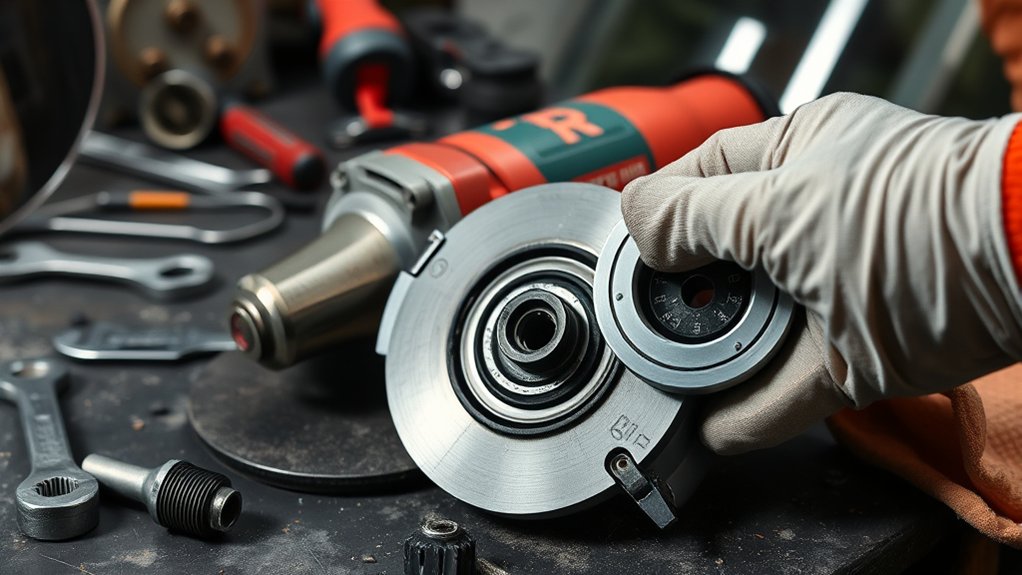
To securely install grinder discs, you need specific tools, starting with the correct flange nut thickness to guarantee a stable fit. Engaging the spindle lock during installation is essential for preventing loosening while in operation. Additionally, using a torque wrench helps you achieve the ideal tightness, minimizing the risk of damage to the spindle or nut.
Essential Installation Tools
Installing grinder discs securely requires essential tools that guarantee peak performance and safety. First, a torque wrench is vital for achieving the correct tightness of the flange nut; improper torque can lead to loosening during operation. Always utilize the spindle lock feature when tightening discs to prevent accidental rotation. A flat washer can enhance fit and prevent nut loosening, especially with varying disc thicknesses. Regularly inspect and replace worn or damaged flange nuts and washers to maintain ideal disc security. Keep a socket wrench and screwdriver handy for quick adjustments, ensuring all parts are securely fastened before use. With these essential installation tools at your disposal, you can confidently operate your angle grinder without fear of disc failure.
Proper Flange Nut Selection
Choosing the right flange nut is essential for securing grinder discs effectively. Proper flange nut selection hinges on matching the nut’s thickness and specifications with the specific disc you’re using. An incorrect size can lead to loosening during operation, compromising safety and efficiency. Always utilize a spindle lock when tightening; this guarantees a more secure fit and mitigates the risk of disc movement. Additionally, adding a flat washer between the flange nut and the disc enhances stability, reducing looseness from vibrations. Regularly inspect the threads on the spindle and nut for wear or damage, as compromised threads can greatly undermine the security of your setup. Prioritizing these details guarantees a safer and more effective grinding experience.
How to Stay Safe When Using Angle Grinders
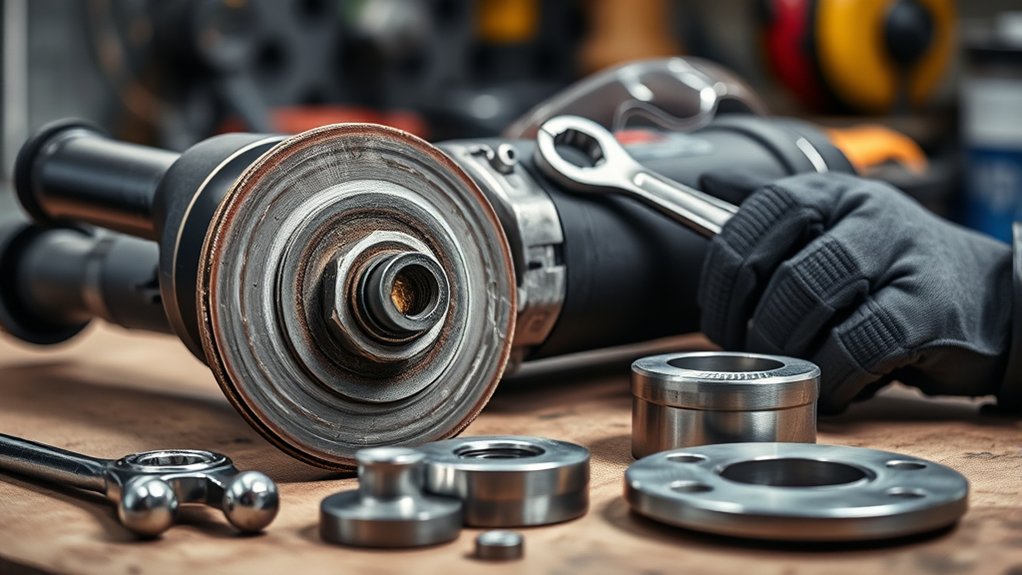
When using angle grinders, you must prioritize safety by wearing essential personal protective equipment (PPE) like safety glasses and gloves. Proper tool handling techniques, such as ensuring the grinder is well-maintained and using the spindle lock, are vital to prevent accidents. Additionally, maintaining awareness of your surroundings and positioning can greatly reduce the risk of injury.
Essential Personal Protective Equipment
Using an angle grinder without the proper personal protective equipment (PPE) can lead to serious injuries, highlighting the significance of safety gear. Always wear safety glasses or goggles to shield your eyes from flying debris and sparks. Ear protection, such as earplugs or earmuffs, is crucial to prevent hearing damage from the grinder’s loud noise. A dust mask or respirator is necessary to avoid inhaling harmful particles, particularly when grinding materials that produce fine dust. Make certain you wear cut-resistant gloves to protect your hands from sharp edges and injuries while handling both the grinder and materials. Finally, steel-toed boots are recommended to safeguard your feet from falling objects, providing a stable footing during operation. Prioritize your safety with these essential personal protective equipment items.
Proper Tool Handling Techniques
Proper handling techniques are vital for operating an angle grinder safely and effectively. Always wear appropriate personal protective equipment (PPE), including safety glasses, gloves, and hearing protection. Before you start, inspect the grinder and the correct disc for any signs of damage. Verify all components are securely fitted. When tightening the disc, use the spindle lock feature to prevent loosening during operation. Maintain a proper grip and stance, giving you better control and reducing the risk of slipping or losing control. Regularly check the tightness of the disc during breaks—this simple step can considerably enhance safety and tool performance. Prioritizing these techniques keeps you safe and guarantees efficient work with your angle grinder.
Maintenance Tips to Stop Discs Loosening
To prevent discs from loosening during operation, it’s crucial to verify the correct flange nut thickness matches your specific grinding or cutting disk. Always inspect the spindle threads for debris or damage; even minor contaminants can compromise the nut’s grip. Utilize the spindle lock when tightening the discs to secure them effectively, minimizing any risk of loosening.
Additionally, consider incorporating a flat washer alongside the flange nut. This can enhance the fit and evenly distribute pressure, further securing the disk. Regularly monitor your grinder for signs of internal wear, such as damaged bearings or bent spindles, which may contribute to disc instability. Addressing these issues promptly will guarantee peak performance and safety. By adhering to these maintenance tips, you can greatly reduce the likelihood of disc loosening and enhance your grinding experience.
Common User Issues With Grinder Discs
When users encounter issues with grinder discs, it’s often due to factors like sudden stops or internal drag that affect spindle RPMs. These problems can lead to serious safety concerns, especially when grinding wheels come loose or even fly off during operation.
To enhance your experience and safety, consider the following:
- Discs can unexpectedly detach, risking injury.
- Improperly tightened flange nuts exacerbate loosening.
- Users report frustration when grinding wheels fail mid-task.
- Repeated issues across brands indicate a common challenge.
- Adopting safety practices can prevent accidents.
Regular monitoring and tightening of the flange nut are essential. Using a flat washer can improve fit, while securing washers correctly helps maintain stability. Always wear proper PPE and verify tools are adequately secured before use. By addressing these common user issues, you can enjoy a safer, more efficient grinding experience.
Troubleshooting Angle Grinder Disc Loosening Issues
Addressing angle grinder disc loosening issues requires a meticulous approach to guarantee safety and efficiency. Start by troubleshooting common causes, such as incorrect flange nut thickness or vibrations from lowering the grinder. Always engage the spindle lock when tightening discs; this assures a secure fit and prevents loosening during operation. Regularly inspect for internal wear or damage; worn bearings or spindle threads can greatly contribute to disc loosening. If you notice persistent issues, flipping the securing washer for thicker discs may provide a better fit. Additionally, tighten the discs slightly more after heavy grinding sessions to counteract vibrations and deceleration effects. By following these steps, you can enhance the stability of your grinding operations, ensuring that your tools perform at their best and minimizing potential hazards. Remember, attention to detail is key in maintaining both performance and safety.
When to Seek Professional Help for Grinder Problems?
Angle grinder issues can escalate quickly, especially if you’ve already attempted common solutions for loosening discs without success. Knowing when to seek professional help is essential for your safety and the tool’s longevity. Consider reaching out to an expert in the following situations:
- Persistent disc loosening despite different tightening techniques
- Unusual vibrations or grinding noises during operation
- Visible wear or damage on spindle threads or flange nuts
- Compatibility issues with various disc brands or types
- Safety concerns, such as discs flying off during use
Frequently Asked Questions
What Are the Two Common Faults That Occur With Grinding Wheels?
Two common faults with grinding wheels are inadequate wheel alignment and excessive wear. You need to guarantee proper alignment and avoid applying too much pressure, as both issues can compromise performance and safety during operation.
How to Tighten a Disc on an Angle Grinder?
To tighten a disc on an angle grinder, use the spindle lock feature and the correct flange nut. Regular disc maintenance guarantees peak performance. Always check for wear, and tighten slightly more after each use.
How to Tell if an Angle Grinder Disc Is Bad?
To determine if your angle grinder disc is bad, conduct a thorough disc inspection. Look for cracks, chips, or uneven surfaces. If it vibrates excessively or glazes over, replace it immediately for safety.
How to Secure an Angle Grinder Disc?
To secure your angle grinder disc, verify disc compatibility, use the correct flange nut thickness, engage the spindle lock tightly, and consider adding a flat washer. This’ll keep your setup stable and vibration-free.
Conclusion
In conclusion, ensuring your angle grinder discs stay secure is essential for both performance and safety. By understanding the causes, employing proper mounting techniques, and maintaining your equipment, you can greatly reduce the risk of loosening. Remember, a tightly fastened disc isn’t just a precaution; it’s a commitment to precision and safety. So, when you’re grinding away, keep your focus sharp—because a loose disc can turn a simple task into a hazardous endeavor.