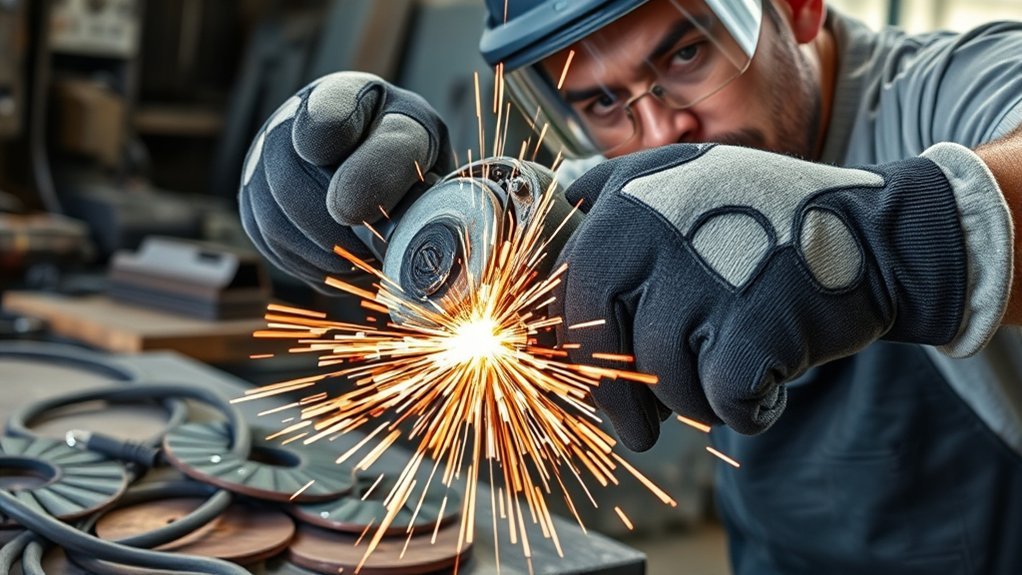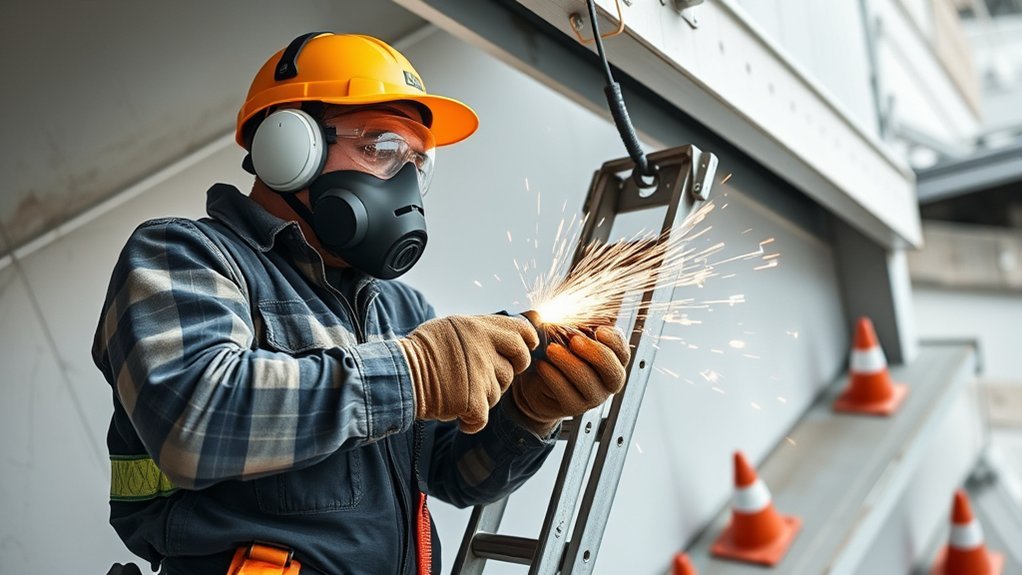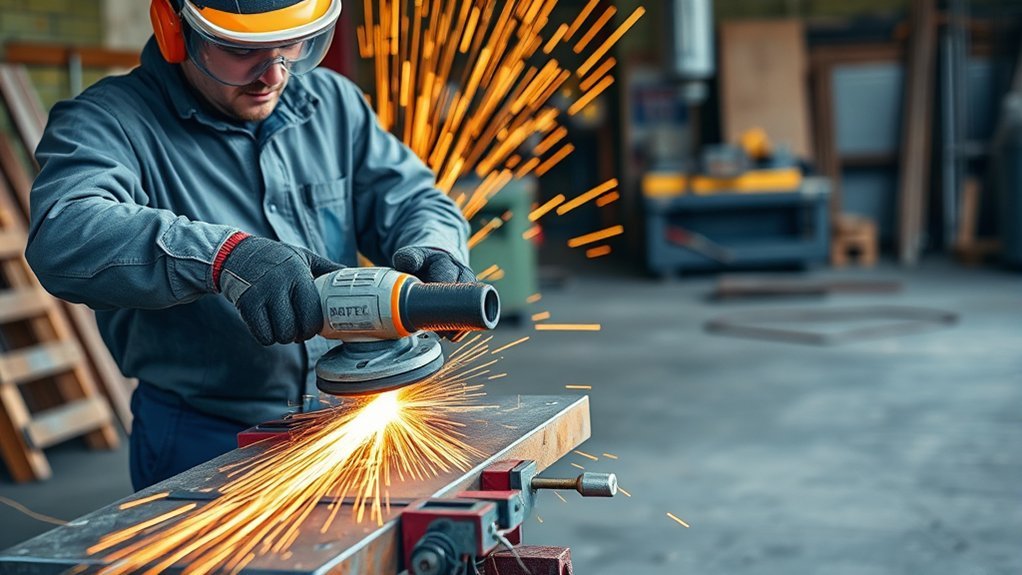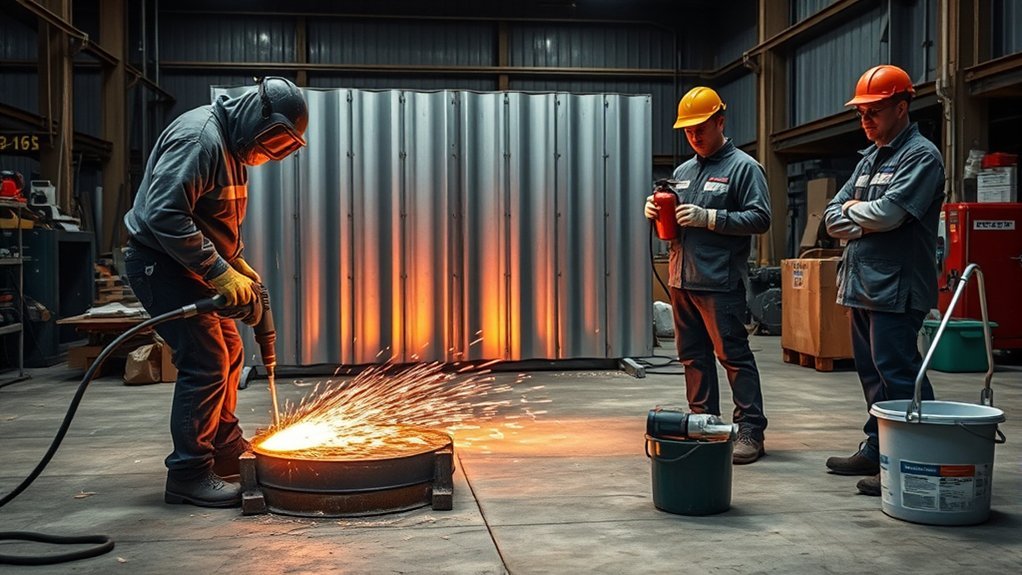
Angle grinder sparks can travel farther than you expect and can ignite dry grass, dust, paper, rags, and other fuel fast. Before you cut or grind, control the fire risk around the work area, not just the tool in your hands. This guide explains how to set up a safer workspace, reduce sparks, choose protective gear, and respond if a fire starts.
Quick Answer
Angle grinder sparks can start fires when they land on dry or flammable material. Clear at least 10 meters around your work area, keep a suitable fire extinguisher or water source nearby, and assign a fire watch when the job creates a higher risk. Use steady pressure, the right disc, and full personal protective equipment to lower the chance of injury or ignition.
Key Takeaways
- Clear dry, dusty, or flammable material before you start grinding.
- Keep a fire extinguisher, water source, or approved fire suppression tool within reach.
- Use a fire watch for hot work near dry grass, timber, fuel, paint, rags, or stored materials.
- Wear eye, face, hand, hearing, and respiratory protection that matches the task.
- Stop work right away if sparks reach unsafe areas or conditions change.
Understanding the Fire Risks of Angle Grinder Use
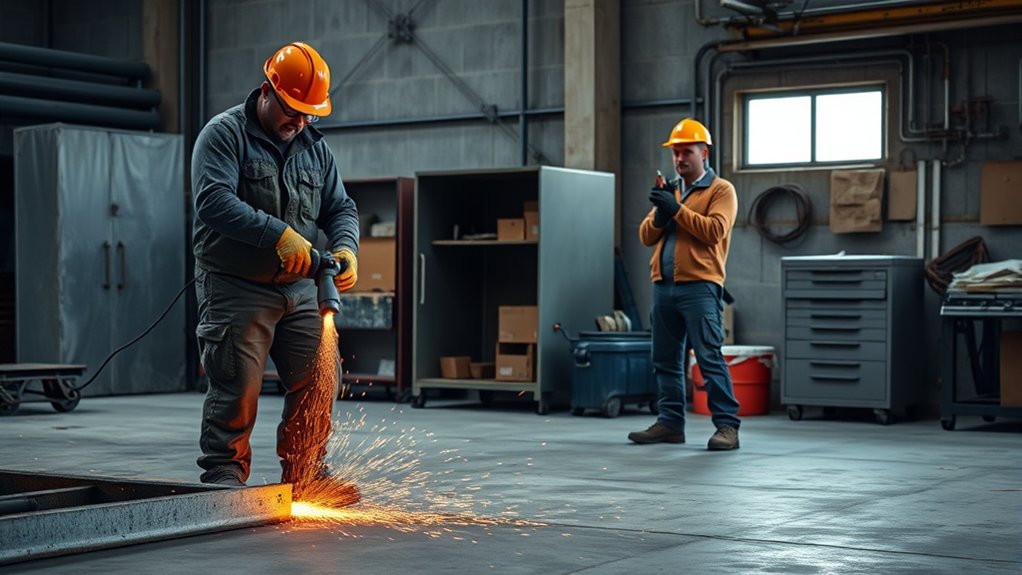
Angle grinders create heat, friction, and fast-moving sparks. Those sparks can ignite dry grass, sawdust, paper, oily rags, cardboard, paint dust, fuel vapors, and other flammable materials.
The risk increases when you cut metal outdoors, grind in dry weather, work near stored materials, or use the wrong disc. A clean setup gives you more control before the tool starts throwing sparks.
Clear at least 10 meters around your work area when sparks may travel. Keep fire safety equipment close, inspect the grinder before use, and follow the tool maker’s safety instructions.
Warning: Do not grind or cut near fuel, solvents, gas cylinders, dry vegetation, or hidden combustible dust.
Essential Fire Watch Precautions to Use
Angle grinding often counts as hot work because it creates sparks and heat. A fire watch helps spot smoke, embers, and small flames before they spread.
Keep a cleared space of at least 10 meters around the grinding area. Remove flammable items, sweep up dust and debris, and check both sides of walls, fences, floors, or panels if sparks may pass through gaps.
Keep a suitable fire extinguisher or water source ready before work starts. Assign one person to watch for ignition during the job and after the grinder stops, especially in dry, windy, or cluttered areas.
Plan grinding work for cooler, calmer parts of the day when outdoor fire risk allows. If sparks blow toward dry material or stored goods, stop and reset the work area before you continue.
How to Minimize Sparks During Grinding
You can’t remove all sparks from angle grinding, but you can reduce how many sparks the tool creates and where they land. Start with the right disc, steady hand pressure, and a clear spark path.
Products Worth Considering


THE ULTIMATE DIY MULTI-TASKER - Seamlessly cuts Tile, Concrete, PVC, and Thin Metal (≤1/8 inch) without changing blades.Angle grinder cutting disc are ideal for home repair and mixed materials.

[High-Performance Cutting] Designed for cutting metal & stainless steel, these cut off wheels 4 1/2 inch work efficiently with any angle grinder wheel, supporting speeds up to 13,300 RPM.
Adjust Your Cutting Technique
Use light, steady pressure instead of forcing the grinder through the material. Too much pressure creates more friction, more heat, and more sparks.
Hold the grinder so sparks travel away from your body and toward a non-flammable area. Keep both hands on the tool, let the disc reach full speed, and avoid twisting the disc during the cut.
You can also clamp the workpiece to stop movement. A moving workpiece can pinch the disc, increase friction, and make sparks harder to control.
Choose the Right Grinder Disc
Match the disc to the material and task. Cutting, grinding, sanding, and wire brushing each need the correct attachment.
Reduced-spark or low-spark blades may help in some metal-cutting jobs, but they do not remove fire risk. Check the disc label and confirm its maximum revolutions per minute rating exceeds the grinder’s speed.
Inspect every disc before use. Do not use cracked, worn, wet, warped, or damaged discs because they can break apart at high speed.
Set Up the Workspace for Spark Control
A safe workspace limits where sparks can land. Before you start, remove loose fuel sources and set up shields or barriers when nearby surfaces need protection.
- Set up a dedicated grinding area with good airflow and clear footing.
- Remove sawdust, paper, rags, dry leaves, cardboard, and fuel containers.
- Keep a 10-meter cleared space around the spark path where practical.
- Place fire-resistant welding blankets or screens where sparks could reach nearby items.
- Check the area again after each cut or grinding pass.
What to Check Before You Start Grinding
A short pre-use check can prevent a serious fire or injury. Do the check before each job, not only when the grinder looks worn.
- Confirm the guard sits in place and directs sparks away from you.
- Check the disc type, size, condition, and speed rating.
- Inspect the power cord, plug, switch, side handle, and body for damage.
- Secure the workpiece with clamps or a vise before cutting.
- Check that no one stands in the spark path or disc plane.
Do not remove the guard to gain reach or visibility. If the tool can’t reach the cut safely, choose a different setup or tool.
Keeping Your Workspace Clean and Safe
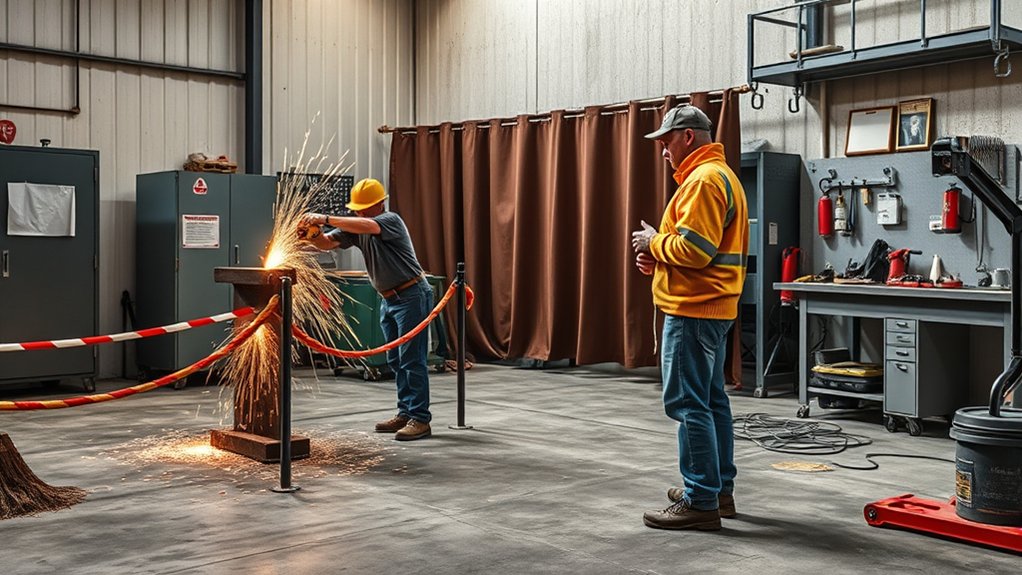
A clean workspace gives sparks fewer places to start a fire. Sweep up sawdust, metal dust, paper scraps, packaging, leaves, and rags before you plug in the grinder.
Choose a grinding area with enough ventilation and clear walking space. Keep at least a 10-meter cleared area around the work zone when the job creates flying sparks.
Check for hidden hazards before you start, such as dry grass behind a fence, dust under a bench, or flammable material on the far side of a panel. Keep water or a suitable fire extinguisher nearby so you can act fast if sparks ignite material.
The Importance of Personal Protective Equipment (PPE)
Personal protective equipment (PPE) helps protect you from sparks, flying fragments, noise, dust, and sharp edges. Choose PPE that suits the material, disc, and work area.
- Safety glasses or goggles: Protect your eyes from sparks and small fragments.
- Face shield: Adds full-face protection when debris can fly toward you.
- Heavy-duty gloves: Protect your hands from hot metal, burrs, and sharp edges.
- Hearing protection: Reduces noise exposure during cutting and grinding.
- Respirator or dust mask: Helps reduce dust exposure when the material creates harmful particles.
- Non-flammable clothing or apron: Protects your skin from sparks and heat.
Avoid loose clothing, dangling cords, jewelry, and synthetic fabrics that can melt. Tie back long hair and keep sleeves fitted at the wrist.
What to Do if a Fire Breaks Out?
If a fire starts during angle grinding, stop the grinder and alert everyone nearby. Act only if the fire is small, you have a clear exit, and you can use the extinguisher without putting yourself at risk.
If the fire grows, spreads, or creates heavy smoke, leave the area and call emergency services. Your first job is to protect people, not save tools or materials.
Take Immediate Response Steps
- Stop using the grinder and disconnect power if you can do so safely.
- Alert others and activate any fire alarm in the area.
- Call emergency services and give your exact location.
- Use a suitable extinguisher only if the fire stays small and you have an exit.
- Move to a planned meeting point and account for everyone.
If smoke fills the area, stay low and move toward clean air. Do not re-enter the work area until emergency responders or a qualified person says it is safe.
Use a Fire Extinguisher Safely
Keep a fire extinguisher rated for the likely fire types near the grinding area. For many workshops, that means an extinguisher suitable for ordinary combustibles and flammable liquids.
Use the PASS method: pull the pin, aim at the base of the fire, squeeze the handle, and sweep side to side. Stand at a safe distance and keep your exit behind you.
After you put out a small fire, watch the area for rekindling. Report the incident, check for hidden hot spots, and do not restart work until you remove the cause.
Follow Emergency Contact Procedures
Know who to call before you start grinding. In many areas, 911 connects you to emergency services, but workplace sites may also require you to call a supervisor or site emergency number.
- Call emergency services as soon as a fire moves beyond quick control.
- Give the address, nearest entrance, and type of fire.
- Send someone to guide responders if the site is hard to find.
- Keep a phone or two-way radio within reach during hot work.
Tools for Fire Safety When Using Angle Grinders
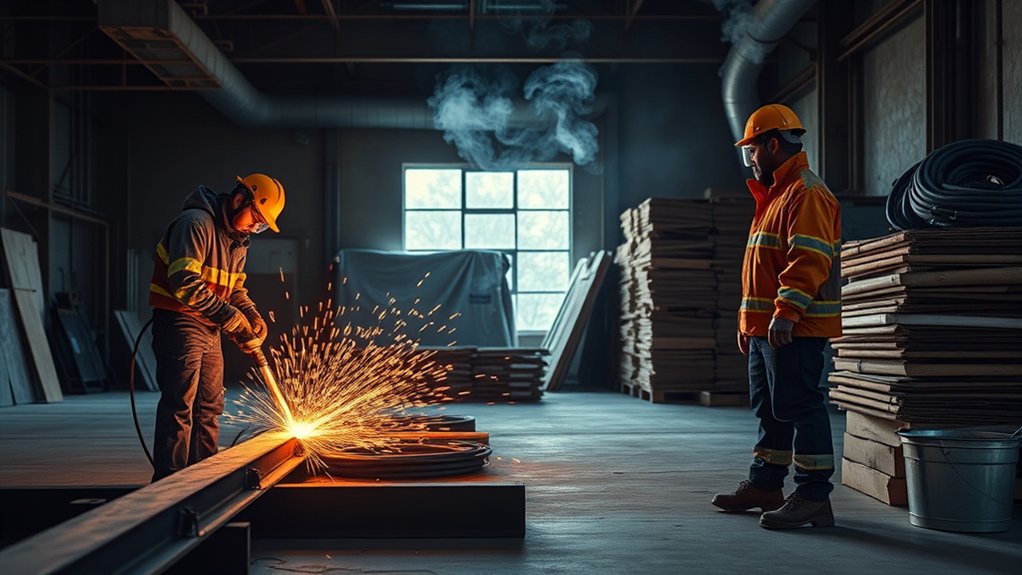
Fire safety tools help you control risk before sparks spread. Keep them close enough to reach without crossing the spark path.
- Fire extinguisher: Choose a type that matches likely fire hazards in your work area.
- Water source: Use water for suitable outdoor combustible fires, but not on live electrical hazards.
- Welding blanket or spark screen: Block sparks from reaching nearby fuel sources.
- Metal bucket: Hold hot offcuts, slag, or small waste pieces until they cool.
- Flashlight: Help check dark corners, wall gaps, and floor spaces for embers.
Inspect and maintain your grinder, discs, guards, cords, and fire tools often. Replace damaged equipment before it turns a small spark into a serious problem.
Products Worth Considering

Versatile Tool Conversion: 3mm/6mm angle grinder conversion adapter, easily convert your threaded angle grinder into a straight grinder, enabling more convenient and precise operations in confined spaces.
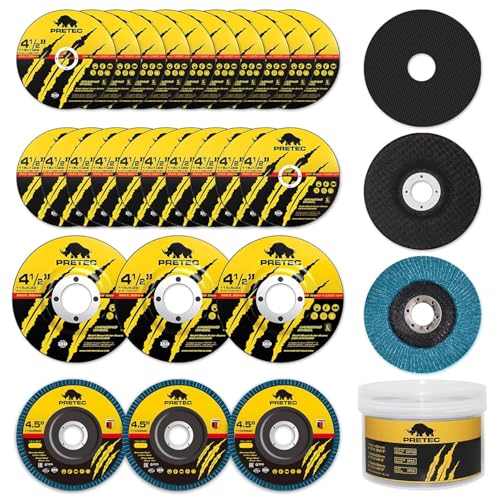
26pcs Angle Grinder Disc 4-1/2 inch & 3 Different Types : ✅ The 26 packs angle grinder wheels 4-1/2 inch including 20 Packs 4.5"x1/4"x7/8" Cut off Wheels, 3 Packs 4.5"x7/8" 60 Grit Flap Discs, 3 Packs 4.5"x1/25"x7/8" Grinding Wheels, with each type of disk collectively wrapped with those of its kind. This kit has everything you need to prep steel.
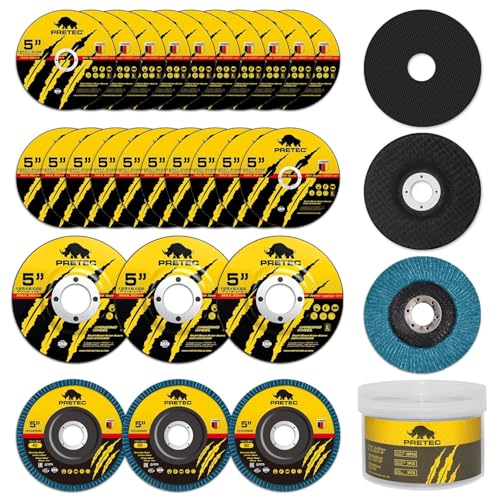
26pcs Angle Grinder Disc 5 inch & 3 Different Types : ✅ The 26 packs angle grinder wheels 5 inch including 20 Packs 5"x1/4"x7/8" Cut off Wheels, 3 Packs 5"x7/8" 60 Grit Flap Discs, 3 Packs 5"x1/25"x7/8" Grinding Wheels, with each type of disk collectively wrapped with those of its kind. This kit has everything you need to prep steel.
Best Practices for Operating Angle Grinders Safely
Safe grinding starts before the disc touches the material. Plan the job, control the spark path, and keep people away from the danger zone.
- Wear PPE before you plug in or start the tool.
- Use the correct disc for the material and task.
- Keep the guard installed and aimed toward the spark path.
- Clamp the workpiece so it cannot shift or vibrate.
- Stand to the side of the disc plane when starting the grinder.
- Stop work if wind, dust, clutter, or nearby fuel raises the fire risk.
Let the disc stop fully before you set the grinder down. Hot discs and fresh cuts can still ignite or burn nearby material.
Pro tip: After the job, spend a few minutes checking the spark path, floor, corners, and nearby materials for smoke or heat.
Common Mistakes That Increase Fire Risk
Many grinder fires start because the work area looked safe at first glance. Sparks can bounce, roll, or fall into places you may not notice right away.
- Grinding near dry grass, leaves, sawdust, or paper.
- Pointing sparks toward walls, gaps, under benches, or stored goods.
- Using extra pressure to speed up the cut.
- Working without a fire extinguisher or water source nearby.
- Leaving the area right after grinding without checking for hot spots.
Build a short cleanup and fire check into every job. That habit matters most when you work outdoors or in crowded workshops.
Resources for Further Learning on Fire Prevention
You can improve fire safety by learning the rules and risks for your area. Local fire agencies, land management offices, and workplace safety programs often publish hot work and wildfire prevention guidance.
For outdoor work, check local fire danger ratings, burn restrictions, and red flag warnings before you start. In some areas, rules may limit grinding, cutting, or other spark-producing work during high fire danger.
Firewise programs, wildfire preparedness networks, CAL FIRE, and Bureau of Land Management resources can help you build safer habits. Use them with your local codes, employer rules, and tool manufacturer instructions.
Frequently Asked Questions
How Can I Reduce Sparks When Cutting With an Angle Grinder?
Use the correct disc, apply light steady pressure, and aim sparks toward a clear, non-flammable area. Keep the material clamped and let the grinder do the work.
Can Sparks From an Angle Grinder Start a Fire?
Yes, grinder sparks can start a fire when they land on dry grass, sawdust, paper, rags, fuel, or other flammable material. Clear the area first and keep fire safety tools nearby.
What Are the Key Safety Precautions to Take When Using an Angle Grinder?
Wear proper PPE, inspect the grinder and disc, keep the guard in place, and secure the workpiece. Clear at least 10 meters where sparks may travel and keep a suitable extinguisher close.
Are Fire Watches Used to Prevent and Extinguish Fires at the Beginning Stage?
Yes, a fire watch looks for early signs of smoke, sparks, embers, or flame during hot work. The fire watch can alert others, stop the job, and use approved fire equipment if the fire stays small and safe to approach.
How Long Should You Watch for Fire After Grinding?
Watch the area long enough to confirm that sparks, hot metal, and nearby surfaces have cooled. On higher-risk jobs, follow your workplace hot work permit or local safety rules for the required fire watch time.
Safety Disclaimer: This article is for informational purposes only and does not replace professional safety training, local fire codes, workplace rules, or manufacturer instructions. Follow the rules that apply to your site, and ask a qualified safety professional when you are unsure.
Conclusion
Angle grinder fire safety depends on controlling sparks before they reach fuel. Clear the area, use the right disc, wear proper PPE, and keep fire equipment within reach before you start.
After grinding, check the work area for heat, smoke, and hidden embers. A few extra minutes of fire watch can prevent a small spark from becoming a serious emergency.