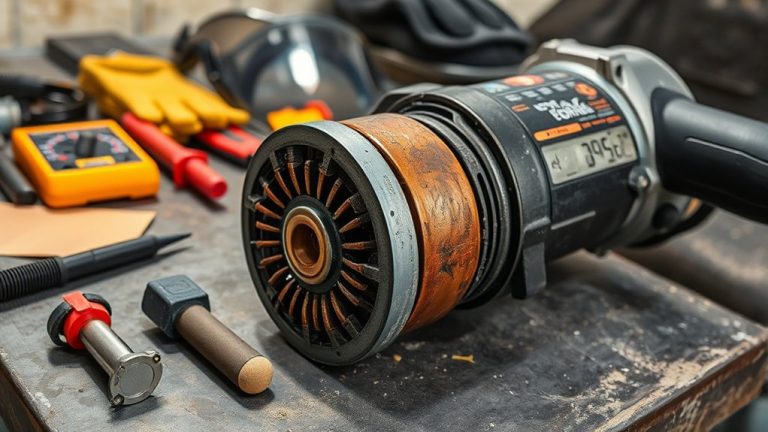
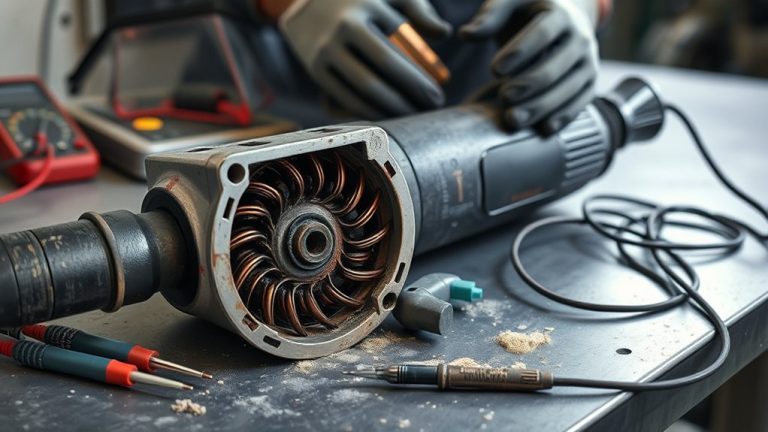
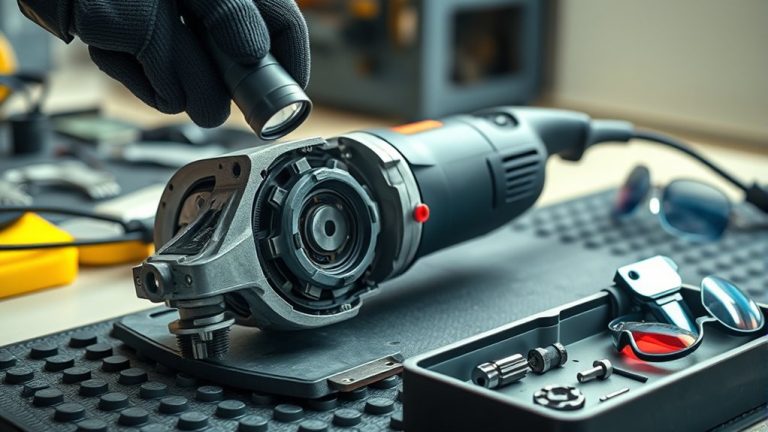
Angle grinder gear noise usually comes from worn gear teeth, debris in the gearbox, or insufficient lubrication. When lubrication is low, friction increases, leading to overheating and noise. Regularly lubricate the gearbox, clean out debris, and check gear alignment for peak performance. If noises persist, inspect the grinder for damage and consider whether repairs or a replacement is more cost-effective. There’s more to explore about managing gear noise effectively in your angle grinder.
Common Causes of Angle Grinder Gear Noise
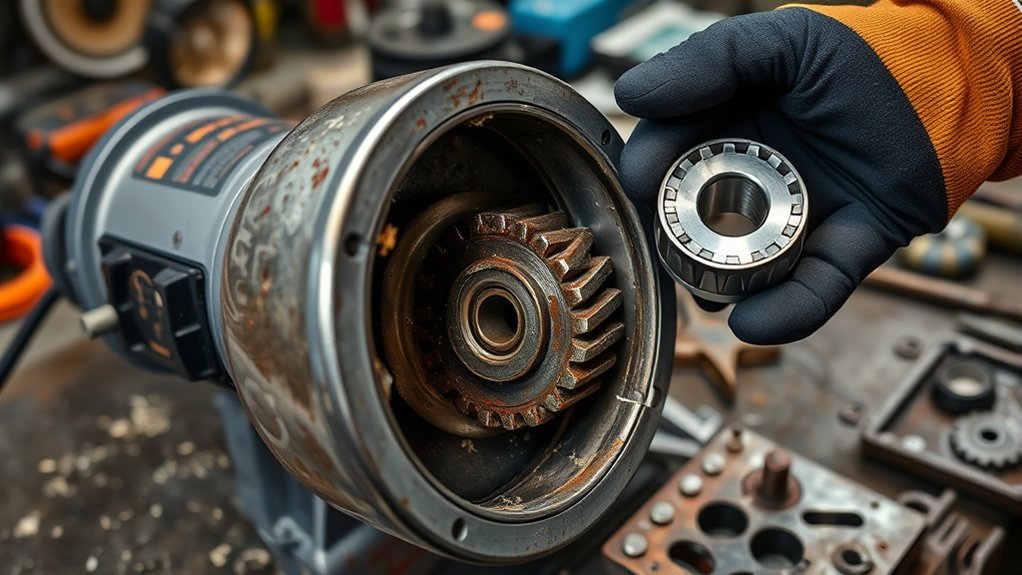
When you hear unusual sounds from your angle grinder, it’s essential to identify the common causes of gear noise. One primary issue often stems from worn or damaged gear teeth, such as pinion or ring gears, which can produce grinding or screeching noises. These sounds signal an urgent need for inspection and possible replacement. Additionally, debris or foreign objects lodged in the gearbox can disrupt normal operation, creating unexpected noise. Insufficient lubrication is another critical factor; metal-on-metal contact increases friction and leads to further gear wear. Loose or improperly mounted components may also cause vibration, amplifying noise levels. Finally, overloading the grinder places excessive strain on gears, leading to abnormal sounds and risking gear failure. Addressing these common issues promptly can enhance your grinder’s efficiency and extend its lifespan. Pay attention to these factors to guarantee smooth, effective operation.
The Impact of Insufficient Lubrication on Gear Performance
Insufficient lubrication in angle grinder gears greatly impacts performance, leading to increased friction and overheating. When gears lack proper lubrication, they experience metal-to-metal contact, which accelerates wear and can result in gear failure. This not only reduces efficiency but also increases noise levels, as poorly lubricated systems operate less smoothly. Using the correct lubricant, like ISO VG (SAE 30) oil for Oilite bushings, is vital for maintaining peak gear function and extending lifespan. Regular maintenance, including checking and replenishing lubrication, is necessary to prevent gear slippage and guarantee consistent power transfer, especially when working with grinding wheels. Neglecting lubrication can lead to significant damage, costly repairs, and ultimately, a less effective angle grinder. To maintain your angle grinder’s performance and minimize noise, prioritize lubrication as a key aspect of your maintenance routine.
Key Maintenance Practices to Minimize Angle Grinder Noise
To minimize noise in your angle grinder, implementing key maintenance practices is crucial. Regular maintenance not only enhances performance but also guarantees a quieter operation during material removal. Here are some practices to bear in mind:
| Maintenance Practice | Purpose | Frequency |
|---|---|---|
| Lubricate Gearbox & Bearings | Reduces friction and noise | Every 20 hours |
| Inspect & Clean Interior | Removes debris and old grease | Monthly |
| Check Gear Alignment | Prevents screeching and wear | Before each use |
| Manual Rotation Check | Detects unusual noises or resistance | Before starting |
| Store Properly | Prevents dust accumulation and wear | Always |
Effective Troubleshooting Techniques for Gear Noise
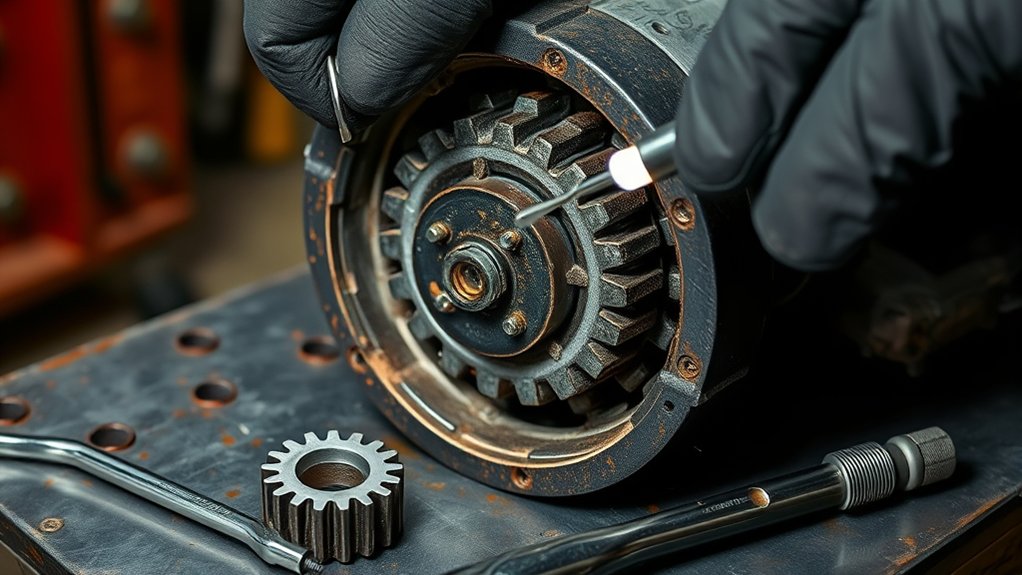
Even with regular maintenance, angle grinders can still produce gear noise that indicates underlying issues. Start by inspecting the gearbox for debris; even small particles can contribute to noise. Confirm that components are adequately lubricated with appropriate oil or moly grease, as insufficient lubrication leads to friction and wear. A practical troubleshooting technique involves rotating the grinder by hand. Listen for any unusual resistance or grinding sounds, which could signal deeper mechanical problems. Maintain the correct amount of grease, ideally using 90-weight gear lube, to prevent overheating and extend component life. Regularly check and clean the internals, focusing on gears and bearings, as this not only helps reduce noise but also enhances overall performance. By following these troubleshooting techniques, you can effectively address gear noise and maintain the efficiency of your angle grinder.
Should You Fix or Replace Your Angle Grinder?
When deciding whether to fix or replace your angle grinder, it’s crucial to weigh the costs and benefits carefully. Assess the repair costs against a new model; many budget grinders can be replaced for under $15, making replacement often more cost-effective. Examine the condition of critical components—if the gearbox shows wear or noise issues, it likely signals the grinder’s impending failure.
Evaluate the availability of replacement parts; if they’re rare or pricey, investing in a new angle grinder may be wiser. Consider the performance history too—if your grinder has needed multiple repairs or exhibits inconsistent performance, it’s probably time for a new unit. Finally, factor in the time and effort for repairs; if troubleshooting becomes too time-consuming, you’ll find that purchasing a new model is the more practical choice. Weigh these factors against your needs to make the best decision.
Frequently Asked Questions
Why Is My Gear Making Noise?
Your gear’s making noise due to gear wear or lubrication issues. Insufficient lubrication increases friction, leading to accelerated wear. Check your lubricant levels and inspect for debris to guarantee smooth operation and extend your tool’s lifespan.
Why Is My Grinder Making Noise?
Your grinder’s noise often signals maintenance issues; studies show 70% of malfunctions stem from improper care. Implement effective grinder maintenance tips and noise reduction techniques to guarantee peak performance and prolong your tool’s lifespan.
How to Reduce Angle Grinder Noise?
To reduce angle grinder noise, implement noise reduction techniques, like regular lubrication and balancing the wheel. Utilize vibration dampening materials and inspect for debris, ensuring all components are tight to minimize rattling and excessive sounds.
What Does It Mean When You Hear a Grinding Noise?
When you hear a grinding noise, it’s like a car engine sputtering—indicating problems in the grinding mechanics. Common noise sources include debris, worn bearings, or improper mounting, signaling the need for immediate inspection and maintenance.
Conclusion
In summary, addressing gear noise in your angle grinder is essential for its longevity and performance. By understanding common causes and implementing effective maintenance, you can minimize that racket that sounds like a thousand angry bees. Regular lubrication and troubleshooting techniques will keep your tool running smoothly. If the noise persists despite your efforts, weigh your options carefully—sometimes, a replacement might be the most practical solution. Don’t let noise disrupt your work; take action today!