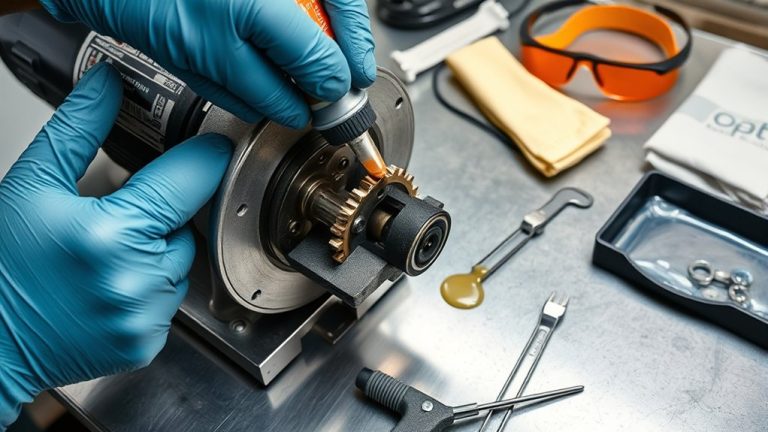
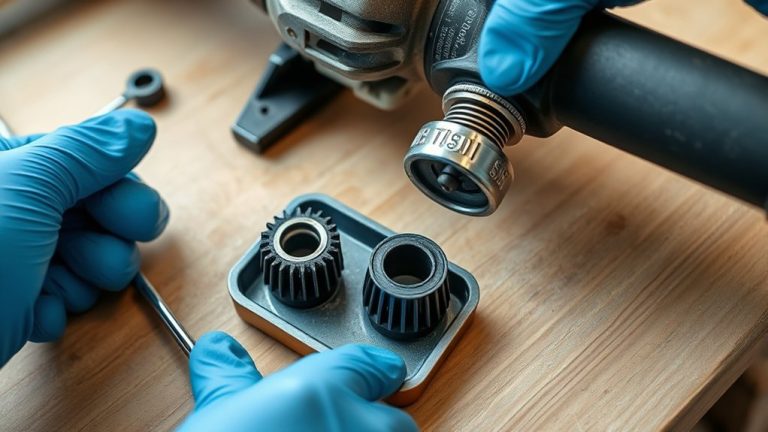
Angle grinder gearbox grease is critical for reducing friction and heat, keeping your tool running smoothly and lasting longer. To use it, disassemble the gearbox, clean out old grease, and apply a high-speed, lithium-based grease, filling 1/3 to 2/3 of the housing. Monitor for discoloration or drying, and address issues right away. Always wear gloves and goggles while handling grease, and store used grease responsibly. For better performance insights and maintenance tips, keep reading.
Quick Answer
- Use a high-speed, lithium-based grease (ideally with Molybdenum disulfide) for angle grinder gearboxes.
- Fill only 1/3 to 2/3 of the bearing housing. Overpacking causes overheating and sluggish performance.
- Disassemble the gearbox, clean out all old grease with a solvent, then apply fresh grease before reassembling.
- Check grease condition every six months. Replace it immediately if it’s discolored, dried out, or the tool runs excessively hot.
- Wear nitrile gloves and safety goggles during the process, and dispose of used grease through local hazardous waste programs.
Step-By-Step Guide: How to Properly Lubricate Your Grinder Gearbox
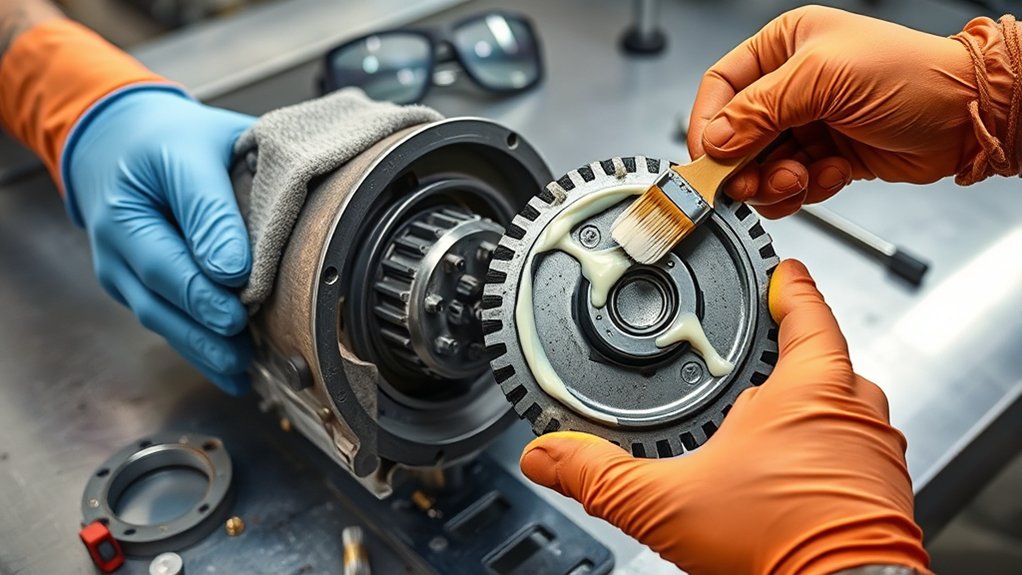
Good lubrication habits keep your angle grinder performing at its best. Start by disassembling the gearbox and thoroughly cleaning off all old lubricant. Any residue left behind can impair how the tool runs.
Next, apply a small amount of high-speed grease, filling 1/3 to 2/3 of the bearing housing. This range gives you effective lubrication without overpacking, which can make the grinder sluggish or cause overheating.
Choose a suitable grease. Lithium-based or CV joint grease works well because both can handle the operating temperatures and pressures typical in angle grinders. Nye Lubricants’ power tool case study shows that lithium soap-thickened greases with EP (extreme pressure) additives are what major manufacturers rely on for their angle grinder gear trains.
Once the grease is applied, carefully reassemble the gearbox and make sure all components are properly aligned. Run a quick functionality test to confirm smooth operation. Finally, check the grease condition regularly, at least every six months, to keep your grinder in top shape.
What Is Angle Grinder Gearbox Grease and Why Is It Important?
Angle grinder gearbox grease is a specialized lubricant designed to reduce friction and wear between the moving parts inside your tool’s gear housing. It’s essential for high-speed operation, where gears can spin at 6,500 to 11,000+ RPM depending on the model.
The grease also dissipates the heat generated during use, preventing temperatures from climbing past the 60-80°C range where damage can occur. Without the right lubricant, you get steel-on-steel contact, which quickly destroys gears and bearings.
Regular maintenance matters. Check and replace the grease every six months to one year, depending on how often you use the tool. Applying the right amount is just as important: fill one-third to two-thirds of the bearing housing. Too much grease can block airflow inside the gearbox, leading to the very overheating you’re trying to prevent.
Key Indicators for Changing Your Angle Grinder Grease
How often should you check your angle grinder grease? Every six months is a good baseline. Inspect the grease condition and replace it if you spot any of the warning signs below.
| Indicator | Action |
|---|---|
| Discolored grease | Replace immediately |
| Dried out grease | Change for effective lubrication |
| Excessive heat | Inspect and adjust lubrication |
| Frequency of use | Change every 3-6 months for heavy use |
Excessive heat during operation is a strong signal that the grease has broken down or been flung off the gears. If the gearbox housing is too hot to touch after short use, open it up and check.
Choosing the Right Grease Type
Not all greases are equal when it comes to angle grinder gearboxes. Here’s what to look for.
Lithium-based grease is the most commonly recommended type. It handles high temperatures well, resists water, and works across a wide range of operating conditions. Lithium complex greases offer even better high-temperature stability, with dropping points above 180°C.
Molybdenum disulfide (MoS2) grease is another popular choice. The MoS2 additive provides extra protection under heavy loads and sliding contact, which is exactly what happens inside an angle grinder gearbox during start/stop cycles.
CV joint grease also works well. It’s formulated for high-pressure, sliding contact situations, making it a good fit for bevel gears.
One thing to watch out for: some angle grinders use a brass or bronze alloy for the ring gear. If your grinder has a yellow-metal gear, avoid EP (extreme pressure) greases with sulfur-based additives, as these can corrode yellow metals over time. Stick with a standard lithium or MoS2 grease in that case.
For NLGI consistency, grades 0 to 2 are typical. Softer greases (NLGI 0 or 00) flow more easily and re-coat gears better at high RPMs, while firmer greases (NLGI 2) stay in place longer but may not redistribute as well.
Best Ways to Remove Old Grease
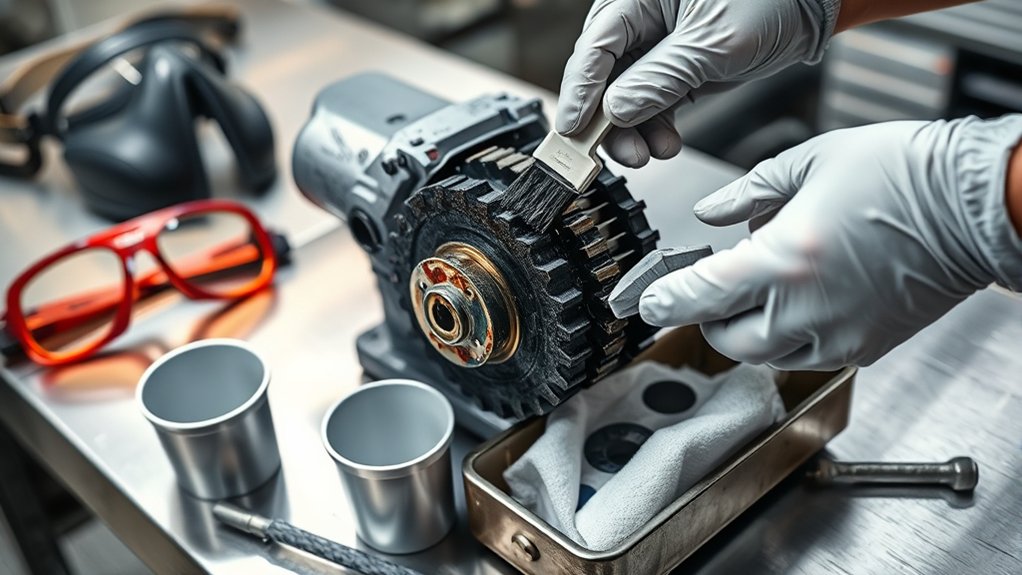
When it’s time to remove old grease, start by disassembling the gearbox so you can access every surface. This is the only way to get a thorough cleaning done.
Use a solvent like mineral spirits or a dedicated degreaser to break down the old grease. A soft-bristle brush or an old toothbrush works well for scrubbing stubborn buildup off gears and housing walls.
For hardened grease that won’t budge, carefully apply heat with a heat gun to soften it. Once you’ve removed the old lubricant, wipe everything down with lint-free cloths to avoid contaminating the fresh grease.
Always do this in a well-ventilated area and wear gloves and goggles. Chemical solvents can irritate skin and eyes on contact.
What Mistakes Should You Avoid When Greasing Your Angle Grinder?
When greasing your angle grinder, avoid overpacking the grease and skipping regular maintenance checks. Both mistakes lead to serious problems over time.
Overpacking Grease
Overpacking is one of the most common mistakes. When you fill the bearing housing with too much grease, it blocks airflow and creates fluid friction, both of which cause the gearbox to overheat fast.
Excess grease also gets flung off by centrifugal force during operation, leaving the actual gear teeth unlubricated. That defeats the whole purpose.
Stick to the 1/3 to 2/3 fill rule. About a teaspoon of the right grease is usually enough for most standard angle grinders. Check and adjust grease levels periodically to avoid dry gears, which cause steel-on-steel contact and potential gear damage.
Ignoring Regular Maintenance
Skipping regular maintenance leads to increased wear from steel-on-steel contact. Grease breaks down over time, losing its lubricating ability. Old grease can liquify and separate, leaving gears exposed.
Using the wrong type of grease can also hurt your grinder’s efficiency and shorten its lifespan. Always follow the manufacturer’s recommendations for grease type and change intervals, typically every six months to a year. Staying on top of these basics keeps your angle grinder in peak condition.
Essential Safety Tips for Handling Angle Grinder Grease
Safety starts with the right gear and good disposal habits. Here’s what to keep in mind.
Personal Protective Equipment (PPE)
Always wear safety goggles to protect your eyes from grease splashes and debris. Nitrile gloves prevent skin irritation and keep your hands clean during application.
If you’re using solvents to clean old grease, a dust mask or respirator helps you avoid inhaling fumes or airborne particles. Steel-toed boots protect your feet from heavy tools that might slip off the workbench. Make sure your workspace has proper ventilation to disperse any fumes.
Safe Disposal Practices
Never pour used grease down drains or toss it in regular trash. Both can cause environmental contamination. Store used grease in a sealed container until you can dispose of it properly.
Check for local recycling programs or hazardous waste collection events in your area. The EPA’s used oil management guidelines outline best practices for handling and recycling used lubricants. Wear gloves and safety goggles while handling used grease, and always follow your local regulations.
Troubleshooting Common Greasing Issues
Greasing issues can cause real performance problems if you don’t catch them early.
Overpacked gearbox: If the grinder runs hot and feels sluggish, there may be too much grease blocking airflow. Open the gearbox and remove excess grease until you’re within the manufacturer’s specifications.
Degraded grease: Inspect the grease for discoloration or drying. If it looks dark, crusty, or has separated, it’s no longer lubricating effectively. Replace it.
Grease on walls, dry gears: It’s normal for grease to get flung to the inside walls of the gearbox. If you find the gears are bone dry with grease packed around them, scrape some of that grease back onto the gears and consider a full repack.
Excessive heat: Monitor the grinder’s operating temperature. If the gearbox housing gets too hot to touch after short use, this likely means insufficient lubrication or overpacking. Either way, open it up and inspect.
Follow recommended grease change intervals, typically every six months to a year, and your angle grinder will last considerably longer.
Frequently Asked Questions
What Grease to Use on Angle Grinder Gears?
Use a high-speed grease with Molybdenum disulfide (MoS2) or a lithium-based grease. Fill the gearbox to about 1/3 capacity and check the grease every six months for best performance.
Does a Gear Box Need Grease?
Yes. Without grease, metal gears grind directly against each other, generating excessive heat and rapid wear. Lubricate every six months to keep gears smooth and prevent premature failure.
What Kind of Grease to Use in a Gearbox?
A high-speed grease with Molybdenum disulfide works well for most gearboxes. NLGI grade “00” to “2” types are common choices. Check and replace the grease every 1 to 6 months based on how heavily you use the tool.
How to Apply Grease to Gears?
Apply grease directly to the gear teeth using a small brush, spatula, or grease gun. Fill the housing adequately but avoid overpacking. Check the grease condition every six months to keep everything running smoothly.
Conclusion
Maintaining your angle grinder’s gearbox with the right grease is a lot like keeping a car engine properly oiled. Neglect it, and you’ll end up with inefficiency and breakdowns. A well-lubricated grinder performs better, runs cooler, and lasts longer. Stay proactive with your maintenance routine, and you’ll avoid the costly repairs that come from ignoring this simple but essential task.