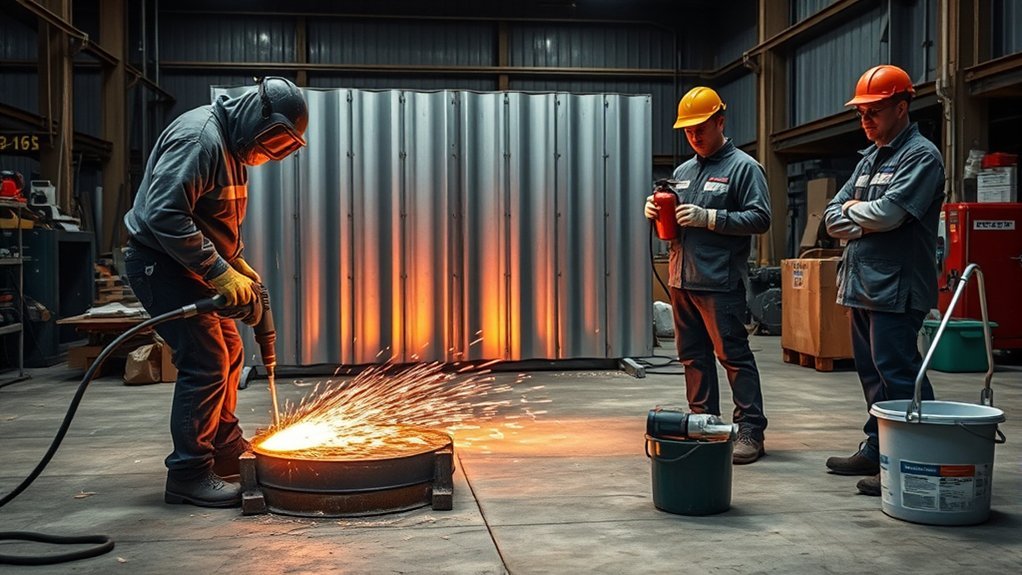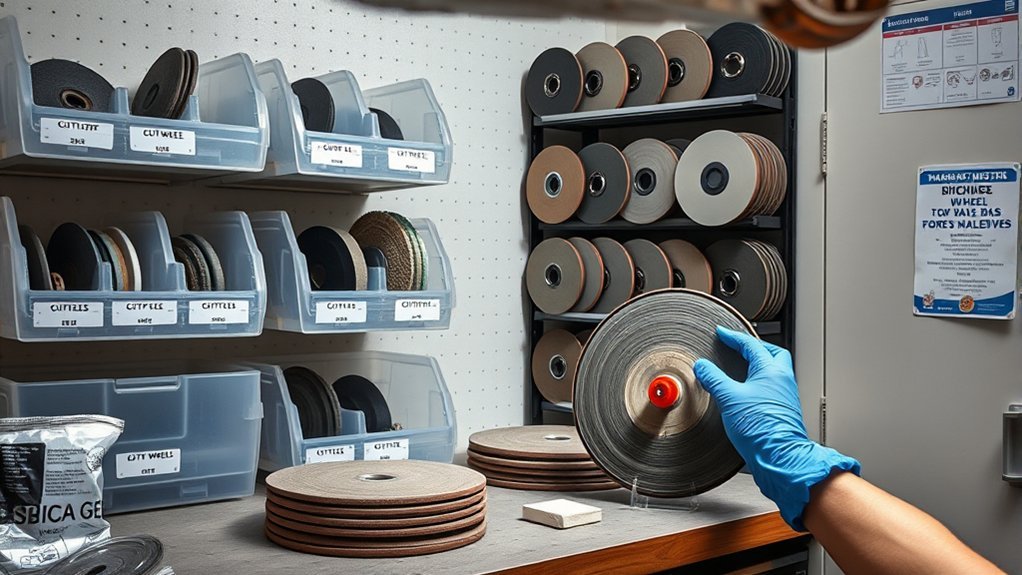
Cutoff and grinding wheels can suffer hidden damage from impact, moisture, poor support, or sudden temperature changes before you ever mount them. The safest storage method depends on the wheel’s size, shape, and bond. This guide shows you how to identify, clean, inspect, organize, handle, and store bonded abrasive wheels without warping or weakening them.
Quick Answer
Store bonded cutoff and grinding wheels in a dry, stable room protected from water, solvents, freezing, heat, vibration, and impact. Lay thin cutoff wheels flat on a rigid, level shelf. Support thicker straight wheels in a divided cradle or rack. Inspect labels and condition before mounting, and quarantine any wheel that was dropped or damaged.
Key Takeaways
- Store thin cutoff wheels flat on a rigid surface so they do not warp.
- Use cradles, partitions, bins, or purpose-built racks that match the wheel type.
- Keep wheels dry and away from condensation, freezing, oils, solvents, vibration, and falling objects.
- Use a dry brush or cloth for light cleaning. Do not wash or soak bonded wheels unless the manufacturer expressly allows it.
- Visually inspect every wheel before mounting, and use a ring test only when it is suitable for that wheel.
At a Glance
| Time Required | About 1–2 minutes per wheel; 30–60 minutes to organize a small storage area |
| Difficulty | Easy, but correct wheel identification matters |
| Tools Needed | Dry soft-bristle brush, clean cloth, labels, marker, dividers, and a rigid shelf or wheel rack |
| Cost | Low; usually limited to labels, dividers, and suitable shelving or a purpose-built rack |
What’s in This Article
- Identify the Wheel Before Storage
- Understanding the Importance of Safe Storage for Abrasive Wheels
- How to Clean Your Wheels Before Storage
- How to Store Different Wheel Types
- Ideal Storage Conditions for Safe Wheels
- Essential Handling Techniques for Abrasive Wheels
- Organize Your Storage for Maximum Efficiency
- Inspection and Maintenance: How to Ensure Your Wheels Are Safe
- Signs That Your Wheels Need Replacement
- Troubleshooting Stored Abrasive Wheels
- Understanding Legal Regulations for Abrasive Wheel Storage
- Frequently Asked Questions
- Conclusion
- Sources
Note: This guide focuses on bonded abrasive cutoff and grinding wheels. Flap discs, fibre discs, wire wheels, and diamond blades use different constructions and may need different storage. Follow the product label and manufacturer’s instructions whenever they are more specific.
Identify the Wheel Before Storage
Do not choose a storage position by diameter alone. First identify the wheel type, shape, bond, and intended machine. A thin resin-bonded cutoff wheel needs flat support, while a thicker straight grinding wheel may be stored on its edge in a properly designed cradle.
Before you store a wheel, read and preserve these markings:
- Wheel type and shape: such as a flat cutoff wheel, depressed-center grinding wheel, straight wheel, cup wheel, or cylinder wheel.
- Dimensions: outside diameter, thickness, and arbor-hole size.
- Maximum operating speed: shown in rpm, surface speed, or both.
- Material and use restrictions: including whether the wheel is for cutting, grinding, wet use, dry use, metal, masonry, or another material.
- Date or traceability marking: use any marked use-by or best-use date, lot code, and manufacturer guidance to manage old stock.
If the label, blotter, or printed markings are missing or unreadable, do not guess the wheel’s speed or intended use. Move it to the quarantine area until the manufacturer or supplier can identify it. If it cannot be identified, remove it from service.
Understanding the Importance of Safe Storage for Abrasive Wheels
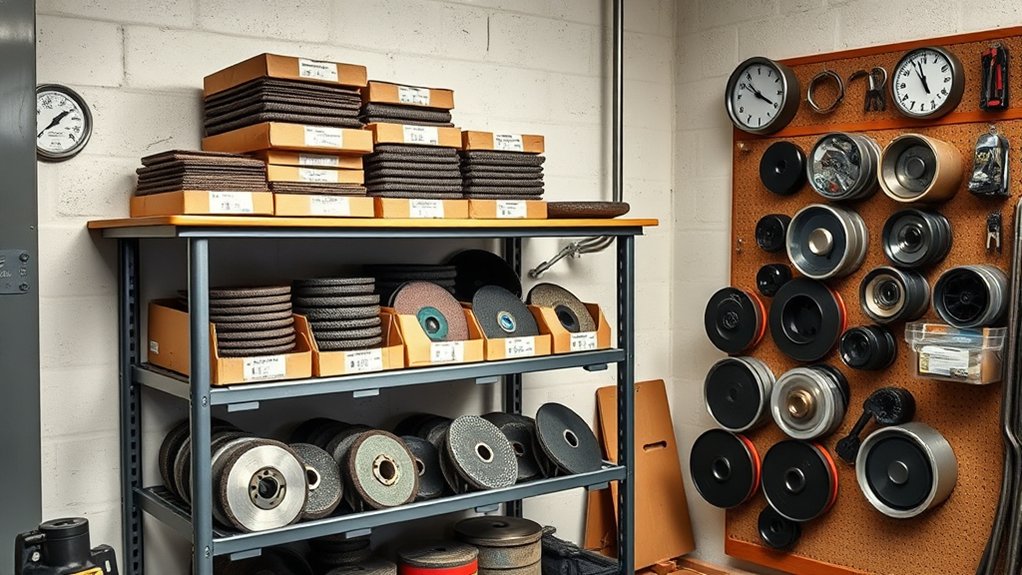
When you store cutoff and grinding wheels correctly, you protect the wheels, the grinder, and everyone near the work area. Poor storage can cause edge chips, cracks, warping, contamination, or hidden weakness. A wheel may look usable yet fail after it reaches operating speed.
Bad storage is not limited to leaving wheels on a wet floor. Damage can also come from a heavy tool placed on top, a rack that lets wheels fall against each other, repeated vibration, a forklift impact, freezing conditions, or condensation after a fast temperature change.
The safest system keeps every wheel supported in the position recommended for its type, separates it from loose tools, and allows you to remove one wheel without disturbing the rest. Keep the manufacturer’s safety information near the storage area so users can check special restrictions before mounting.
Abrasive wheels are breakable tools. Storage support, environmental control, and careful handling are part of the safety system, not just housekeeping.
How to Clean Your Wheels Before Storage
Clean only enough to expose the surface for inspection. For most bonded cutoff and grinding wheels, dry cleaning is the safest first choice. Dust and loose grit can hide chips or cracks, but soaking, washing, or applying solvents can affect some bonds and labels.
Cleaning Tools Required
Use a clean, soft-bristle brush and a dry, lint-free cloth. Keep metal scrapers, wire brushes, harsh cleaners, oils, and strong solvents away from the wheel unless the manufacturer specifically approves them for that product.
Inspect the wheel as you clean it. Check both faces, the outer edge, the arbor hole, and any attached hub or blotter. Look for cracks, chips, gouges, warping, crushed edges, delamination, moisture staining, or a damaged label.
Cleaning Techniques Explained
- Place the wheel on a clean, protected surface that fully supports it.
- Brush loose dust from the faces, edge, and arbor hole with light pressure.
- Wipe remaining dry dust with a clean cloth.
- Do not scrape the wheel with a metal tool or strike it against a bench.
- Return the wheel to the correct rack or flat shelf only after it is clean, dry, labeled, and inspected.
If a wheel has been soaked, exposed to oil or solvent, or contaminated by an unknown chemical, do not simply dry it and return it to service. Quarantine it and follow the manufacturer’s instructions.
Warning: Never use a wheel that shows a crack, chip, warped profile, damaged arbor hole, delamination, or other visible defect. Mark it “DO NOT USE” and keep it separate so another person cannot mount it by mistake.
How to Store Different Wheel Types
One storage method does not fit every abrasive wheel. Use the wheel maker’s instructions first. The table below shows common storage methods for bonded wheels.
| Wheel Type | Recommended Support | Main Risk to Avoid |
|---|---|---|
| Thin organic-bonded cutoff wheels | Lay flat and horizontal on a rigid, level steel shelf or similar solid surface. Do not place loose blotters between stacked thin wheels unless supplied and required by the manufacturer. | Warping, bending, moisture, and uneven pressure |
| Thick straight or tapered wheels | Support on the edge or a central support in a cushioned cradle with chocks or partitions that prevent rolling and falling. | Rolling, edge impact, and toppling |
| Small bonded wheels | Use divided boxes, bins, or drawers that contain no loose tools or metal parts. | Chipping, mixing sizes, and label loss |
| Cylinder and large straight cup wheels | Store on the flat side with suitable cushioning between wheels, or use a dedicated rack designed for that shape. | Edge chipping and unstable stacks |
| Cup and specialty-shaped wheels | Use the original packaging or a rack that supports the body without loading fragile edges. | Chipped rims and point loading |
Pro Tip: Keep wheels in their original packaging until needed when the packaging supports and protects them correctly. Add the received date to the package and issue older suitable stock first.
Products Worth Considering

【Heavy-Duty Capacity】 This set of 8 caster wheels has a total weight capacity of 1000 lbs.These casters constructed with ball bearings,which provide smooth swivel action and easy direction changes rollability

Installation Instructions: Only fit to boltless self locking shelving rack, Rack posts as picture ( Before purchasing, please confirm your rack post type); Easy to install, Package include bolts and washers

Installs on your existing storage rack. After installing these wheels, your shelf can easily roll and no longer has to be stationary.
Ideal Storage Conditions for Safe Wheels
Store cutoff and grinding wheels in a dry room that is not exposed to extreme temperatures or rapid temperature swings. Prevent freezing and any condition that can cause condensation on the wheel. Keep racks away from open doors, wet floors, wash areas, heaters, direct heat, oils, solvents, and chemical vapors.
Choose a stable location away from forklift routes, crane loads, vehicle traffic, welding spatter, falling stock, and excessive vibration. The shelf or rack must be strong enough for the full load and anchored when needed. Wheels should not protrude into walkways or beyond supports where an edge can be struck.
Use partitions so wheels do not lean into one another. Arrange the storage area so you can remove one wheel without lifting, dragging, or knocking several others. Do not toss wheels into drawers or bins with wrenches, flanges, nuts, or other metal parts.
Storage Area Checklist
- The room is dry, frost-free, and free from condensation.
- Wheels are separated from water, oil, coolant, solvents, and unknown chemicals.
- Thin cutoff wheels lie flat on a rigid, level surface.
- Large wheels have cradles, chocks, partitions, or central supports.
- Heavy wheels stay on lower shelves, with safe lifting access.
- No tools, castings, stock, or spare parts sit on top of wheels.
- The rack is away from traffic, vibration, sparks, and falling-object hazards.
- Manufacturer instructions and a quarantine area are easy to find.
Essential Handling Techniques for Abrasive Wheels
Safe handling starts before the wheel reaches the storage rack. Carry each wheel with control, keep your hands clean and dry, and avoid bumping the edge against a bench, door frame, or another wheel. Do not throw, drop, or roll a wheel across a hard floor.
Safe Transportation Methods
- Use the original container when practical: Packaging can protect labels, edges, and flatness during movement.
- Use carts, trucks, or suitable carriers: Move heavy wheels with full support instead of rolling them.
- Separate wheels during transport: Use dividers or cushioning so the wheels cannot collide.
- Secure the load: Prevent wheels from tipping, sliding, or being crushed by other items.
- Inspect after movement: Check for new chips, cracks, warping, or package damage before storage or mounting.
Proper Storage Practices
Use dedicated storage for new and partly used wheels. Keep each wheel’s label or packaging with it, and do not mix wheels that look similar but have different speed ratings, dimensions, or material restrictions.
For portable grinders, protect the mounted wheel whenever you set the tool down. A dedicated tool rack should keep the wheel from touching the floor, wall, bench, or other tools. Norton advises removing abrasive wheels from portable grinders for overnight storage and when transporting the machine between worksites. Follow the grinder and wheel manufacturer’s instructions for your exact setup.
What to Do After a Drop or Impact
Stop using the wheel and move it to quarantine. A drop can create damage that is not easy to see. Mark the wheel so no one mounts it while you check the manufacturer’s instructions or contact the supplier.
Do not rely on a ring test to clear a thin cutoff wheel, small wheel, mounted wheel, or another shape for which the test is not suitable. If damage is suspected or the manufacturer cannot confirm the wheel is safe, remove it from service.
Inspection Before Use
Inspect every wheel immediately before mounting. Check the wheel, label, arbor hole, flanges, guard, and grinder speed. The grinder’s no-load speed must not exceed the maximum operating speed marked on the wheel.
Wear suitable eye and face protection when mounting and using abrasive wheels, along with any hearing, respiratory, hand, foot, or body protection required by the task and your risk assessment.
Organize Your Storage for Maximum Efficiency
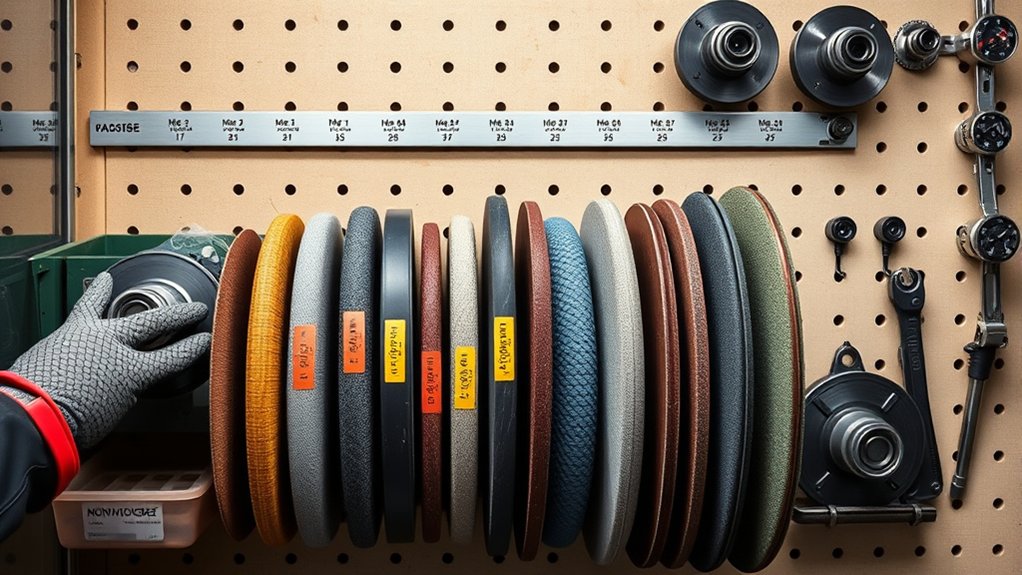
Organized storage saves time and reduces handling. Create separate, clearly marked sections for cutoff wheels, grinding wheels, cup wheels, and other bonded products. Within each section, separate wheels by diameter, thickness, arbor size, maximum speed, and intended material.
Place frequently used wheels where they can be removed without reaching over unstable stacks. Store heavy wheels on lower shelves. Keep thin cutoff wheels flat, and use dividers or trays that prevent the stack from sliding or bending.
Label each location with the wheel type and key restrictions. Where practical, keep the original package label visible. Record the date received, manufacturer, lot or traceability code, marked use-by date, and inspection status.
Products Worth Considering

【Heavy-Duty Capacity】 This set of 4 caster wheels has a total weight capacity of 500 lbs.These casters constructed with ball bearings,which provide smooth swivel action and easy direction changes rollability

500 lbs Heavy-Duty Design: Each set includes 4 caster wheels with a combined load capacity of 500 lbs, perfect for keeping robust shelving units mobile and meeting all your storage needs. The galvanized surface offers protection against corrosion and rust

Strong & Durable Build: Made from premium carbon steel, this tire stand supports up to 275 lbs, providing a secure solution for most standard car, SUV, and truck tires.
Use a Quarantine Area
Create a separate, clearly marked container or shelf for wheels that are dropped, wet, contaminated, unlabeled, expired, or otherwise questionable. The quarantine area should prevent accidental reuse while a competent person checks the product instructions or contacts the manufacturer.
Rotate Stock and Keep Records
Issue older suitable stock before newer stock. A simple log can record delivery dates, inspection findings, damage events, and disposal. This is especially useful in shared workshops where several people handle the same wheel inventory.
Inspection and Maintenance: How to Ensure Your Wheels Are Safe
Check wheels when they arrive, before they enter storage, after any move or impact, and immediately before mounting. Inspection is not a one-time delivery task. Storage conditions can change, and a wheel may be damaged by another item long after it was received.
Visual Inspection Checklist
- Cracks, chips, gouges, missing sections, or damaged reinforcement
- Warping, cupping, twisting, or an uneven profile
- A crushed, enlarged, or damaged arbor hole
- Water, oil, solvent, coolant, or unknown chemical exposure
- Loose hubs, delamination, damaged blotters, or missing labels
- A marked use-by date that has passed
- A maximum speed or intended use that does not match the grinder and job
When and How to Use a Ring Test
A ring test is one inspection method for suitable bonded grinding wheels, especially some vitrified wheels. It is not a universal test for every cutoff or grinding product. Small wheels, mounted wheels, plugs, cones, segments, plate-mounted wheels, and several specialty shapes may not be practical to ring test. Organic-bonded wheels also do not produce the same clear metallic tone as vitrified wheels.
In United States workplaces, OSHA 29 CFR 1910.215 requires close inspection and sounding immediately before mounting. Use the manufacturer’s instructions and competent workplace procedures to determine the correct test for the wheel.
When a ring test is suitable:
- Make sure the wheel is clean, dry, and free from sawdust or other material that can deaden the sound.
- Support a light wheel through its arbor hole on a finger or small pin. Support a heavy wheel as directed by the manufacturer.
- Tap gently with a light, nonmetallic tool, such as a plastic screwdriver handle or wooden mallet.
- Tap about 45 degrees to each side of the vertical centerline and about 1–2 inches from the edge, then rotate the wheel 45 degrees and repeat.
- Do not use a wheel that gives a dead, cracked, or suspiciously different sound compared with an equivalent sound wheel.
Note: A ring test does not prove that a wheel is safe. It supplements the visual inspection and manufacturer’s instructions. It should never be used to justify mounting a wheel that was dropped, visibly damaged, contaminated, or incorrectly labeled.
Signs That Your Wheels Need Replacement
Remove a cutoff or grinding wheel from service when you find damage, cannot verify its identity, or have reason to suspect hidden weakness. Do not save a questionable wheel for a smaller or “quick” job.
- Cracks, chips, gouges, missing pieces, delamination, or exposed reinforcement
- Warping, cupping, twisting, or an uneven edge
- A damaged arbor hole, hub, blotter, or mounting surface
- Exposure to water, oil, solvents, chemicals, freezing, or severe heat outside the manufacturer’s limits
- A drop, collision, crushed package, or other impact that may have caused hidden damage
- A missing or unreadable speed rating, type marking, or use restriction
- A passed use-by date when one is marked or required by the manufacturer
- Unexpected vibration, wobble, cracking sounds, or unusual noise during the pre-use test run
Slow cutting, glazing, loading, excess dust, or rapid wear can also signal the wrong wheel, poor technique, contamination, or a machine problem. Stop and inspect the full setup instead of assuming storage damage is the only cause.
Quarantine and Disposal
Mark rejected wheels “DO NOT USE,” segregate them from serviceable stock, and make them unavailable for remounting. Follow the wheel manufacturer’s disposal instructions and local waste rules. Do not leave rejected wheels in an open scrap bin where someone may retrieve them.
Troubleshooting Stored Abrasive Wheels
| Problem | What to Do |
|---|---|
| The wheel was dropped | Quarantine it immediately. Do not mount it until the manufacturer’s instructions or supplier confirms the correct action. Replace it whenever damage is suspected. |
| The wheel became wet or oily | Do not wash and reuse it. Quarantine it and follow the manufacturer’s guidance because liquid exposure can affect some bonds. |
| The label is missing | Do not guess the speed, size, or application. Identify it through the manufacturer or remove it from service. |
| A thin cutoff wheel is warped | Reject it. Check that the remaining thin wheels are stored flat on a rigid, level shelf without uneven loads. |
| The package is crushed | Inspect every wheel in the package and quarantine any wheel with visible or suspected damage. |
| The wheel vibrates during a test run | Switch off, isolate the tool, and inspect the wheel, flanges, arbor, guard, mounting, and grinder. Do not continue until the cause is corrected. |
| Old stock has no clear shelf-life guidance | Check the lot code and manufacturer’s instructions. Contact the manufacturer or supplier before use when age or storage history is uncertain. |
Understanding Legal Regulations for Abrasive Wheel Storage
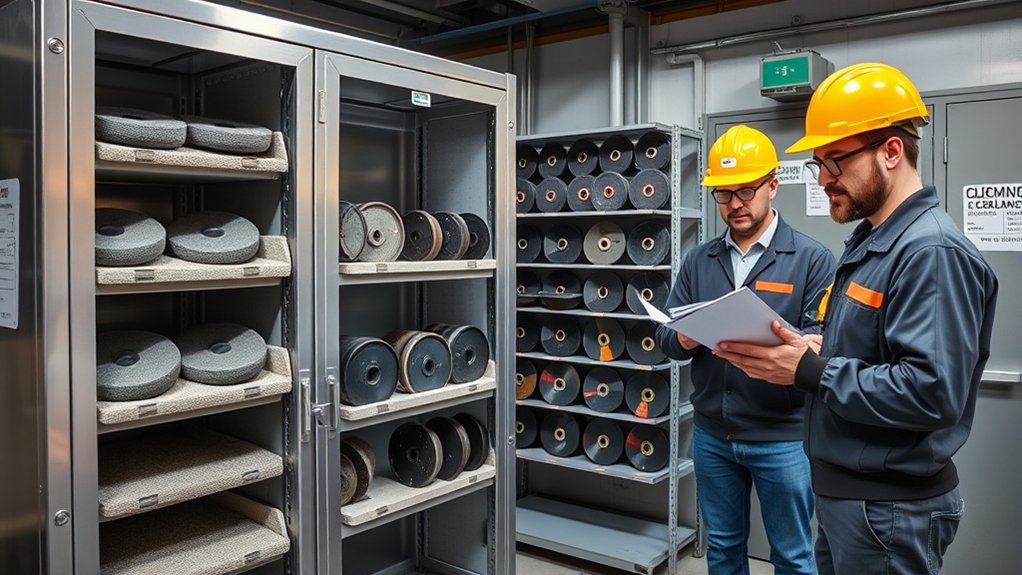
Legal duties depend on your country, industry, and workplace. Manufacturer instructions, training, inspection, machine guarding, speed compatibility, and safe systems of work can all form part of compliance.
United States Requirements
For covered workplaces, OSHA 29 CFR 1910.215 covers abrasive wheel machinery, including guarding, flanges, inspection, ring testing, and speed checks before mounting. Portable abrasive grinders are also addressed in OSHA 29 CFR 1910.243. State-plan rules and industry-specific standards may add requirements.
United Kingdom Requirements
The Health and Safety at Work etc. Act 1974 sets broad workplace safety duties. The Provision and Use of Work Equipment Regulations 1998, or PUWER, require work equipment to be suitable, maintained, inspected, and used by people with adequate information, instruction, and training. HSE publication HSG17, Safety in the Use of Abrasive Wheels, gives practical guidance on examination, handling, storage, mounting, and use.
Other Locations
In Canada, occupational health and safety duties are mainly set by provincial, territorial, and federal rules, depending on the workplace. The Canadian Centre for Occupational Health and Safety provides practical handling and storage guidance. In other countries, check the current rules issued by your workplace safety authority.
Safe abrasive wheel storage supports accident prevention, equipment control, worker training, and workplace compliance.
- Use competent people: Anyone selecting, inspecting, mounting, or managing abrasive wheels should have suitable information and training.
- Follow manufacturer instructions: Keep wheel and grinder manuals, labels, safety leaflets, and restrictions available.
- Inspect and document: Check storage racks, wheels, labels, and housekeeping at a frequency based on risk.
- Control damaged stock: Use a quarantine and disposal process that prevents rejected wheels from returning to service.
- Provide suitable PPE: Select eye, face, hearing, respiratory, hand, foot, and body protection through the task risk assessment.
Note: This section gives general safety information, not legal advice for a specific workplace. Check the current law and official guidance that apply where you work.
Frequently Asked Questions
How should grinding wheels be stored?
Store bonded grinding wheels in a dry, stable area away from condensation, freezing, chemicals, vibration, and impact. Use storage designed for the wheel shape. Thick straight wheels may use divided cradles or racks, while thin cutoff wheels should normally lie flat on a rigid, level surface.
Can cutoff wheels be stored vertically?
Thin organic-bonded cutoff wheels should generally be stored flat and horizontal on a rigid surface to prevent warping. Do not place them upright merely because a rack has vertical slots. Follow the wheel manufacturer’s instructions when they specify another supported method.
How do you safely use a cutoff wheel?
Inspect the wheel and label, verify that the tool speed does not exceed the wheel’s maximum rating, use the correct guard and flanges, wear suitable PPE, and run the tool in a protected position before cutting. Keep the cut straight, do not twist or side-load the wheel, and stop for vibration or unusual noise.
How do you store, handle, and transport abrasive wheels safely?
Use the original packaging or a carrier that fully supports the wheels. Keep them separated, secure the load, and use a cart for heavy wheels. Do not drop, throw, roll, or place tools on them. Inspect the wheels after transport and before mounting.
What storage method should you avoid with cutting wheels?
Avoid unsupported vertical storage, uneven stacks, damp shelves, loose bins with metal tools, and heavy objects on top of the wheels. Keep thin cutoff wheels flat and evenly supported so they cannot bend or warp.
Can you use a cutoff wheel after it gets dropped?
Do not mount it immediately. Quarantine the wheel because an impact can create hidden damage. Follow the manufacturer’s instructions or contact the supplier. If damage is visible or suspected, replace the wheel. A ring test is not a reliable clearance test for many thin or small cutoff wheels.
Do abrasive cutoff and grinding wheels expire?
Some organic-bonded wheels carry a use-by or best-use date, while other products rely on manufacturer shelf-life instructions and traceability codes. Follow the marked date and product guidance. When the age or storage history is uncertain, ask the manufacturer before use.
Can you clean a grinding wheel with water?
Do not wash or soak a bonded abrasive wheel unless its manufacturer expressly permits that method. Use a dry soft brush or cloth for storage cleaning. Quarantine a wheel that has been soaked or exposed to an unknown liquid.
Conclusion
Safe abrasive wheel storage starts with identifying the product and supporting it correctly. Lay thin cutoff wheels flat, place thicker wheels in suitable cradles or divided racks, and keep every wheel dry, labeled, and protected from impact. Inspect wheels at delivery, after movement, and before mounting. When a wheel is dropped, damaged, wet, expired, or unidentified, quarantine it instead of taking a chance.
Sources
- OSHA 29 CFR 1910.215, Abrasive Wheel Machinery — inspection, ring testing, maximum speed, flanges, and guarding
- OSHA 29 CFR 1910.243, Guarding of Portable Powered Tools — portable abrasive grinder inspection and mounting requirements
- HSE HSG17, Safety in the Use of Abrasive Wheels — examination, handling, wheel-specific storage, training, and mounting guidance
- HSE, Provision and Use of Work Equipment Regulations 1998 Overview — current UK work-equipment duties
- CCOHS, Handling and Storing of Bonded Abrasive Wheels — storage conditions, rack selection, transport, and ring-test limits
- Norton Abrasives, Proper Handling and Storage of Grinding Wheels — wheel-specific rack design, flat storage for thin cutoff wheels, and portable-tool storage