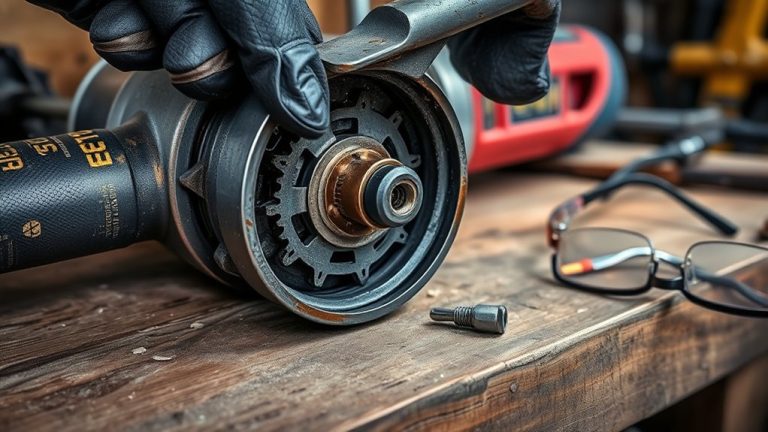
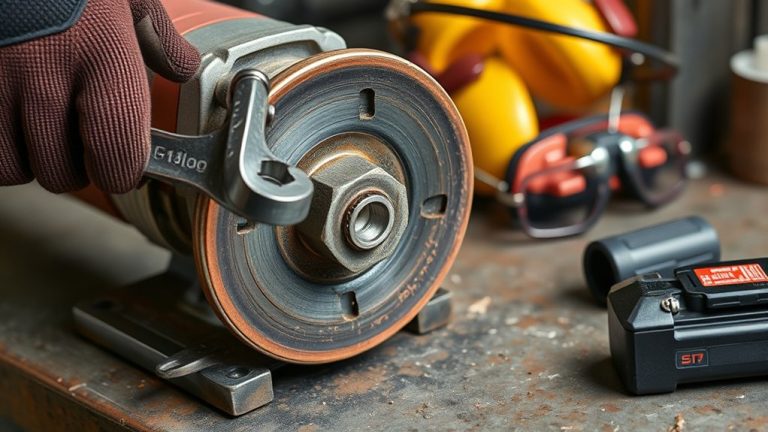
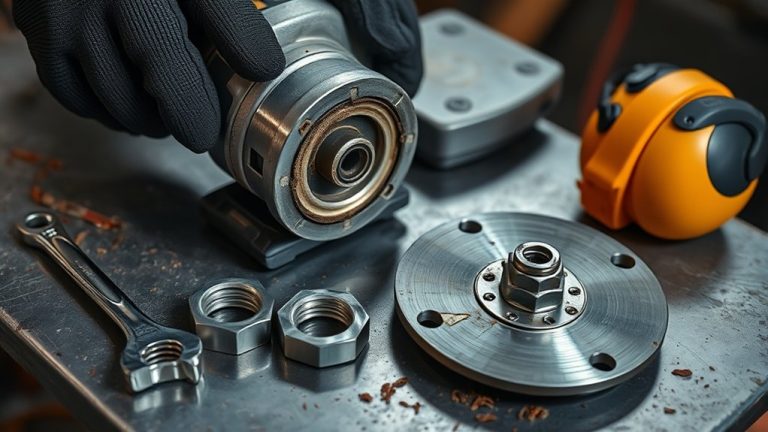
If your angle grinder guard won’t stay in place, check for missing spacers or debris that may obstruct fit. Make certain locking tabs engage securely and tighten screws appropriately—avoid over-tightening, which can cause misalignment. Before use, conduct a stability tug test and confirm everything aligns with manufacturer guidelines. Regular maintenance is essential for preventing issues. For a deeper understanding of causes, effective fixes, and key safety practices, there’s more important information to explore.
Identify Common Causes of Loose Grinder Guards
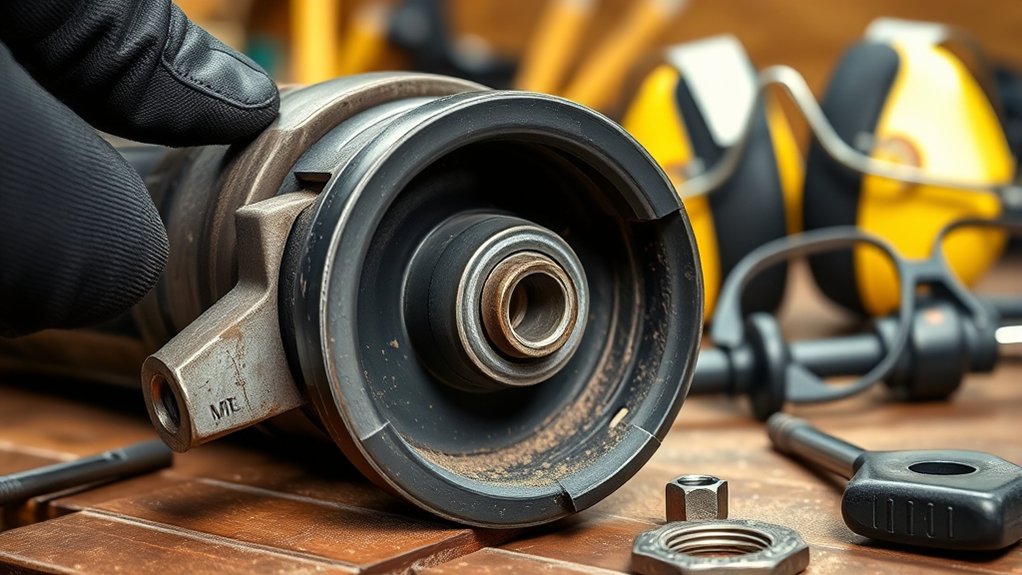
A loose guard on an angle grinder can pose serious safety risks, so it’s crucial to identify common causes quickly. One frequent issue arises from missing spacers necessary for proper alignment and fit. Without these spacers, the guard can misalign, leading to instability and an increased likelihood of slipping during operation.
Over-tightening screws might seem like a solution, but it often creates misalignment problems that prevent the guard from securing correctly. Additionally, debris or burrs on the grinder’s hub can obstruct a snug fit, highlighting the significance of regular cleaning and inspection.
Lastly, a worn-out cam lock can contribute to a loose guard, stressing the importance of routine maintenance checks. By understanding these factors, you can guarantee your angle grinder operates safely and effectively, liberating you from potential hazards while working.
Fixing a Slipping Grinder Guard: A Step-by-Step Guide
Loose guards can greatly affect the performance of your angle grinder, making it essential to address slipping issues promptly. Follow these steps to secure your guard effectively:
Loose guards can significantly impact your angle grinder’s performance, so it’s crucial to address slipping issues without delay.
- Check Locking Tabs: Confirm that the locking tabs click securely into place. This is critical before you tighten the cover plate to prevent slippage during operation.
- Inspect Spacers: Verify that there are no missing spacers that might be necessary for a snug fit between the guard and the grinder body.
- Tighten Screws: Firmly tighten the screws, but avoid overtightening, as this can misalign the guard. Regularly inspect for debris or burrs on the mounting surfaces that could hinder stability.
Finally, verify the guard’s stability before using the grinder, especially with a diamond-tipped stone disc, to guarantee peak safety and performance.
Key Safety Checks to Perform Before Using Your Grinder
Before using your grinder, confirm the guard is securely locked in place with all locking tabs engaged. Check for missing spacers or debris that could affect the guard’s fit, and guarantee everything is aligned and tightened per the manufacturer’s guidelines. These steps are essential for maintaining stability and safety during operation.
Guard Stability Verification
Making certain the guard of your angle grinder is stable is essential for safe operation. To verify guard stability, follow these key steps:
- Check Locking Tabs: Confirm the guard’s locking tabs are clicked into place and aligned with the grinder body slots to prevent guard alignment issues.
- Tighten Screws: Verify that all screws on the cover plate are firmly tightened but not overtightened; excessive force can disrupt securing mechanisms and lead to instability.
- Inspect for Debris: Examine the guard for any debris or burrs that may hinder a snug fit. Regularly check for missing spacers to eliminate gaps.
Conduct a gentle tug test on the guard before use to confirm it’s securely positioned, as a loose guard presents serious safety hazards.
Proper Assembly Confirmation
After verifying guard stability, the next step involves confirming the proper assembly of your angle grinder. Begin with guard alignment techniques; make certain the locking tabs click securely, aligning with the grinder body to prevent movement. Check that all spacers are in place, following spacer installation tips to eliminate any gaps that could lead to misalignment. When securing the cover plate, use tightening screw methods to fasten firmly but avoid overtightening, which can disrupt the guard’s function. Inspect for debris or burrs on both the guard and grinder, cleaning as needed to make certain of a snug fit. Finally, manually test the guard’s alignment before starting the grinder to guarantee safety during use.
User Experiences: Troubleshooting Tips for Grinder Guards
When troubleshooting grinder guards, it’s essential to identify common issues that can lead to safety hazards during operation. User experiences highlight several key areas to focus on for effective guard adjustments.
- Check for Missing Spacers: Many users have reported that loose guards often stem from missing spacers or misaligned locking tabs. Ensuring all components are present can prevent instability.
- Inspect for Debris: Regularly inspecting for debris or burrs is vital; these can obstruct a snug fit and compromise guard performance.
- Tighten Screws Properly: User testimonials emphasize the importance of firmly tightening screws without overtightening, which can cause misalignment and further issues.
Preventive Maintenance for Angle Grinder Guards
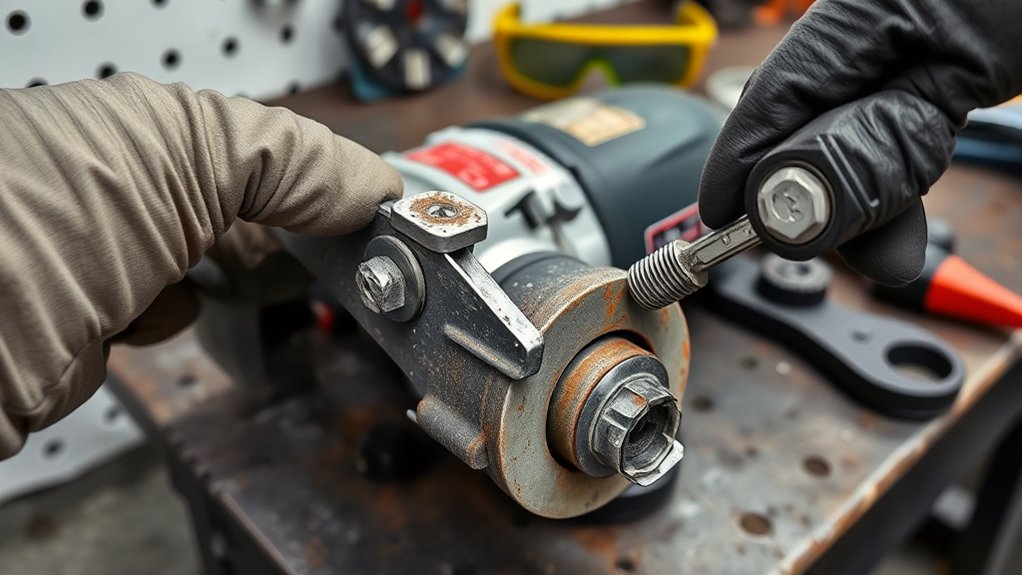
Preventive maintenance for angle grinder guards is essential for ensuring safety and performance. Regularly inspect the guard for wear and tear, focusing on locking tabs and cam mechanisms to confirm they’re functioning properly. Clean the guard and surrounding areas to eliminate debris or burrs that could disrupt a snug fit, compromising safety. Pay attention to guard material selection; high-quality materials can greatly enhance durability. Check for any missing spacers to prevent gaps between the guard and grinder housing, which can lead to instability. Tighten screws firmly, but avoid overtightening to prevent misalignment. Stay informed about guard design evolution, as advancements may influence maintenance practices. If necessary, consider aftermarket guard options that align with your specific needs. Always follow manufacturer guidelines for peak performance and safety, ensuring your angle grinder operates effectively throughout its service life.
Essential Tools and Equipment for Grinder Guard Repairs
Having the right tools and equipment for grinder guard repairs is essential for efficient and safe maintenance. Proper tool organization enhances your workflow and guarantees you have what you need for effective repair techniques. Here are three indispensable items to keep on hand:
- Screwdriver Set: For adjusting and securing screws during component inspection.
- Torque Wrench: To tighten screws to the manufacturer’s specifications, preventing damage from overtightening.
- Pliers: Ideal for handling small components like spacers and cam locks.
Additionally, having replacement parts available will speed up repairs, while a clean workspace with good lighting facilitates easier assembly and troubleshooting. Don’t forget your safety gear—gloves and goggles are critical for protecting yourself from debris and potential injuries during the repair process. Equip yourself well, and you’ll maintain your grinder guard effectively and safely.
Frequently Asked Questions
Why Does My Grinding Wheel Keep Falling Off?
Your grinding wheel keeps falling off due to improper installation, spindle lock issues, or excessive wear. Check all components, guarantee tight fittings, and address any debris on the spindle to secure the wheel effectively.
How to Position Guard on Angle Grinder?
To position the guard on your angle grinder, align the tab, rotate to the desired angle, and engage the quick lock. Follow guard adjustment tips and safety precautions for ideal maintenance practices and safe operation.
How Close to the Grinding Wheel Should the Tongue Guard Be Placed?
Position the tongue guard within 1/8 inch of the grinding wheel to guarantee safety compliance standards. Regular guard adjustment is essential; it minimizes hazards and emphasizes the tongue guard’s importance in protecting you during operation.
What Are Common Grinder Machine Problems?
Common grinder problems include excessive vibrations, which may indicate imbalance or wear, and overheating issues from inadequate cooling. Regular maintenance tips like cleaning and lubrication can enhance performance and prolong the tool’s lifespan.
Conclusion
In conclusion, ensuring your angle grinder guard stays secure is essential for both safety and efficiency. By diagnosing common causes and implementing effective fixes, you can prevent mishaps that may arise from a loose guard. Think of your grinder as a ship; without a sturdy sail, it won’t navigate the waters safely. Regular maintenance and safety checks will keep your equipment in top shape, ensuring smooth sailing in your projects. Stay vigilant and work smart!