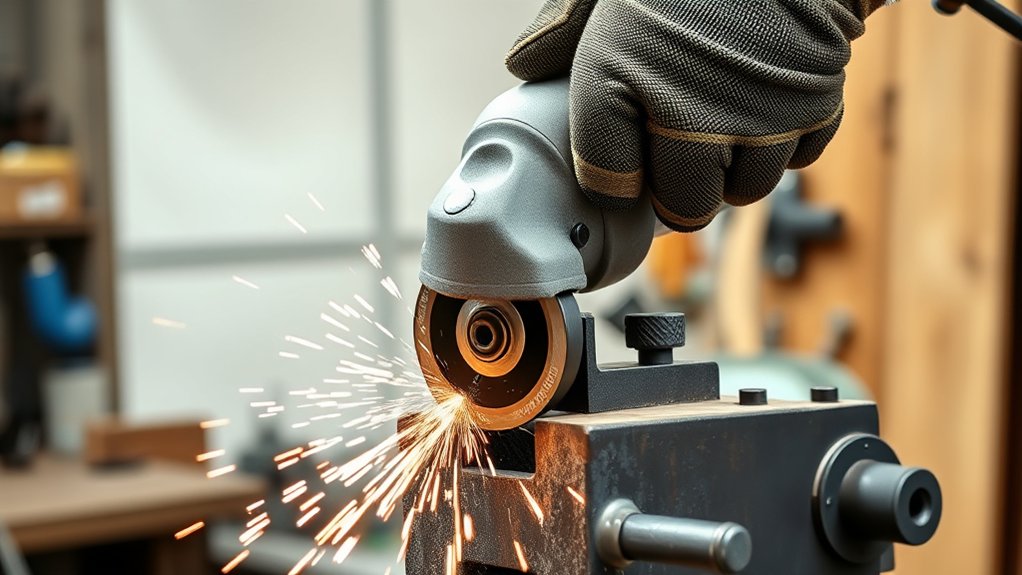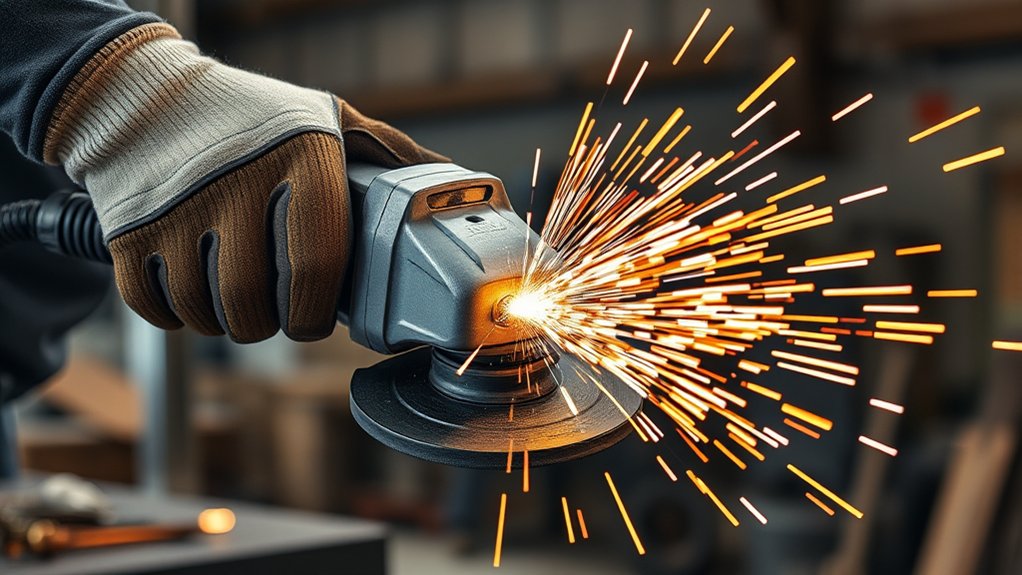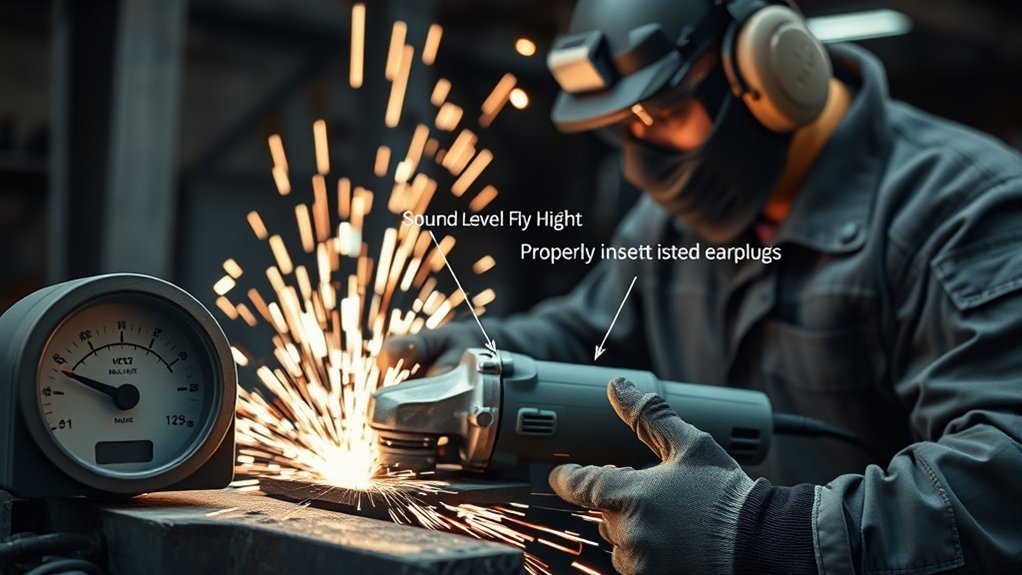
Hand-held angle grinders can produce about 90 to 115 dB(A), depending on the grinder, wheel, material, pressure, and work area. At those levels, the recommended daily noise allowance can be used up quickly. Wear fitted hearing protection before startup, use earplugs under earmuffs when measured noise reaches 100 dBA or more or includes impulse noise, and reduce noise at the wheel, workpiece, and workspace.
Last updated: July 23, 2026 · Method: This guide synthesizes published safety guidance and does not claim original noise measurements. · Author: [VERIFY: add the real author name and relevant credentials before publishing.]
Quick Answer
Angle grinders commonly create hazardous task noise, and published guidance reports about 90 to 115 dB(A) for hand-held models. Wear properly fitted earplugs or earmuffs before the wheel starts, use double protection for measured noise of 100 dBA or more or impulse noise, and reduce exposure with the correct wheel, a firmly clamped workpiece, good maintenance, distance, and barriers.
Key Takeaways
- Measure the actual grinding task when possible because noise varies by tool, wheel, material, and room.
- NIOSH treats repeated exposure at 85 dBA or higher as hazardous and uses a 3 dB exchange rate.
- Choose hearing protection by measured exposure and fit, not by the highest Noise Reduction Rating alone.
- Keep the guard installed, use the correct wheel and guard combination, and inspect the tool before every job.
- Ringing, muffled hearing, new rattling, strong vibration, or a hot smell are reasons to stop and investigate.
How Loud Is an Angle Grinder?
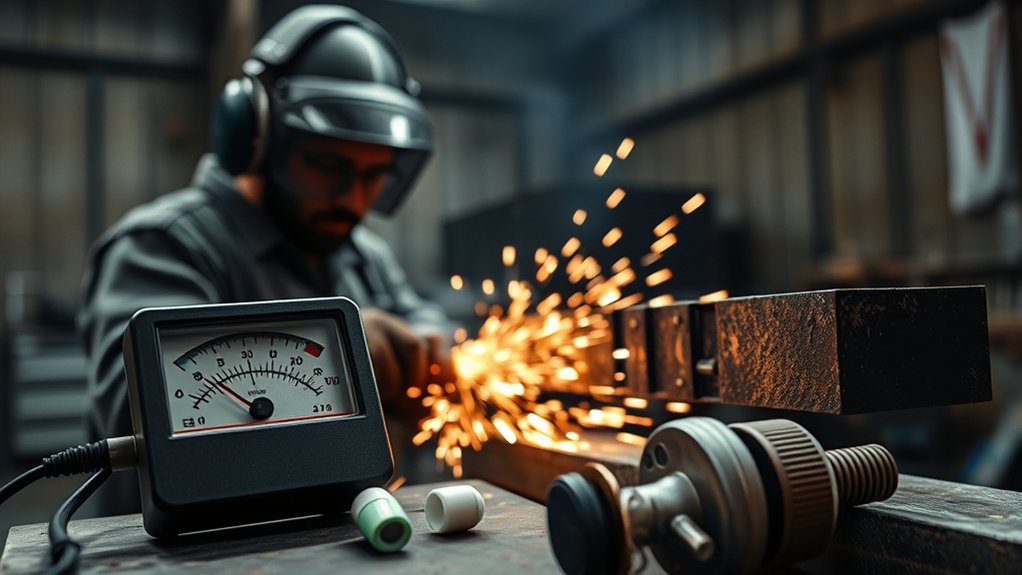
An angle grinder creates sound from the motor, airflow, gears, wheel, and contact with the workpiece. Cutting thin sheet, rough-grinding a weld, sanding wood, and grinding masonry can produce very different sound levels. Enclosed or reflective spaces can also raise the noise that reaches your ears.
WorkSafe Victoria reports that hand-held angle grinders can produce about 90 to 115 dB(A). That is a broad task range, not a guaranteed level for every grinder. No-load motor noise may be much lower than the sound produced when the wheel contacts thin sheet, a weld, concrete, or another resonant surface.
Manufacturer-declared sound pressure values vary by model and test method, and they are not a substitute for measuring the complete task. The wheel type and condition, material, load, contact time, distance, room reflections, ventilation, and nearby equipment can all change the sound at the operator’s ears.
The National Institute for Occupational Safety and Health (NIOSH) recommends an eight-hour occupational limit of 85 dBA and halves the recommended exposure time for every 3 dB increase. Noise dose also combines across the day, so several short grinding tasks can add up to a full daily dose.
A 3 dB increase doubles sound energy, so a small change on the meter can cut the recommended exposure time in half.
Products Worth Considering

7 amp AC/DC, 12,000 rpm motor of the angle grinder is designed for faster material removal and higher overload protection
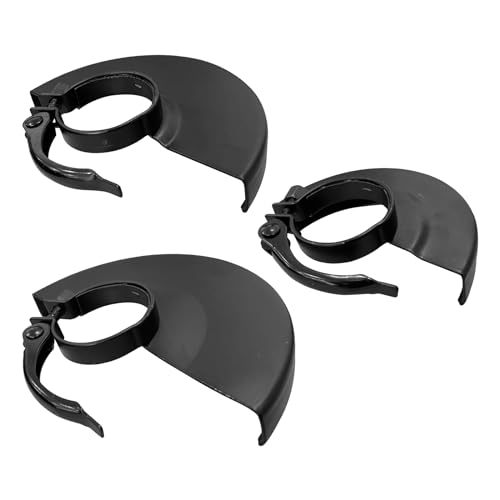
HIGH QUALITY MATERIAL: Angle grinder protective cover is made of iron material with good wear resistance and durability.

Universal Compatibility: fitment for many brand Angle Grinder.Most angle grinders can be seamlessly replaced according to their size.
Noise Exposure Time Adds Up Quickly
The table below shows the NIOSH daily exposure durations for steady noise. These are recommended exposure limits, not guarantees that hearing damage cannot occur. Individual risk varies, and hearing protection should be used whenever grinding noise is hazardous.
| Noise Level | NIOSH Recommended Daily Duration |
|---|---|
| 85 dBA | 8 hours |
| 88 dBA | 4 hours |
| 91 dBA | 2 hours |
| 94 dBA | 1 hour |
| 97 dBA | 30 minutes |
| 100 dBA | 15 minutes |
| 103 dBA | 7.5 minutes |
Daily-dose example: Thirty minutes at 94 dBA uses about half of the NIOSH daily allowance at that level. Another 7.5 minutes at 100 dBA uses the other half. Together, those two short tasks equal a full recommended daily noise dose before other shop noise is counted.
Note: In U.S. general industry, OSHA requires a hearing conservation program at an eight-hour time-weighted average of 85 dBA and applies a 90 dBA eight-hour permissible exposure limit. NIOSH uses the more protective 85 dBA recommended exposure limit and a 3 dB exchange rate.
Why Is Hearing Protection Essential When Grinding?
Hearing protection matters because noise exposure is cumulative. Several short grinding jobs, nearby tools, compressors, and metal impact noise can combine into a hazardous daily dose even when no single task feels long.
Loud grinding can cause ringing, buzzing, muffled hearing, trouble understanding speech, and permanent noise-induced hearing loss. High noise can also reduce situational awareness, making it harder to hear alarms, coworkers, vehicles, or moving equipment.
Put on hearing protection before starting the grinder. Do not wait for discomfort; harmful noise can occur without pain.
Warning: Stop the noise exposure if you develop ringing or muffled hearing. Seek prompt medical care for sudden hearing loss, especially in one ear, because the National Institute on Deafness and Other Communication Disorders treats sudden deafness as a medical emergency.
Choosing the Right Hearing Protection for Grinding
Choose hearing protection from the measured or estimated exposure, the length of the job, and how well the protector fits. The printed Noise Reduction Rating (NRR) is a laboratory value; real protection can be much lower when plugs are inserted poorly or earmuff seals are broken.
NIOSH hearing-protection guidance recommends enough attenuation to bring the sound at the ear to about 75 to 85 dBA. It also recommends double protection—earmuffs over earplugs—for noise of 100 dBA or more or for impulse noise.
Products Worth Considering

You Will Get: a set of a total of 6 headset noise reduction earmuffs, a sufficient number that helps you quickly get relief from the noise environment, allowing you to replace and share, bringing a lot of conveniences, cute colors designed to fit young adults

Note: Please do not wear too tight, to avoid discomfort for a long time. The headband is made of soft and elastic polyester fabric, durable, not easy to deform, smooth skin feel, comfortable to wear. It can be adjusted by hook and loop strips.

Dual Standard Noise Attenuation: Tested by NVLAP accredited lab per EU EN352-1 standard, certified SNR 33dB (printed on product outer package). Industry recognized equivalent US ANSI S3.19 NRR 28dB, SNR & NRR adopt different testing algorithms
Types of Hearing Protection
Common choices include disposable foam earplugs, reusable earplugs, banded plugs, and earmuffs. The best option is one you can fit correctly and wear for the entire exposure.
- Foam earplugs: Useful in hot areas and under face shields, but they must be rolled, inserted deeply, and held while they expand.
- Reusable earplugs: Fast to insert and washable when the manufacturer permits, but the correct size is important.
- Earmuffs: Easy to inspect and put on, but glasses, hair, hats, respirator straps, or damaged cushions can break the seal.
- Dual protection: Wear well-fitted plugs under earmuffs when measurements reach 100 dBA or more, when impact noise is present, or when a safety professional requires it.
Proper Fit and Comfort
A proper fit matters as much as the rating. With foam plugs, your voice should sound deeper after correct insertion, and very little of the plug should remain visible from the front. Earmuff cushions should sit flat against the skin around the entire ear.
Check compatibility with safety glasses, face shields, welding helmets, hard hats, and respirators. Thin glasses temples usually disturb an earmuff seal less than thick frames, but fit testing gives the best answer.
Replace disposable plugs after use or when dirty, and replace reusable plugs or earmuff cushions when they harden, crack, tear, or no longer seal.
Pro Tip: If hearing protection changes position when you put on a face shield or respirator, refit it before starting the grinder. A high NRR cannot make up for a broken seal.
How to Measure Angle Grinder Noise
A sound level meter can screen the work area, while a personal noise dosimeter measures exposure over time as the operator moves between tasks. Measure during normal work with the usual wheel, material, pressure, nearby equipment, and ventilation running.
- Measure near the operator’s hearing zone rather than beside the tool body.
- Include setup, cutting, grinding, cleanup, and nearby noise sources in the daily exposure.
- Repeat measurements when the wheel, process, enclosure, or equipment changes.
- Use calibrated instruments and follow the manufacturer’s instructions when results will support workplace compliance decisions.
The free NIOSH Sound Level Meter app is available for iOS and can help screen area or task noise. NIOSH reports accuracy within ±2 dBA under its test conditions and Type 2 performance when used with a calibrated external microphone. A phone app should not replace a personal dosimeter, a professional survey, or compliance-grade measurements when legal decisions depend on the result.
Essential Safety Practices for Angle Grinder Operation
Safe grinding starts before you pull the trigger. Inspect the grinder, wheel, flanges, guard, side handle, power cord, plug, battery, and switch before each use. Disconnect power or remove the battery before changing accessories or making adjustments.
Hearing protection is only one part of angle grinder PPE. Use safety glasses, suitable face protection, and task-appropriate protection for sparks, dust, and debris.
- Use a wheel designed for the grinder, material, and task, with a maximum speed rating at least as high as the grinder’s no-load speed.
- Keep the correct guard installed and position it between you and the wheel, as required by OSHA portable-grinder guarding rules.
- Use the side handle and hold the grinder with both hands when the design and task allow it.
- Clamp the workpiece so it cannot shift, ring, or vibrate against the wheel.
- Keep sparks away from fuel, solvents, sawdust, paper, gas cylinders, and other combustible materials.
- Stand out of the wheel’s plane during startup and let the tool reach full speed before contacting the work.
- Use dust collection and suitable respiratory protection when the material can create hazardous dust.
Use the Correct Working Angle
The correct angle depends on the accessory. Follow the grinder and wheel manufacturer’s instructions rather than using one angle for every task.
- Depressed-center grinding wheel: Many manuals specify roughly 15 to 30 degrees for surface grinding.
- Flap disc: The recommended angle varies by disc type and is often lower than a grinding wheel angle.
- Cut-off wheel: Keep the wheel aligned with the cut. Never use a cut-off wheel for side grinding or force it sideways.
Stop work if the grinder shakes, smells hot, loses power, sparks inside the housing, or develops a new rattling, scraping, or growling sound.
Minimizing Noise While Grinding

Control noise in this order: remove or replace the noisy process when practical, use engineering controls, change how the work is organized, and then use PPE for the remaining exposure. Hearing protection should not be the only control when quieter methods are practical.
| Strategy | What to Do | Why It Helps |
|---|---|---|
| Choose a quieter process | Use shearing, sawing, machining, or a less aggressive finishing method when it is safe and practical. | Removes or reduces the grinding noise at its source. |
| Match the wheel to the job | Use the correct wheel type, grit, diameter, and speed rating; replace glazed, loaded, worn, or damaged accessories. | Reduces chatter, excess pressure, and unnecessary contact time. |
| Stabilize the work | Clamp thin sheet, tubing, and loose parts close to the work area without distorting them. | Reduces ringing and resonance from the workpiece. |
| Use barriers and distance | Place portable acoustic screens between the task and nearby workers, and move nonessential people away. | Reduces sound reaching others without enclosing sparks or blocking ventilation. |
| Limit exposure time | Plan noisy work, rotate tasks where allowed, and avoid running several loud tools together. | Lowers each person’s daily noise dose. |
| Wear hearing protection | Use fitted plugs, muffs, or both based on the measured exposure. | Reduces the remaining sound at the ear. |
Pro Tip: Thin sheet and hollow parts can act like bells. Clamp them near the grinding area or add safe temporary damping away from the wheel path to reduce ringing.
Why Regular Maintenance Matters for Quieter Grinding
Regular maintenance keeps an angle grinder smoother and helps you notice changes before a part fails. Worn bearings, loose fasteners, blocked vents, damaged gears, incorrect flanges, and unbalanced accessories can increase sound, heat, and vibration.
Follow the tool manual for cleaning, inspection, lubrication, brush service, and replacement parts. Do not open a tool or lubricate internal parts unless the manufacturer permits it and you are qualified to perform the work.
Enhanced Tool Efficiency
A correct, sharp accessory removes material with less pressure and fewer passes. Let the wheel work at its intended speed instead of forcing the tool.
- Use an accessory made for the material and task.
- Keep cooling vents clear without blowing hazardous dust into the air.
- Replace damaged, glazed, loaded, or badly worn accessories.
Reduced Noise Levels
A new rough, scraping, growling, or rattling sound is a condition warning, not normal grinder noise. Check wheel mounting, flanges, guard clearance, loose fasteners, bearings, gears, and brushes as the manual allows.
Never keep using a cracked, chipped, warped, water-damaged, or out-of-balance wheel. Disconnect the tool and replace the accessory before restarting.
Extended Equipment Lifespan
Good maintenance can extend tool life by reducing heat, dust buildup, overload, and bearing stress.
- Inspect the cord, plug, battery, switch, guard, and side handle before use.
- Store wheels dry and protected from impact, moisture, and extreme temperatures.
- Use only compatible flanges, nuts, guards, and replacement parts.
Identifying Symptoms of Noise-Induced Hearing Loss
Noise-induced hearing loss can build slowly, so early signs are easy to dismiss. Watch for ringing or buzzing, muffled hearing after work, trouble following speech in background noise, and needing more volume than other people.
Treat temporary ringing, dullness, or muffled hearing after grinding as a warning that the exposure may have been too high or the protector fit may have been inadequate. Reduce future exposure, review noise controls and fit, and arrange a hearing evaluation if symptoms persist or recur.
Sudden hearing loss in one or both ears needs urgent medical assessment. The National Institute on Deafness and Other Communication Disorders advises treating sudden deafness as a medical emergency.
Creating a Safe and Compliant Work Environment
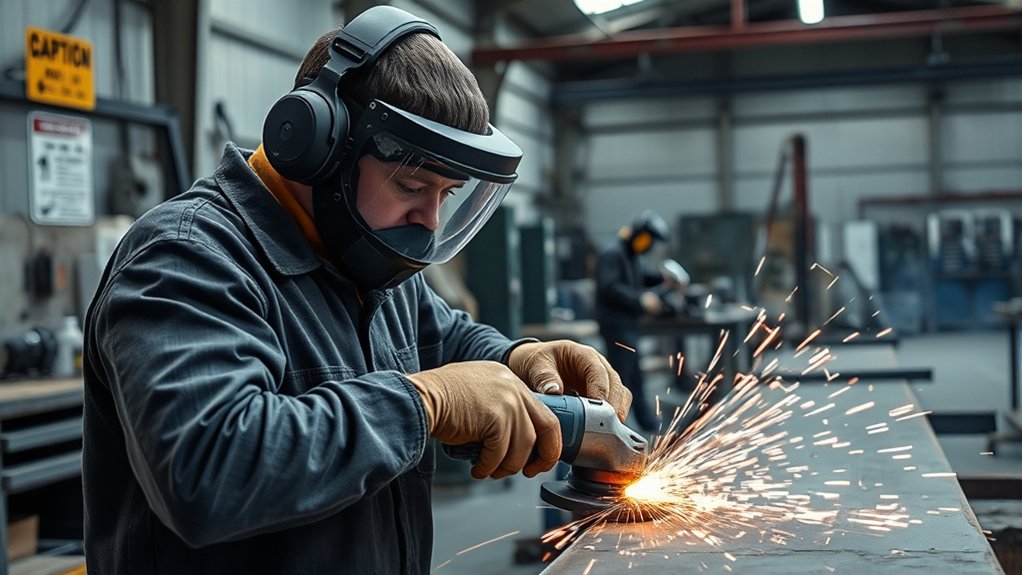
A safe work area uses the hierarchy of controls: eliminate or substitute the noisy process when possible, add engineering controls, use administrative controls, and provide suitable PPE for the remaining risk.
- Measure representative tasks and identify workers or areas with hazardous exposure.
- Use acoustic screens, isolation, damping, distance, and quieter tooling where practical.
- Schedule noisy work to reduce the number of people exposed.
- Train users to select, fit, inspect, clean, and store hearing protection.
- Post hearing-protection zones and keep exposure and training records when workplace rules require them.
- Provide audiometric testing for covered employees as required by the OSHA occupational noise standard.
DIY users may not be covered by workplace rules, but the hazard is the same. Measure when practical, wear fitted protection, keep other people away, and avoid grinding in small reflective rooms without ventilation and noise controls.
Frequently Asked Questions
What are the main hazards of using an angle grinder?
The main hazards include hazardous noise, sparks, flying particles, wheel breakage, kickback, dust, vibration, burns, electric shock, and fire. Use the correct wheel and guard, inspect the tool, secure the workpiece, control dust and sparks, and wear suitable eye, face, hearing, hand, and body protection.
How loud can an angle grinder be?
There is no single level for every grinder. WorkSafe Victoria reports that hand-held angle grinders can produce about 90 to 115 dB(A), while the actual sound at the ear varies with the model, wheel, material, pressure, distance, and room. Measure the task when possible and wear hearing protection before startup.
What does 85 dBA mean for grinder use?
NIOSH recommends limiting an eight-hour workday to 85 dBA and halving the recommended duration for each 3 dB increase. Under that system, 94 dBA reaches the recommended daily dose in about one hour and 100 dBA in about 15 minutes.
What hearing protection should you use for grinding?
Use earplugs, earmuffs, or both based on the measured exposure and the protection you can achieve with a proper fit. Aim to reduce sound at the ear to about 75 to 85 dBA. Do not choose protection by NRR alone because real-world attenuation depends heavily on fit.
When should you wear earplugs and earmuffs together?
NIOSH recommends double hearing protection for noise of 100 dBA or more or for impulse noise. Wear correctly fitted plugs under well-sealed earmuffs; the two printed NRR values are not simply added together.
How can you reduce angle grinder noise?
Use the quietest suitable process, match the wheel to the job, clamp the workpiece, avoid excessive pressure, maintain the grinder, add barriers or distance, and limit the number of loud tools running together. Hearing protection controls the remaining exposure at the ear.
Can noise-canceling earbuds replace hearing protection?
Not unless the product is specifically labeled with a Noise Reduction Rating (NRR) and is intended as hearing protection. Consumer active-noise-canceling earbuds may make steady sound seem quieter, but NIOSH and OSHA do not treat unrated consumer headphones as a substitute for tested earplugs or protective earmuffs.
When should you stop using an angle grinder?
Stop immediately if the grinder vibrates strongly, sounds rough, rattles, smells hot, loses power, has a damaged cord or switch, or uses a cracked, chipped, warped, or incorrectly mounted wheel. Disconnect power and correct the problem before restarting.
Conclusion
Angle grinder noise can damage hearing faster than many users expect, but the risk can be reduced. Measure the task when possible, control noise at the source, choose hearing protection that fits, and wear it before the wheel starts.
Pay attention to ringing, muffled hearing, new vibration, rattling, or a hot smell. Stop when something changes, inspect the tool and accessory, and protect your hearing before every grinding, cutting, or sanding job.
Sources
- NIOSH: Understand Noise Exposure — 85 dBA recommended limit, 3 dB exchange rate, and task measurement.
- NIOSH: Provide Hearing Protection — protector selection, fit testing, target protected level, and double protection.
- NIOSH Sound Level Meter App — workplace noise screening and measurement guidance.
- OSHA 29 CFR 1910.95: Occupational Noise Exposure — U.S. action level, permissible exposure limit, monitoring, and hearing conservation requirements.
- OSHA 29 CFR 1910.243: Guarding of Portable Powered Tools — guard positioning for portable grinders.
- NIDCD: Sudden Sensorineural Hearing Loss — urgent evaluation for sudden hearing loss.
- WorkSafe Victoria: Controlling Noise From Grinders — angle-grinder task ranges and source-control options.
- OSHA: Noise-Canceling Headphones and Hearing Protection — why unrated consumer ANC devices are not a substitute for tested hearing protectors.
Safety Disclaimer: This article is for informational purposes only and does not replace workplace safety training, exposure monitoring, medical advice, tool manuals, or professional safety guidance. Follow your employer’s rules, applicable regulations, and the grinder and accessory manufacturers’ instructions.