Disclosure: As an Amazon Associate, we earn from qualifying purchases. If you click a link on this page and make a purchase, we may receive a small commission at no extra cost to you.
iGreely 4 Gauge Wire Review: What You Should Know Before Buying
Choosing the wrong battery cable can cause voltage drop, heat buildup, and frustrating power loss in a vehicle, RV, solar, or marine setup. The iGreely 4 Gauge Wire is built for buyers who need a flexible copper cable for medium-duty power connections without moving to a much larger gauge. It uses a high-strand oxygen-free copper conductor and a protective insulated jacket, but you still need to match the 4 AWG size to your actual current draw, cable length, fuse size, and installation environment.
This review breaks down its construction, insulation, compatibility, safety considerations, and real-world use cases so you can decide if it fits your wiring project or if a larger cable would be the safer choice.
Quick Verdict
Rating: 8/10, Recommended with caveats
Best For: DIY automotive, RV, solar, marine, generator, and inverter wiring projects that need flexible 4 AWG copper cable
Bottom Line: The iGreely 4 Gauge Wire offers strong copper construction, a flexible strand design, and a protective insulated jacket for demanding low-voltage power runs. The main tradeoff is that it ships as raw cable, so you must supply the correct terminals, crimping tools, fuses, and sizing checks for your setup.
Key Specifications
| Specification | Detail |
|---|---|
| Brand | iGreely |
| ASIN | B0F2T8NCT2 |
| Product Type | 4 AWG flexible welding and battery cable |
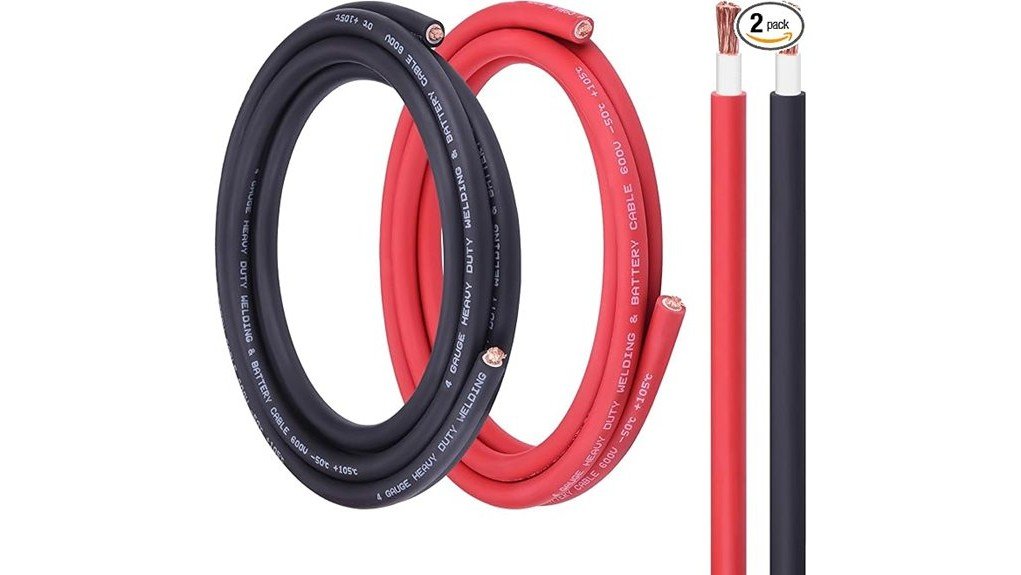
| Reviewed Variant | 10 ft red cable + 10 ft black cable |
| Conductor | 673 strands of 0.2mm oxygen-free copper, according to the product listing |
| Voltage Rating | Up to 600V |
| Insulation | Double EPDM insulation sheath |
| Temperature Range | -50°C to +105°C, or -58°F to +221°F |
| Outer Diameter | 12mm |
| Available Gauge Options | 1/0 AWG, 2/0 AWG, 2 AWG, 4 AWG, and 6 AWG options appear in the listing |
| Available Length Options | 10 ft red + 10 ft black and 20 ft red + 20 ft black options appear in the listing |
| Common Use Cases | Automotive, car audio, solar, RV, marine, generator, inverter, and battery connections |
| Connectors Included | No pre-crimped terminals are stated for this reviewed raw-wire listing |
| Package Note | Fallback retailer listing shows a packaged weight of 2.11 kg for the reviewed variant |
| Safety Note | Confirm amp load, cable length, fuse size, terminal size, and local electrical rules before installation |
What Is the iGreely 4 Gauge Wire?
The iGreely 4 Gauge Wire is a flexible 4 AWG copper cable made for battery and power-transfer applications. The reviewed listing is the 10 ft red plus 10 ft black version, which gives you separate positive and negative cable runs for many DIY projects.
Its main selling point is the 673-strand oxygen-free copper construction. A higher strand count helps the cable bend more easily than stiffer low-strand battery wire, which matters when you route cable around battery trays, inverter mounts, audio amplifiers, generator compartments, or tight RV storage bays.
This is not a finished battery cable with terminals already attached. You should treat it as raw wire that needs proper cutting, stripping, crimping, heat shrink, strain relief, and circuit protection.
Who Should Buy It?
Best For
- DIY installers wiring a battery, inverter, car audio amplifier, or generator connection
- RV, marine, and solar users who need flexible red and black 4 AWG cable
- Projects where 10 ft per color gives enough length without buying a large spool
Skip If
- Your load calculation calls for 2 AWG, 1/0 AWG, or larger cable
- You want pre-terminated battery cables with lugs already crimped on
- Your installation must meet a specific listed industrial, marine, or building-code cable standard not shown on the listing
Build Quality and Copper Construction
The strongest part of this cable is the conductor design. The listing describes 673 strands of 0.2mm oxygen-free copper, which gives the wire a flexible feel compared with more rigid battery cable designs.
That flexibility helps during installation because 4 AWG wire can be difficult to route in tight spaces. You still need to avoid sharp bends, pinched runs, and abrasion points, but a fine-strand cable is easier to work with around batteries, audio equipment, charge controllers, and inverter mounts.
The oxygen-free copper claim also matters because copper carries current more efficiently than copper-clad aluminum. For low-voltage systems, every bit of resistance can affect voltage drop, especially when the cable run gets longer.
Insulation and Durability
The cable uses a double EPDM insulation sheath and carries a listed temperature range of -50°C to +105°C. That range makes it suitable for cold-weather storage, outdoor equipment areas, and warmer vehicle compartments when installed away from exhaust parts and other extreme heat sources.
The listing also describes resistance to moisture, oil, corrosion, wear, tearing, and many solvents. Those traits are useful for automotive, marine, and RV environments because cables may face vibration, humidity, splashes, dust, and temperature swings.
You should still protect the cable with loom, grommets, clamps, and proper routing. Even strong insulation can wear through if it rubs against bare metal, a sharp panel edge, or a moving part.
Compatibility and Electrical Safety
The 600V rating gives this cable room for many low-voltage DC systems, including 12V and 24V vehicle, solar, and battery setups. That does not mean every 4 AWG run can safely carry every load. Amp capacity depends on current draw, run length, temperature, bundling, insulation rating, voltage drop target, and the rules that apply to your installation.
For car audio, inverter, generator, or solar battery connections, you should size the cable and fuse together. The fuse should protect the cable, not just the device connected to it.
For boats, RVs, permanent solar installs, and high-current systems, consider getting guidance from a qualified electrician, marine technician, or RV electrical professional. A proper crimp, correct terminal size, and safe fuse placement matter as much as the cable itself.
Before You Buy: Do not choose 4 AWG by guesswork. Check your device’s current draw, cable length, voltage drop target, and fuse requirements before ordering, because undersized cable can overheat and oversized cable may be harder to route or terminate.
How It Performs in Real Use
For Automotive Battery and Accessory Wiring
In vehicle projects, this cable makes the most sense for battery-to-accessory runs where flexibility and copper conductivity matter. The red and black pair helps you keep polarity clear, which reduces confusion during installation and future maintenance.
For Car Audio Amplifiers
For car audio systems, 4 AWG is a common size for amplifier power wiring when the amp and run length match the cable. The fine-strand design helps you route cable through the cabin or trunk area, but you still need a proper fuse near the battery and terminals that match the wire size.
For Solar, RV, and Inverter Systems
For solar battery banks, RV upgrades, and inverter connections, the 600V rating and insulated jacket make it useful for many low-voltage power runs. Longer runs can still suffer voltage drop, so measure the full round-trip distance and confirm that 4 AWG is suitable before cutting the cable.
For Marine and Outdoor Equipment
For marine and outdoor use, the moisture-resistant jacket is a useful advantage. You should still keep connections sealed, supported, and protected from standing water, salt exposure, sharp edges, and constant vibration.
Setup Tips Before First Use
Measure your cable route before you cut anything. Include bends, service loops, battery-box routing, fuse-holder placement, and the space needed for lugs or terminals.
Use terminals that fit both 4 AWG cable and the stud size on your battery, bus bar, fuse block, inverter, or amplifier. A loose terminal can create heat, voltage loss, and unreliable power delivery.
Crimp the lugs with a tool designed for heavy-gauge cable. After crimping, use adhesive-lined heat shrink where appropriate, then tug-test the connection before installing it in the system.
Pro Tip: Keep high-current cable runs as short and direct as safely possible. Shorter runs help reduce voltage drop and make it easier to protect the cable with the correct fuse near the power source.
Pros and Cons
Pros
- 673-strand oxygen-free copper design supports flexibility and efficient power transfer
- 10 ft red plus 10 ft black option works well for paired positive and negative runs
- Double EPDM insulation helps protect against heat, moisture, wear, and outdoor exposure
- 600V rating supports many automotive, RV, solar, marine, generator, and inverter projects
- Available in several gauge and length options, which helps you match the cable to your project
Cons
- Does not appear to include pre-crimped connectors for this reviewed raw-wire variant
- May be too small for high-current, long-distance runs that require 2 AWG, 1/0 AWG, or larger cable
- Requires proper crimping tools, fuse sizing, terminal selection, and installation knowledge
Want to Check the Current Listing?
Review the latest product details, variant options, and availability before you order.
Is It Worth the Price?
The iGreely 4 Gauge Wire is worth considering if you want a flexible copper cable for DIY power projects and do not want to buy a large spool. The 10 ft red plus 10 ft black setup gives you enough cable for many compact vehicle, inverter, generator, audio, and battery connections.
Its strongest value comes from the combination of fine-strand copper, a protective insulated jacket, and multiple available gauge options. It is not the best fit if you need a finished cable set with lugs attached or a cable with a specific certification required by your project plan.
For casual DIY work, it can be a smart buy when 4 AWG matches your load calculation. For professional or code-sensitive installs, verify all ratings and installation requirements before purchase.
How It Compares to Alternatives
Compared with standard low-strand automotive battery wire, this iGreely cable should be easier to bend and route because of its fine-strand construction. Compared with pre-terminated battery cables, it gives you more flexibility in length and routing, but it also requires more tools and installation skill.
Compared with heavier 2 AWG or 1/0 AWG cable, 4 AWG is easier to handle and terminate, but it may not be enough for higher-current or longer-distance runs. The iGreely option makes the most sense when you want flexible raw cable and your sizing calculations confirm that 4 AWG is appropriate.
Frequently Asked Questions
Is this iGreely wire suitable for car audio systems?
Yes, it can work for car audio amplifier power wiring when 4 AWG matches your amplifier’s current draw and cable length. You still need the correct fuse near the battery, proper terminals, and safe routing through the vehicle.
Can it be used for solar battery or inverter setups?
Yes, the listing supports solar, inverter, RV, and generator use cases. Before using it, calculate the current draw, total cable distance, voltage drop, and fuse size for your battery system.
Does this cable include connectors or lugs?
The reviewed listing is for raw red and black cable and does not state that pre-crimped connectors are included. Plan to buy compatible lugs, heat shrink, and a proper crimping tool if your project needs terminated ends.
Is 4 AWG enough for every battery cable project?
No. Cable size depends on current, distance, acceptable voltage drop, temperature, bundling, and installation rules. Higher-current or longer runs may need 2 AWG, 1/0 AWG, or larger cable.
Can this wire be used outdoors or in marine areas?
The listing describes a durable insulated jacket with resistance to moisture, wear, oil, and corrosion, which helps in outdoor and marine-style environments. Protect the cable from abrasion, standing water, salt exposure, and unsupported vibration for a safer installation.
What tools do you need to install it correctly?
You will usually need heavy-gauge cable cutters, wire strippers, compatible 4 AWG lugs, a proper crimping tool, heat shrink, and cable protection such as loom or grommets. You may also need a fuse holder or breaker sized for the cable and load.
What common mistakes should you avoid?
Avoid routing the cable across sharp edges, skipping the fuse, using loose terminals, or crimping with the wrong tool. Also avoid assuming 4 AWG is enough without checking voltage drop and current requirements.
Who should skip this iGreely 4 Gauge Wire?
Skip it if you need pre-made battery cables, a certified cable for a regulated installation, or a larger gauge for a high-current run. It is better for buyers who are comfortable measuring, cutting, terminating, and protecting raw cable.
The Bottom Line
The iGreely 4 Gauge Wire is a strong option for DIY automotive, solar, RV, marine, generator, and inverter projects that need flexible red and black copper cable. Its biggest strengths are the fine-strand OFC construction, 600V rating, and durable insulated jacket, while its main limitation is that you must handle sizing, terminals, crimping, and fusing correctly.
Buy it if your calculations confirm that 4 AWG fits your load and cable length. Skip it if you need pre-terminated cables, a larger wire size, or a cable with a specific certification not shown for this listing.