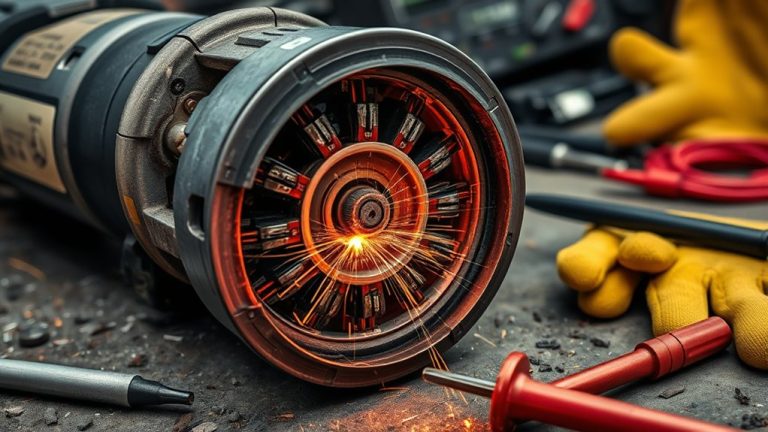
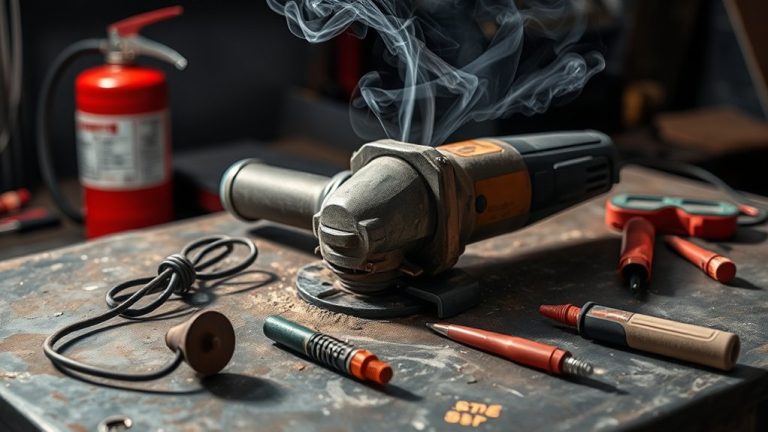
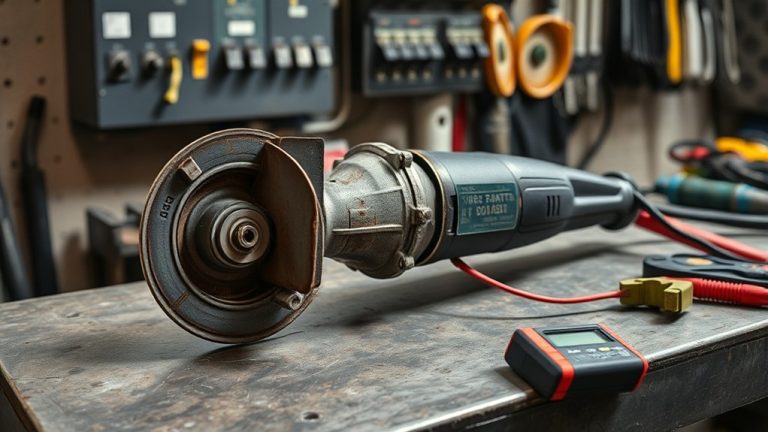
If your angle grinder overheats quickly, it typically results from prolonged use without breaks, inadequate airflow from dust accumulation, or mismatched components. To troubleshoot, verify you’re using a grinder rated for your task and that the grinding wheel matches the material. Check for dust in vents and inspect electrical components for damage. Regular maintenance is essential, including cleaning, inspecting carbon brushes, and confirming proper installations. Discover effective solutions and maintenance practices to keep your tool running smoothly.
Why Is My Angle Grinder Overheating? Common Causes and Solutions
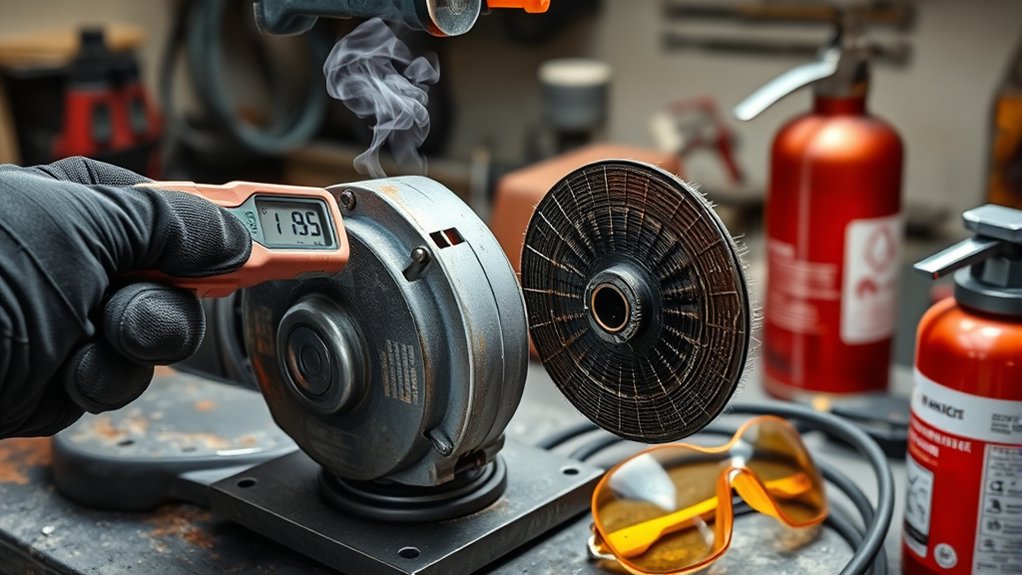
When you notice your angle grinder overheating, it’s often due to a combination of factors that strain its performance. Prolonged operation without breaks forces the motor to work harder, leading to overheating and potential damage. Additionally, accumulated dust and debris can block proper ventilation, impeding airflow and exacerbating the issue. Using a lower amperage grinder on dense materials like mortar can also strain the tool, as it struggles under heavy loads. Furthermore, employing an improper grinding wheel generates excessive friction, further increasing heat. To mitigate these problems, guarantee regular cleaning of ventilation areas and match the grinder’s specifications to the material being worked on. Allowing the tool to cool between uses and operating it in intervals can greatly reduce overheating risks, ultimately extending your angle grinder’s lifespan and enhancing your productivity.
Tips to Avoid Overloading Your Grinder
Overheating often stems from improper use or a mismatch between the grinder and the task at hand. To avoid overloading your grinder, consider these essential tips:
- Choose the Right Grinder: Opt for a grinder with at least 15 amps for heavy-duty tasks, ensuring it can handle dense materials without strain.
- Intermittent Operation: Take breaks during prolonged use. This allows the grinder to cool down, preventing overheating and potential motor damage.
- Correct Wheel Selection: Always match the grinding wheel to the material. Mismatched tools increase motor strain and risk overheating.
- Avoid Forcing the Tool: Let the grinder perform its task without excessive pressure. Overexertion can lead to inefficiency and overheating.
Cooling Tips for Your Grinder
To keep your angle grinder operating efficiently, implementing effective cooling strategies is crucial. First, allow the grinder to cool down for at least 15 minutes between heavy-duty tasks. This simple step can greatly extend the motor’s life. Ascertain proper ventilation by keeping air vents free from dust and debris; blocked vents can hinder cooling efficiency.
Use the grinder intermittently rather than continuously, limiting operation time during intense tasks to reduce overheating risks. Additionally, consider using a heavy-duty extension cord for lower amp grinders. This helps maintain ideal power supply and prevents overheating due to voltage drops.
Finally, regularly inspect carbon brushes for wear and replace them as needed, as worn brushes can contribute to overheating and strain on the motor. By following these cooling tips, you can enhance your grinder’s performance and longevity, guaranteeing a smoother, safer operation.
How to Identify Electrical and Mechanical Failures in Your Grinder
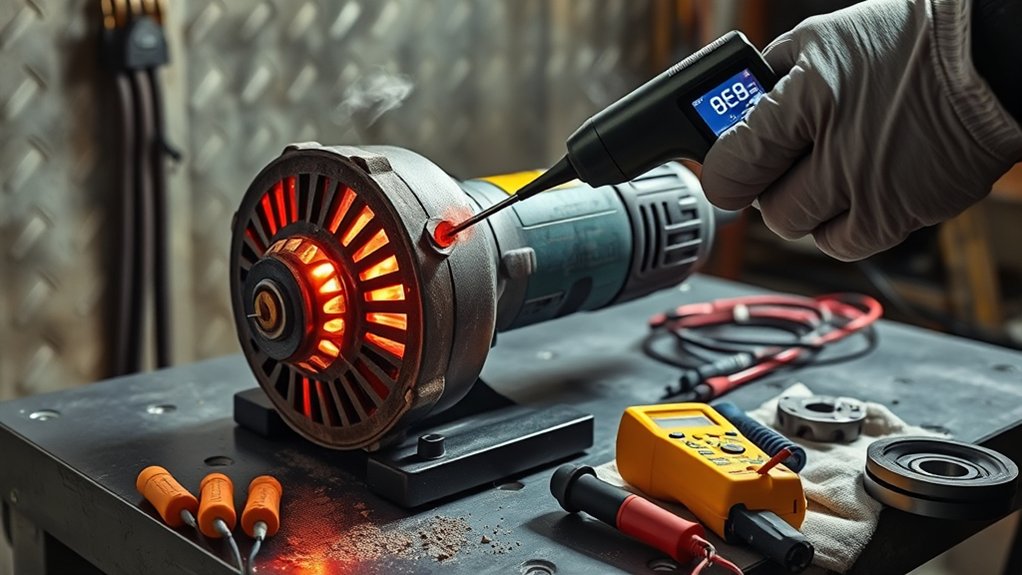
To effectively identify electrical and mechanical failures in your grinder, start by examining the power supply, outlets, and cords for any visible damage. Pay close attention to unusual motor noises or smoke, as these are clear indicators of potential overload. Additionally, check the spindle lock and grinding wheel installation to guarantee peak performance and safety.
Common Electrical Issues
While using an angle grinder, you might encounter various electrical issues that can compromise its performance. Identifying these common electrical issues is essential for safe operation. Here’s how to check:
- Inspect power supply: Verify the outlet and extension cords are intact and free of damage.
- Examine power cord: Look for fraying or any visible damage, as this can disrupt power flow.
- Monitor flickering lights: If power lights flicker, it may indicate power loss, warranting immediate attention.
- Conduct regular maintenance: Check connections and clean vents regularly to prevent overheating and electrical strain.
Mechanical Malfunction Signs
Identifying mechanical malfunction signs in your angle grinder is crucial for maintaining its efficiency and preventing overheating. Listen closely for unusual motor noises, like grinding or squeaking; these can indicate underlying issues. Check the spindle lock for damage or obstruction, as any malfunction here can hinder performance and contribute to overheating. Inspect the wheel installation for security and visible cracks; improper wheel conditions lead to operational inefficiencies. Monitor for blade wobbling, which suggests alignment issues or worn bearings, placing excessive strain on the motor. Finally, regularly examine the cooling system for blockages and verify vents are clear. Insufficient ventilation greatly increases overheating risks, highlighting the importance of recognizing these mechanical malfunction signs early.
Steps to Troubleshoot and Resolve Overheating Issues
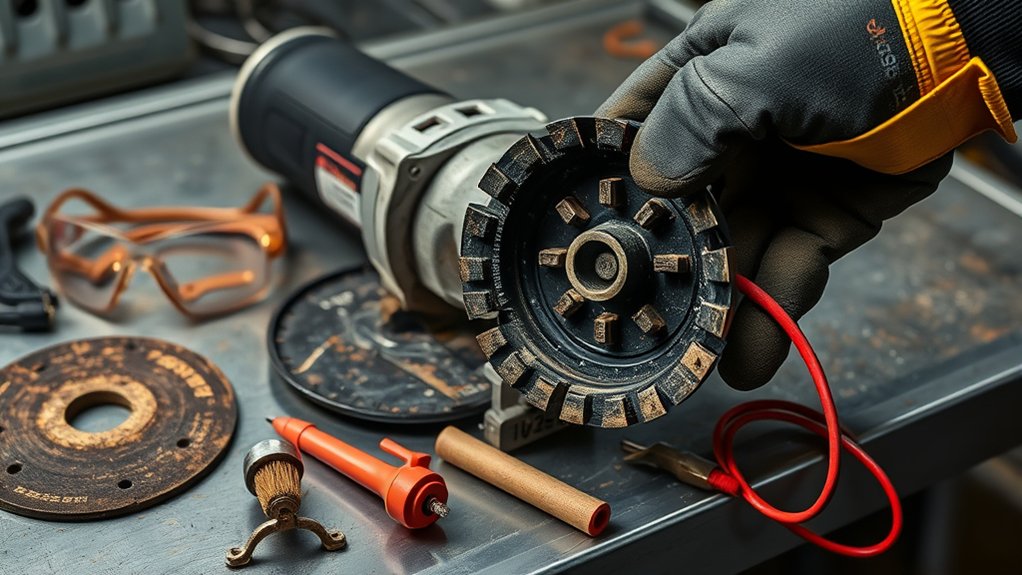
Overheating issues in angle grinders can often be traced back to a few key factors, and addressing them promptly is vital for maintaining tool performance. Follow these steps to troubleshoot and resolve overheating:
- Monitor Use Time: Limit continuous operation; allow your grinder to cool periodically to prevent overheating from prolonged use.
- Clean Vents: Regularly remove dust and debris from vents to guarantee unrestricted airflow, which is critical for efficient cooling.
- Evaluate Amperage: If you’re using a low amperage model (like 6.5 amps), consider switching to a higher amp version for dense materials to avoid strain.
- Inspect Carbon Brushes: Check for wear on carbon brushes; replace them as needed to maintain peak motor performance.
How to Maintain Your Grinder to Prevent Overheating
To maintain your grinder and prevent overheating, establish a regular cleaning schedule to remove dust and debris that can obstruct airflow. Guarantee proper ventilation by keeping air vents clear, which is essential for efficient motor cooling. By implementing these practices, you can enhance the grinder’s performance and longevity.
Regular Cleaning Schedule
Maintaining an angle grinder through a regular cleaning schedule is essential for preventing overheating. Follow these steps to guarantee peak performance:
- Inspect and clear dust and debris from vents and motor housing to promote airflow.
- Use a soft brush or compressed air after each use, targeting areas that collect dust to enhance cooling efficiency.
- Check and clean the carbon brushes periodically; worn brushes can lead to poor electrical contact and contribute to overheating.
- Regularly inspect the grinding wheel for wear and replace it as necessary, as improper wheels can strain the motor and cause overheating.
Proper Ventilation Practices
Ensuring proper ventilation is essential for your angle grinder’s performance and longevity, as it directly affects cooling efficiency. Start by keeping the air vents free from dust and debris, promoting ideal airflow. Regularly inspect and clean the cooling fan to prevent blockages that hinder air circulation. Always operate your grinder in well-ventilated areas; this facilitates heat dissipation and reduces motor strain. During heavy-duty tasks, take intermittent breaks to allow the motor to cool down, preventing prolonged overheating. Additionally, use appropriate grinding wheels designed for the material you’re working on, as mismatched tools can generate excess friction and heat. Implementing these proper ventilation practices will greatly enhance your grinder’s operational efficiency and lifespan.
Safety Measures to Implement Before Using Your Grinder
Before operating your angle grinder, it’s crucial to conduct a thorough visual inspection to identify any signs of wear or damage. Implementing effective safety measures can prevent accidents and guarantee peak performance. Follow these steps:
- Inspect the power cord for fraying or damage to avoid electrical hazards during operation.
- Confirm that the correct disc size and type are suitable for your task, assuring both efficiency and safety.
- Check the guard and flange for security, making sure they’re properly attached to prevent accidents.
- Wear appropriate personal protective equipment (PPE) such as safety goggles, gloves, and earmuffs to mitigate injury risk while operating the grinder.
Frequently Asked Questions
What Causes a Grinder to Overheat?
A grinder overheats mainly due to motor issues like prolonged use, insufficient power for heavy tasks, or improper wheel selection. Dust buildup can also obstruct ventilation, exacerbating heat accumulation during operation. Prioritize breaks for cooling.
How to Cool Down a Grinder?
To cool down your grinder effectively, use cooling techniques like intermittent operation, allowing breaks between use. Guarantee proper ventilation and regularly clean air vents to maintain airflow, preventing overheating during your tasks.
Why Does My Angle Grinder Keep Cutting Out?
Your angle grinder keeps cutting out due to insufficient power supply, inadequate ventilation, or prolonged use. Check your outlets, guarantee proper torque at RPM settings, and maintain components to enhance performance and reliability.
What Are Signs My Grinder Needs Repair?
Your grinder needs repair if you notice overheating, unusual noises, visible wear on parts, frequent circuit tripping, or blade wobbling. These repair indicators signal potential mechanical or electrical issues that require immediate attention for safety and efficiency.
Conclusion
In summary, addressing overheating in your angle grinder is essential for both performance and safety. Did you know that nearly 40% of tool failures are due to overheating? By following the troubleshooting steps and maintenance tips outlined, you can greatly extend your grinder’s lifespan and efficiency. Always prioritize safety measures before use to prevent accidents. With proper care, you’ll keep your grinder running smoothly and effectively, ensuring you get the job done right every time.