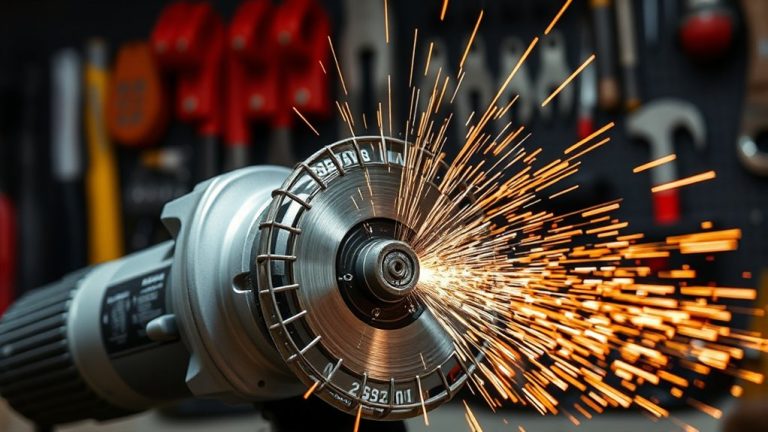
An angle grinder consists of essential parts like the guard, spindle, switch, handle, and motor. The guard protects you from debris and sparks. The spindle connects the motor to the grinding disc, influencing cutting efficiency. The switch controls power, while the handle offers stability and control during operation. The motor drives the spindle, converting electrical energy into mechanical power. Understanding these components enhances safety and performance, and you’ll find more detailed insights about maintenance and functionality.
Understanding the Essential Parts of an Angle Grinder
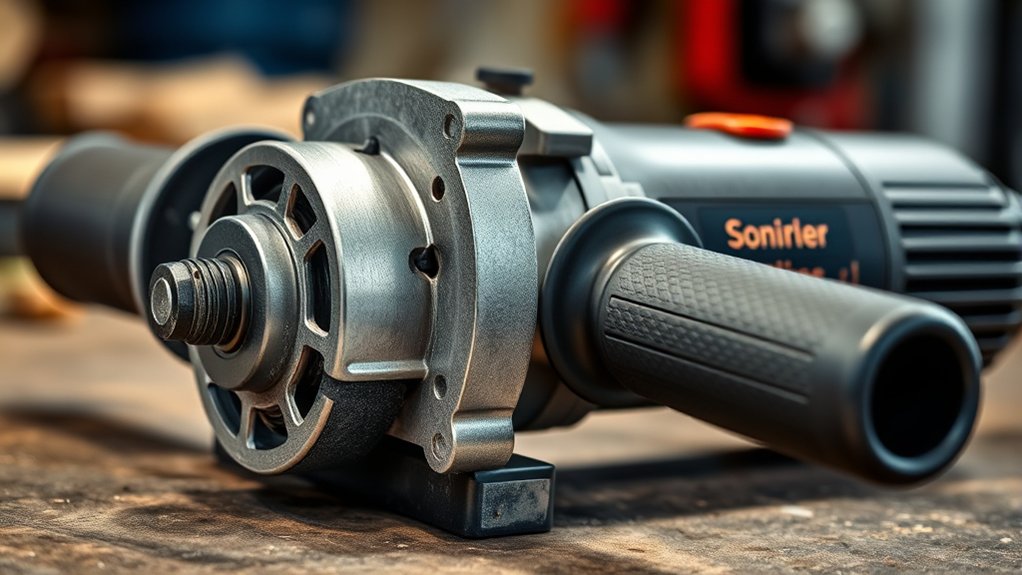
When you operate an angle grinder, understanding its essential parts is important for both safety and efficiency. The guard acts as a protective shield, covering the grinding disc and preventing debris and sparks from harming you. The spindle, a threaded metal shaft, connects to the motor and drives the grinding wheel, making it critical for the tool’s functionality.
The on/off switch controls the grinder’s operation, allowing you to easily activate or deactivate the tool as needed. For ideal control and stability, the handle—including both the main and side handles—ensures you have a firm grip, enabling precision during use. At the core of the grinder, the motor converts electrical energy into mechanical power, directly influencing its cutting and grinding capabilities. By familiarizing yourself with these components, you enhance your safety and maximize the effectiveness of your tool.
How the Guard Protects You During Operation
The guard on your angle grinder is vital for protecting you during operation by covering a significant portion of the blade, which minimizes the risk of injury. It effectively prevents flying debris and sparks from reaching you, enhancing overall user safety. Properly adjusting and securing the guard is fundamental to guarantee it functions as intended.
Importance Of Blade Coverage
While operating an angle grinder, having a blade guard in place is essential for your safety. This semi-circular protective cover shields you from sparks, debris, and potential blade contact, greatly enhancing operator safety. When properly adjusted, the guard directs debris away from you, playing an important role in injury prevention. Many grinders come with adjustable guards, allowing you to reposition them based on your specific task while ensuring compliance with safety regulations. Regular inspection and proper maintenance are critical; any damage or misalignment can drastically reduce the effectiveness of the blade guard. By prioritizing these safety measures, you can confidently operate your angle grinder while minimizing risks associated with power tool usage.
Preventing Flying Debris
A properly adjusted guard is vital for minimizing the risk of flying debris during angle grinder operation. This semi-circular shield covers the spinning disc, effectively deflecting sparks and debris away from you while cutting or grinding. By securing the guard correctly, you prevent accidental contact with the spinning disc, which can lead to serious injuries from sparks or material fragments. Regular inspection and maintenance of the guard are important; any damage or misalignment can compromise its protective function, increasing the likelihood of accidents. Adjusting or replacing the guard to fit different disc sizes guarantees peak safety tailored to your specific task, empowering you to work confidently and efficiently without unnecessary risks.
Enhancing User Safety
Guaranteeing safety during angle grinder operation relies heavily on the guard’s design and functionality. The guard acts as a semi-circular shield, covering the grinding wheel and providing essential protection from sparks and debris. When properly adjusted, it deflects flying particles away from you, greatly reducing the risk of injury to your face and eyes. Different guards accommodate various disc sizes and applications, guaranteeing ideal safety for each task. Most designs feature a quick-release mechanism, allowing you to adjust the guard easily without tools. Regularly inspect the guard for cracks or damage to maintain its protective function and guarantee your safety throughout the grinder’s lifespan. Prioritizing guard maintenance is vital for a safe and effective working environment.
The Spindle’s Role in Angle Grinder Functionality
The spindle is a critical component of your angle grinder, as it rotates to drive the grinding wheel or cutting disc when the motor is engaged. Understanding its mechanics and ensuring proper maintenance are essential for peak performance and safety. Neglecting the spindle can lead to issues like wobbling and vibrations, which can compromise your work.
Spindle Mechanics Explained
While operating an angle grinder, understanding the spindle’s mechanics is vital for ideal performance. The spindle, a threaded metal shaft, connects to the motor, driving the rotation of the grinding wheel or cutting disc. A well-functioning spindle enhances stability and cutting efficiency, guaranteeing precise operation. When disc changes are necessary, some grinders offer a spindle lock mechanism, simplifying the process.
| Feature | Importance |
|---|---|
| Threaded Metal Shaft | Guarantees secure attachment of discs |
| Compatibility | Varies among models, critical for replacements |
| Motor Connection | Drives rotation, impacting performance |
Maintaining a clean spindle prevents wobbling and vibrations, further improving your angle grinder’s functionality.
Importance of Spindle Maintenance
Maintaining the spindle of your angle grinder is essential for peak performance and safety. The spindle connects the motor to the grinding wheel, enabling high-speed rotation vital for effective cutting and grinding tasks. Regular maintenance, including inspecting for wear and tear, prevents wobbling and vibrations that can compromise safety. If your grinder features a spindle lock, use it for safe disc changes—this enhances both efficiency and safety during operation. Verify the spindle is tightly secured and free of debris for best performance. Don’t forget to inspect and lubricate the spindle regularly; this reduces friction and wear, prolonging the life of both the spindle and the grinding wheel, guaranteeing you get the most out of your tool.
Angle Grinder Switch Functionality: What You Need to Know?
How does the switch on your angle grinder work to enhance your control and safety? The angle grinder switch, typically a trigger or lever, lets you easily control the power supply. Here’s what you need to know:
- Lock button: This feature allows you to keep the grinder running continuously, reducing hand fatigue during long tasks.
- Variable speed control dial: Some models include this handy dial, enabling you to adjust the rotation speed of the disc for various applications.
- Soft-start mechanism: This safety feature gradually ramps up the motor speed, minimizing kickback and enhancing control when you start the tool.
Regularly inspect the switch, as worn or damaged components can lead to operational failures and safety hazards. A well-functioning angle grinder switch is essential for both effective use and your safety.
Why the Handle Matters for Control and Stability
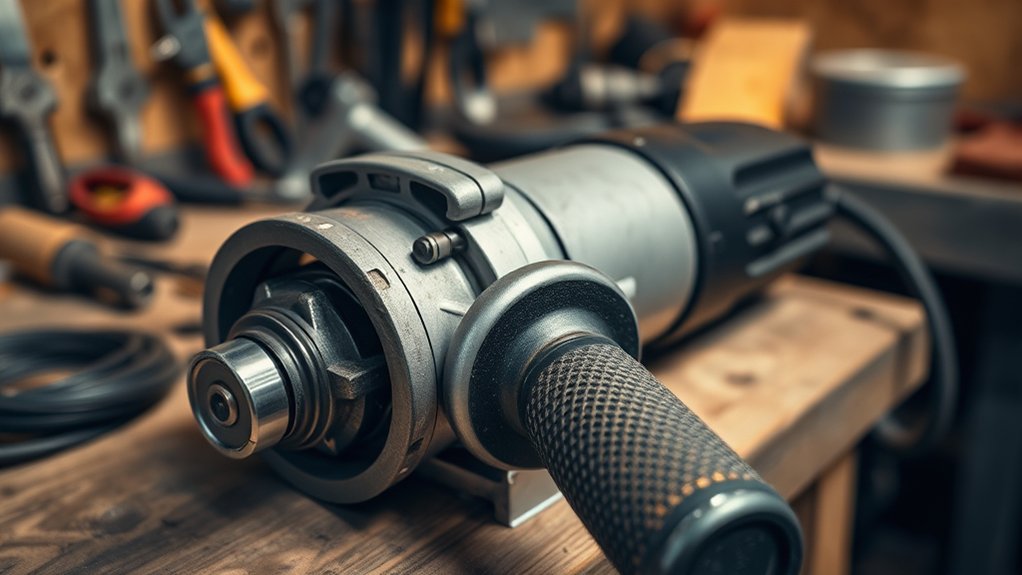
The handle of your angle grinder plays an essential role in guaranteeing control and stability during operation. A well-designed handle allows for a comfortable grip, enhancing precision during cutting and grinding tasks. Auxiliary handles can be attached to either side, providing extra support, particularly during prolonged use.
| Feature | Benefit | Importance |
|---|---|---|
| Ergonomically Designed | Reduces vibration by up to 70% | Enhances comfort and control |
| Firm Grip | Prevents kickback | Guarantees safer operation |
| Proper Placement | Improves balance | Increases maneuverability |
Using the handle correctly is vital for maintaining stability and preventing accidents. When you position the handle well and grip it firmly, you greatly reduce the risk of kickback, allowing for better control over your tool. Prioritize the handle’s design and functionality to enhance your overall grinding experience.
How the Motor Powers Your Angle Grinder
Understanding the motor’s role in your angle grinder is essential, as it converts electrical energy into mechanical power, typically ranging from 500 to 2400 watts based on the model. This conversion is critical for achieving the high speeds necessary for effective grinding and cutting tasks.
- The motor drives the spindle, which rotates the grinding discs.
- Brushless motors in cordless models enhance efficiency and reduce maintenance.
- Regular maintenance, including inspecting carbon brushes, is crucial for peak performance.
Common Angle Grinder Issues and Solutions
While using an angle grinder can be straightforward, encountering common issues can hinder your work and lead to frustration. Here are some typical problems and their solutions:
| Issue | Solution |
|---|---|
| Overheating | Clean the vents to guarantee proper airflow. |
| Grinder not spinning | Check and replace worn carbon brushes. |
| Wobbling disc | Tighten the loose flange nut or inspect the spindle. |
| Unresponsive power switch | Clean or replace the power switch due to accumulated dust and debris. |
| Unusual noises or failure to start | Inspect for a malfunctioning motor, which may need professional repair. |
Tips for Maintaining Your Angle Grinder Parts
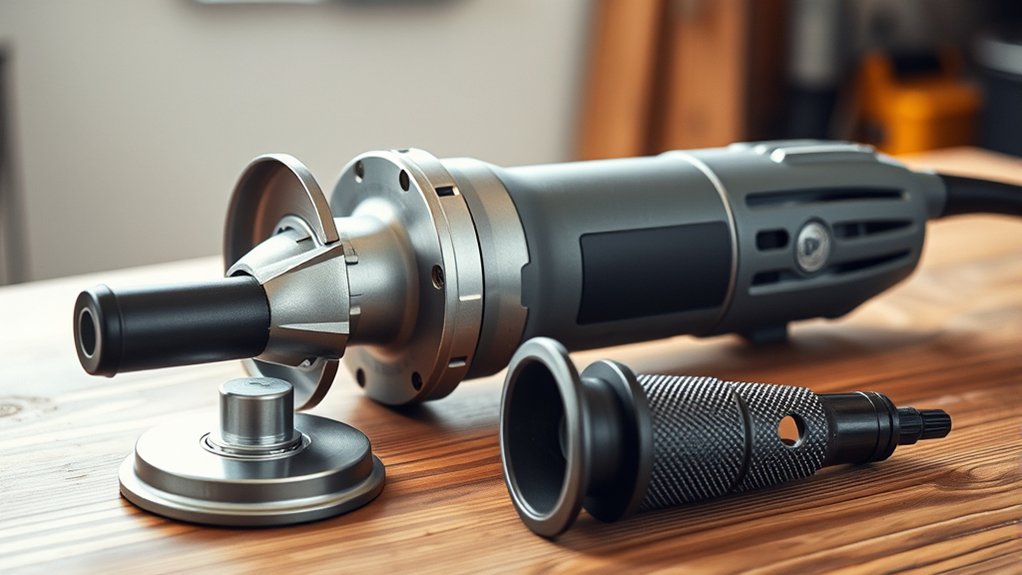
Maintaining your angle grinder parts is essential for guaranteeing peak performance and longevity. To keep your tool in prime condition, follow these tips:
Proper maintenance of your angle grinder is vital for optimal performance and durability.
- Regularly inspect the power cord for cracks or exposed wires to prevent electrical hazards.
- Clean the air vents frequently to avoid overheating and keep the motor running efficiently.
- Check and replace carbon brushes as needed, since worn brushes can diminish motor efficiency.
Additionally, always verify the disc is securely fastened using the flange nut—loose discs can lead to wobbling and accidents. Don’t forget to lubricate moving parts periodically to reduce friction and wear, extending your grinder’s lifespan. By adopting these maintenance practices, you’ll not only enhance your angle grinder’s performance but also promote a safer working environment. Remember, a well-maintained tool is a reliable tool!
Frequently Asked Questions
What Are the Parts of an Angle Grinder?
An angle grinder consists of a guard, spindle, switch, handle, and motor. Understanding these angle grinder basics helps you guarantee grinder safety tips, choose the right disc, and apply correct maintenance techniques for peak performance.
Where Does the Guard Go on an Angle Grinder?
The guard mounts securely on the front of your angle grinder. For safety, choose the right guard type, adjust it properly, and follow maintenance advice to prevent common issues while enjoying the benefits of safe operation.
What Is the Spindle Lock Button on an Angle Grinder Used For?
The spindle lock button immobilizes the spindle, enhancing angle grinder safety when replacing discs. Engaging this spindle lock mechanism secures your tool, ensuring smooth grinding techniques while preventing common grinder issues during maintenance.
Why Are 9 Inch Angle Grinders Banned?
Nine-inch angle grinders are often banned due to safety regulations highlighting risk assessments. Their torque and size exceed industry standards, prompting user reviews favoring smaller, safer alternative tools per manufacturer guidelines and historical usage.
Conclusion
In conclusion, understanding the key parts of your angle grinder—like the guard, spindle, switch, handle, and motor—ensures safer and more efficient operation. Just like a knight relies on their trusty sword, you depend on these components for precise performance. Regular maintenance can prevent common issues, keeping your tool in top shape. So, take the time to familiarize yourself with these parts, and your angle grinder will serve you well for years to come.