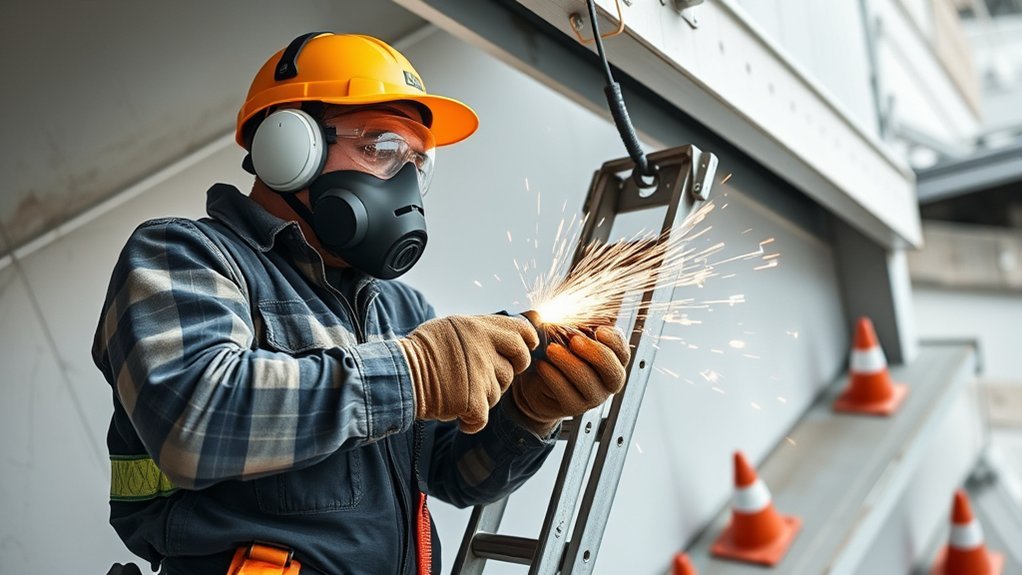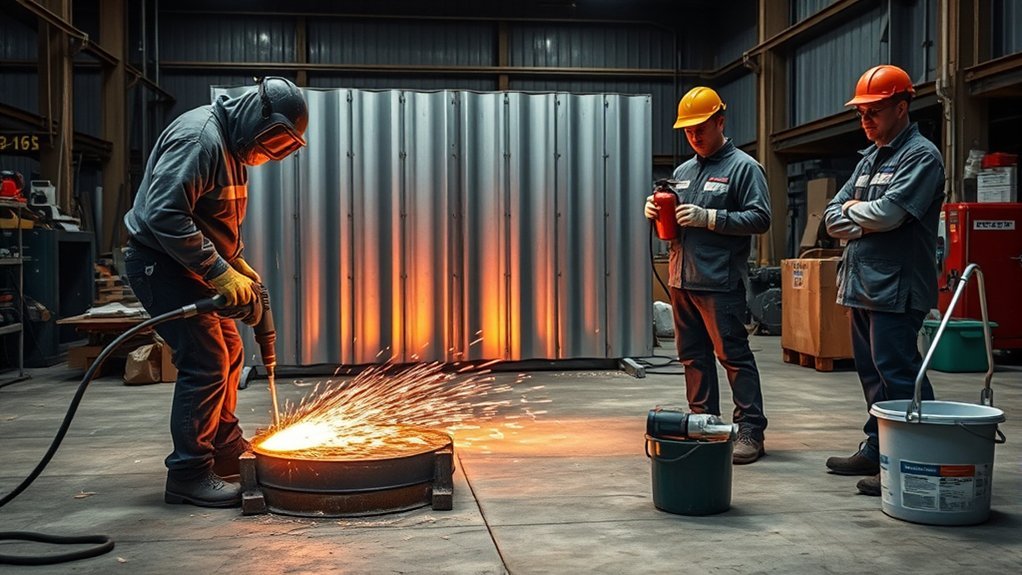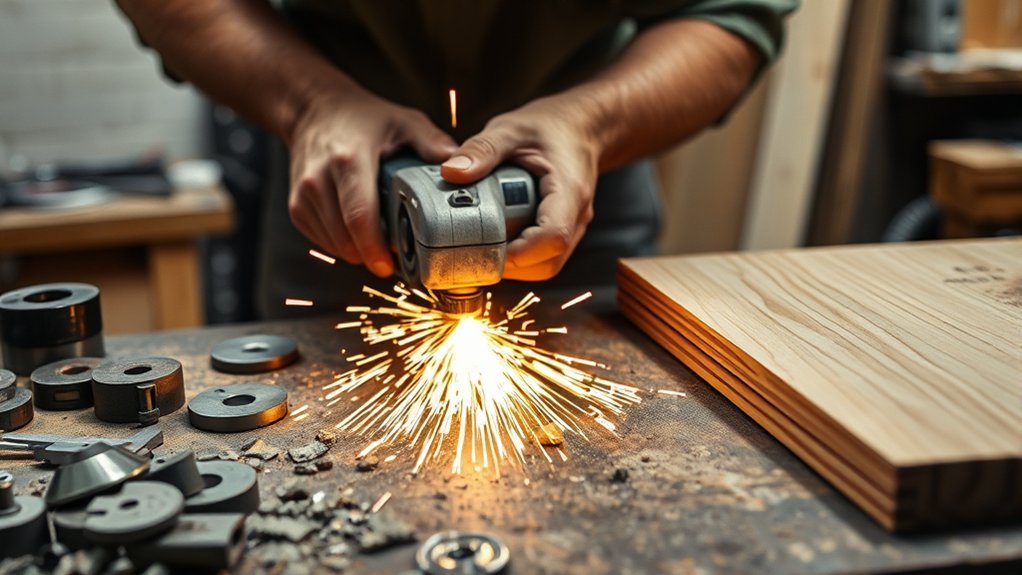
An angle grinder is a handheld power tool used for cutting, grinding, sanding, cleaning, and surface prep. With the right disc, you can cut metal, trim tile or masonry, smooth welds, remove rust, strip paint, sharpen some tools, and prepare surfaces for welding or finishing. The key is matching the disc to the material, keeping the guard in place, and using light, controlled pressure.
Quick Answer
You can use an angle grinder for cutting metal, masonry, tile, and rebar; grinding welds and rough edges; sanding or smoothing surfaces with flap discs; removing rust or paint with wire wheels; and light polishing with the right pad. Always use the correct rated disc, guard, handle, PPE, and a clamped workpiece.
Key Takeaways
- The most common angle grinder uses are cutting, grinding, sanding, rust removal, weld cleanup, and masonry or tile cutting.
- The disc matters more than the tool itself: cutting wheels cut, grinding wheels grind, flap discs sand, diamond blades cut masonry, and wire wheels clean.
- Never use a cutting disc for grinding or a grinding disc for cutting because the wrong wheel can grab, crack, or shatter.
- Keep the guard and side handle installed, clamp the work, wear eye, face, hearing, hand, and respiratory protection, and let the wheel stop before setting the tool down.
At a Glance
| Time Required | A few minutes for small cuts or grinding passes; longer for prep, cleanup, and cooling breaks. |
| Difficulty | Beginner to intermediate, depending on the material, disc, and cut depth. |
| Tools Needed | Angle grinder, correct rated disc, guard, side handle, clamps or vise, PPE, and dust control when cutting masonry. |
| Cost | Low to moderate if you already own the grinder; expect ongoing cost for discs, PPE, and dust-control accessories. |
Warning: An angle grinder is not a casual cutting tool. Discs can shatter, kickback can cause severe cuts, and masonry dust can harm your lungs. Use the guard, side handle, correct disc, and proper PPE every time.
What Can You Use an Angle Grinder For?
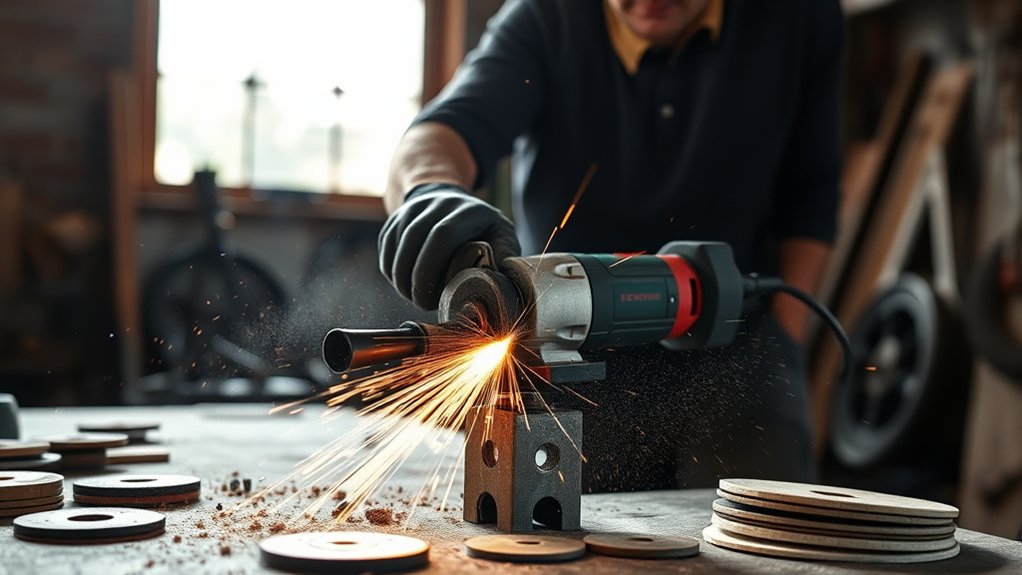
You can use an angle grinder for many workshop, welding, auto repair, metalworking, and home improvement jobs. It works by spinning a disc at high speed, so the tool can remove material quickly when the disc is matched to the task.
Common uses include:
- Cutting metal: Use a thin cut-off wheel for bolts, sheet metal, angle iron, rebar, brackets, and small fabrication cuts.
- Grinding metal: Use a grinding wheel to smooth weld beads, bevel edges, remove burrs, or shape steel.
- Sanding and blending: Use a flap disc or sanding disc to smooth metal, clean up weld transitions, or prepare surfaces before paint.
- Removing rust and paint: Use a wire cup brush, wire wheel, strip disc, or flap disc depending on how aggressive the job needs to be.
- Cutting masonry, tile, brick, or concrete: Use a diamond blade rated for the material and control dust carefully.
- Sharpening and cleanup: Use a suitable grinding wheel for basic sharpening of mower blades, scrapers, and some garden tools, as long as you can hold the part securely.
- Polishing: Use polishing pads and compounds only if they are rated for your grinder speed and backing system.
An angle grinder can also sand wood with the right sanding or flap disc, but it is not a replacement for a random orbital sander. It removes material fast and can gouge soft wood quickly. For cutting lumber, tree roots, or branches, use a saw designed for that job instead of a grinder.
Products Worth Considering

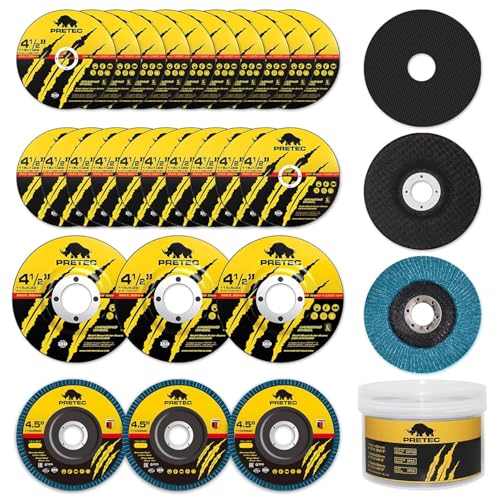
26pcs Angle Grinder Disc 4-1/2 inch & 3 Different Types : ✅ The 26 packs angle grinder wheels 4-1/2 inch including 20 Packs 4.5"x1/4"x7/8" Cut off Wheels, 3 Packs 4.5"x7/8" 60 Grit Flap Discs, 3 Packs 4.5"x1/25"x7/8" Grinding Wheels, with each type of disk collectively wrapped with those of its kind. This kit has everything you need to prep steel.

[High-Performance Cutting] Designed for cutting metal & stainless steel, these cut off wheels 4 1/2 inch work efficiently with any angle grinder wheel, supporting speeds up to 13,300 RPM.
How an Angle Grinder Works
An angle grinder uses a motor to spin a disc, wheel, brush, or pad on a threaded spindle. The disc does the cutting or grinding, while the guard helps deflect sparks and fragments away from you. The side handle gives you a second grip point so you can control torque, vibration, and kickback.
The grinder itself is only part of the system. Safe and clean results depend on five things:
- Disc type: Choose a disc made for the task and material.
- Disc rating: The disc must match the grinder size, arbor, and maximum RPM.
- Guard position: Keep the guard between you and the disc path when possible.
- Workpiece control: Clamp the material so it cannot move, twist, or pinch the disc.
- Light pressure: Let the abrasive do the work instead of forcing the tool.
Note: Before changing discs, unplug a corded grinder or remove the battery from a cordless model. Wait until the wheel has fully stopped before touching the disc, guard, or locking nut.
Choosing the Right Discs for Your Angle Grinder
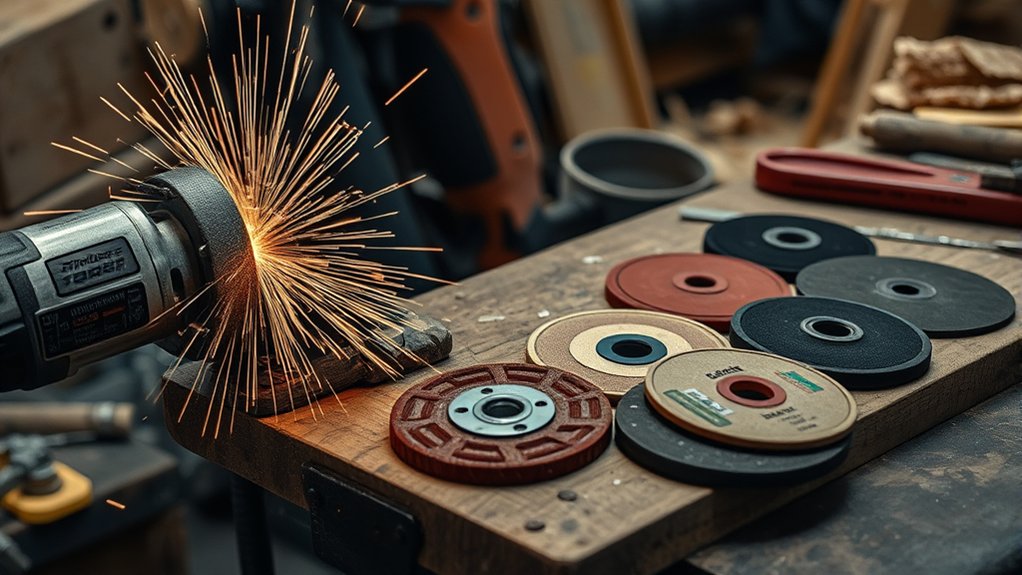
Choosing the right disc is the most important part of using an angle grinder. A disc that works well on steel may be wrong for concrete. A wheel made for cutting may be unsafe for side grinding. Always read the disc label and your grinder manual before use.
| Disc or Attachment | Best Use | Key Safety Tip |
|---|---|---|
| Thin cut-off wheel | Cutting metal, bolts, rebar, brackets, and sheet metal | Cut straight. Do not twist the wheel or use it for side grinding. |
| Grinding wheel | Grinding welds, beveling edges, removing burrs, and shaping metal | Use the correct grinding angle and keep both hands on the tool. |
| Flap disc | Sanding, blending welds, smoothing edges, and surface prep | Start with a less aggressive grit if you need a smoother finish. |
| Diamond blade | Cutting tile, brick, concrete, stone, and masonry | Use dust control and respiratory protection when cutting silica-containing materials. |
| Wire wheel or wire cup brush | Removing rust, paint, scale, and surface corrosion | Wear a face shield because wire bristles can break loose. |
| Polishing pad | Light polishing on metal or stone with the correct compound | Use only pads and backing plates rated for grinder speed. |
Check the disc before every use. Do not use a cracked, dropped, warped, expired, or unknown wheel. The disc’s maximum RPM must be equal to or higher than the grinder’s no-load speed. The disc diameter and arbor hole must also match the grinder and flange system.
Products Worth Considering

Structural Components: A Cut off wheel typically comprises an abrasive, a binder, and air holes. The abrasive cuts, the binder shapes and strengthens, and the air holes remove swarf and dissipate heat to prevent damage to the cutting disc from overheating

Premium and Value: This 10-pack 4-1/2 x 7/8-inch metal/stainless steel cut-off wheel set is specially formulated for fast cutting in metals and stainless steel

【Fits All 4-1/2 Inch Angle Grinders】 PRETEC Cut Off Wheel is compatible with all 4-1/2 inch angle grinders with 7/8 inch arbor. The high rotating speed of up to 13,300 RPM, more than common 13,000 RPM, ensure maximum efficiency.
Essential Techniques for Effective Grinding and Cutting
Good technique helps the grinder cut cleaner, last longer, and stay easier to control. Start by putting the guard and side handle in the best position for the task. Then clamp the workpiece so it cannot shift. Stand out of the direct wheel path, keep your feet balanced, and use both hands.
Before You Start
- Inspect the grinder, cord or battery, guard, side handle, spindle, flange, and disc.
- Make sure the disc is correct for the material and task.
- Confirm the disc is rated for the grinder’s RPM.
- Remove loose clothing, jewelry, and anything that can catch in the wheel.
- Clear sparks from flammable liquids, sawdust, rags, paper, and fuel containers.
- Clamp the workpiece instead of holding it by hand.
- Let the wheel run up to full speed before touching the work.
Cutting With an Angle Grinder
For cutting, use a thin cut-off wheel or diamond blade rated for the material. Hold the grinder steady and keep the wheel straight in the cut. Do not twist, bend, or force the disc sideways. If the cut starts to pinch, stop and support the material better before continuing.
Let sparks travel away from your body when possible. Keep bystanders out of the spark path and use a screen if people are nearby. After the cut, let the disc stop completely before setting the grinder down.
Grinding With an Angle Grinder
For grinding, use a grinding wheel, not a cut-off wheel. Hold the grinding disc at a shallow angle to the surface, usually about 15 to 30 degrees. Move steadily instead of staying in one spot, which can overheat the workpiece or gouge the surface.
Use light pressure. If you have to push hard, the disc may be dull, clogged, wrong for the material, or mounted on an underpowered grinder.
Pro Tip: If you are new to angle grinders, practice on scrap metal first. Try a light grinding pass, a straight cut, and a flap-disc smoothing pass before working on the final part.
What Not to Do With an Angle Grinder
An angle grinder is versatile, but it is not the best tool for every job. Avoid these unsafe or poor-fit uses:
- Do not remove the guard. The guard helps protect you if sparks or fragments come back toward the operator.
- Do not grind with a cutting wheel. Thin cut-off wheels are not made for side pressure.
- Do not cut with a grinding wheel. Grinding wheels are thicker and not designed for clean, deep slicing cuts.
- Do not use damaged discs. A cracked or dropped wheel can fail at high speed.
- Do not cut roots, branches, or lumber with improvised blades. Use a saw designed for wood or landscaping work.
- Do not cut plastic without caution. Some plastics melt, smoke, or grab the disc. A saw, rotary tool, or shears may be safer.
- Do not use the grinder near fuel, solvents, paint thinner, or dry debris. Sparks can ignite flammable materials.
- Do not set the grinder down while the wheel is still spinning. Wait for a complete stop.
How to Stay Safe While Using Your Angle Grinder
Safety starts before the disc touches the work. OSHA notes that hand and power tools can cause severe injuries when used or maintained improperly, and angle grinders deserve extra care because the wheel spins at high speed.
Personal Protective Equipment (PPE)
Wear PPE that protects against sparks, fragments, dust, noise, and sharp edges:
- Safety glasses plus a face shield for cutting, grinding, and wire brushing.
- Hearing protection, especially when the tool is loud enough that you must raise your voice nearby.
- Heavy-duty gloves that still let you grip the tool securely.
- Fitted, non-melting work clothing with no loose sleeves or dangling strings.
- Closed-toe safety footwear.
- A dust mask or respirator suited to the material, especially for masonry, concrete, brick, mortar, or stone.
Noise can damage hearing at levels above 85 dBA over time, and angle grinder work can also create sparks, fragments, and dust. Treat PPE as part of the tool, not an optional extra.
Workspace Safety Measures
Keep your workspace clean, bright, and free of flammable materials. Clamp small parts in a vise or to a bench. If you are cutting pipe, tubing, or flat stock, support both sides of the cut so the material does not pinch the wheel as it separates.
When cutting concrete, brick, mortar, stone, or similar materials, dust control matters. OSHA explains that respirable crystalline silica can be created when cutting or grinding stone, concrete, brick, block, and mortar. Work outdoors when practical, use wet methods or dust extraction when allowed by the disc and tool setup, and wear suitable respiratory protection.
Proper Tool Handling Techniques
Hold the grinder with two hands. Keep the side handle installed. Position your body out of the wheel’s direct line. Do not lean over the disc. Let the tool reach full speed before contact, then use light pressure and steady movement.
SafeWork SA warns that angle grinder kickback can cause severe cuts and that discs can shatter or disintegrate. It also advises using the correct disc for the task and keeping guards in place. If the grinder chatters, grabs, slows heavily, or feels unstable, stop and correct the setup.
Tips for Maintaining Your Angle Grinder for Longevity
Regular maintenance helps your grinder run cooler, cut better, and stay safer. Dust, worn brushes, damaged cords, clogged vents, and cracked wheels can all create problems.
Regular Inspection Practices
- Check discs for cracks, chips, glazing, warping, or uneven wear before each use.
- Inspect the guard and side handle to make sure both are tight.
- Check the power cord, plug, battery, and switch for damage.
- Look at the spindle, flange, and locking nut for wear or missing parts.
- Confirm vents are clear so the motor can cool.
Proper Cleaning Techniques
| Task | Tools Needed | Frequency |
|---|---|---|
| Clean air vents | Soft brush or low-pressure compressed air | After dusty work |
| Wipe tool body | Dry cloth | After each use |
| Inspect discs and accessories | Visual inspection | Before each use |
| Check carbon brushes on brushed models | Owner’s manual guidance | Monthly for frequent use |
Do not wash the grinder with water or solvents. Keep dust out of the motor housing as much as possible. If the tool smells hot, sparks heavily at the motor, loses power, or vibrates more than normal, stop using it until the cause is found.
Safe Storage Methods
Store your angle grinder in a dry, clean place. Remove the disc if the grinder will be stored for a long time or transported in a toolbox. Keep discs flat, dry, and away from impact. Do not stack heavy items on abrasive wheels, because damage may not always be obvious before use.
Frequently Asked Questions
What are the three main uses of an angle grinder?
The three main uses are cutting, grinding, and surface preparation. Cutting uses thin cut-off wheels or diamond blades. Grinding uses thicker grinding wheels. Surface prep uses flap discs, sanding discs, wire wheels, or strip discs to remove rust, paint, scale, or rough edges.
Can I use my angle grinder as a sander?
Yes, you can use an angle grinder as a sander with the correct flap disc, sanding disc, or backing pad rated for your grinder speed. Use light pressure because a grinder removes material faster than a regular sander and can leave gouges if you stay in one spot.
How is cutting or grinding done with an angle grinder?
For cutting, use a rated cut-off wheel or diamond blade, keep the wheel straight, and avoid twisting the disc in the cut. For grinding, use a grinding wheel at a shallow angle and move steadily across the surface. In both cases, clamp the work, use both hands, and let the tool do the work.
What is the difference between grinding and cutting?
Cutting slices through material with a thin wheel or blade. Grinding removes surface material with a thicker wheel designed for side contact. Do not swap the two: a cutting wheel is not built for side pressure, and a grinding wheel is not the best choice for deep slicing cuts.
Can an angle grinder cut concrete or brick?
Yes, if you use a diamond blade rated for masonry, concrete, brick, or stone. Control dust carefully because cutting or grinding these materials can create respirable crystalline silica. Work outside when possible, use dust control, and wear suitable respiratory protection.
Can I use an angle grinder without the guard?
No. Keep the guard installed and positioned between you and the disc path when possible. The guard helps deflect sparks and fragments if the wheel breaks or grabs. If a job cannot be done with the guard in place, choose a different tool or setup.
Conclusion
An angle grinder is one of the most useful tools in a workshop because it can cut, grind, sand, clean, and prepare many materials with the right disc. It is also a high-speed tool that demands respect. Match the disc to the material, check the RPM and size rating, clamp your work, keep the guard and side handle installed, and wear proper PPE. Used with care, it can save time on metalwork, masonry, auto repair, welding prep, and surface finishing.
Sources
- SafeWork SA – Angle grinders – backs up kickback, disc, guard, PPE, and safe-use guidance.
- eCFR – 29 CFR 1910.215 Abrasive wheel machinery – backs up abrasive wheel guarding and wheel safety requirements.
- OSHA – Hand and Power Tools – backs up general power-tool hazard and safe-use context.
- OSHA – Crystalline Silica – backs up silica dust risks from cutting and grinding masonry materials.
- OSHA – Occupational Noise Exposure – backs up hazardous noise and hearing protection guidance.
- CDC/NIOSH – About Occupational Hearing Loss – backs up the 85 dBA recommended exposure limit for occupational noise.