An angle grinder is fast, powerful, and useful for cutting, grinding, and surface prep, but it is not the right tool for every job. You should avoid it when the work needs fine control, a clean finished edge, low heat, low dust, or safe access in a tight space. Before you pull the trigger, match the task, material, disc, workspace, and your experience level to the safest tool for the job.
Quick Answer
Do not use an angle grinder for fine finish cuts, delicate materials, unsupported workpieces, cramped corners, overhead work, or any job where the correct guard, disc, PPE, and dust or spark control cannot be used. Choose a saw, rotary tool, file, sander, shear, or specialty cutter when accuracy and control matter more than speed.
Key Takeaways
- Use an angle grinder for rough cutting, grinding, and surface prep, not for fine woodworking, delicate plastics, or precision finish work.
- Never use the wrong disc. A cutting disc is for cutting, a grinding disc is for grinding, and each disc must match the material and tool speed.
- Keep the guard, side handle, eye protection, face protection, hearing protection, gloves, and safe work position in place.
- Control sparks, dust, and kickback before starting. If you cannot clamp the work or keep a clear view, choose another tool.
At a Glance
| Best For | Rough metal cutting, grinding welds, removing rust, masonry cutting with the correct disc, and fast surface prep. |
| Avoid For | Precision cuts, soft plastics, thin trim, unsupported work, tight blind corners, and jobs where sparks or dust cannot be controlled. |
| Minimum Safety Gear | Safety glasses or goggles, face shield, hearing protection, gloves with good grip, fitted clothing, and respiratory protection when dust is present. |
| Main Risk | Kickback, shattered discs, flying debris, sparks, burns, dust exposure, noise, and loss of control. |
Common Risks Associated With Angle Grinder Use
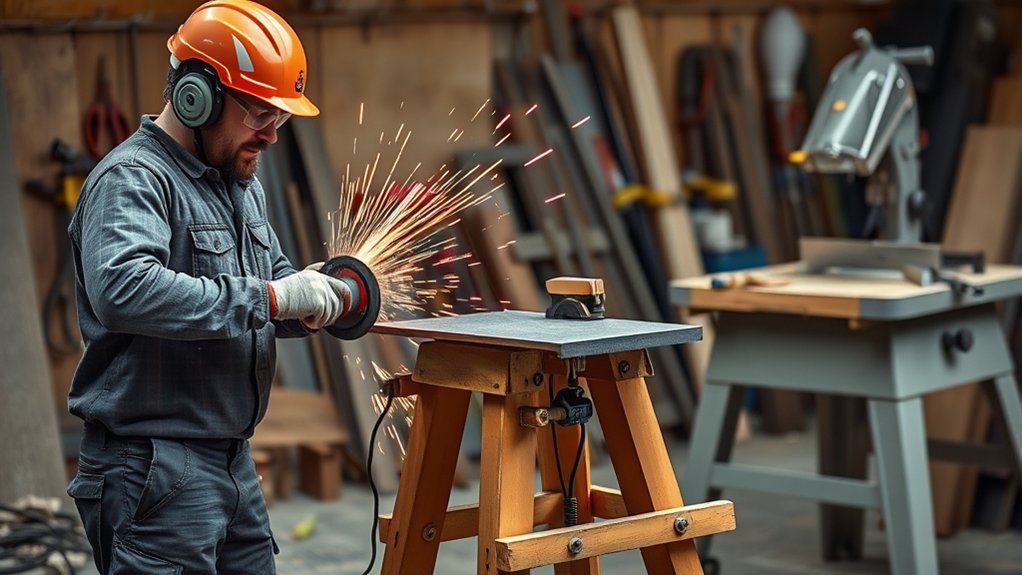
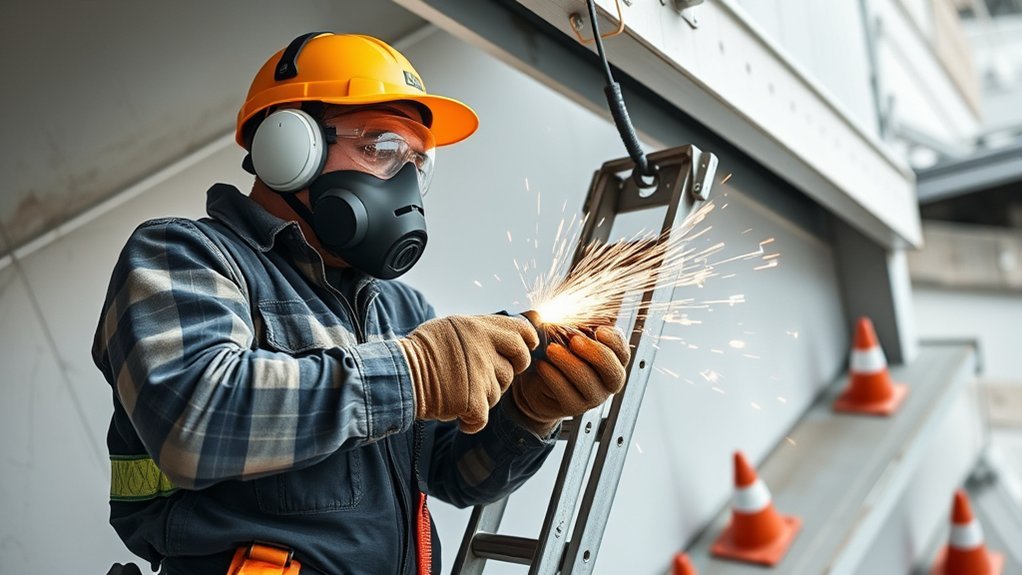
Angle grinders remove material at high speed, so small mistakes can turn serious quickly. The main hazards are kickback, shattered discs, flying metal or masonry chips, sparks, burns, noise, vibration, and dust. These risks increase when the workpiece is loose, the disc is wrong for the material, the guard is removed, or you work from an awkward position.
Use the grinder only with the correct guard and handle installed. OSHA requires portable abrasive wheels to be used on machines with safety guards, and right-angle grinder guards should sit between you and the wheel. You should also inspect each wheel before mounting and confirm the grinder speed does not exceed the wheel’s rated speed.
Warning: Never remove the guard to “make the grinder fit.” If the guard blocks access, the job likely needs a different tool, a smaller grinder, or a safer setup.
Sparks can ignite rags, solvents, dry leaves, fuel vapors, sawdust, and other flammable materials. Dust can also be a serious hazard. When cutting or grinding concrete, brick, stone, mortar, block, or similar materials, respirable crystalline silica may be produced. OSHA explains that this dust can be created during grinding, cutting, drilling, and crushing those materials and can increase the risk of serious lung disease.
When Not to Use an Angle Grinder
You should not use an angle grinder just because it is nearby. If the tool is too aggressive for the finish, too large for the space, or too risky for the material, slow down and choose a better option.
| Avoid the Angle Grinder When | Why It Is a Problem | Better Tool Choice |
|---|---|---|
| The cut must be exact and clean | The disc can wander, overcut, or leave a rough edge. | Miter saw, table saw, cold saw, track saw, jigsaw, or bandsaw |
| The material is soft plastic, vinyl, rubber, or thin trim | Heat can melt, smear, warp, or chip the edge. | Utility knife, fine-tooth saw, oscillating tool, shears, or rotary tool |
| You cannot clamp the workpiece | The work can shift and pinch the disc, causing kickback. | Clamp first, use a vise, or switch to a slower hand tool |
| You are working in a blind corner or cramped space | You may lose sight of the disc, guard position, or spark path. | Die grinder, rotary tool, oscillating multi-tool, file, or compact saw |
| Sparks, dust, or noise cannot be controlled | You can expose yourself or others to fire, dust, and hearing hazards. | Cold-cut saw, hand saw, shears, nibbler, wet-cut system, or dust-controlled tool |
Identifying Tasks Unsuitable for Angle Grinders
Some jobs look simple until the grinder touches the work. The disc spins fast, removes material quickly, and creates heat. That is useful for rough work but risky when you need a clean line, a delicate edge, or tight control.
Tasks Requiring Precision Cutting
Angle grinders are not the best choice for detailed cuts, visible finish edges, cabinet parts, trim work, or layout lines that must stay exact. The disc can flex or drift, and the sparks can hide your cut line. For metal, a cold saw or bandsaw often gives a squarer cut. For wood, use a saw designed for wood and keep the angle grinder out of the job.
Note: Do not fit wood-cutting blades to a standard angle grinder unless the grinder, guard, blade, and manufacturer instructions are specifically designed for that use. A grinder is not a substitute for a circular saw or miter saw.
Soft Materials and Plastics
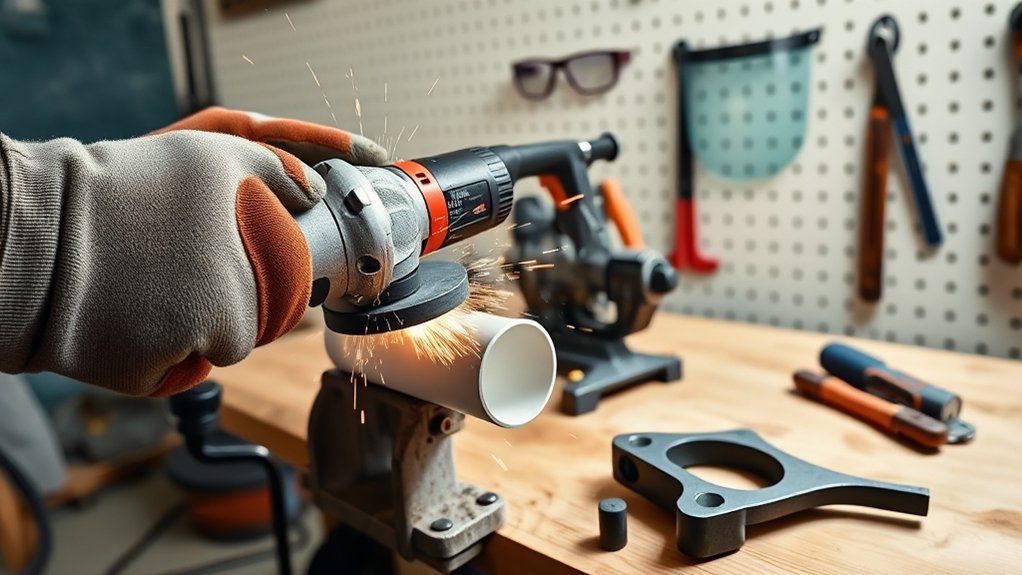
Soft plastics, vinyl, rubber, acrylic, fiberglass trim, and thin decorative pieces are easy to damage with a grinder. Heat can melt the edge. Abrasive action can tear the surface instead of cutting it cleanly. Dust and fumes may also be unpleasant or unsafe, depending on the material.
For these materials, use a fine-tooth saw, utility knife, plastic scoring tool, oscillating tool, rotary tool, or shears. Work slowly and support the material on both sides of the cut.
Tight Spaces and Corners
A full-size grinder can be too bulky for tight corners, underside work, and confined areas. When you cannot keep two hands on the tool, see the disc, control the spark path, and keep the guard in the correct position, the grinder is the wrong choice.
Use a compact die grinder, rotary tool, hacksaw, file, oscillating multi-tool, or smaller purpose-built cutter instead. These tools remove material more slowly, but they give you better control and reduce the chance of a sudden grab.
Best Alternatives for Precision Work
When precision matters, the safest tool is usually the one that removes material at the right speed, follows a guide, and matches the material. Angle grinders are strong at rough work. Other tools are better for clean cuts, delicate edges, and controlled finishing.
Products Worth Considering

The 20pcs double cut tungsten carbide burr bits set compatible with Dremel metal grinding bits compatible with Hardell Milwaukee DeWALT angle or straight air or electric die grinder or drill.

5 Pcs tungsten carbide burr set 1/4" shank, head dia 8mm, 1 pc clamshell slotted plastic clear box(3"x2.4"x0.6"), 1 manual and 1 paper box.

Material: Crafted from durable stainless steel, ensuring a long service life with resistance to rust, enhancing both efficiency and economy for your projects.
Essential Hand Tools
Hand tools are slower, but that is often the point. They help you remove small amounts of material without heat, sparks, or sudden kickback.
| Hand Tool | Best Use |
|---|---|
| File | Deburring metal, fitting brackets, and easing sharp edges |
| Hacksaw | Small metal cuts where sparks or noise are a problem |
| Chisel | Controlled material removal in masonry, stone, or wood |
| Coping Saw | Curves, trim, and small detailed cuts |
Specialized Cutting Equipment
Specialized saws and cutters give cleaner results because they guide the blade and remove material in a more controlled way. A cold saw is often better for square metal cuts. A bandsaw works well for repeated metal cuts or curves. A jigsaw is better for controlled curves in sheet goods. A table saw or miter saw is better for straight wood cuts. A nibbler or shear can cut sheet metal without the same spark risk as a grinder.
Precision Electric Tools
For small details, use a tool that lets you slow down and see the work. Rotary tools are useful for engraving, small deburring, and light shaping. Detail sanders help with finish prep. Oscillating multi-tools are useful for plunge cuts in tight spaces. Die grinders can reach areas a larger angle grinder cannot, but they still need the correct bit, eye protection, and firm control.
Pro Tip: If the job requires you to “just touch” the material with the grinder, choose a smaller tool. Fine control is usually easier with a file, rotary tool, sander, or oscillating tool.
Choose the Right Disc Before You Start
The disc matters as much as the grinder. A wheel that is wrong for the material or task can break, grab, overheat, or leave a poor finish. Always read the disc label and the grinder manual before use.
- Cutting disc: Use only for cutting. Do not use it for side grinding.
- Grinding disc: Use for grinding and shaping metal. Do not use it as a thin cut-off wheel.
- Flap disc: Use for blending, smoothing, and light stock removal.
- Wire wheel or cup brush: Use for rust, scale, and paint removal. Watch for flying wires.
- Diamond wheel: Use only when rated for the material, such as masonry, tile, concrete, or metal, depending on the wheel design.
Check that the disc diameter, arbor size, maximum RPM, and material rating match the grinder. Do not use a dropped, cracked, chipped, wet, swollen, or expired abrasive wheel.
Products Worth Considering

Structural Components: A Cut off wheel typically comprises an abrasive, a binder, and air holes. The abrasive cuts, the binder shapes and strengthens, and the air holes remove swarf and dissipate heat to prevent damage to the cutting disc from overheating

Premium and Value: This 10-pack 4-1/2 x 7/8-inch metal/stainless steel cut-off wheel set is specially formulated for fast cutting in metals and stainless steel

How to Pick the Best Power Source for Your Tools?
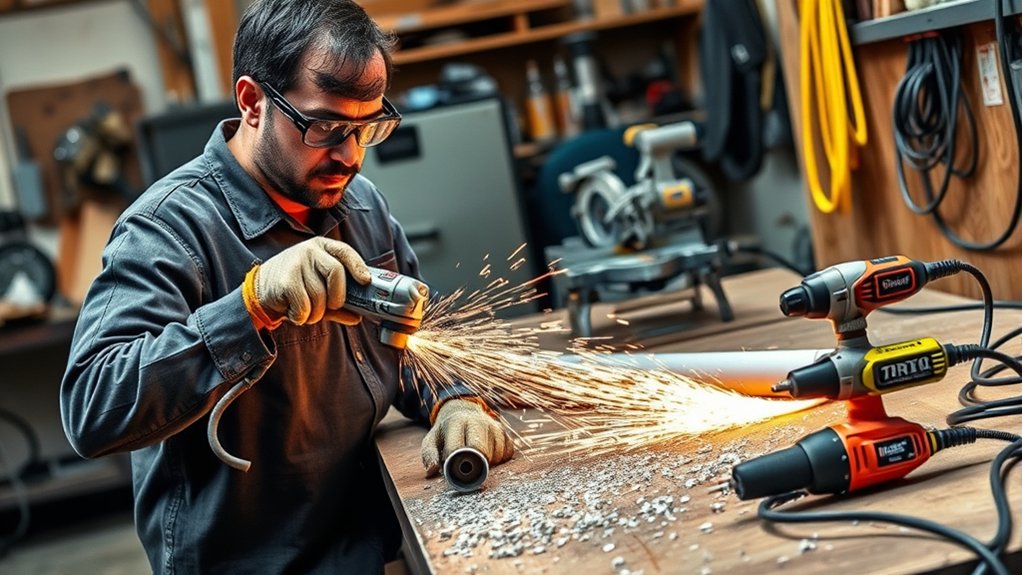
Choose the power source based on the jobsite, run time, tool size, and access. Corded electric grinders work well when you have reliable power and need steady output. Cordless grinders are convenient for quick cuts and mobile work, but battery charge and tool load matter. Pneumatic grinders can be compact and useful in shops with a strong compressed-air system, but the compressor, hose size, fittings, and air pressure must support the tool.
Do not assume one power source is always safer or lighter. Compare the actual tool weight, handle layout, vibration, noise, speed control, brake, and switch style. A smaller tool that you can control with both hands is usually safer than a larger tool that finishes faster but pulls you off balance.
Maximize Ergonomics for Long Use
Long grinder sessions can strain your hands, wrists, arms, shoulders, and hearing. Use the smallest grinder that can safely do the job. Keep the side handle installed. Choose a tool with a comfortable grip, stable switch, balanced weight, and enough power so you do not have to force the disc.
A grinder that is larger than needed can be harder to control. SafeWork SA advises against using a grinder that is larger, heavier, or more powerful than necessary.
Stand with your feet apart, keep the work near waist height when possible, and keep your body out of the likely kickback path. Take short breaks during long jobs so fatigue does not reduce your grip or focus.
Choosing the Best Size for Your Workspace
Grinder size affects control. Larger grinders remove material quickly, but they add weight, torque, and gyroscopic force. Smaller grinders are easier to handle in tight areas, but they still require the correct guard, disc, PPE, and work support.
| Grinder Size | Best Use Case | Important Caution |
|---|---|---|
| 4-inch to 5-inch | General cutting, grinding, cleanup, and smaller work areas | Still dangerous if the wrong disc or poor grip is used |
| 6-inch to 7-inch | Larger cuts and surface prep in open areas | More torque and fatigue, so stance and two-hand control matter |
| 9-inch | Heavy cutting only when a risk assessment supports it | Higher kickback and handling risk; many jobs are safer with another tool |
| Die grinder or rotary tool | Small details, deburring, and confined access | Use rated bits and keep eye protection on |
Safety Tips for Using Angle Grinders
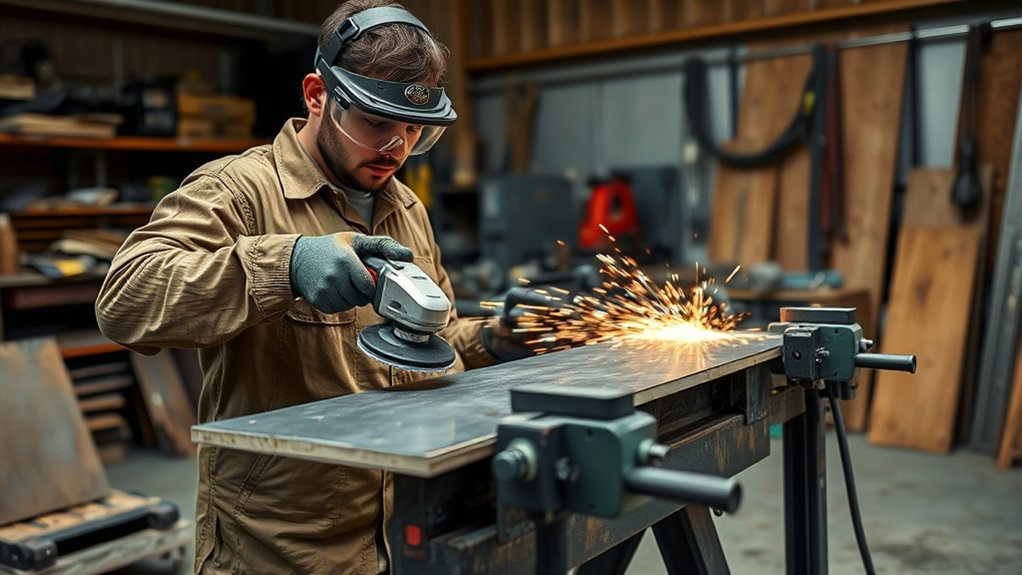
If an angle grinder is the right tool, set up the job before you start. A safe setup should feel controlled, visible, and stable.
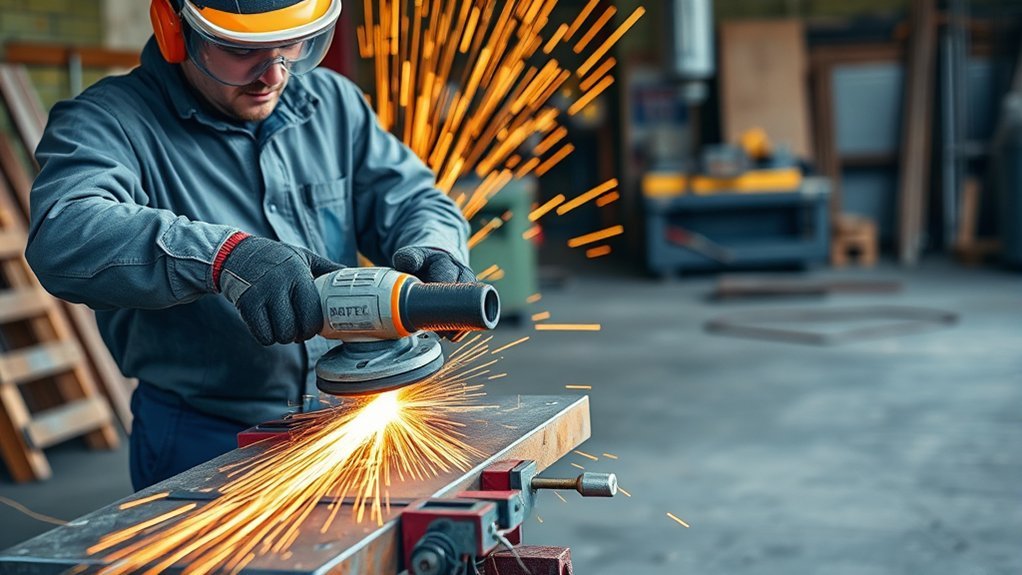
- Wear the right PPE: Use safety glasses or goggles, a face shield, hearing protection, gloves with good grip, fitted clothing, and sturdy footwear. Use respiratory protection when dust cannot be controlled.
- Keep the guard and handle installed: The guard should be positioned between you and the disc, and the side handle should help you use two hands.
- Inspect the wheel: Do not use cracked, damaged, dropped, or wrong-size discs. Check the disc rating against the grinder speed.
- Clamp the work: The workpiece should not move, sag, pinch the disc, or vibrate loose.
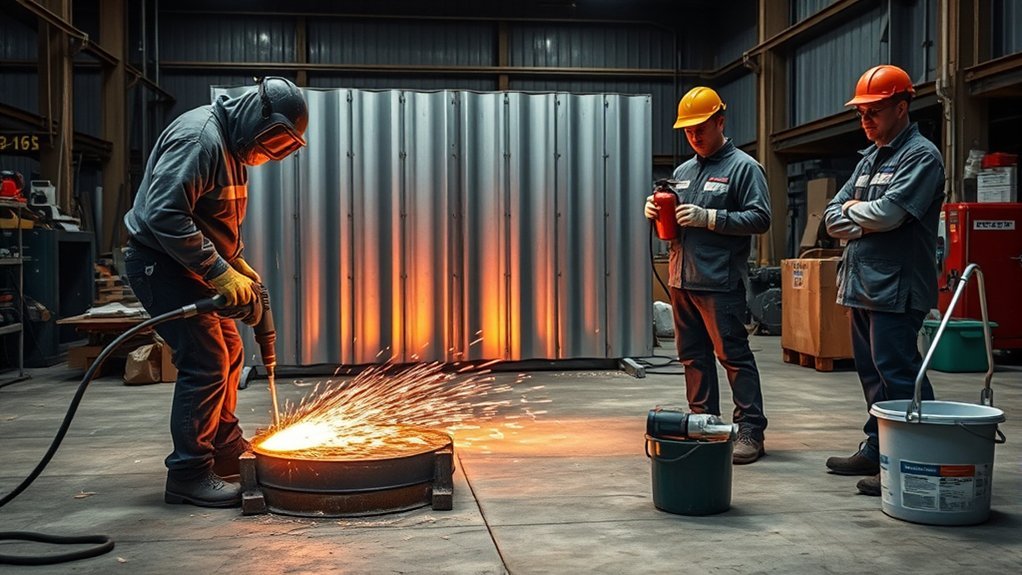
- Control sparks and dust: Move flammables away, warn nearby people, use screens when needed, and use dust controls for masonry or concrete.
- Let the grinder reach full speed: Do not bump the disc into the work. Start gently and use light pressure.
- Wait for the disc to stop: Never set the grinder down while the wheel is still spinning.
Best Practices for Effective Tool Usage
Before each job, ask four questions: What material am I cutting or grinding? How clean does the result need to be? Can I hold the tool with both hands and see the disc? Can I control sparks, dust, and noise? If any answer is weak, choose a safer tool or improve the setup first.
Use light pressure and let the disc do the work. Forcing the grinder increases heat, wear, and kickback risk. Keep bystanders away from the spark path. Disconnect power before changing discs. Store discs flat and dry, and do not use accessories that are not rated for your grinder.
Pro Tip: If you are fighting the grinder, stop. A stable setup should not require you to twist your wrists, lean over the disc, or hold the work with one hand while grinding with the other.
Frequently Asked Questions
What are the safety rules when using an angle grinder?
Wear eye, face, hearing, hand, and respiratory protection as needed. Keep the guard and side handle installed. Use the correct disc for the material and task. Clamp the workpiece, keep both hands on the tool, control sparks and dust, and disconnect power before changing discs.
How do you choose the right angle grinder?
Choose the grinder by material, disc size, power source, workspace, and control. A 4-inch or 5-inch grinder suits many general jobs. Larger grinders need more space, strength, and experience. Look for a comfortable handle, working guard, compatible discs, and speed ratings that match your accessories.
Why is it important to use the right tool for the right task?
The right tool gives you better control, a cleaner result, and a safer work position. A grinder is fast, but speed is not always helpful. For precision cuts, soft materials, tight spaces, or low-spark work, a saw, shear, file, rotary tool, or sander may be safer and more accurate.
What common injuries can result from using an angle grinder improperly?
Improper angle grinder use can cause cuts, eye injuries, burns, fractures, hearing damage, dust exposure, and injuries from kickback or shattered discs. These risks rise when the wrong disc is used, the guard is removed, the workpiece is not clamped, or the operator works from an unstable position.
Can you use an angle grinder on wood?
Do not use a standard angle grinder as a general wood-cutting tool. Wood can grab, kick back, burn, or splinter. Use a circular saw, jigsaw, miter saw, handsaw, or carving tool designed for wood unless your grinder and accessory are specifically rated by the manufacturer for that use.
Should you use a cutting disc for grinding?
No. A cutting disc is thin and designed for edge cutting, not side pressure. Grinding with a cutting disc can break the wheel. Use a grinding disc for grinding, a cutting disc for cutting, and a flap disc for blending or smoothing.
Conclusion
Angle grinders are useful, but they are not precision tools for every material or workspace. Use one only when you can control the disc, guard, workpiece, sparks, dust, and your body position. For fine cuts, soft materials, cramped corners, or unsupported work, choose a saw, file, shear, sander, rotary tool, or other task-specific tool. The safer choice is the tool that gives you control, not just speed.
Sources
- OSHA 1910.243, Guarding of Portable Powered Tools — backs up guard, wheel inspection, and abrasive wheel safety guidance.
- SafeWork SA: Angle Grinders — backs up kickback, disc selection, 9-inch grinder caution, PPE, and safe-use practices.
- CDC/NIOSH: About Occupational Hearing Loss — backs up hearing-risk and hearing-protection guidance.
- OSHA: Crystalline Silica Overview — backs up dust and silica cautions for concrete, brick, stone, mortar, and similar materials.
- OSHA: Personal Protective Equipment — backs up PPE selection and hazard-exposure guidance.