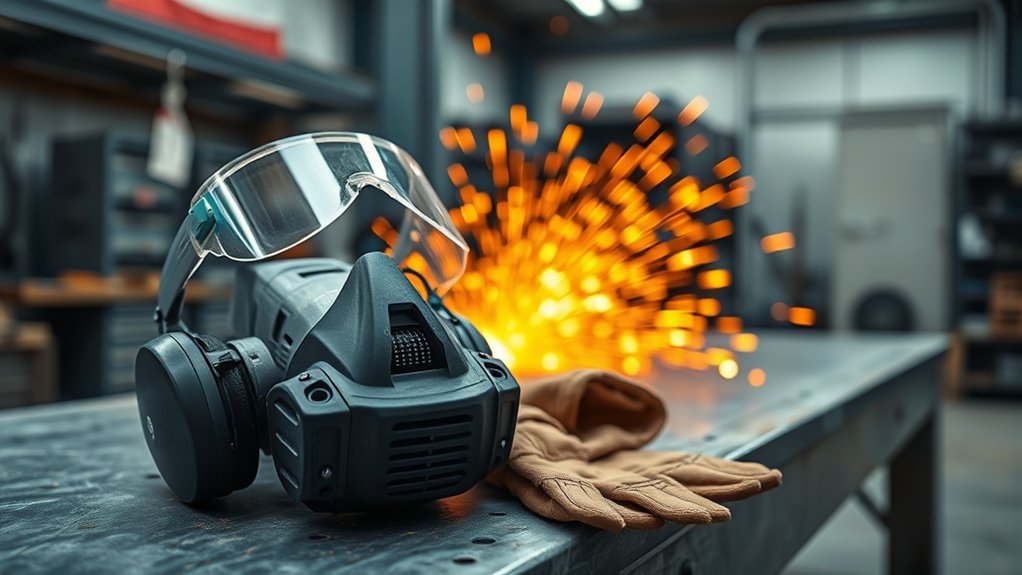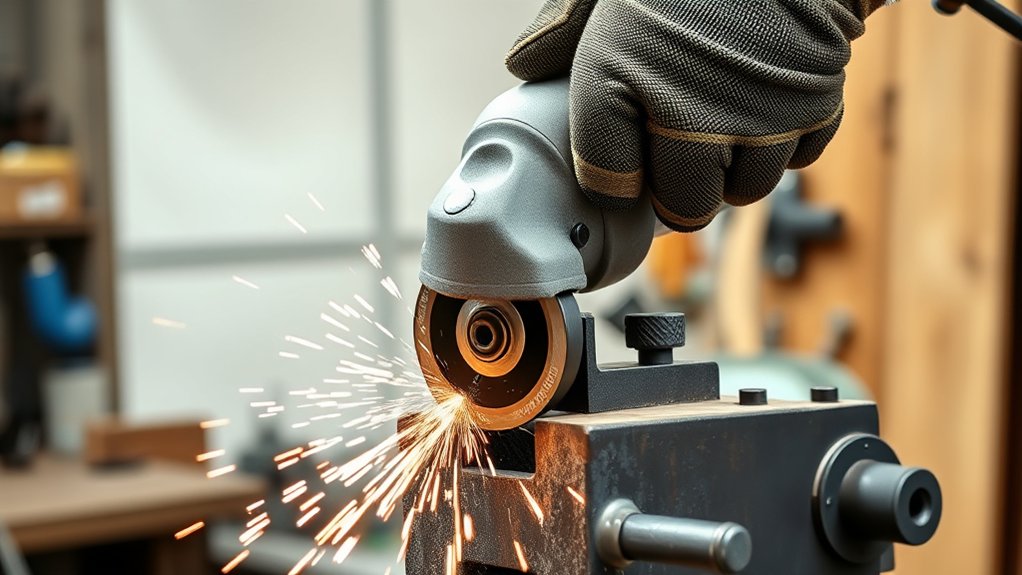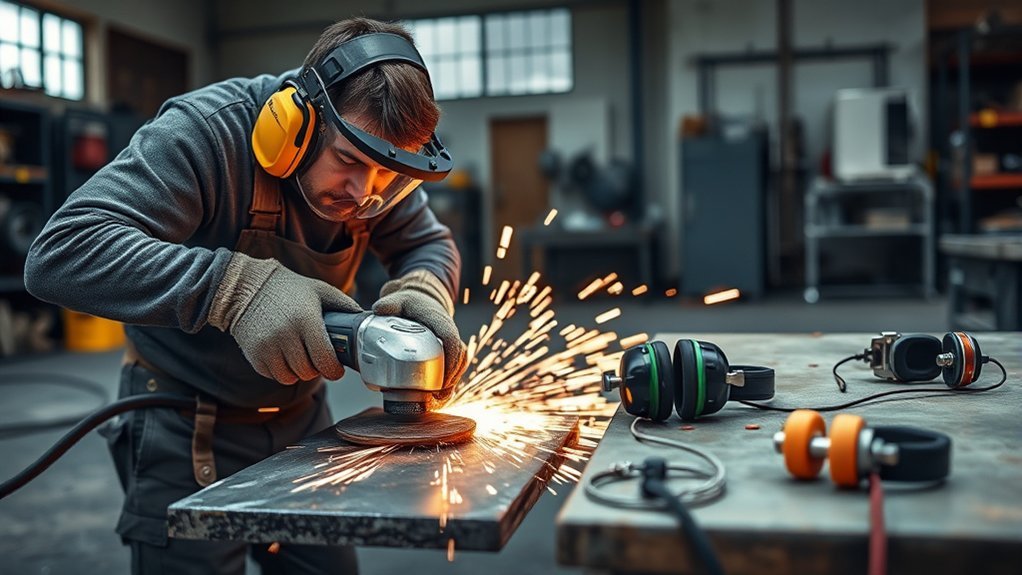
Angle grinders can expose you to hazardous noise within minutes, even during a small cutting or grinding job. The wheel, material, pressure, tool condition, and room can all change the sound level. Wearing properly fitted hearing protection before the grinder starts is one of the simplest ways to lower your risk of permanent hearing damage.
Quick Answer
Yes. Wear hearing protection whenever you use an angle grinder. NIOSH measurements in one industrial evaluation found angle-grinder sound levels of 90.1–103.7 dBA. Use well-fitted earplugs or earmuffs, and use both when exposure reaches 100 dBA or more or includes impulse noise.
Key Takeaways
- Put on hearing protection before starting the grinder, not after your ears begin ringing.
- Do not treat the printed Noise Reduction Rating (NRR) as the exact protection you will receive; fit and consistent use matter.
- Use earplugs and earmuffs together at 100 dBA or higher or for impulse noise.
- Measure workplace exposure with a sound level meter or personal dosimeter; phone apps are screening tools, not always compliance instruments.
- Reduce noise at the source by using the correct wheel, maintaining the grinder, securing the workpiece, and limiting time near the noise.
- Sudden hearing loss is a medical emergency and needs immediate evaluation.
At a Glance
| Time Required | About 1–2 minutes to inspect and fit hearing protection before grinding |
| Difficulty | Easy, but correct fit is essential |
| Tools Needed | NRR-labeled earplugs or earmuffs; a sound level meter or dosimeter for exposure assessment |
| Cost | Low for basic plugs; reusable earmuffs and workplace fit testing cost more but may provide better long-term value |
Understanding Angle Grinder Noise Levels and When You Need Hearing Protection
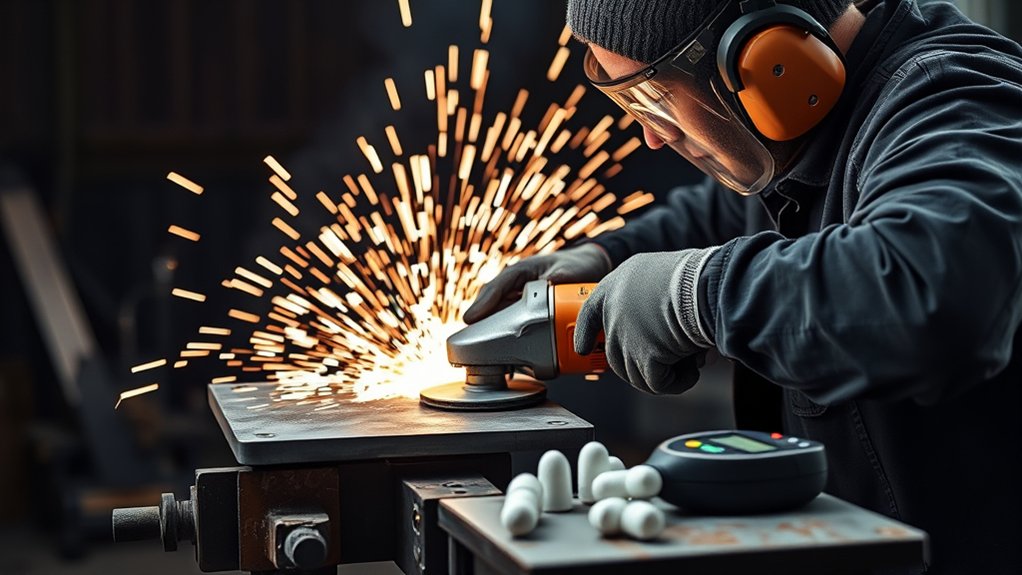
An angle grinder does not have one fixed noise level. The wheel type, wheel diameter, material, contact pressure, grinder speed, tool condition, and nearby surfaces all affect the sound reaching your ears. Hard walls and metal surfaces can reflect noise and make an enclosed shop louder than an open work area.
In an August 2025 NIOSH shipbuilding and repair evaluation, measured sound levels during angle-grinder use ranged from 90.1 to 103.7 dBA. These readings came from specific industrial tasks, so they are not a rating for every grinder. They do show why it is unsafe to assume that a small grinder or short job is quiet enough to use without protection.
Under the NIOSH 3-dB exchange rate, 100 dBA reaches a full recommended daily noise dose in about 15 minutes.
Noise-induced hearing loss may happen slowly after repeated exposure, or it may follow a very intense sound. You may not feel pain while damage is occurring. Ringing, muffled hearing, or trouble understanding speech after grinding are warning signs that the exposure was too high, not proof that your ears will fully recover.
Warning: Never wait for discomfort before using hearing protection. Put it on before the wheel starts and keep it on until the grinder and nearby noisy equipment have stopped.
Noise Level and Exposure Time Both Matter
The NIOSH recommended exposure limit is 85 dBA as an eight-hour time-weighted average. For every 3-dB increase, the recommended exposure time is cut in half. Noise from other tools, hammering, compressed air, music, and earlier work also counts toward the same daily dose.
| Continuous Sound Level | Time to Reach 100% of the NIOSH Daily Dose |
|---|---|
| 85 dBA | 8 hours |
| 88 dBA | 4 hours |
| 91 dBA | 2 hours |
| 94 dBA | 1 hour |
| 97 dBA | 30 minutes |
| 100 dBA | 15 minutes |
These times are not a countdown for working without protection. NIOSH recommends wearing hearing protection whenever noise exceeds 85 dBA, regardless of duration. Because measured angle-grinder tasks commonly exceed that level, the practical rule is simple: wear protection every time you grind or cut.
OSHA Workplace Noise Requirements
For U.S. general-industry workplaces, OSHA’s occupational noise standard uses an action level of 85 dBA as an eight-hour time-weighted average for a hearing conservation program and a permissible exposure limit of 90 dBA as an eight-hour time-weighted average. Construction and state-plan requirements may differ, so employers must apply the rules that cover their work.
OSHA limits are legal workplace requirements, not a promise that lower exposure is risk-free. Employers should measure exposure, use feasible engineering or administrative controls, provide suitable hearing protectors, train workers, and verify that protectors are fitted and used correctly.
Selecting Effective Hearing Protection Options
The best hearing protector is one that provides enough reduction, works with your other PPE, and stays comfortable enough to wear for the full noisy task. Common choices include disposable foam plugs, reusable pre-molded plugs, custom-molded plugs, canal caps, and earmuffs.
Products Worth Considering
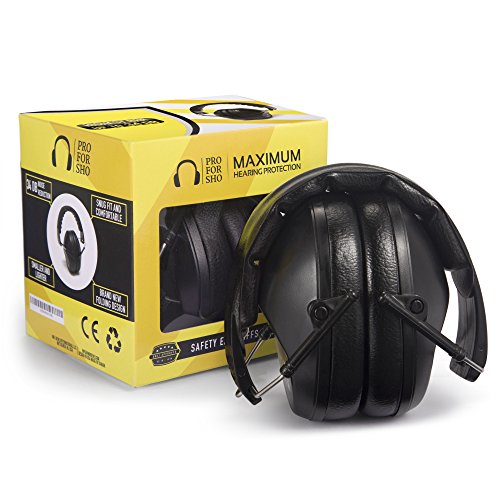
34 dB NRR — Proven, Compact & Trusted for Over 10 Years: Since 2013, we’ve designed sleeker, lighter safety earmuffs without sacrificing performance — launching one of the first models certified at 34dB NRR, a rare achievement for compact soundproof earmuffs. Most ear muffs above 30 dB are bulky and heavy; ours deliver powerful noise protection with lasting comfort, fold to pocket size, and give you the confidence to take on shooting ranges, hunting, yard work, and any loud environment

LITTLE EARS, BIG PROTECTION - Shield your baby’s ears from potential hearing damage in loud environments. Our NRR 26dB noise cancelling headphones for babies reduce harmful loud noise while preserving ambient sounds
Types of Hearing Protection
- Foam earplugs: Lightweight and effective when rolled, inserted deeply, and allowed to expand. They are harder to fit correctly and should be handled with clean hands.
- Reusable pre-molded plugs: Faster to insert and remove than foam plugs. They must match the size and shape of your ear canals.
- Custom-molded plugs: Made for the user’s ears. They can be useful for frequent grinding when standard plugs are uncomfortable or difficult to fit.
- Earmuffs: Easy to inspect and put on. They work well for intermittent tasks, but glasses, face-shield arms, long hair, hats, or other PPE can break the cushion seal.
- Level-dependent or communication protectors: Designed to preserve speech or quieter sounds while reducing hazardous noise. They still need an appropriate hearing-protection rating and correct fit.
Note: Consumer earbuds or active-noise-canceling headphones are not substitutes for hearing protection unless the product is labeled and rated as a hearing protector.
How to Use the Noise Reduction Rating (NRR)
The NRR printed on a package is a laboratory-derived rating. It is useful for comparing products and estimating whether a protector may be suitable, but it is not the exact number of decibels every user will receive. A shallow earplug, worn cushion, broken earmuff seal, or inconsistent use can sharply reduce real protection.
Do not simply subtract the printed NRR from an A-weighted grinder reading and assume the result is your protected exposure. Employers evaluating protection for OSHA compliance must use an accepted method in Appendix B to 29 CFR 1910.95. For individual workers, NIOSH now recommends quantitative hearing-protector fit testing, which produces a personal attenuation rating for the protector as worn.
NIOSH advises selecting enough protection to bring exposure at the ear to about 75–85 dBA while avoiding unnecessary overprotection that can block warning signals or communication. For noise at 100 dBA or higher, or for impulse noise, use dual protection: properly fitted earplugs under properly sealed earmuffs.
Pro Tip: In a workplace hearing conservation program, ask for individual fit testing. It can show whether your usual earplug insertion actually provides enough protection and can help you choose a better size or style.
Check Compatibility With Other PPE
Angle-grinder work often requires safety glasses, a face shield, gloves, protective clothing, and respiratory protection when dust or fumes require it. Make sure these items do not disturb your hearing protector.
- Place thin safety-glasses temples under earmuff cushions and check for gaps.
- Use hearing protectors designed to work with your hard hat or face shield when needed.
- Keep hair, hood strings, hat bands, and jewelry out of the earmuff seal.
- Do not modify plugs, cushions, headbands, or helmet-mounted adapters.
How to Fit Earplugs and Earmuffs Correctly
Correct fit is as important as the product rating. Inspect the protector first, then fit it before entering the noisy area or starting the grinder.
Products Worth Considering

NRR 28 MUFFS. NRR 38 WHEN DOUBLED UP: wear the earmuffs on their own, or add the NRR 33 foam earplugs when you want extra protection. Using the standard +5 dB field rule gives a combined NRR 38 for very loud ranges or sensitive ears.

Comfortable and Cozy: The lining of ear muffs is designed to provide warmth to your ears without causing any uncomfortable pressure. Stay comfortable and protected during your winter outdoor activities and travels

NRR 28 MUFFS. NRR 38 WHEN DOUBLED UP: wear the earmuffs on their own, or add the NRR 33 foam earplugs when you want extra protection. Using the standard +5 dB field rule gives a combined NRR 38 for very loud ranges or sensitive ears.
Fit Foam Earplugs: Roll, Pull, and Hold
- Roll: With clean hands, roll the entire foam plug into a small, smooth cylinder. Do not fold it or leave creases.
- Pull: Reach over your head with the opposite hand and pull the top of the ear up and back to straighten the ear canal.
- Insert: Slide the compressed plug well into the canal. A properly inserted plug should not stick far out of the ear.
- Hold: Keep a finger on the plug for about 20–30 seconds while it expands.
- Check both ears: Your voice should sound deeper or more blocked. If one side sounds different, remove the plug and refit it with clean hands.
If professional fit testing is not available, NIOSH suggests a simple check: count out loud while slowly cupping and uncupping your hands over your ears. With a good earplug fit, your voice should sound about the same because the plugs are already blocking most of the change. This is only a fit check, not a measurement of exact protection.
Fit Earmuffs
- Inspect the cushions for cracks, stiffness, tears, dirt, or flattened areas.
- Center each cup over the full outer ear.
- Adjust the headband so both cushions press evenly against the head.
- Move hair, hat edges, jewelry, and hood material away from the seal.
- Check that safety-glasses arms or other PPE do not create a visible gap.
If the earmuffs loosen when you move your head, replace or adjust them before grinding. Helmet-mounted muffs must be clicked fully into their protective position according to the manufacturer’s instructions.
How to Minimize Noise Exposure in Your Workspace
Hearing protection is the last line of defense, not the only control. Lowering sound at the source and reducing the time people spend near it can make the job safer for the operator and nearby workers.
Assess the Noise Level
Use a sound level meter to check area noise and a personal dosimeter when you need a worker’s total exposure over time. The NIOSH Sound Level Meter app can help screen workplace noise on compatible iOS devices. Other phone apps vary in accuracy, and an app may not meet regulatory measurement requirements.
- Measure during real work: Check the level while the grinder is contacting the actual material, not only while it idles.
- Measure at the operator’s position: Keep the microphone near the hearing zone without blocking it with your body.
- Include the full shift: Count grinding, cutting, hammering, compressed air, and other loud tasks in the total dose.
- Mark noisy zones: Keep bystanders out or require them to wear suitable protection.
A practical warning sign is having to raise your voice to talk to someone at arm’s length. That is not a substitute for measurement, but it means the area is likely hazardous and hearing protection should be used.
Control Noise Before You Grind
- Use the correct wheel: Match the wheel type, diameter, arbor, and speed rating to the grinder and task. Never use a cutting disc for side grinding.
- Do not force the cut: Excess pressure can increase vibration, noise, heat, and wheel stress.
- Secure the workpiece: Clamp it so it cannot chatter, ring, or move unexpectedly.
- Maintain the tool: Remove grinders with worn bearings, damaged guards, loose parts, unusual vibration, or rattling from service.
- Choose quieter equipment: When replacing tools, compare manufacturer noise-emission data and buy quieter models that can complete the work.
- Reduce reflected sound: Move away from hard corners when possible and use suitable acoustic barriers or absorption that will not create a fire or spark hazard.
- Limit access and time: Rotate tasks or schedule noisy work so fewer people are exposed, while making sure each worker’s total exposure remains controlled.
Pro Tip: Quiet breaks can reduce total daily dose only when the break area is truly quiet. They do not erase earlier exposure or make an otherwise excessive noise dose safe.
Do Not Ignore Other Angle Grinder Hazards
Hearing protection does not protect against wheel fragments, sparks, dust, kickback, fire, or electric shock. Keep the guard installed and adjusted between you and the wheel, use the side handle and two hands, secure the work, and follow the grinder and wheel manufacturers’ instructions.
Under OSHA’s general-industry rule for other portable grinders, the maximum angular exposure of the wheel periphery and sides must not exceed 180 degrees, and the top half of the wheel must remain enclosed. Other standards, tool types, and limited exceptions may apply, so employers must identify the rule that covers the specific work.
Best Practices for Hearing Protection Maintenance
Clean, well-fitting hearing protection works better and lasts longer. Follow the protector manufacturer’s instructions because materials and replacement intervals differ.
- Inspect before use: Look for cracked plugs, hardened foam, split flanges, stretched bands, stiff cushions, loose adapters, or missing parts.
- Clean reusable products: Wash reusable plugs and wipe earmuff cups and cushions as directed. Do not soak electronic muffs or use solvents unless the manufacturer allows it.
- Store them safely: Keep clean protectors in a dry case or bag away from metal dust, grinding debris, heat, direct sunlight, and sharp tools.
- Replace worn parts: Replace disposable plugs when dirty, damaged, or no longer able to expand and seal. Replace earmuff cushions or the full unit when the seal or headband tension is no longer reliable.
- Keep spares available: Store a clean backup set so damaged or contaminated protection is never an excuse to grind unprotected.
Do not share reusable earplugs unless they are designed for sharing and can be fully cleaned and disinfected. Custom plugs should be checked if they become loose, uncomfortable, damaged, or no longer pass a fit test.
What to Do in a Hearing Emergency?
Stop the grinder and move to a quiet area if you notice ringing, muffled hearing, ear pain, unusual sound sensitivity, dizziness, or trouble understanding normal speech. Do not restart the job simply because the symptoms begin to fade.
Warning: Treat sudden hearing loss in one or both ears as a medical emergency. Seek immediate medical evaluation rather than assuming the ear is blocked by wax or that the problem will resolve on its own.
The National Institute on Deafness and Other Communication Disorders advises immediate medical care for sudden deafness because delayed diagnosis and treatment can reduce treatment effectiveness. Call emergency services for severe injury, loss of consciousness, significant bleeding, or other urgent symptoms.
For a workplace incident, report the event and document the tool, wheel, task, duration, measured noise level if available, hearing protection used, and symptoms. Employers should review the exposure assessment, protector selection, fit, training, and noise controls before the worker returns to the same task.
Workplaces with repeated hazardous exposure should maintain a hearing conservation or hearing loss prevention program as required. A complete program may include exposure monitoring, engineering controls, suitable protector choices, fit training, audiometric testing, recordkeeping, and follow-up after a hearing shift.
Additional Resources for Angle Grinder Safety
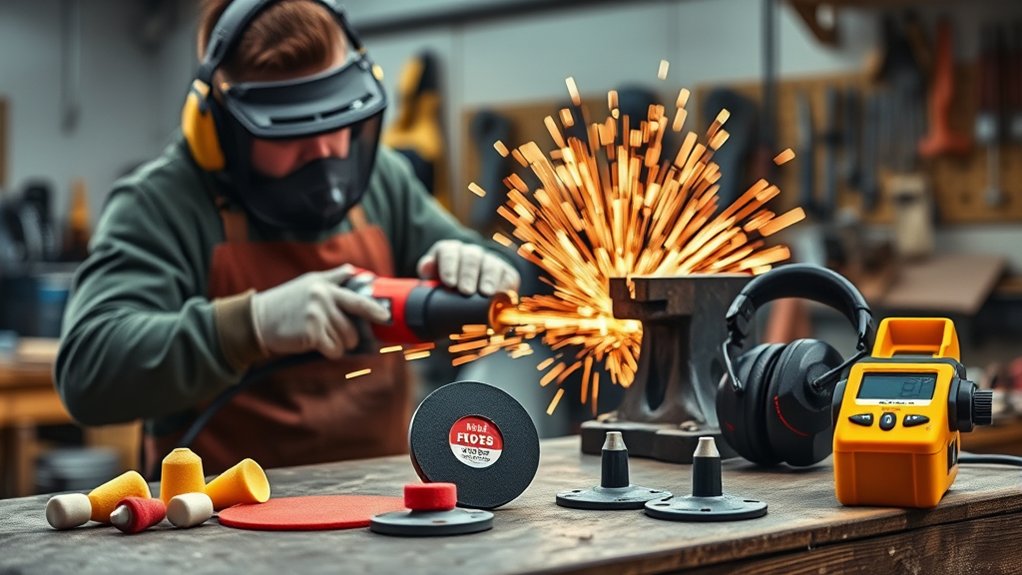
Hearing protection is only one part of safe grinder use. Before each job, review the grinder manual, wheel instructions, workplace hot-work rules, and the hazards created by the material being cut or ground.
- Hearing guidance: Use NIOSH and OSHA resources to assess exposure, select protection, and improve fit.
- Tool instructions: Confirm guard position, side-handle use, wheel compatibility, maximum speed, inspection steps, and required PPE for the exact grinder.
- Wheel instructions: Verify the wheel is approved for the material and task and has a speed rating at least as high as the grinder’s no-load speed.
- Dust and fume controls: Identify metal, coating, silica, or other respiratory hazards and use suitable controls and respiratory protection where required.
- Fire prevention: Remove combustible materials, control sparks, and follow hot-work permit and fire-watch rules when they apply.
Sources
- NIOSH: Evaluation of Exposure to Metals and Noise During Shipbuilding and Ship Repair Operations — measured angle-grinder noise and dual-protection guidance.
- NIOSH: Understanding Noise Exposure Limits — 85-dBA recommended exposure limit and 3-dB exchange-rate table.
- NIOSH: Provide Hearing Protection — protector selection, fit testing, target protected level, and dual protection.
- OSHA: Occupational Noise Exposure, 29 CFR 1910.95 — U.S. general-industry hearing conservation and protector requirements.
- OSHA: Guarding of Portable Powered Tools, 29 CFR 1910.243 — portable grinder guard requirements.
- NIDCD: Sudden Deafness — emergency signs and the need for immediate medical evaluation.
Frequently Asked Questions
Do You Need Ear Protection for an Angle Grinder?
Yes. Wear hearing protection every time you use an angle grinder. Measured industrial angle-grinder tasks have exceeded 90 dBA, and NIOSH recommends protection whenever noise exceeds 85 dBA.
How Do You Choose the Right Hearing Protection for Grinding?
Choose NRR-labeled plugs or muffs that fit correctly, remain comfortable, work with your other PPE, and provide enough reduction for the measured exposure. In workplaces, individual fit testing is the best way to verify the protection a worker receives.
Can You Wear Earplugs and Earmuffs Together?
Yes. NIOSH recommends double hearing protection—earmuffs over properly fitted earplugs—for noise at 100 dBA or higher or for impulse noise. Wearing both does not mean you can add the two printed NRR values together.
What NRR Is Best for Angle Grinder Use?
There is no single NRR that is best for every grinder task. Measure or estimate the exposure, select a protector capable of enough attenuation, and verify the fit. The printed NRR is a laboratory rating and should not be treated as the exact reduction at your ear.
Are Noise-Canceling Headphones Safe for Grinding?
Not unless they are specifically labeled and rated as hearing protection. Consumer active-noise-canceling earbuds or headphones may reduce perceived sound but should not replace NRR-labeled hearing protectors.
What Are the Key Safety Precautions When Using an Angle Grinder?
Wear hearing and eye protection, use a face shield, keep the guard and side handle installed, use the correct speed-rated wheel, secure the workpiece, control sparks and dust, keep flammables away, and follow the grinder and wheel manufacturers’ instructions.
What Are the OSHA Requirements for Angle Grinder Guards?
For other portable grinders covered by 29 CFR 1910.243(c)(3), the maximum exposed portion of the wheel periphery and sides is 180 degrees, and the top half must be enclosed. Other standards and exceptions may apply to a specific tool or workplace.
Safety Disclaimer: This article is for general information only and does not replace professional safety training, exposure monitoring, medical care, the instructions for your grinder and wheel, or workplace rules. Employers must follow the OSHA standard, applicable state-plan requirements, and other rules that cover their work.
Conclusion
Angle grinders are loud enough to make hearing protection a routine part of the job. Put on well-fitted earplugs or earmuffs before starting, use dual protection when the noise reaches 100 dBA or more, and do not rely on the package NRR without considering fit and the actual exposure.
Before your next grinding job, inspect the grinder, wheel, guard, work area, and hearing gear. Reduce noise where you can, keep other people out of the noisy zone, and stop work if you notice ringing, muffled hearing, or a sudden change. These small steps can help protect your hearing for years.