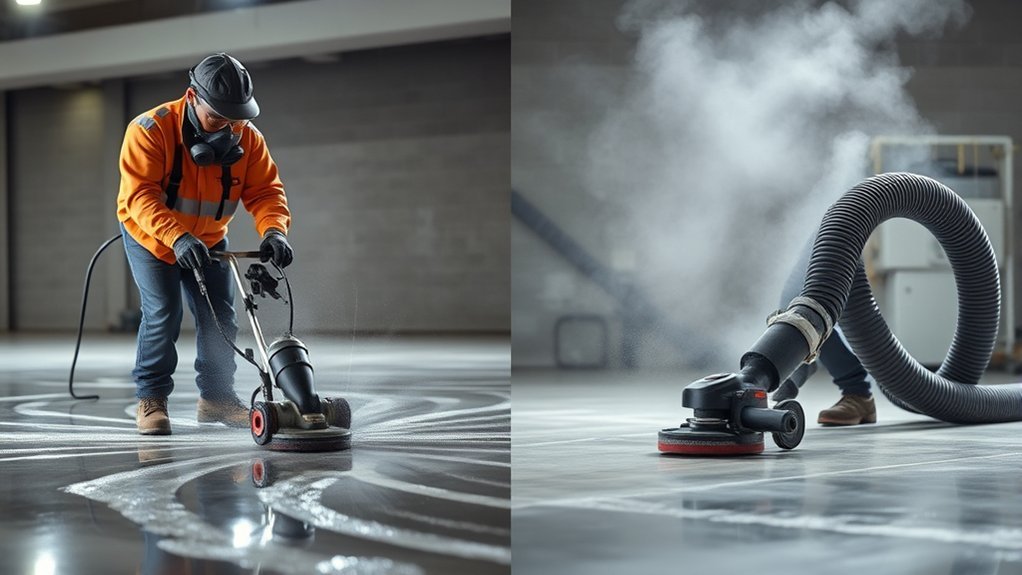
Concrete dust control is not just about keeping the jobsite tidy. When you grind, cut, drill, or polish concrete, you can release respirable crystalline silica, a fine dust that can travel deep into the lungs. The safest setup usually comes down to choosing the right control method for the task: wet grinding, vacuum dust collection, or a combination of both.
Quick Answer
Wet grinding is better when you can manage water and slurry because it knocks dust down at the source. Vacuum dust collection is better when you need a drier, cleaner work area. For indoor concrete grinding or silica-sensitive jobs, the best approach is often a compatible shroud, dust extractor, and wet method where allowed.
Key Takeaways
- Wet grinding reduces airborne dust by trapping particles in water, but it creates slurry that must be contained and cleaned up.
- Vacuum dust collection keeps the work area drier and cleaner, but it only works well when the shroud, hose, airflow, and filter system match the tool.
- For OSHA-regulated construction work, check OSHA’s crystalline silica construction guidance and 29 CFR 1926.1153 before choosing controls.
- Never use a basic household vacuum, dry broom, or compressed air blowdown for concrete silica dust cleanup.
The Importance of Dust Control in Concrete Work
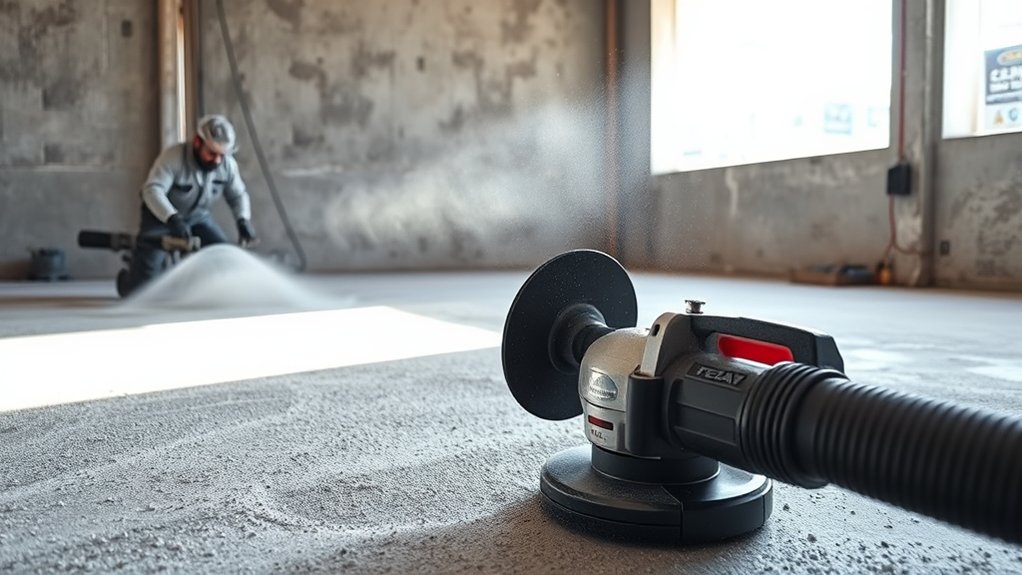
Dust control matters because concrete, brick, mortar, stone, and similar materials can contain crystalline silica. When you grind or cut those materials, tiny respirable particles can become airborne. According to CDC/NIOSH silica guidance, respirable crystalline silica can cause serious lung disease, including silicosis, and is also linked with lung cancer, COPD, certain autoimmune diseases, and chronic renal failure.
OSHA’s construction silica standard sets a permissible exposure limit of 50 micrograms per cubic meter of air, calculated as an 8-hour time-weighted average. If you work under OSHA-regulated conditions, your dust-control plan must match the task, tool, exposure risk, and jobsite conditions.
Warning: Concrete dust can contain respirable crystalline silica. Use engineering controls first, follow the tool and extractor manuals, and use respiratory protection only as part of a proper safety plan. A paper nuisance mask is not a substitute for OSHA-required silica controls.
Wet Grinding vs Vacuum Dust Collection: Which Is Better?
The better method depends on where you are working, how much dust the tool creates, whether water is allowed, and how clean the finished area must stay. Wet grinding and vacuum dust collection solve the same problem in different ways.
| Method | Best For | Main Strength | Main Drawback |
|---|---|---|---|
| Wet grinding | Outdoor work, polishing, cutting, and jobs where water is allowed | Controls dust at the source by trapping particles in water | Creates slurry that can stain, track, clog drains, or require disposal |
| Vacuum dust collection | Indoor grinding, dry surface prep, occupied buildings, and cleanup-sensitive jobs | Captures dust at the shroud and keeps the area drier | Needs correct airflow, sealed connections, filter cleaning, and tool compatibility |
| Combined method | High-dust tasks, indoor work, and jobs where silica exposure must be tightly controlled | Reduces airborne dust while capturing leftover debris | Requires more setup, more cleanup, and compatible wet-rated equipment |
For small outdoor projects, wet grinding may be enough when the tool is designed for water delivery and the slurry can be controlled. For indoor grinding, dry surface prep, or work near finished spaces, a shrouded tool connected to a proper dust extractor is usually the cleaner choice. On high-risk silica jobs, combining water control with vacuum cleanup often gives you the safest workflow.
Comparing Wet Grinding and Vacuum Systems
When comparing wet grinding and vacuum systems, look at more than dust capture alone. You also need to think about surface finish, water access, electrical safety, cleanup time, waste handling, and the tool manufacturer’s dust-control requirements.
Effectiveness in Dust Control
Wet grinding reduces airborne dust by adding water at the cutting or grinding surface. The water traps particles before they float into the breathing zone. This can work well for polishing, outdoor grinding, masonry saw work, and tasks where the water flow reaches the point of contact.
Vacuum dust collection works by pulling dust through a shroud or cowling as soon as the tool creates it. A true HEPA filter can theoretically remove at least 99.97% of 0.3-micron airborne particles, but the filter is only one part of the system. The shroud must sit close to the surface, the hose must stay clear, the dust extractor must provide enough airflow, and the filter-cleaning system must keep suction from dropping.
The best dust-control method is the one that controls dust at the point of generation and still matches the tool, work area, and cleanup plan.
Equipment Compatibility Considerations
Equipment compatibility is where many concrete dust-control setups fail. A strong vacuum will not help much if the shroud leaks, the hose collapses, the filter clogs, or the extractor cannot keep up with the grinder.
| Feature | Wet Grinding | Dry Grinding With Vacuum Collection |
|---|---|---|
| Dust management | Dust is captured in water and becomes slurry | Dust is captured through a shroud, hose, extractor, and filter system |
| Airflow needs | Lower airborne dust, but water flow must reach the grinding surface | Extractor airflow must meet or exceed the tool maker’s recommendation |
| Tool integration | Requires a water-fed tool or safe water-delivery setup | Requires a tight shroud, compatible hose, filter cleaning, and sealed dust container |
| Cleanup | Slurry must be collected before it dries | Collected dust must be emptied without releasing a dust cloud |
| Main risk if done poorly | Slurry tracking, slip hazards, water near electricity, and residue stains | Visible dust leaks, clogged filters, poor suction, and high silica exposure |
Pro Tip: Do a short test pass before grinding the full area. If you see a dust plume, slurry splash, or dust escaping from the shroud, stop and fix the setup before continuing.
Top Advantages of Using Vacuum Dust Collection for Concrete Work
Using vacuum dust collection systems in concrete work offers major benefits when the system is built for silica dust and matched to the tool. A proper setup improves air quality, reduces cleanup time, and lets you inspect the surface sooner because the floor is not covered in slurry.
Enhanced Air Quality
Vacuum dust collection improves jobsite air quality by capturing dust before it spreads. This is especially helpful indoors, in garages, in basements, near finished rooms, or in occupied buildings where dust migration can become a serious problem.
For best results, use a grinder shroud that contacts the slab evenly, a hose that does not restrict airflow, and a dust extractor with the filtration and filter-cleaning features required for the task. If the extractor loses suction, visible dust can escape even when the filter rating looks good on paper.
Improved Worker Safety
Worker safety improves when dust is controlled before it reaches the breathing zone. Vacuum systems also improve visibility because you can see the cut line, grinding pattern, or floor profile more clearly. That reduces mistakes and helps you avoid over-grinding the surface.
In workplace settings, respirators may still be required for certain tasks, durations, or conditions. When respirators are required, they must be selected, fitted, used, and maintained under the applicable respiratory protection rules. Do not treat a respirator as the first or only dust-control method.
Increased Operational Efficiency
A good dust extractor can reduce downtime because you spend less time sweeping, wiping, and waiting for airborne dust to settle. It also helps protect grinders, bearings, switches, and diamond tooling from heavy dust buildup. Cleaner operation makes it easier to check the surface profile between passes and adjust your technique.
Health Risks of Concrete Dust
Concrete dust can be more than a nuisance. When the dust contains respirable crystalline silica, repeated exposure can lead to serious disease. The risk depends on the material, task, dust level, time exposed, ventilation, and whether effective controls are used.
- Silicosis: A serious lung disease caused by inhaling excessive respirable crystalline silica.
- Lung cancer risk: Respirable crystalline silica is linked with lung cancer.
- COPD and other respiratory disease: Exposure can contribute to chronic breathing problems.
- Kidney and autoimmune concerns: CDC/NIOSH notes links with chronic renal failure and certain autoimmune diseases.
- Delayed symptoms: You may not feel sick right away, even when exposure is harmful.
Because symptoms may not appear during the job, you should not use smell, taste, coughing, or visible dust alone as your safety gauge. Use the right engineering controls every time you grind, cut, drill, or polish silica-containing materials.
OSHA Standards for Dust Control: What You Need to Know
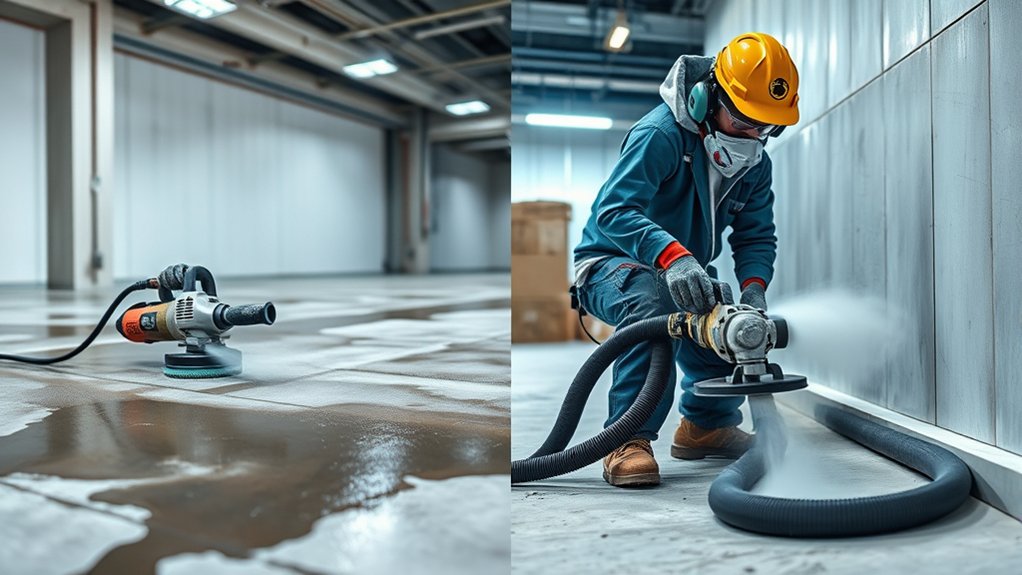
OSHA’s respirable crystalline silica standard for construction is found in 29 CFR 1926.1153. It gives employers two main paths for controlling silica exposure: follow the specified control methods in Table 1, or use alternative exposure control methods based on exposure assessment and controls that keep exposure at or below the PEL.
For many common construction tasks, Table 1 lists tool-specific controls. Examples include water-delivery systems, commercially available shrouds or cowlings, dust collection systems, filters with 99% or greater efficiency for certain tasks, filter-cleaning mechanisms, and respiratory protection in some conditions.
| Task Type | Common OSHA Table 1 Control Concept | What You Should Check |
|---|---|---|
| Handheld grinders for uses other than mortar removal | Integrated water delivery or commercially available shroud and dust collection system | Wheel diameter, shroud fit, airflow, filter efficiency, and whether work is indoors or outdoors |
| Handheld grinders for mortar removal | Shroud and dust collection system with higher airflow needs | OSHA lists 25 cfm or greater per inch of wheel diameter for this task |
| Handheld and stand-mounted drills | Shroud or cowling with dust collection system | Extractor airflow, filter cleaning, and HEPA-filtered vacuuming when cleaning holes |
| Walk-behind floor grinders | Integrated water delivery or manufacturer-recommended dust collection system | Manufacturer airflow recommendation, filter cleaning, and loose dust removal between passes indoors |
Note: OSHA Table 1 is task-specific. Do not assume one vacuum, one filter, or one respirator choice fits every grinder, saw, drill, or floor machine.
How to Minimize Health Risks With Effective Dust Control
To minimize health risks, start with controls that reduce dust at the point where the tool touches the concrete. Then use cleanup practices that keep settled dust from becoming airborne again.
- Use wet methods when allowed: Apply water at a flow rate that minimizes visible dust without creating uncontrolled runoff.
- Use a shroud and dust extractor for dry grinding: The shroud should sit close to the surface and connect tightly to the hose.
- Match the extractor to the tool: Follow the tool and extractor manufacturer’s airflow and filter requirements.
- Control dust indoors: Use ventilation or exhaust where needed to stop visible dust from building up in enclosed areas.
- Clean safely: Use wet sweeping or HEPA-filtered vacuuming instead of dry sweeping when silica dust may be present.
- Empty the collector carefully: Seal bags or containers before disposal so you do not create a second dust cloud.
- Train workers: Anyone using the equipment should understand silica hazards, control methods, and the signs of equipment failure.
Wet Grinding: Benefits and Limitations
Wet grinding is often effective because it keeps dust from becoming airborne in the first place. It can also cool diamond tooling, reduce surface burning, and help produce a smoother finish during polishing work.
The tradeoff is slurry. Slurry can be slippery, messy, and difficult to remove after it dries. It may also carry silica-containing solids, so do not wash it into storm drains or let it spread into clean areas. Use a wet vacuum rated for the material, collect the slurry, and follow local disposal rules.
Wet grinding may not be ideal near finished walls, electrical hazards, sensitive equipment, or areas where moisture can damage flooring, framing, or stored materials. If you cannot manage water safely, use a properly matched vacuum dust collection setup instead.
Vacuum Dust Collection: Benefits and Limitations
Vacuum dust collection keeps the work area dry and makes cleanup easier. It is often the preferred choice for indoor surface prep, coating removal, crack repair, edge grinding, and occupied-building work where dust migration must be controlled.
The limitation is that the entire system must work together. A high-quality filter cannot make up for a poor shroud seal. A strong extractor cannot work well through a clogged hose. A dust bag cannot protect you if it is emptied in a way that releases dust into the air.
For concrete silica dust, use a dust extractor designed for construction dust, not a household vacuum. Look for a sealed system, automatic or manual filter cleaning, compatible bags or containers, and a filter rating that matches the task requirements.
Selecting the Best Concrete Dust Control Method for Your Project
Effective dust control is easier when you match the method to the project before work starts. Use these practical rules to choose the right approach.
- Choose wet grinding when water is allowed, runoff can be controlled, and slurry cleanup will not damage the site.
- Choose vacuum dust collection when you need a dry work area, indoor dust control, faster inspection, or cleaner surface preparation.
- Combine both methods when the task creates heavy dust, the work is indoors, or the project has strict silica-control requirements.
- Pause the job if you see dust escaping, suction dropping, slurry spreading, or workers bypassing controls.
If you are working under OSHA rules, do not choose based on convenience alone. Check whether the task appears in Table 1, confirm the required controls, and make sure the employer’s written exposure control plan covers the work.
Products Worth Considering

POWER: With strong airflow and suction power, the BOSCH VAC090AH dust collector delivers a maximum 150 cubic feet of air per minute rate (CFM), with a sustainable maximum 97 in. static water lift

UNIVERSAL FIT FOR 7” ANGLE GRINDERS – Designed for most 7-inch angle grinders. Compatible with major brands like Makita, Hitachi, Milwaukee, and Craftsman. Perfectly supports 7 inch diamond grinding wheels for heavy-duty applications.

UNIVERSAL DUST SHROUD: Surface Grinding Dust Shroud Fits All Known Brand 7 Inch Grinders and Polishers
Ensuring Equipment Compatibility for Optimal Performance
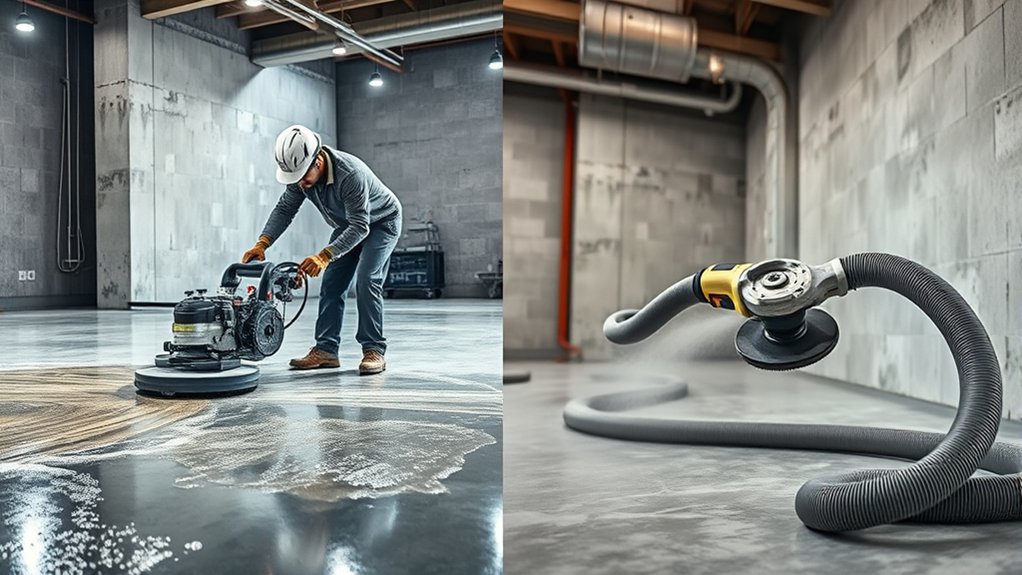
Equipment compatibility is critical for strong concrete dust control. Before you start grinding, confirm that the dust extractor, grinder, shroud, hose, filter, and bags are designed to work together.
- Check the shroud: It should fit the grinder and sit close to the slab without large gaps.
- Check airflow: Follow the tool manufacturer’s required airflow or the applicable OSHA Table 1 requirement.
- Check the hose: Use the correct diameter and keep it as short and straight as practical.
- Check the filter system: Use the filter efficiency and filter-cleaning setup required for the task.
- Use a pre-separator when needed: Heavy dust loads can clog filters quickly without one.
- Inspect seals and bags: Leaks around the lid, hose, bag, or shroud can release dust.
- Plan power safely: Wet methods and electric tools require careful attention to GFCI protection and manufacturer instructions.
Products Worth Considering

Soft brushes prevent dust from escaping and help move the tool over the surface

For Makita 4-1/2" and 5" Grinders Only (except 9005B)
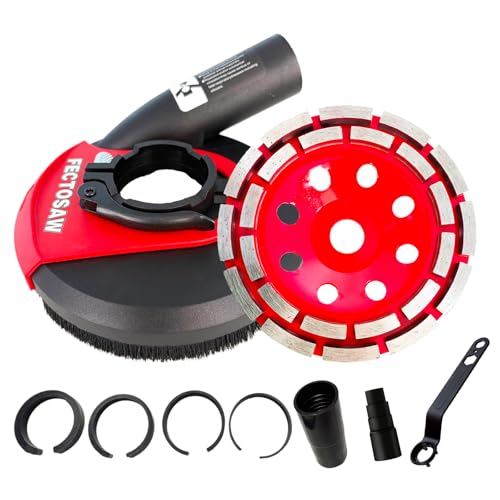
Complete Grinding & Dust Control Kit Includes a dust shroud and diamond grinding cup wheel, providing efficient surface grinding and dust collection in one ready-to-use set.
Housekeeping After Concrete Grinding
Cleanup can create as much exposure as the grinding itself if you stir settled dust back into the air. Avoid dry sweeping, dry brushing, and compressed air blowdown where those actions could contribute to silica exposure. Safer cleanup methods include wet sweeping, HEPA-filtered vacuuming, and sealed dust disposal.
For wet grinding, collect slurry before it dries. For dry grinding, let the extractor run briefly after the tool stops so dust clears the hose and shroud. Empty bags or containers slowly and follow the manufacturer’s dust-disposal procedure.
Troubleshooting Poor Dust Control
If your dust-control setup is not working, stop and fix the cause before continuing. Visible dust is a warning sign that the system may not be capturing particles effectively.
| Problem | Likely Cause | Fix |
|---|---|---|
| Dust plume around grinder | Poor shroud seal, low suction, wrong wheel depth, or clogged hose | Reseat the shroud, inspect hose, clean filters, and reduce tool angle |
| Suction drops during work | Filter loading, full bag, blocked hose, or undersized extractor | Use filter cleaning, replace bag, clear hose, or upgrade extractor |
| Slurry spreads across floor | Too much water, no containment, or delayed cleanup | Reduce water flow, contain runoff, and vacuum slurry before it dries |
| Dust escapes during emptying | Poor bag handling or unsealed container | Use fleece or rated collection bags and seal waste before disposal |
Professional Recommendations for Effective Dust Control
For reliable dust control, choose the method before the tool touches the slab. Walk the area, identify indoor or enclosed spaces, check whether water is allowed, and confirm how dust or slurry will be collected. Then verify the tool, shroud, hose, extractor, filter, and PPE plan.
| Technique | Benefits | Recommendations |
|---|---|---|
| Wet grinding | Reduces airborne dust at the source | Use controlled water flow and collect slurry before it dries |
| Shrouded vacuum collection | Keeps the work area drier and cleaner | Match the extractor, hose, filter, and shroud to the grinder |
| Layered controls | Improves protection on high-dust or indoor jobs | Use water or dust extraction first, then add ventilation, cleanup controls, and PPE as required |
Frequently Asked Questions
Can you vacuum up concrete dust?
Yes, but only with equipment designed for fine construction dust and silica-control work. Do not use a household vacuum. Use a compatible dust extractor, proper filter system, sealed collection bag or container, and a shroud or attachment that captures dust at the tool.
Is a dust collector better than a vacuum for concrete dust?
For concrete work, the better choice is a dust extractor or dust collection system matched to the tool and task. A regular shop vacuum is not enough for silica dust. The system must provide enough airflow, fit the shroud, clean or protect the filter, and contain the dust safely.
Is it better to grind concrete wet or dry?
Wet grinding is often better for reducing airborne dust at the source, but it creates slurry. Dry grinding with vacuum dust collection is better when you need a dry surface or cleaner indoor workflow. For many silica-sensitive jobs, the safest choice is the method required by the tool instructions and OSHA Table 1.
What is the best device to get rid of concrete dust?
The best device is a construction-grade dust extractor connected to a compatible grinder shroud or tool attachment. For cleanup, use HEPA-filtered vacuuming or wet methods where appropriate. The best device is not just the vacuum itself, but the complete system: shroud, hose, extractor, filters, bags, and safe disposal.
Can you sweep concrete dust after grinding?
Avoid dry sweeping or dry brushing when concrete dust may contain respirable crystalline silica. Use wet sweeping, HEPA-filtered vacuuming, or another method that keeps dust from becoming airborne. Do not use compressed air to blow dust off clothing, tools, or surfaces unless the required capture controls are in place.
Conclusion
Choosing between wet grinding and vacuum dust collection depends on the jobsite. Wet grinding is strong at stopping dust at the source, but it creates slurry. Vacuum dust collection keeps the area drier and cleaner, but it must be matched to the grinder, shroud, hose, airflow, and filter system. For the safest concrete dust control, follow the tool manual, use OSHA-aligned controls, clean without stirring dust back into the air, and stop work whenever visible dust escapes your setup.
Sources
- OSHA: Silica, Crystalline – Construction – Supports OSHA construction silica control guidance, Table 1 resources, written exposure plans, training, and medical surveillance requirements.
- eCFR: 29 CFR 1926.1153 Respirable Crystalline Silica – Supports the PEL, Table 1 control methods, housekeeping restrictions, and written exposure control plan requirements.
- OSHA Fact Sheet: Respirable Crystalline Silica Standard for Construction – Supports the basic explanation of respirable crystalline silica, health risks, action level, PEL, and employer responsibilities.
- CDC/NIOSH: Silica and Worker Health – Supports health-risk information, silica sources, and layered protection concepts.
- EPA: What is a HEPA filter? – Supports the HEPA filter definition and 99.97% removal statement for 0.3-micron particles.