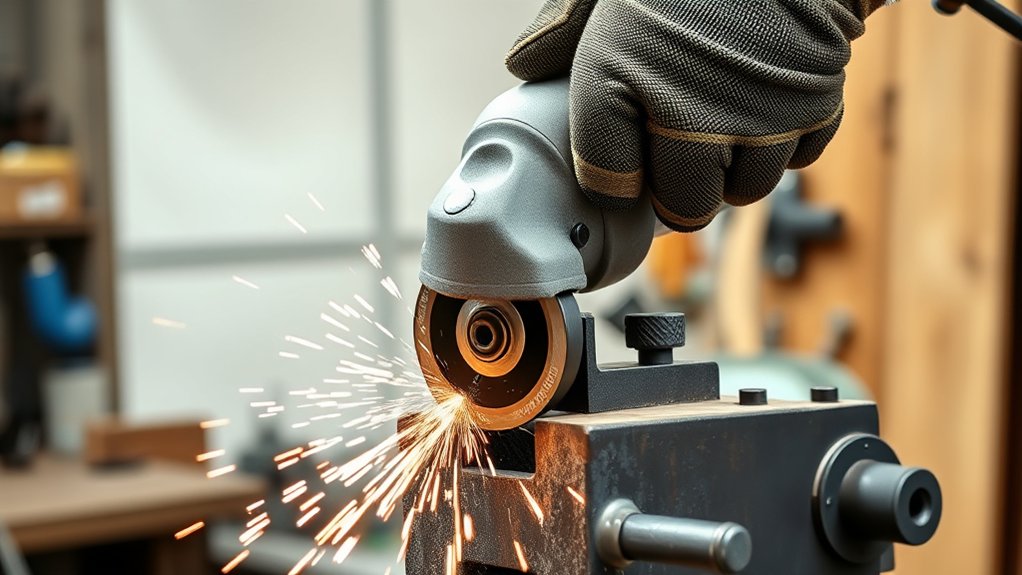
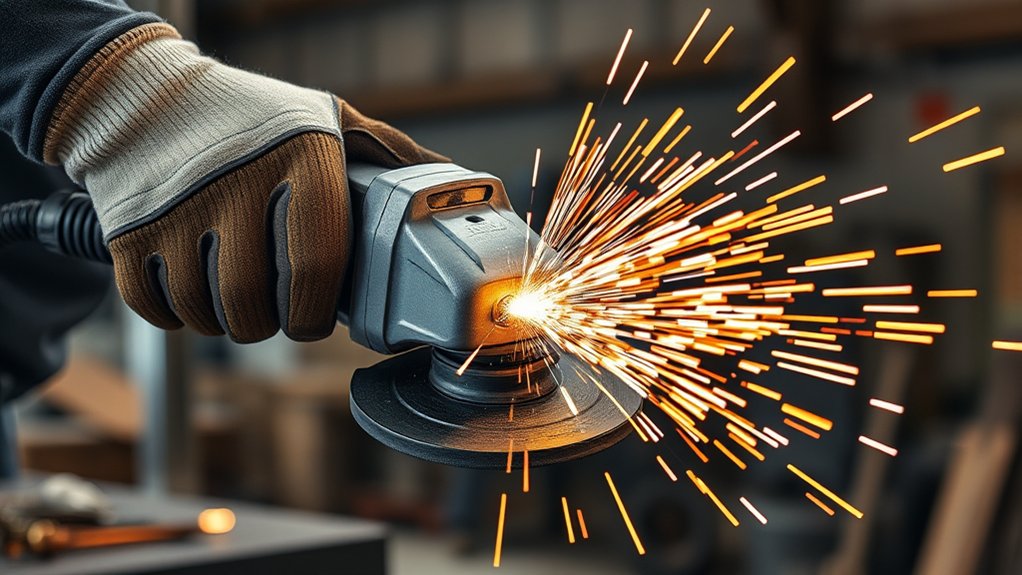
Grinding, cutting, drilling, or polishing concrete, brick, mortar, engineered stone, and natural stone can release respirable crystalline silica. These particles can travel deep into your lungs and cause permanent disease. The right respirator can reduce exposure, but it must be selected for the task and used with wet methods, dust collection, ventilation, and other controls.
Quick Answer
Choose a NIOSH Approved respirator that meets the task’s required assigned protection factor, not simply the highest filter label. An N95 may satisfy some APF 10 tasks. A P100 filters at least 99.97% of test particles but does not automatically provide a higher APF. Use dust controls, fit testing, and seal checks.
Key Takeaways
- Control silica dust at the source with water, tool shrouds, dust collection, ventilation, and safe cleanup methods.
- Select the respirator by the required assigned protection factor, or APF, as well as the filter class.
- N95 filters capture at least 95% of test particles; P100 filters capture at least 99.97% and resist oil aerosols.
- Required workplace users need medical clearance before fit testing and must be fit-tested before initial use and at least annually.
- Perform a user seal check every time you put on a tight-fitting respirator.
- Clean reusable respirators according to OSHA or manufacturer instructions, and replace filters based on condition and breathing resistance.
At a Glance
| Time Required | About 10–20 minutes for selection review, inspection, donning, and a seal check; formal fit testing is scheduled separately. |
| Difficulty | Moderate; workplace selection requires a hazard assessment or proper use of OSHA Table 1. |
| Tools Needed | NIOSH Approved respirator, correct filters, manufacturer instructions, dust-control equipment, eye protection, and hearing protection. |
| Cost | Varies by respirator type. Employers must provide respirators required by OSHA or the employer at no cost to covered employees. |
Understanding Silica Dust and Its Health Risks
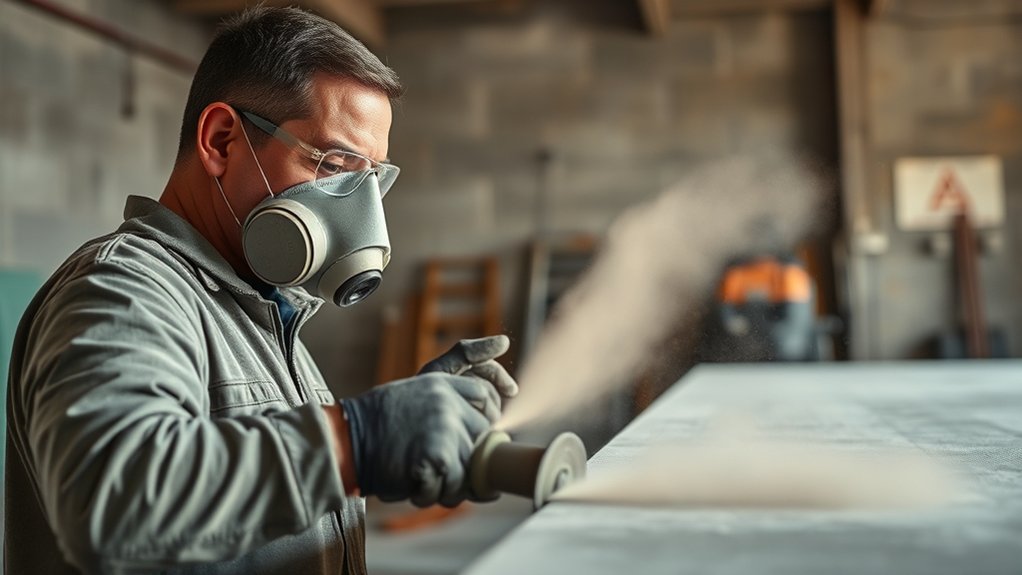
Respirable crystalline silica consists of particles small enough to reach deep into the lungs. Dust can become airborne when you cut, drill, grind, polish, crush, or disturb concrete, mortar, brick, tile, rock, sand, or engineered stone.
According to the National Institute for Occupational Safety and Health, excessive exposure can cause silicosis, lung cancer, chronic obstructive pulmonary disease, some autoimmune diseases, and chronic kidney disease. Silicosis is permanent but preventable.
OSHA’s permissible exposure limit for respirable crystalline silica is 50 micrograms per cubic meter of air as an 8-hour time-weighted average.
Visible dust is a warning that controls may be inadequate, but the absence of a visible cloud does not prove that the air is safe. Respirable particles may remain airborne even when you cannot easily see them.
Control Silica Dust Before Choosing a Respirator
A respirator is not the first or only control. The OSHA construction silica standard requires employers to use feasible engineering and work-practice controls to reduce exposure. Respirators supplement those controls when they are not enough or when a covered task requires respiratory protection.
- Use water: Wet cutting, drilling, and grinding can keep dust from becoming airborne.
- Capture dust at the tool: Use a properly fitted shroud and a dust collector with the airflow and filter performance specified for the task.
- Improve ventilation: Use local exhaust or work outdoors when the task and equipment instructions allow it.
- Restrict the area: Keep bystanders and unprotected workers away from the dust-generating operation.
- Clean safely: Use a HEPA-filtered vacuum or wet cleanup method instead of dry sweeping.
- Handle clothing carefully: Do not use compressed air to blow silica dust from clothing or surfaces unless an OSHA-permitted capture system is in use or no feasible alternative exists.
Warning: Do not enter an unknown, oxygen-deficient, or immediately dangerous atmosphere with an N95, P100, or other air-purifying particulate respirator. These respirators do not supply oxygen and do not protect against gases or vapors unless the complete NIOSH approval specifically includes the required cartridges.
Key OSHA Regulations for Silica Dust Exposure
OSHA uses two important exposure values for respirable crystalline silica:
- Action level: 25 micrograms per cubic meter as an 8-hour time-weighted average.
- Permissible exposure limit: 50 micrograms per cubic meter as an 8-hour time-weighted average.
The action level is not a respirator rating. It helps determine when parts of the silica standards apply, including exposure assessment and medical-surveillance duties. The PEL is the maximum allowable 8-hour average workplace exposure under the federal standards.
Construction Work and OSHA Table 1
Construction employers may follow the specified controls and respiratory protection in OSHA Table 1 or use an alternative exposure-control approach supported by exposure data. Table 1 requirements change with the tool, control method, location, and task duration.
- Tuckpointing and mortar removal: A handheld grinder must use a commercially available shroud and qualifying dust collection. Table 1 calls for APF 10 respiratory protection for shifts of four hours or less and APF 25 for shifts longer than four hours.
- Other handheld grinding: When a qualifying shroud and dust collector are used outdoors, Table 1 may require no respirator. Indoors or in an enclosed area, it calls for no respirator for four hours or less and APF 10 for more than four hours.
- Outdoor wet grinding: An integrated water-delivery system used as specified may require no respirator under the applicable Table 1 entry.
Note: These examples are not a substitute for reading the complete Table 1 entry. The controls must be fully and properly implemented, and the tool must be operated and maintained according to its instructions.
General Industry and Maritime Work
Manufacturing, fabrication, foundry, countertop-shop, and similar work may fall under 29 CFR 1910.1053. These employers generally use exposure assessments and controls rather than the construction Table 1 system. State-plan requirements may be at least as protective and can differ in detail.
Respiratory Protection Program Requirements
When workplace respirator use is required, the employer must follow the OSHA respiratory protection standard. A compliant program includes:
- A written, worksite-specific respiratory protection program.
- A trained program administrator.
- Hazard evaluation and proper respirator selection.
- A medical evaluation before fit testing or required use.
- Initial and annual fit testing for tight-fitting facepieces.
- Training, cleaning, storage, inspection, repair, and program evaluation.
Silica-specific medical surveillance is separate from respirator medical clearance. In construction, OSHA generally requires the employer to offer silica medical surveillance to an employee who must wear a respirator under the silica standard for 30 or more days per year. The general-industry trigger is based on exposure at or above the action level for 30 or more days per year.
How to Choose the Right Respirator for Silica Dust
Products Worth Considering
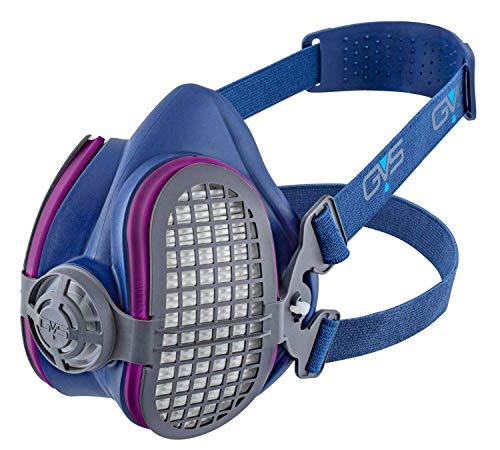
This mask is recommended for dust and fumes containing substances such as micro-organisms, marble, gypsum, titanium oxide, soapstone, rock wool, wood, detergents, textile fibres, spices, salt, animal feeds, etc.. Protects against dust that can cause lung disease. In particular, protects against coal, silica, cotton, iron ore, graphite, kaolin, zinc, aluminium dusts. Protects against harmful dusts such as asbestos, bauxite, coal, silica, iron, and against toxic dusts.

[Combination] The combination of respirator mask and dust goggles forms a comprehensive eye‑face protective system.Glasses effectively prevent dust from entering eyes,while spare cotton pads ensure the continuous protection of the mask.In addition,the body of this respirator mask with filters is made of high-quality silicone material,which is soft and breathable,and will not feel uncomfortable even during prolonged wear.It is an ideal reusable respirator mask with filters for sanding,painting.

PROTECTION : The AirGearPro G-500 Respirator mask and Safety Goggles are CE certified to ensure your protection during painting, woodworking, construction, sanding, renovation, demolition etc.
Step 1: Identify the Task and Controls
List the material, tool, work location, shift duration, and dust-control method. For workplace use, determine whether OSHA Table 1 covers the construction task. When Table 1 does not apply, use exposure-monitoring results, objective data, or a qualified safety professional’s assessment.
Step 2: Find the Required Assigned Protection Factor
An assigned protection factor describes the expected workplace protection of a complete respirator class when it is used through an effective respiratory protection program. It is different from the filter’s percentage rating.
| Respirator Type | Typical OSHA APF | Key Point |
| Filtering facepiece, such as an N95 | 10 | Lightweight and disposable, but must seal to the face and meet the task’s required APF. |
| Reusable elastomeric half-mask with approved particulate filters | 10 | Replaceable filters and a reusable facepiece; P100 filters do not raise the half-mask APF above 10. |
| Negative-pressure full-facepiece | 50 | Can provide higher respiratory protection and eye coverage when properly selected and quantitatively fit-tested. |
| Loose-fitting hood or helmet PAPR | Usually 25 | Uses a blower, does not depend on a tight face seal, and may help users who cannot wear a tight-fitting facepiece. |
Actual APFs depend on the complete NIOSH-approved configuration and OSHA program conditions. Do not calculate protection from the filter label alone.
Step 3: Select the Filter Class
NIOSH particulate filter classes combine filtration efficiency with resistance to oil aerosols:
- N95, N99, and N100: At least 95%, 99%, and 99.97% efficient; not resistant to oil.
- R95, R99, and R100: At least 95%, 99%, and 99.97% efficient; somewhat resistant to oil.
- P95, P99, and P100: At least 95%, 99%, and 99.97% efficient; strongly resistant to oil.
Silica dust itself is a particulate hazard, not an oil aerosol. An N-series filter may therefore be suitable when no oil mist is present and the complete respirator meets the required APF. P100 filters are often selected for their 99.97% efficiency and oil resistance, but they can create more breathing resistance and do not correct a leaking face seal.
Step 4: Choose a Facepiece That Fits
Try more than one size, style, or manufacturer when possible. The facepiece should remain stable while you talk, turn your head, bend over, and breathe deeply. Straps should be secure without causing sharp pressure or forcing the facepiece out of shape.
Step 5: Verify NIOSH Approval
Do not rely on an online listing that merely says “N95” or “P100.” A NIOSH Approved filtering facepiece should show the manufacturer or approval holder, model or part number, filter class, “NIOSH,” and a TC approval number such as TC-84A-XXXX. Check the number through the NIOSH respirator approval resources.
Pro Tip: Keep the facepiece, filters, retainers, adapters, and other components in the exact NIOSH-approved configuration. Mixing unapproved parts from different product lines can void the approval.
How to Complete Fit Testing and Seal Checks
Medical Evaluation Before Fit Testing
Required workplace users must receive a medical evaluation before they are fit-tested or required to wear a respirator. Negative-pressure respirators can increase breathing effort, heat stress, and physical strain, so medical clearance is not a paperwork formality.
Formal Fit Testing
A formal fit test confirms that a specific make, model, style, and size can fit the wearer. OSHA requires testing before initial workplace use, whenever the facepiece changes, at least annually, and after physical changes that could affect fit.
- Qualitative fit test: A pass-or-fail test based on whether the wearer detects an approved test agent, such as saccharin or Bitrex.
- Quantitative fit test: An instrument measures leakage and produces a numerical fit factor.
A qualitative test may be used only for respirators that need a fit factor of 100 or less. A full-facepiece used at APF 50 normally needs a quantitative fit test.
User Seal Check Each Time
Perform a user seal check every time you put on a tight-fitting respirator. Follow the exact positive-pressure, negative-pressure, or manufacturer-approved procedure for that model.
- Positive-pressure check: Cover the exhalation valve or outlet as directed and exhale gently. The facepiece should bulge slightly without air leaking around the seal.
- Negative-pressure check: Cover the filter inlets as directed and inhale gently. The facepiece should collapse slightly and remain collapsed without inward leakage.
Note: A seal check is not a fit test. Passing a quick seal check does not replace the initial and annual workplace fit-test requirements.
Facial Hair, Glasses, and Other Interference
Warning: A tight-fitting respirator cannot be used when facial hair, stubble, clothing, eyewear, or another object crosses the sealing surface or interferes with valve function. Facial hair outside the sealing area may be acceptable. A properly selected loose-fitting hood PAPR may be an option when a face seal cannot be maintained.
Guidelines for Safe Respirator Use
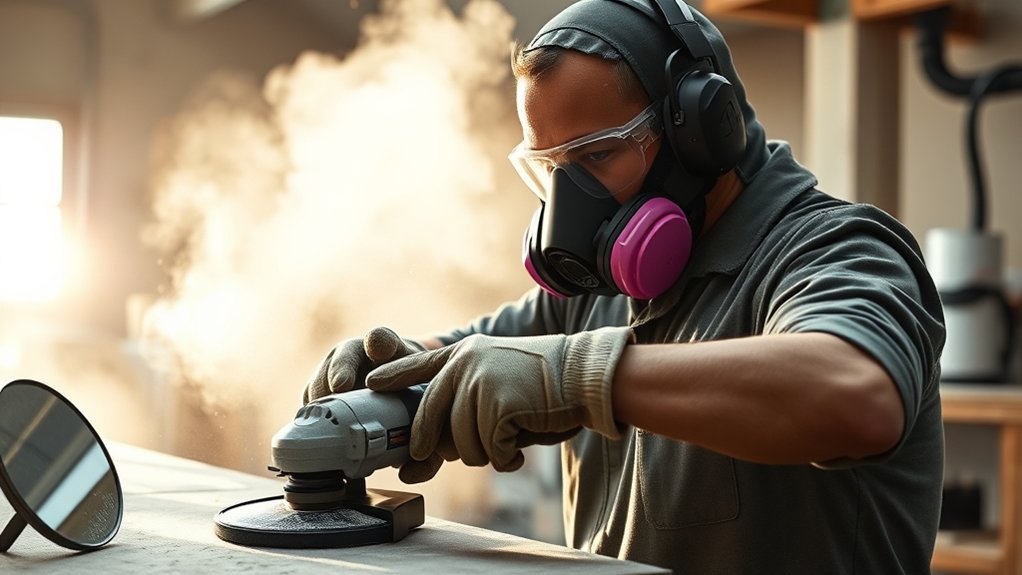
Inspect and seal-check the respirator before entering the dusty area. Keep the facepiece on for the entire period in which respiratory protection is required. Leaving your nose uncovered, loosening a strap, or lifting the mask to talk defeats the seal.
- Check the facepiece, straps, buckles, valves, gaskets, filter holders, and filters before each use.
- Confirm that filters are installed on both sides when the design requires a matched pair.
- Leave the work area if the facepiece leaks, breathing becomes unusually difficult, a part breaks, or you feel dizzy, faint, short of breath, or unwell.
- Do not alter the respirator, punch holes in it, stretch straps around a hard hat, or use replacement parts that are not approved for the model.
- Keep safety glasses, goggles, hearing protection, and other PPE from crossing the face seal.
- Follow the employer’s written respiratory protection and silica exposure-control plans.
How to Maintain and Inspect Your Respirator
Disposable Filtering Facepiece Respirators
Do not wash a disposable N95 or other filtering facepiece. Replace it when it becomes damaged, visibly dirty, wet, contaminated, difficult to breathe through, or unable to maintain a seal. Follow the manufacturer’s disposal and reuse limits.
Reusable Elastomeric Respirators
Clean reusable facepieces as often as needed to keep them sanitary. OSHA requires the procedure in Appendix B-2 or an equally effective manufacturer-approved method.
- Remove filters, cartridges, gaskets, valves, speaking diaphragms, and other parts as directed by the manufacturer.
- Wash reusable components in warm water with mild detergent or a manufacturer-approved cleaner.
- Use a soft brush when needed, taking care not to damage valves or sealing surfaces.
- Disinfect according to the manufacturer or OSHA-approved procedure.
- Rinse thoroughly in clean, warm water.
- Air-dry in a clean area or hand-dry with a lint-free material.
- Inspect all parts and reassemble the respirator according to its instructions.
Do not use isopropyl alcohol, solvents, bleach concentrations, wipes, or cleaners unless the respirator manufacturer permits that specific product and method.
When to Replace Particulate Filters
There is no universal rule requiring every particulate filter to be discarded at the end of each shift. Replace filters when:
- Breathing resistance increases.
- The filter is damaged, wet, dirty, or contaminated.
- The housing or connection is cracked or loose.
- The filter has reached a manufacturer-stated use or service limit.
- The employer’s written program requires replacement based on workplace conditions.
Pro Tip: Record the installation date when the manufacturer or workplace program uses time-based tracking, but do not treat the written date as the only replacement test. Condition, contamination, breathing resistance, and manufacturer limits still control.
Safe Respirator Storage
Store a clean, dry respirator in a sealed container or cabinet that protects it from dust, sunlight, extreme temperatures, moisture, chemicals, crushing, and facepiece deformation. Do not leave it hanging in the contaminated work area or loose in a toolbox.
What to Do If Your Respirator Is Uncomfortable
Do not solve discomfort by loosening the straps or breaking the seal. Leave the dusty area first, then inspect the respirator and determine why it hurts, slips, fogs your glasses, or restricts breathing.
Adjusting for Comfort
- Confirm that you are using the size, style, and model that passed your fit test.
- Position the straps according to the manufacturer’s instructions instead of overtightening them.
- Try another approved model or size if the current facepiece creates pressure points.
- Consider a reusable silicone facepiece when it provides an acceptable fit and the required APF.
- Replace clogged filters when breathing resistance increases.
- Clean reusable sealing surfaces to remove sweat, grit, and skin oils.
When a PAPR May Help
A powered air-purifying respirator uses a blower to move air through its filters. A properly selected PAPR may reduce breathing resistance and provide cooling airflow. A loose-fitting hood or helmet can also avoid the need for a tight face seal.
A PAPR is not automatically suitable for every silica task. Its APF, filter type, battery condition, airflow indicator, hood or facepiece, and complete NIOSH approval must meet the hazard assessment. Tight-fitting PAPRs still require fit testing and cannot be worn with facial hair that crosses the seal.
Additional PPE for Silica Dust Work
Respiratory protection does not replace other personal protective equipment. The task assessment may call for:
- Safety glasses or sealed goggles that do not interfere with the respirator seal.
- A face shield over impact-rated eye protection for flying fragments and sparks.
- Hearing protection for grinders, saws, drills, and dust collectors.
- Work gloves selected for abrasion, vibration, sharp edges, and tool-control hazards.
- Protective clothing and footwear that can be cleaned without spreading silica dust.
Wash your hands and face before eating, drinking, smoking, or leaving the site. Change or clean dusty clothing using methods that do not create another airborne dust cloud.
Products Worth Considering
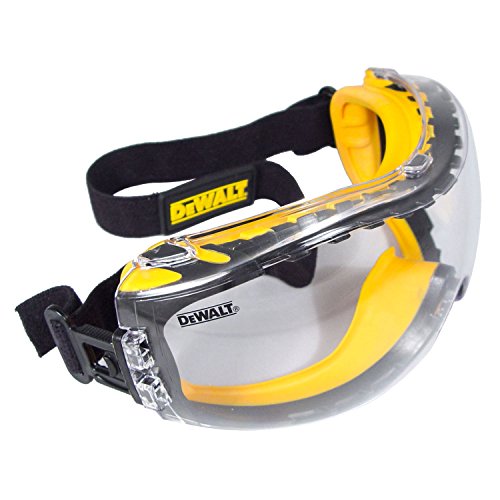
DEWALT ToughCoat hard coated lens provides tough protection against scratches.
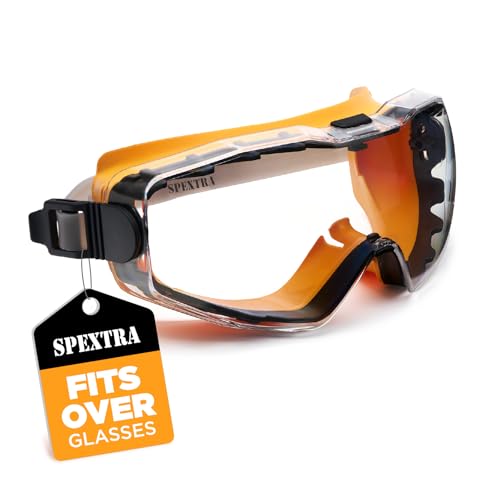
FITS OVER YOUR GLASSES: The purpose-built side-notch rubber seal of the lab goggles provides generous room for most prescription glasses, allowing temple arms to pass through comfortably and ensuring a pressure-free, glasses-friendly OTG fit for everyday eyewear users. (*fits glasses up to 5.7" W x 1.65-2.10" H)

Tough, industrial design; safety eyewear that looks as tough as it protects
Frequently Asked Questions
What type of respirator do I need for silica dust?
Use a NIOSH Approved respirator that meets or exceeds the APF required by OSHA Table 1 or the workplace exposure assessment. An N95 filtering facepiece may be suitable for some APF 10 tasks. Higher exposures may require a full-facepiece, PAPR, supplied-air respirator, or another higher-protection option.
Is P100 good for silica dust?
Yes. A P100 particulate filter captures at least 99.97% of test particles and is strongly resistant to oil aerosols. However, a P100 filter does not automatically give the complete respirator a higher APF. Facepiece type, fit, exposure level, and program compliance also determine protection.
Is an N95 enough for silica?
An N95 may be enough when a properly implemented Table 1 entry or exposure assessment calls for an APF 10 respirator and no oil aerosol is present. It is not enough when the required APF is higher, exposure is unknown, the mask does not fit, or the atmosphere is oxygen-deficient or immediately dangerous.
Does a P100 half-mask have a higher APF than an N95?
Not normally. A filtering facepiece such as an N95 and a reusable air-purifying half-mask with P100 filters are both generally assigned an OSHA APF of 10. P100 describes the filter’s efficiency and oil resistance; it does not change the half-mask facepiece category.
Can I wear a tight-fitting respirator with facial hair?
Not when the hair or stubble crosses the sealing surface or interferes with a valve. Facial hair outside the sealing area may be acceptable. A properly selected loose-fitting hood PAPR may be an alternative because it does not rely on a face-to-facepiece seal.
What PPE is needed for silica dust?
The hazard assessment may require a suitable respirator, safety glasses or goggles, a face shield for impact hazards, hearing protection, gloves, protective clothing, and work footwear. Dust-control equipment remains essential because PPE should not replace feasible engineering and work-practice controls.
Medical and Safety Disclaimer: This article provides general information and is not a substitute for a workplace exposure assessment, written respiratory protection program, medical evaluation, manufacturer instructions, or advice from an occupational health professional. Employers must follow applicable federal or state-plan OSHA requirements. Seek medical advice for persistent cough, chest pain, shortness of breath, or known significant silica exposure.
Conclusion
The right respirator for silica dust is the one that matches the task’s required APF, carries a valid NIOSH approval, fits the wearer, and is used through a complete respiratory protection program. An N95 may be suitable for some controlled APF 10 tasks, while other work requires a higher-protection facepiece or PAPR.
Start by controlling dust with water, shrouds, dust collection, ventilation, and safe housekeeping. Before each use, inspect the respirator and complete a seal check. Clean reusable equipment correctly, replace damaged or restricted filters, and never treat a P100 label as a substitute for exposure control or proper fit.
Sources
- OSHA 29 CFR 1926.1153: Respirable Crystalline Silica in Construction — PEL, action level, Table 1 controls, housekeeping, respiratory protection, and written-plan requirements.
- OSHA 29 CFR 1910.1053: Respirable Crystalline Silica — general-industry and maritime exposure-control requirements.
- OSHA 29 CFR 1910.134: Respiratory Protection — APFs, medical evaluations, fit testing, seal checks, facial hair, inspection, and storage.
- OSHA Appendix B-2: Respirator Cleaning Procedures — required or equivalent cleaning and disinfecting procedures.
- NIOSH Filtering Facepiece Respirators — N-, R-, and P-series filtration efficiency and oil resistance.
- NIOSH Silica and Worker Health — silica sources and associated occupational diseases.