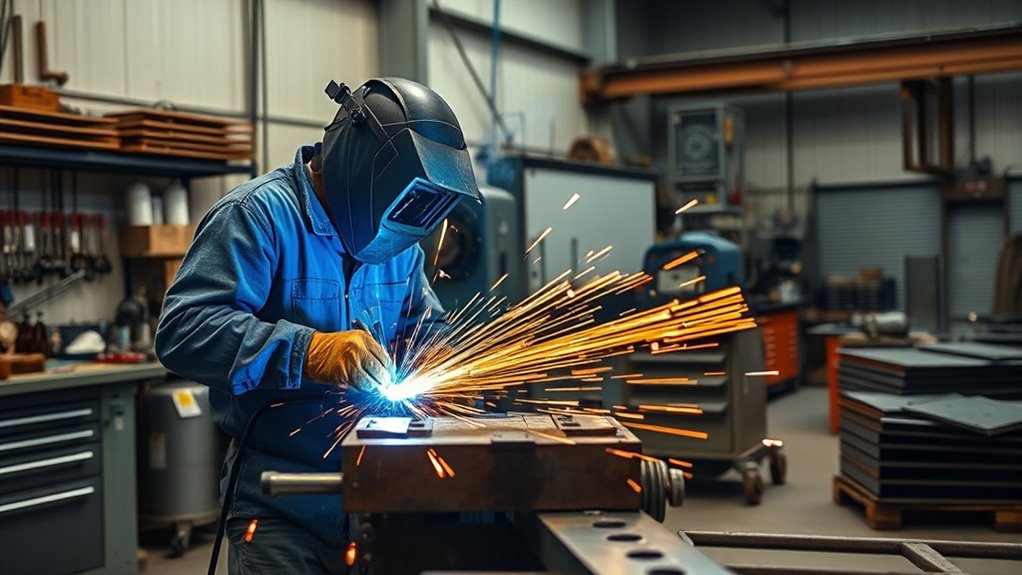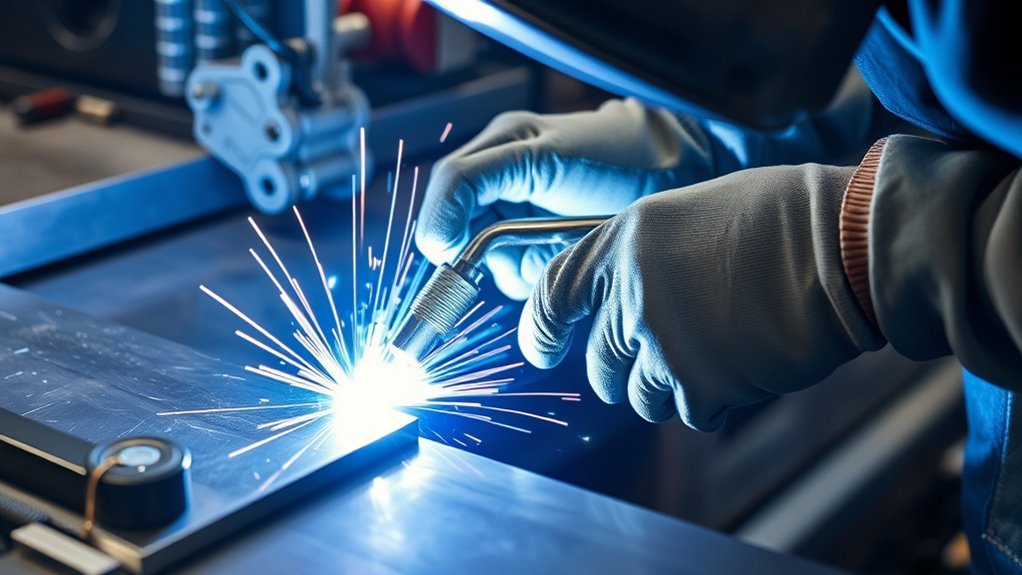
A smooth weld bead can still hide a weak edge. Cold lap in welding is commonly used to describe overlap at the weld toe, where molten filler metal rolls onto the base metal or a previous bead without fully fusing at that edge.
The condition can reduce the joint’s usable strength and create a sharp stress point. The safest response is to identify the full affected area, correct the process problem, remove the unfused metal, and reweld before the joint enters service.
Quick Answer
Cold lap is a weld overlap condition in which molten filler metal rolls onto the base metal or a previous bead without fusing at the edge. It often appears as a lip, shelf, or sharp line at the weld toe. Remove the defect, correct the cause, and reweld before service.
Key Takeaways
- Cold lap is usually a surface overlap with missing fusion at the weld toe.
- Incomplete fusion is the broader term and may occur at the toe, sidewall, root, or between weld passes.
- Low voltage or current, poor arc placement, excessive filler deposition, incorrect travel speed, wide weaving, and dirty metal can all contribute.
- Both very fast and very slow travel can cause fusion problems, but the bead shape and process settings determine the correct fix.
- Visual inspection can find surface overlap, but it cannot prove that the entire weld is fused internally.
- Do not weld over cold lap. Remove it to sound metal, reweld to the approved procedure, and reinspect the repair.
At a Glance
| Time Required | A few minutes for a surface check; longer for grinding, rewelding, cooling, and any required nondestructive testing |
| Difficulty | Intermediate to advanced; critical weld repairs should follow an approved procedure and qualified inspection |
| Tools Needed | Bright inspection light, scraper or wire brush, grinder or approved gouging equipment, welding machine, matching filler metal, PPE, and measuring tools |
| Cost | Usually limited to abrasives, filler metal, electrodes, and shielding gas; inspection or certified repair costs may apply |
What’s in This Article
- What Cold Lap Means in Welding
- Why Cold Lap Weakens Welds
- Common Causes of Cold Lap
- How MIG Welding Causes Cold Lap
- Why Stick Welding Gets Cold Lap
- Cold Lap in TIG and Flux-Cored Welding
- How to Spot Cold Lap in a Weld
- Inspection Methods for Cold Lap
- Cold Lap vs. Incomplete Fusion
- How to Prevent Cold Lap
- How to Repair Cold Lap Before Failure
- Frequently Asked Questions
- Conclusion
What Cold Lap Means in Welding
Cold lap is a shop term that is commonly used for overlap. It occurs when weld metal flows beyond the intended fusion line and rests on the base metal or an earlier bead without bonding at the toe. Hobart Brothers describes overlapping, or cold lap, as filler metal that does not fuse into the base material at the weld toes.
The condition is related to incomplete fusion, but the terms are not fully interchangeable. Cold lap usually points to a visible toe condition. Incomplete fusion is broader and may be hidden at a sidewall, root, or between passes.
A bead can look wide and smooth while an unfused edge is only resting on the plate.
Fusion and penetration are also different ideas. Fusion describes bonding between the weld metal and the base metal or a previous bead. Penetration describes how far the fusion extends into the joint. Lincoln Electric explains this distinction in its guide to weld fusion versus weld penetration.
You may see a thin line, rolled lip, shelf, or bulge at the weld toe. The exact appearance changes with the process, position, joint shape, and bead profile. Proper fillet weld sizing and good joint access help the arc reach both members, but size alone does not guarantee fusion.
Why Cold Lap Weakens Welds
A sound weld transfers load through fused metal. Cold lap interrupts that load path at the toe. The unfused boundary also forms a sharp change in shape, which can concentrate stress when the joint is loaded or vibrated.
The effect depends on the joint, the size and location of the discontinuity, the loading, and the governing code. A cosmetic noncritical weld and a cyclically loaded structural weld do not have the same acceptance requirements. For code work, the drawing, welding procedure specification, and applicable acceptance criteria control the decision.
Fusion Failure
Fusion failure means the deposited metal did not become one continuous metallic bond with the surface below it. A surface lap may be visible, while sidewall or interpass lack of fusion can remain hidden inside the weld.
Do not judge fusion only by bead width or a “stacked dimes” appearance. A smooth cap does not prove that the root, sidewalls, and earlier passes fused correctly.
Stress Concentration
A rolled toe can leave a notch-like edge. Repeated loading may start a crack at that local stress point, especially when the weld is undersized, poorly shaped, or exposed to fatigue.
Grinding only the surface smooth does not restore a missing bond. The unfused metal must be removed to sound material before the area is rewelded.
Joint Weakening
The amount of weakening cannot be estimated from appearance alone. Joint geometry, material, load direction, defect size, and service conditions all matter. That is why a critical weld should be evaluated against its approved requirements rather than a general internet rule.
Basic joint preparation and puddle-control habits also apply to flux-cored work. This guide to flux-core welding tips for beginners covers setup practices that support cleaner bead placement.
Warning: Do not place a load-bearing, pressure-retaining, lifting, vehicle-safety, or roll-cage weld into service when cold lap or incomplete fusion is suspected. Follow the applicable repair procedure and have the weld evaluated by a qualified person.
Common Causes of Cold Lap
Cold lap rarely comes from one setting by itself. It usually results from a mismatch among heat, filler deposition, travel speed, joint access, and arc placement.
- Voltage or current that is too low for the joint and process
- Too much filler metal entering a puddle that cannot wet the toes
- Travel that is too slow, allowing the puddle to roll ahead of the arc
- Travel that is too fast, reducing heat and tie-in at the edges
- Incorrect work angle or travel angle
- An arc held on the puddle instead of the leading edge
- A weave that is too wide or poorly timed
- Mill scale, rust, paint, oil, oxide, zinc, or slag blocking fusion
- Poor fit-up, a narrow groove, or limited access to the sidewall or root
Low Heat Input
If the arc does not melt the receiving surface, filler metal can stack up without tying in. In MIG welding, low voltage can produce a convex bead and poor toe fusion. Low wire feed speed can also mean insufficient amperage on a constant-voltage machine.
Do not use “turn everything up” as a universal repair. Excessive voltage, current, or heat can create undercut, burn-through, distortion, or an unstable puddle. Start with the machine chart, filler-metal data, or approved welding procedure, then make one controlled adjustment at a time.
Incorrect Travel Speed
Both travel-speed extremes can cause fusion trouble. Moving too fast may leave a narrow bead with inadequate toe tie-in. Moving too slowly can build an oversized puddle that shields the base metal from the arc and rolls over the toe.
The correct speed keeps the arc working at the leading edge of the puddle. Miller’s stick-welding guidance notes that very slow travel can direct heat into the puddle instead of the base metal and lead to cold lap.
Poor Technique Control
The work angle should direct heat into both sides of the joint. A poor angle can melt one member while filler metal washes over the other. Excessive weaving can also cool the toes or leave the arc away from each side for too long.
Joint cleanliness matters because the arc must reach bare, weldable metal. When welding thin material with flux core, use the process-specific heat and motion guidance in this article on controlling heat input on thin metal.
How MIG Welding Causes Cold Lap
In MIG welding, more formally called gas metal arc welding or GMAW, cold lap can form when the wire deposits metal faster than the arc and travel technique can fuse it into the joint.
A common pattern is low voltage, excessive wire feed for the selected voltage, slow travel, or riding behind the leading edge of the puddle. Hobart Brothers recommends balancing voltage, wire feed, travel speed, and gun angle so the arc reaches the toes instead of feeding an oversized puddle.
For MIG cold lap, watch where the arc is working—not just how much metal is filling the joint.
Fast travel can cause a different lack-of-fusion pattern by reducing heat and tie-in. Miller notes that low voltage, low wire feed speed, or excessive travel speed can produce poor fusion, depending on the material and setup. Review these MIG welding problems and solutions alongside the machine manufacturer’s parameter chart.
Use these bead clues as a starting point:
- Low voltage: convex bead, stubbing arc, spatter, and poor wetting at the toes
- Too much deposition or travel too slow: wide or ropey bead that rolls over the edges
- Travel too fast: narrow bead, weak tie-in, underfill, or undercut
- Wrong work angle: one toe fuses while the opposite toe remains cold
Do not copy a voltage and wire-speed number from another machine without checking wire size, shielding gas, transfer mode, polarity, material thickness, and joint design.
Why Stick Welding Gets Cold Lap
Stick welding, or shielded metal arc welding, can develop cold lap when the puddle becomes too large and the arc rides on top of it. Travel that is too slow and a weave that is too wide are common causes.
Miller advises keeping the arc in the leading one-third of the puddle. Its stick-welding guide explains that overly slow travel can produce a wide, convex bead with shallow penetration and cold-lapping. A straight stringer bead or a controlled weave is often easier to fuse than a wide, sweeping pattern.
Low current can also cause poor fusion, while excessive current may create undercut, spatter, or loss of puddle control. Use the electrode manufacturer’s range, the approved procedure, and a short, stable arc.
Out-of-position welding adds gravity to the problem. Pause long enough at each sidewall to establish tie-in, then move across the center without piling up excess metal. Cast iron requires separate filler, preheat, and cooling decisions, so use process-specific cast iron heat-control guidance instead of applying a generic cold-lap fix.
Cold Lap in TIG and Flux-Cored Welding
TIG welding can show poor fusion when current is too low, travel is too fast, the arc is too long, or the torch angle directs heat away from the joint. Adding filler before the base metal forms a properly wetted puddle can also leave metal sitting at the edge.
Flux-cored welding can develop toe or interpass lack of fusion from poor bead placement, low heat, excessive travel speed, wide weaving, or slag left between passes. Remove all slag and clean the groove before depositing the next bead.
Shielding-gas flow affects porosity and oxidation, but it is not a direct cure for cold lap. Use the correct gas and flow range while separately fixing heat, angle, travel, and bead placement. This overview of how gas flow affects TIG welding explains that separate part of weld quality.
How to Spot Cold Lap in a Weld
Start with a clean weld and strong side lighting. Remove slag, spatter, soot, and loose scale so you can see the actual toe line.
- A lip or shelf of weld metal extending onto the base metal
- A sharp line where the bead appears to sit on the plate
- A rolled or bulging toe with little smooth transition into the base metal
- One side of a fillet weld tied in while the other side appears cold
- A convex, oversized bead that suggests the puddle ran ahead of the arc
- A visible seam between adjacent passes
Slag that is hard to remove is not proof of cold lap. It may simply hide the toe or point to poor bead shape. Clean the weld completely, then inspect the exposed surface.
Pro Tip: Aim a bright light almost parallel to the plate. Low-angle light casts a shadow under a rolled toe and makes surface overlap easier to see.
Inspection Methods for Cold Lap
Visual inspection is the first step, but it only evaluates surfaces that can be seen. A clean-looking cap cannot confirm internal sidewall, root, or interpass fusion.
For critical work, a qualified inspector chooses the method required by the drawing, code, or repair procedure. Ultrasonic testing, including phased-array ultrasonic testing, can be aimed at planar discontinuities such as lack of fusion. ASNT notes that phased-array beams can be steered and focused toward weld-fusion defects.
Other methods may be used for surface-breaking or near-surface indications, depending on the material and code. The inspector must also decide whether an indication is relevant and whether it exceeds the acceptance criteria.
Note: A discontinuity is not judged only by its name. The applicable code, drawing, service, and acceptance criteria determine whether the weld must be repaired.
Cold Lap vs. Incomplete Fusion
Cold lap and incomplete fusion are related, but they describe different levels of detail. Cold lap usually refers to overlap at the toe. Incomplete fusion covers any location where weld metal fails to bond to the base metal or a previous bead.
| Condition | What It Means | Typical Clue |
| Cold lap or overlap | Weld metal rolls onto a surface without fusion at the toe | Visible lip, shelf, rolled edge, or sharp toe line |
| Incomplete fusion | Missing bond at the base metal, sidewall, root, or between passes | May be visible or hidden inside the weld |
| Incomplete penetration | Fusion does not extend through the intended joint depth or root | Unfused root or insufficient joint penetration |
| Undercut | A groove is melted into the base metal beside the weld and is not filled | Recessed channel at the toe rather than metal rolled over it |
Contamination can contribute to incomplete fusion by blocking arc access or leaving oxides between surfaces. Galvanized steel needs special preparation and fume controls; these zinc removal techniques cover the preparation step.
How to Prevent Cold Lap
Prevention starts before the arc is struck. Confirm the material, joint design, filler metal, polarity, shielding gas, position, and approved parameter range.
- Clean the joint. Remove rust, scale, oil, paint, moisture, oxide, zinc where required, and all slag between passes.
- Make sure the arc can reach the joint. Correct poor fit-up, tight groove access, or an angle that blocks the sidewall.
- Set the process correctly. Match voltage, current, wire feed, electrode size, and polarity to the material and joint.
- Work at the leading edge of the puddle. Do not let a large puddle roll ahead and hide the toe from the arc.
- Use controlled travel. Avoid both racing ahead and moving so slowly that metal piles up.
- Limit the weave. Use stringer beads or a narrow weave when a wide pattern prevents sidewall tie-in.
- Inspect every pass. Fix bead placement and clean the weld before adding another layer.
For stick welding, match current to the electrode and thickness instead of relying on one fixed number. This guide to stick welding amperage by metal thickness can help you understand the starting variables.
| What You See | Likely Direction to Check |
| Wide, convex bead rolling over both toes | Travel may be too slow, deposition too high, voltage too low, or the arc may be riding the puddle |
| Narrow bead with weak toe tie-in | Travel may be too fast, heat too low, or the arc may not be centered on the joint |
| One toe fuses and the other overlaps | Check work angle, joint access, gun or electrode position, and unequal material thickness |
| Seam between passes | Check interpass cleaning, bead placement, pass profile, heat, and sidewall access |
Warning: Grinding coatings and rewelding can release hazardous dust and fumes. OSHA requires appropriate ventilation and controls for welding fumes. Identify the coating and metal before heating, wear the correct PPE, and never weld on a container or enclosed part that has not been made safe.
Products Worth Considering
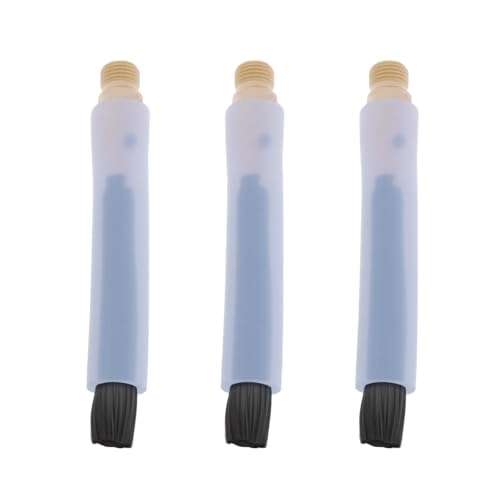
Product dimensions: The product has a total length of 93mm, a brush length of 60mm, and a thread of M10. Manual measurements, please allow slight errors.

Wire fitting brush with plastic handle in Assorted Color

Material: Crafted with carbon steel and stainless steel wire bristles, ensuring long-lasting performance and effective cleaning.
How to Repair Cold Lap Before Failure
Do not cover cold lap with another pass. A cap can hide the surface while leaving the unfused boundary in place.
Products Worth Considering

【Complete 3-Size Sphere Burr Set with Precise Specs】BURMONG wood carving tools includes 3 spherical rotary burrs (25mm/0.98", 30mm/1.18", 40mm/1.57" diameters) with 5/8"-11 universal threads. Made of high-density carbon steel, these burrs maintain sharpness through extended use while withstanding speeds up to 12,000 RPM. The graduated sizes allow progressive shaping from rough carving to fine detailing.

PERFORMANCE | The Arbortech Ball Gouge is a spherical shaped wood carving tool that can rapidly hollow small concave surfaces in woodworking projects

Complete Set With Multiple Sizes: this sphere rotary burr package includes 4 sphere rotary burr attachments with different diameters (20mm/0.79in, 25mm/0.98in, 30mm/1.18in, 40mm/1.57in), featuring 5/8"-11 universal threads for direct installation, providing a versatile range for progressive wood shaping from rough carving to fine detailing
1. Stop and Assess the Weld
Identify the joint, material, service, and governing requirements. For structural, pressure, lifting, vehicle-safety, or production work, confirm that you are authorized and qualified to make the repair.
2. Find the Full Extent
Clean the surface and mark every visible lip, toe line, bulge, or suspect pass. A qualified inspector may require additional testing when the discontinuity could extend below the surface.
3. Remove the Defect
Grind, machine, or gouge the affected metal using the approved method. Continue until the rolled edge and unfused boundary are gone and clean, sound metal is exposed. Do not thin the base metal below the drawing or repair limits.
4. Clean and Reprepare the Joint
Remove grinding residue, oxide, slag, oil, moisture, and loose metal. Restore the correct groove shape and access for the electrode or gun.
5. Correct the Root Cause
Use the bead profile to decide what to check. The correction may involve more voltage or current, less wire feed, faster or slower travel, a better work angle, a narrower weave, improved fit-up, or cleaner metal. Do not assume that reducing travel speed always increases fusion; a slow, oversized puddle can create cold lap.
Make sure the machine has enough output and duty cycle for the joint. This overview of welder capacity for 1/4-inch steel explains why machine size and available amperage matter.
6. Reweld and Reinspect
Reweld to the approved procedure with the correct filler, preheat, interpass temperature, and bead sequence where required. Clean each pass and inspect the final repair. Complete any visual or nondestructive examination required before the joint returns to service.
Note: Cooling control can matter for cracking, hardness, and distortion in some materials, but it does not repair missing fusion. The unfused metal still has to be removed and rewelded.
Frequently Asked Questions
What causes cold lap welding?
Cold lap usually comes from an oversized or poorly directed puddle that rolls over the weld toe without fusing. Common contributors include low voltage or current, excessive wire deposition, travel that is too slow or too fast, poor work angle, wide weaving, dirty metal, and limited joint access.
How do you fix cold lap in welding?
Remove the entire unfused area by an approved grinding, machining, or gouging method until sound metal is exposed. Correct the setting, travel, angle, cleanliness, or access problem, then reweld to the proper procedure and inspect the repair.
How do you prevent cold lap?
Use clean metal, correct fit-up, suitable process settings, a work angle that directs heat into both members, and a travel speed that keeps the arc at the leading edge of the puddle. Limit wide weaving and inspect each pass before adding the next one.
What is the difference between overlap and cold lap?
In common shop use, overlap and cold lap usually describe the same toe condition: weld metal has flowed onto the base metal or an earlier pass without fusion at the edge. A code or company procedure may use one term instead of the other.
Can cold lap hide under a smooth weld bead?
A true surface overlap often leaves a lip or toe line, but a generally smooth-looking weld can still hide sidewall, root, or interpass incomplete fusion. Visual appearance alone cannot confirm internal fusion.
Is cold lap dangerous in structural welding?
It can be. An unfused toe reduces the effective bond and may create a stress concentration. Structural acceptance depends on the applicable code, drawing, loading, and inspection results, so suspected cold lap should be evaluated before service.
Can you weld over cold lap?
No. Adding another pass can hide the edge without creating fusion below it. Remove the defective metal to a clean, sound surface, correct the cause, and then reweld.
Does grinding the bead smooth remove cold lap?
Not necessarily. Cosmetic blending may remove the visible lip while leaving the unfused boundary underneath. Grind or gouge until the full defect is gone and sound metal is exposed, then reweld if the joint still requires weld metal.
Conclusion
Cold lap is usually overlap at the weld toe, not a label for every fusion problem. It forms when weld metal rolls onto a surface without bonding, often because heat, deposition, travel, angle, access, or cleanliness are out of balance.
Inspect the toe under good light, but do not assume a smooth cap proves internal fusion. When cold lap is found, remove the full defect, correct the cause, reweld to the proper procedure, and complete the required inspection before service.
Careful setup, controlled puddle placement, and pass-by-pass inspection prevent most repeat repairs.
Sources
- Hobart Brothers: MIG Troubleshooting for Metal-Cored and Solid Wire — definition, causes, and corrections for overlapping or cold lap
- Miller Electric: Five Steps to Improving Your Stick Welding Technique — travel speed, puddle position, angle, and weaving guidance
- Miller Electric: Common MIG Weld Defects — low voltage, wire feed, travel speed, and toe tie-in
- Lincoln Electric: Weld Fusion vs. Weld Penetration — difference between fusion and penetration
- American Society for Nondestructive Testing: Phased Array Ultrasonic Testing — detecting planar weld discontinuities such as lack of fusion
- OSHA 29 CFR 1910.252 — welding ventilation, fumes, and general safety requirements