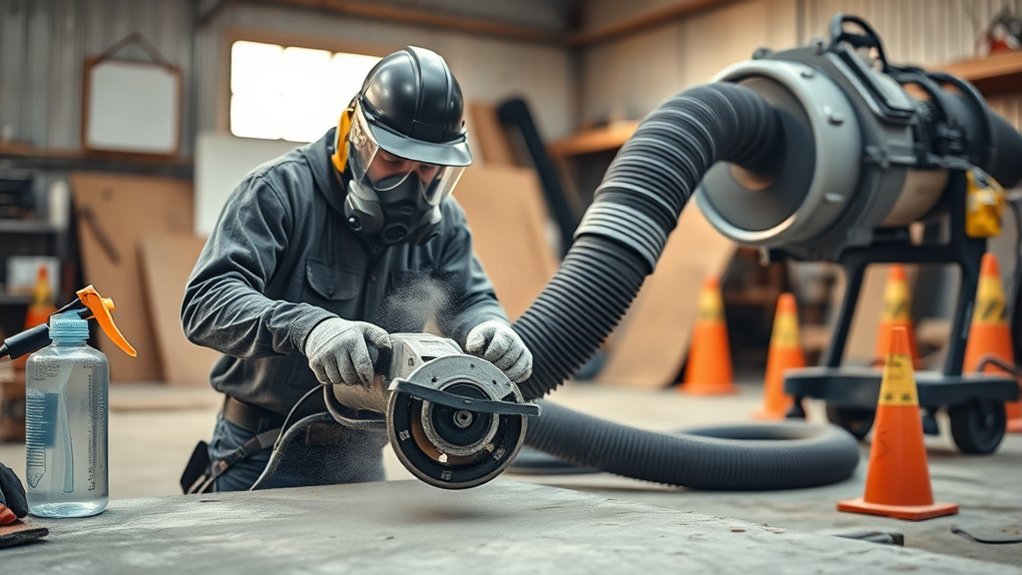
Silica Dust Control for Angle Grinders
What’s in This Article
- Why You Can’t Ignore Silica Dust Control
- How Dust Shrouds Capture Dust Effectively
- Choosing the Right Type of Dust Shroud for Your Task
- Essential Features for Choosing a Dust Shroud
- Compatibility Tips: Ensuring a Good Fit for Your Grinder and Shroud
- Maintenance and Troubleshooting Tips for Dust Shrouds
- Essential Safety Gear for Grinding
- Frequently Asked Questions
- Conclusion
Grinding concrete or masonry can send fine silica dust into your breathing zone fast. You may not see the smallest particles, but they can still harm your lungs and create job-site compliance problems.
Good silica dust control starts with a fitted dust shroud, a high-efficiency vacuum, and the right safety gear. This guide explains how dust shrouds work, how to choose one, and how to keep your grinder setup safer.
Quick Answer
You control silica dust from an angle grinder by using a dust shroud that fits your wheel size, then connecting it to a high-efficiency vacuum. You also need proper eye, hearing, skin, and respiratory protection. The setup works best when the brush skirt seals well and the vacuum filter stays clean.
Key Takeaways
- Use a dust shroud whenever you grind concrete, mortar, stone, brick, or similar silica-containing materials.
- Match the shroud to your grinder wheel size, spindle setup, and vacuum hose connection.
- Check the brush skirt, mounting collar, hose, and filter before each grinding task.
- Wear a respirator, sealed eye protection, hearing protection, gloves, and other job-site safety gear.
- Stop work if you see dust escaping from the shroud or feel the grinder setup shift.
Why You Can’t Ignore Silica Dust Control
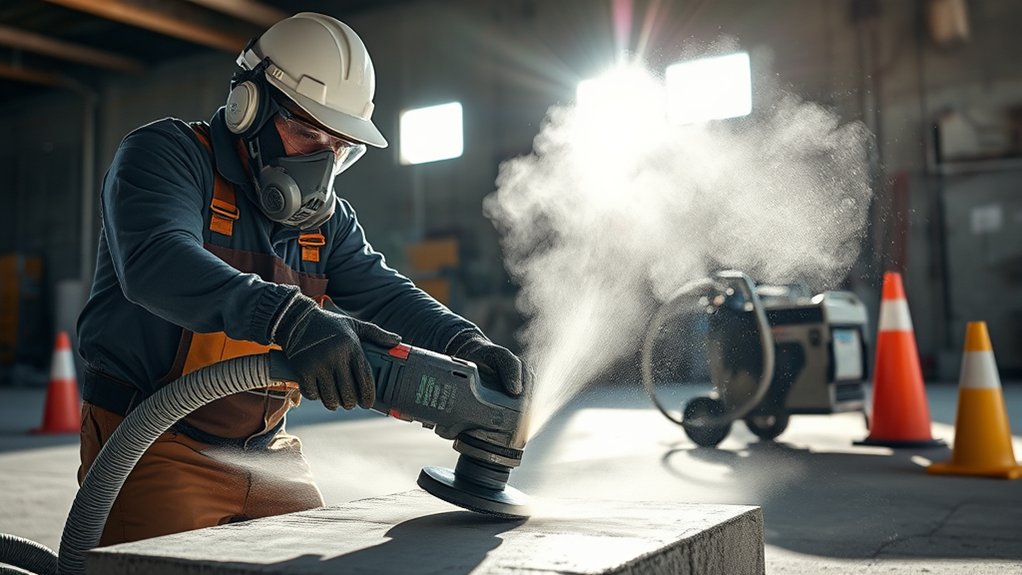
You can’t ignore silica dust control when you grind concrete, brick, mortar, stone, or tile. These materials can release respirable crystalline silica, which can reach deep into your lungs.
Silica exposure from grinding can raise the risk of serious health problems, including silicosis, chronic obstructive pulmonary disease (COPD), and lung cancer. Job sites that fall under Occupational Safety and Health Administration (OSHA) rules must control exposure to respirable crystalline silica.
OSHA sets the permissible exposure limit for respirable crystalline silica at 50 micrograms per cubic meter of air, measured as an 8-hour time-weighted average. Strong dust control also helps you keep the site cleaner, protect nearby workers, and reduce cleanup time.
Warning: Dry grinding silica-containing materials without dust control can expose you to dust that may damage your lungs.
How Dust Shrouds Capture Dust Effectively
A dust shroud surrounds part of the grinding wheel and helps direct dust toward a vacuum hose. When the vacuum pulls air through the shroud, it creates suction near the grinding point and captures much of the dust before it spreads.
Using a dust shroud with your angle grinder can greatly improve silica dust control when you pair it with a proper vacuum and a good seal.
These parts work together to improve dust capture:
- Hood: Guides dust and airflow toward the vacuum port.
- Mounting collar: Keeps the shroud tight on the grinder housing.
- Brush skirt: Seals the gap between the shroud and the work surface.
- Vacuum port: Connects the shroud to your dust extractor or vacuum hose.
- Accessory hardware: Helps you install, adjust, and secure the shroud.
A shroud works best when it fits the grinder, seals against the surface, and connects to a vacuum with enough airflow. Worn brushes, loose collars, clogged filters, and poor hose connections can reduce dust capture fast.
Choosing the Right Type of Dust Shroud for Your Task
Your grinding task should guide the type of dust shroud you choose. A surface grinding shroud works well for concrete slab leveling, coating removal, and broad surface prep.
A convertible or hinged-nose shroud can help when you need to grind close to a wall, corner, or edge. The moving nose improves access, but you still need a tight seal and careful control.
A tuck-pointing or cutting shroud suits mortar raking, crack chasing, and similar cutting tasks. Do not use that style as a surface grinding shroud unless the maker says it supports that use.
For large floor areas, a walk-behind grinder and dust collection system may give you better control. For small repair areas, corners, and detail work, a handheld shroud gives you more reach.
Products Worth Considering

Angle grinder dust extraction suitable for the front cover of most 48-51mm angle grinders. Can be installed on most 5"/4.5" angle grinders.The thickness of Diamond Grinding Disc should not more than 25mm or less than 15mm.

Soft brushes prevent dust from escaping and help move the tool over the surface

High Compatibility:Suitable for Angle Grinder under main brand 4-1/2''/5",adapt to 48-51mm Angle grinder front cap and easy to install.Allows collection of harmful dust suface grinding application.
Essential Features for Choosing a Dust Shroud
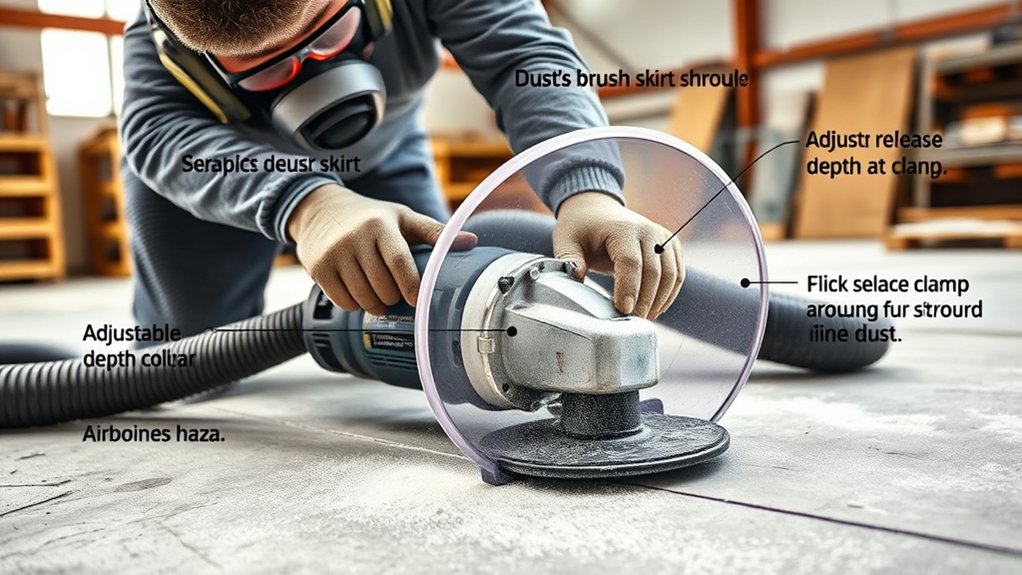
The best dust shroud for you depends on fit, seal quality, and ease of use. Focus on features that help you keep the shroud stable and the dust path clear.
- Choose adjustable depth controls when you need steady wheel depth.
- Look for replaceable brush skirts so you can restore the seal after wear.
- Use a clear viewing window if you need better sight lines while grinding.
- Pick quick-release latches when you change wheels often.
- Choose durable, anti-static materials when your work creates heavy dust.
These features help you work with less dust and fewer stops. They also make it easier to keep the grinder under control during long grinding sessions.
Pro tip: Keep spare brush skirts and filters on hand so one worn part does not stop your work.
Products Worth Considering

Fit 4-5in Grinding Wheel: Our cutting dust shroud is universal for 100-125mm cutting machines, compatible with 90% of major brands. It can be installed on 4-5 inch cutting machines, making it suitable for both home DIY and professional use.
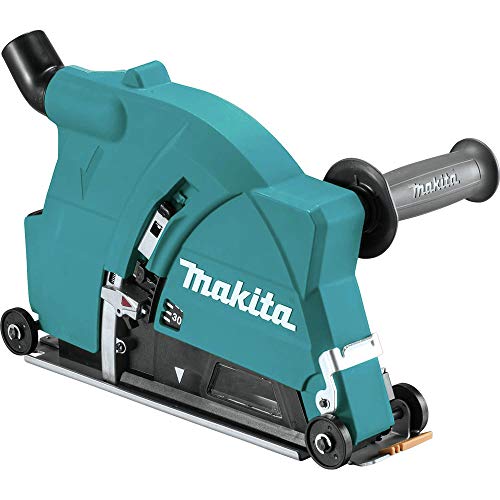
Easily adjustable depth setting allows up to 2-3/8" cutting depth when used with a 9" cutting blade

[Iron and Abs Materials] Crafted from materials, this cover is long-lasting and easy to for maintenance convenience.
Compatibility Tips: Ensuring a Good Fit for Your Grinder and Shroud
A good fit can improve both grinding control and dust capture. Start by matching the dust shroud to your grinder’s wheel diameter, not just the grinder’s power rating.
Next, check the spindle thread, guard mount, and gear housing shape. A shroud that does not mount securely can move during use and let dust escape.
Match the vacuum port to your hose or use the correct reducer. A loose hose connection can lower suction and send dust back into the room.
Before you start, confirm that the mounting collar sits tight and the brush skirt touches the surface evenly. If you see daylight under the skirt, adjust the shroud or replace worn parts.
Maintenance and Troubleshooting Tips for Dust Shrouds
Dust shrouds need regular care because fine dust can clog filters, wear brushes, and build up inside the housing. A few quick checks can keep your setup working better.
Regular dust shroud maintenance helps you keep airflow strong and reduce silica dust exposure while grinding.
- Wipe the shroud after each shift to reduce dust buildup.
- Replace worn brush skirts when the bristles no longer seal well.
- Check the vacuum filter often and clean or replace it as needed.
- Inspect the hose for cracks, clogs, loose ends, and crushed sections.
- Stop and check the setup if you see dust spurts from the shroud.
Do not use high pressure air to blow dust toward yourself or other workers. If you use air for cleaning, follow your site’s safety rules and control where the dust goes.
Note: A clogged filter can make a good dust shroud perform like a poor one.
Essential Safety Gear for Grinding

Dust control equipment helps, but you still need personal protective equipment (PPE). Start with respiratory protection that matches the hazard and follows your workplace safety plan.
Wear sealed safety goggles or safety glasses with side protection to protect your eyes from dust and chips. Use hearing protection because angle grinders can create high noise levels during cutting and grinding.
Wear cut-resistant gloves, long sleeves, and sturdy footwear when the task calls for them. Use a hard hat on job sites with overhead hazards or when your site rules require one.
Your employer or site safety lead should help confirm the right respirator, filters, fit testing, and exposure control plan. Do not treat a dust shroud as a replacement for the safety gear required for the job.
Frequently Asked Questions
How Is Silica Dust Controlled?
You control silica dust by using engineering controls, such as a fitted dust shroud and a proper vacuum. You also reduce exposure with safe work methods, respiratory protection, training, and regular equipment checks.
How Do You Reduce Dust When Using an Angle Grinder?
Use a dust shroud that fits your grinder and connect it to a vacuum with strong filtration. Keep the brush skirt sealed to the surface, clean the filter often, and wear the required PPE.
What Is the Most Effective Method of Silica Control?
The strongest approach uses several controls together. Use a dust shroud, vacuum dust collection, good work practices, and the right PPE instead of relying on one method.
Do You Need a Dust Shroud for an Angle Grinder?
You should use a dust shroud when you grind materials that can contain silica, such as concrete, mortar, brick, stone, or tile. A shroud helps capture dust near the source and keeps your work area cleaner.
Why Does Dust Still Escape From a Dust Shroud?
Dust may escape if the shroud does not fit, the brush skirt has worn down, or the vacuum filter has clogged. A loose hose, weak suction, or uneven surface can also reduce dust capture.
Safety Disclaimer: This article is for informational purposes only and does not replace professional safety advice, OSHA compliance support, or workplace training. Always follow your employer’s exposure control plan, product manuals, and applicable safety rules before grinding silica-containing materials.
Conclusion
Silica dust control protects your lungs, your crew, and your job-site workflow. A fitted dust shroud, a strong vacuum, and the right PPE give you a much safer grinding setup.
Before your next grinding task, check the shroud fit, brush seal, hose connection, and filter condition. Small checks can prevent big dust problems.
Take dust control seriously every time you grind, even on short jobs. Your future health depends on the habits you build now.